Factos essenciais
- Datas
- 8–12 mar. 2027 (5 dias)
- Local
- Hotel Des Colonies, Bruxelas, Bélgica
- Preço por participante
- £4.560 (GBP)
- Pagamento
- Por fatura e transferência bancária
- Encerramento das inscrições
- 17 jan. 2027
- Formato
- 5-day short course: a practical capacity-building programme for government, NGO and project teams in Brussels
- Opção interna
- Realize-o para a sua equipa, nas datas que preferir
Nesta página 12 secções
Formação em Cooperação e Diplomacia Humanitárias em Bruxelas
Visão geral do programa
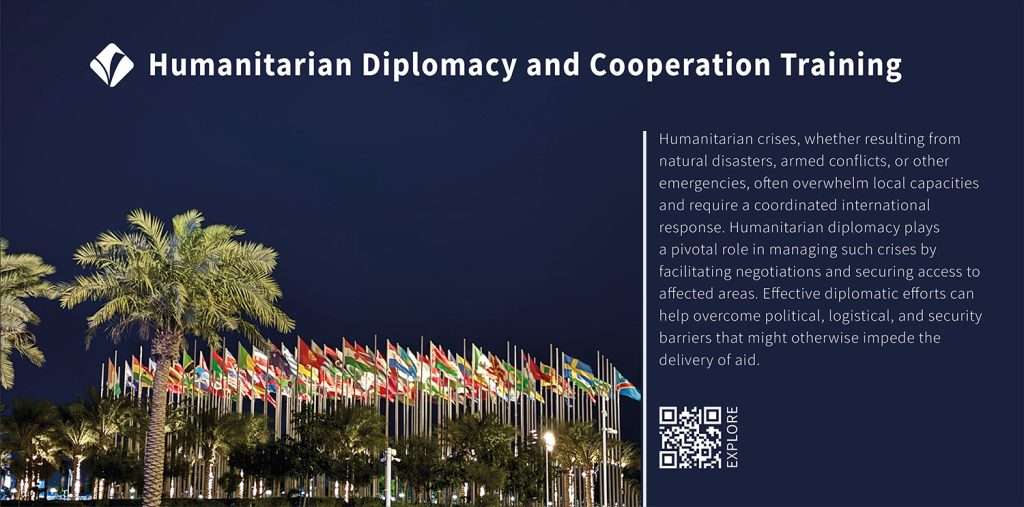
The aim of humanitarian diplomacy is to help alleviate human suffering that is caused by natural disasters, armed conflicts, and other complex crises. It can bridge the gap between political objectives and humanitarian needs when conventional diplomacy efforts fall short. Given its historical importance in the conflict arena, the concept of humanitarian diplomacy has been accepted as an integral part of foreign relations practice, forging cooperation between nations and non-state actors.
This training programme has exclusively been designed by Risalat to help delegates develop essential skills to undertake humanitarian efforts effectively and ethically while navigating evolving political landscapes with discernment. Delivered by Risalat Consultants International in Brussels, Belgium, it combines expert-led sessions, real cases and group work, so that participants can apply what they learn in their own institution.
It is designed for members of humanitarian agencies, international organisations, NGOs, and INGOs, government officials and diplomats, policymakers and advisors and others who want practical, current skills in leadership, management and communication.
O programa reforça a capacidade institucional em:
- Understanding the concept and scope of humanitarian diplomacy
- Historical context and evolution of humanitarian diplomacy
- The role of diplomacy in complex humanitarian emergencies
- Understanding negotiation and mediation
- Effective negotiation strategies and techniques
- Técnicas de mediação para resolver conflitos e garantir o acesso humanitário
- Strategic planning in humanitarian crises
- Risk assessment and management
- Pensamento estratégico e definição de orientações
- Liderar e desenvolver equipas
- Tomada de decisão e resolução de problemas
- Comunicação e influência
Why this matters now
As organizações precisam cada vez mais de profissionais capazes de:
- Setting clear direction and priorities
- Leading and motivating teams through change
- Communicating and negotiating effectively
- Managing performance fairly
- Making sound decisions under pressure
Sistemas sólidos de liderança, gestão e comunicação ajudam as organizações a:
- Transformar estratégias em resultados
- Criar equipas motivadas e capazes
- Gerir a mudança com menos resistência
- Melhorar as relações com parceiros e partes interessadas
Quem deve participar
Este programa destina-se a:
- Members of humanitarian agencies, international organisations, NGOs, and INGOs
- Government officials and diplomats
- Policymakers and advisors
- Crisis and emergency managers and response teams
- Advocacy and communication specialists
- Leaders of communities
- Diretores e quadros superiores
- Chefes de departamento e de unidade
- Quadros intermédios e chefes de equipa
- Gestores de projetos e programas
- Pessoal de RH e de desenvolvimento organizacional
- Profissionais que se preparam para funções de liderança
Assinale o que a sua equipa precisa de ser capaz de fazer.
Objetivos do programa
No final deste programa, os participantes serão capazes de:
- Compreender e aplicar princípios e quadros humanitários
- Understand how to negotiate humanitarian access and mediate between conflicting parties
- Make informed decisions concerning the prioritisation of humanitarian needs and effectively respond to emergencies
- Establish effective coordination mechanisms for a cohesive response to humanitarian crises
- Falar sobre questões humanitárias com decisores políticos, doadores e o público, influenciando políticas e obtendo apoio
- Engage with affected communities in a respectful and culturally sensitive manner
- Explicar as abordagens atuais à liderança em instituições públicas e privadas
- Definir a orientação e as prioridades da sua equipa
- Liderar, motivar e desenvolver pessoas
- Tomar decisões com métodos estruturados
Training Structure & Contents
- Understanding the concept and scope of humanitarian diplomacy
- Técnicas de mediação para resolver conflitos e garantir o acesso humanitário
- Managing relationships with donors, local authorities, and affected communities
- Strategies for navigating political obstacles and tensions
- Ethical dilemmas and decision-making frameworks
- Simulações de gestão de crises
- Estilos de liderança e os seus efeitos
- Historical context and evolution of humanitarian diplomacy
- Strategic planning in humanitarian crises
- Construir confiança e abordar conflitos de interesse
- Operational challenges in hostile or restricted environments
- Garantir a responsabilização e a transparência nas operações humanitárias
- Strategic thinking, priorities, and goals
- Advocacy role plays
- The role of diplomacy in complex humanitarian emergencies
- Risk assessment and management
- Estratégias de advocacia e mensagens
- Cultural competence and sensitivity
- Addressing and managing ethical challenges
- Criar e desenvolver equipas
- Motivação e empenho
- Understanding negotiation and mediation
- Decision-making frameworks and tools
- Techniques for influencing policy decisions at national and international levels
- Techniques for effective cross-cultural communication
- Leveraging technology and data in humanitarian diplomacy
- Scenario-based problem solving
- Clear communication, influence, and persuasion
- Effective negotiation strategies and techniques
- Strategies for fostering collaboration among international organisations, governments, and NGOs
- Engaging with media and public relations to support humanitarian goals
- Engaging with and understanding local customs and practices
- Negotiation simulations, media, and PR exercises
- Planear e liderar a mudança
- Gerir a resistência
Conteúdo completo, dia a dia
Primeiro dia | Fundamentos da liderança
- Understanding the concept and scope of humanitarian diplomacy
- Técnicas de mediação para resolver conflitos e garantir o acesso humanitário
- Managing relationships with donors, local authorities, and affected communities
- Strategies for navigating political obstacles and tensions
- Ethical dilemmas and decision-making frameworks
- Simulações de gestão de crises
- Estilos de liderança e os seus efeitos
Segundo dia | Estratégia e decisões
- Historical context and evolution of humanitarian diplomacy
- Strategic planning in humanitarian crises
- Construir confiança e abordar conflitos de interesse
- Operational challenges in hostile or restricted environments
- Garantir a responsabilização e a transparência nas operações humanitárias
- Strategic thinking, priorities, and goals
- Advocacy role plays
Terceiro dia | Pessoas e equipas
- The role of diplomacy in complex humanitarian emergencies
- Risk assessment and management
- Estratégias de advocacia e mensagens
- Cultural competence and sensitivity
- Addressing and managing ethical challenges
- Criar e desenvolver equipas
- Motivação e empenho
Quarto dia | Comunicação e influência
- Understanding negotiation and mediation
- Decision-making frameworks and tools
- Techniques for influencing policy decisions at national and international levels
- Techniques for effective cross-cultural communication
- Leveraging technology and data in humanitarian diplomacy
- Scenario-based problem solving
- Clear communication, influence, and persuasion
Quinto dia | Liderar a mudança e planear ações
- Effective negotiation strategies and techniques
- Strategies for fostering collaboration among international organisations, governments, and NGOs
- Engaging with media and public relations to support humanitarian goals
- Engaging with and understanding local customs and practices
- Negotiation simulations, media, and PR exercises
- Planear e liderar a mudança
- Gerir a resistência
Metodologia de formação
Humanitarian diplomacy training has been designed as an active multi-day skills building exercise. It applies systematic methods to increase the competencies of delegates in advocating and managing humanitarian initiatives and interventions. Each of the sessions features a variety of interactive elements. Open presentations are complemented by group assignments, case studies, role plays, scenario analysis, video demonstrations, and panel discussions. Before the programme, a short pre-assessment helps the facilitators understand each participant’s role and priorities, so that examples and exercises can be adjusted to the group. Each day ends with a short reflection in which participants note what they will apply at work.
- Sessões conduzidas por especialistas sobre as práticas atuais
- Estudos de caso regionais e internacionais
- Trabalho de grupo e exercícios práticos
- Simulações e dramatizações, quando relevante
- Discussion of participants’ own challenges
- Aprendizagem entre pares de várias instituições e países
- Ferramentas e modelos práticos para levar para o trabalho
- Reflexão diária e planeamento de ações
Resultados esperados
- Definir uma orientação e prioridades claras
- Liderar e desenvolver equipas
- Tomar decisões acertadas
- Comunicar e negociar de forma eficaz
- Liderar a mudança com menos resistência
- Planear o seu próprio desenvolvimento enquanto líderes
- Acquire practical tools to improve team plans, coaching, change plans, stakeholder communication, and performance reviews
- Develop an actionable institutional plan to take back to work
£4.560 por participante · fatura e transferência bancária · grupos de 5 ou mais pessoas beneficiam de desconto
Cinco ou mais participantes da mesma organização: peça a tarifa de grupo no pedido de fatura.
Ten or more: an in-house version for your institution may cost less per person. Ask for an in-house quote.
As inscrições encerram em 56 dias (17 Jan 2027)
Relevância regional e aplicação
Europe: European institutions apply leadership, management and communication within detailed regulatory frameworks and reform agendas. Participants from Europe can compare their practice with colleagues from other regions and test how established methods work under different conditions.
Africa: Across Africa, ministries, agencies and project teams working in leadership, management and communication increasingly operate alongside donor-financed programmes that expect clear systems and evidence. The programme helps participants adapt good practice to the institutions and resources they work with.
Middle East: In the Middle East, national development strategies and diversification plans place growing demands on leadership, management and communication. Participants explore how to build these capabilities.
Perfil do país anfitrião
Belgium is a notable contributor to the practice of humanitarian diplomacy. Being an EU member state and a major international actor in various organisations like the UN and NATO, the country participates in the construction of global humanitarian strategies. Being heavily involved in high-level discussions and negotiations, Belgium contributes to crafting humanitarian policies. The country reflects its commitment to addressing global crises by advocating for application of humanitarian principles and protection of civilians. What’s more, Belgium provides substantial financial assistance to a wide range of humanitarian organisations responding to disasters, armed conflicts, and other complex emergencies.
Who Will Deliver This Programme
Each date is delivered by a team assigned from Risalat's expert network for this subject. For this programme we assign:
How we choose them: Experience in the region of the participants or comparable settings; Command of the financier rules that apply (World Bank, ADB, AfDB, EU, UN) where relevant; Delivery in English; other languages on request for in-house groups; No conflict of interest with participants' institutions.
Training courses in BrusselsCursos de formação para humanitários
Porquê Bruxelas para este programa
Bruxelas é a sede das instituições da UE, útil para programas sobre financiamento, regulação e políticas da UE.
O programa The Humanitarian Cooperation and Diplomacy Training in Brussels em março de 2027 reúne funcionários e profissionais de toda a Europa, África, Médio Oriente e Ásia. As sessões combinam breves introduções, estudos de caso e trabalho de grupo sobre os próprios ficheiros dos participantes, e as instituições da cidade podem ser adicionadas como visita de estudo a pedido.
Como chegar: Aeroporto de Bruxelas (BRU).
Verifique se precisa de visto com o Verificador de Vistos gratuito e peça uma carta-convite depois de se inscrever.
O mesmo tema noutras cidades
Outros programas em Bruxelas
- AI Ethics, Risk and Regulation: EU AI Act, OECD and UNESCO Principles Training in Brussels
- Afeção de Recursos Humanos no Setor da Saúde e Retenção em Clínicas Distritais em Bruxelas
- District Health Operational Planning and Primary Care Governance in Brussels
- Emergency Secondary Education Continuity and Accelerated Pedagogy in Brussels
- Development Policy Matrix Execution and Prior Action Oversight in Brussels
Teams often travel here from Albania, Serbia, North Macedonia, Bosnia and Herzegovina, Kosovo, Montenegro. Funding, visa letters and group rates are explained on each country page.
- ReliefWeb OCHA
- Consolidação da Paz da ONU Nações Unidas
Is there leadership and management training for government officials in Brussels in March 2027?
Can "Humanitarian Cooperation and Diplomacy Training in Brussels" be delivered in-house for one organisation?
Que outros programas de liderança e gestão realiza a Risalat?
Como se inscrevem e pagam as organizações?
For teams and institutions
Bring your team
Teams that learn together apply more at work. Tell us how many people and how you would like to take part: we reply with a group quote within two working days.
Other dates and cities for this subject: Humanitarian Programme Management training courses (44 upcoming dates).
Mais cursos de formação na Bélgica · Todos os programas na Europa · Calendário de formação completo
Planear este programa num roteiro: porque importa, porque o aprovar, as datas a planear e a carreira que constrói.