Points clés
- Dates
- 8–12 mars 2027 (5 jours)
- Lieu
- Hotel Des Colonies, Bruxelles, Belgique
- Frais par participant
- 4 560 £ (GBP)
- Paiement
- Sur facture et par virement bancaire
- Clôture des inscriptions
- 17 janv. 2027
- Format
- 5-day short course: a practical capacity-building programme for government, NGO and project teams in Brussels
- Option intra
- Organisez-le pour votre équipe, à vos dates
Sur cette page 12 sections
Formation à la coopération et à la diplomatie humanitaires à Bruxelles
Présentation du programme
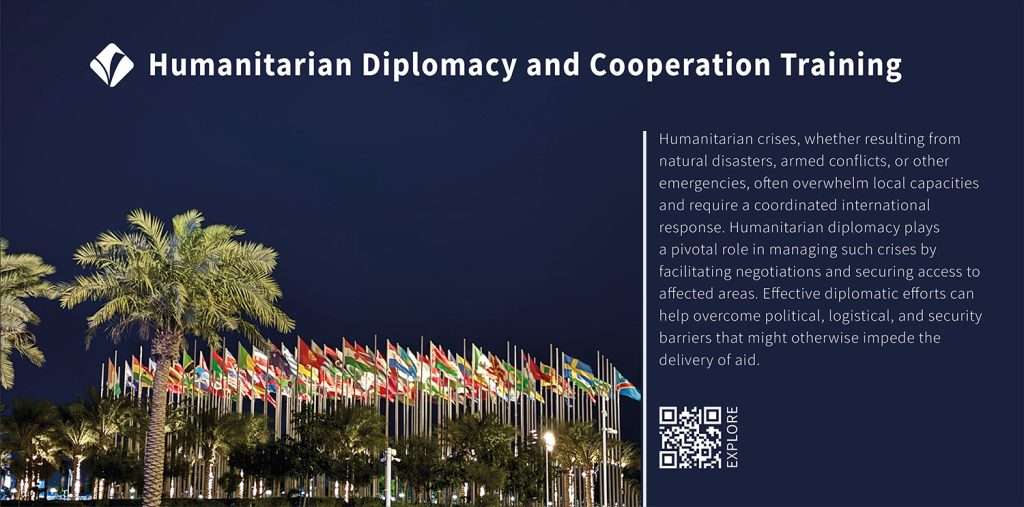
The aim of humanitarian diplomacy is to help alleviate human suffering that is caused by natural disasters, armed conflicts, and other complex crises. It can bridge the gap between political objectives and humanitarian needs when conventional diplomacy efforts fall short. Given its historical importance in the conflict arena, the concept of humanitarian diplomacy has been accepted as an integral part of foreign relations practice, forging cooperation between nations and non-state actors.
This training programme has exclusively been designed by Risalat to help delegates develop essential skills to undertake humanitarian efforts effectively and ethically while navigating evolving political landscapes with discernment. Delivered by Risalat Consultants International in Brussels, Belgium, it combines expert-led sessions, real cases and group work, so that participants can apply what they learn in their own institution.
It is designed for members of humanitarian agencies, international organisations, NGOs, and INGOs, government officials and diplomats, policymakers and advisors and others who want practical, current skills in leadership, management and communication.
Le programme renforce les capacités institutionnelles en matière de :
- Understanding the concept and scope of humanitarian diplomacy
- Historical context and evolution of humanitarian diplomacy
- The role of diplomacy in complex humanitarian emergencies
- Understanding negotiation and mediation
- Effective negotiation strategies and techniques
- Techniques de médiation pour résoudre les conflits et garantir l'accès humanitaire
- Strategic planning in humanitarian crises
- Risk assessment and management
- Réflexion stratégique et définition d'une orientation
- Diriger et faire progresser les équipes
- Prise de décision et résolution de problèmes
- Communication et influence
Why this matters now
Les organisations ont de plus en plus besoin de professionnels capables de :
- Setting clear direction and priorities
- Leading and motivating teams through change
- Communicating and negotiating effectively
- Managing performance fairly
- Making sound decisions under pressure
Des systèmes solides de leadership, de management et de communication aident les organisations à :
- Transformer les stratégies en résultats
- Constituer des équipes motivées et compétentes
- Gérer le changement en limitant les résistances
- Améliorer les relations avec les partenaires et les parties prenantes
Public concerné
Ce programme s'adresse à :
- Members of humanitarian agencies, international organisations, NGOs, and INGOs
- Government officials and diplomats
- Policymakers and advisors
- Crisis and emergency managers and response teams
- Advocacy and communication specialists
- Leaders of communities
- Directeurs et cadres supérieurs
- Chefs de département et d'unité
- Cadres intermédiaires et chefs d'équipe
- Gestionnaires de projets et de programmes
- Personnel RH et développement organisationnel
- Personnel se préparant à des fonctions de direction
Cochez ce que votre équipe doit être capable de faire.
Objectifs du programme
À l'issue de ce programme, les participants seront en mesure de :
- Comprehend and apply humanitarian principles and frameworks
- Understand how to negotiate humanitarian access and mediate between conflicting parties
- Make informed decisions concerning the prioritisation of humanitarian needs and effectively respond to emergencies
- Établir des mécanismes de coordination efficaces pour une réponse cohérente aux crises humanitaires
- Speak for humanitarian issues with policymakers, donors, and the public, influencing policy and securing support
- Engage with affected communities in a respectful and culturally sensitive manner
- Expliquer les approches actuelles du leadership dans les institutions publiques et privées
- Fixer l'orientation et les priorités de leur équipe
- Diriger, motiver et faire progresser les personnes
- Prendre des décisions à l'aide de méthodes structurées
Training Structure & Contents
- Understanding the concept and scope of humanitarian diplomacy
- Techniques de médiation pour résoudre les conflits et garantir l'accès humanitaire
- Managing relationships with donors, local authorities, and affected communities
- Strategies for navigating political obstacles and tensions
- Dilemmes éthiques et cadres de prise de décision
- Crisis management simulations
- Styles de leadership et leurs effets
- Historical context and evolution of humanitarian diplomacy
- Strategic planning in humanitarian crises
- Building trust and addressing conflicts of interest
- Operational challenges in hostile or restricted environments
- Ensuring accountability and transparency in humanitarian operations
- Strategic thinking, priorities, and goals
- Advocacy role plays
- The role of diplomacy in complex humanitarian emergencies
- Risk assessment and management
- Advocacy strategies and messaging
- Cultural competence and sensitivity
- Addressing and managing ethical challenges
- Constituer et faire progresser les équipes
- Motivation et engagement
- Understanding negotiation and mediation
- Decision-making frameworks and tools
- Techniques for influencing policy decisions at national and international levels
- Techniques for effective cross-cultural communication
- Leveraging technology and data in humanitarian diplomacy
- Résolution de problèmes basée sur des scénarios
- Clear communication, influence, and persuasion
- Effective negotiation strategies and techniques
- Strategies for fostering collaboration among international organisations, governments, and NGOs
- Engaging with media and public relations to support humanitarian goals
- Engaging with and understanding local customs and practices
- Negotiation simulations, media, and PR exercises
- Planifier et conduire le changement
- Gérer les résistances
Contenu détaillé jour par jour
Premier jour | Fondamentaux du leadership
- Understanding the concept and scope of humanitarian diplomacy
- Techniques de médiation pour résoudre les conflits et garantir l'accès humanitaire
- Managing relationships with donors, local authorities, and affected communities
- Strategies for navigating political obstacles and tensions
- Dilemmes éthiques et cadres de prise de décision
- Crisis management simulations
- Styles de leadership et leurs effets
Deuxième jour | Stratégie et décisions
- Historical context and evolution of humanitarian diplomacy
- Strategic planning in humanitarian crises
- Building trust and addressing conflicts of interest
- Operational challenges in hostile or restricted environments
- Ensuring accountability and transparency in humanitarian operations
- Strategic thinking, priorities, and goals
- Advocacy role plays
Troisième jour | Personnes et équipes
- The role of diplomacy in complex humanitarian emergencies
- Risk assessment and management
- Advocacy strategies and messaging
- Cultural competence and sensitivity
- Addressing and managing ethical challenges
- Constituer et faire progresser les équipes
- Motivation et engagement
Quatrième jour | Communication et influence
- Understanding negotiation and mediation
- Decision-making frameworks and tools
- Techniques for influencing policy decisions at national and international levels
- Techniques for effective cross-cultural communication
- Leveraging technology and data in humanitarian diplomacy
- Résolution de problèmes basée sur des scénarios
- Clear communication, influence, and persuasion
Cinquième jour | Conduite du changement et plan d'action
- Effective negotiation strategies and techniques
- Strategies for fostering collaboration among international organisations, governments, and NGOs
- Engaging with media and public relations to support humanitarian goals
- Engaging with and understanding local customs and practices
- Negotiation simulations, media, and PR exercises
- Planifier et conduire le changement
- Gérer les résistances
Méthodologie de formation
Humanitarian diplomacy training has been designed as an active multi-day skills building exercise. It applies systematic methods to increase the competencies of delegates in advocating and managing humanitarian initiatives and interventions. Each of the sessions features a variety of interactive elements. Open presentations are complemented by group assignments, case studies, role plays, scenario analysis, video demonstrations, and panel discussions. Before the programme, a short pre-assessment helps the facilitators understand each participant’s role and priorities, so that examples and exercises can be adjusted to the group. Each day ends with a short reflection in which participants note what they will apply at work.
- Sessions animées par des experts sur les pratiques actuelles
- Études de cas régionales et internationales
- Travaux de groupe et exercices pratiques
- Simulations et jeux de rôle le cas échéant
- Discussion des défis rencontrés par les participants dans l’exercice de leurs fonctions
- Apprentissage entre pairs, d'institutions et de pays différents
- Des outils et modèles pratiques à réutiliser au travail
- Réflexion quotidienne et plan d'action
Résultats attendus
- Fixer une orientation et des priorités claires
- Diriger et faire progresser les équipes
- Prendre de bonnes décisions
- Communiquer et négocier efficacement
- Conduire le changement en limitant les résistances
- Planifier leur propre développement en tant que dirigeants
- Acquire practical tools to improve team plans, coaching, change plans, stakeholder communication, and performance reviews
- Develop an actionable institutional plan to take back to work
4 560 £ par participant · facture et virement bancaire · réduction pour les groupes de 5 personnes ou plus
Cinq personnes ou plus d'une même organisation : demandez le tarif de groupe lors de votre demande de facture.
Ten or more: an in-house version for your institution may cost less per person. Ask for an in-house quote.
Registration closes in 56 days (17 Jan 2027)
Pertinence régionale & mise en application
Europe: European institutions apply leadership, management and communication within detailed regulatory frameworks and reform agendas. Participants from Europe can compare their practice with colleagues from other regions and test how established methods work under different conditions.
Africa: Across Africa, ministries, agencies and project teams working in leadership, management and communication increasingly operate alongside donor-financed programmes that expect clear systems and evidence. The programme helps participants adapt good practice to the institutions and resources they work with.
Middle East: In the Middle East, national development strategies and diversification plans place growing demands on leadership, management and communication. Participants explore how to build these capabilities.
Profil du pays d'accueil
Belgium is a notable contributor to the practice of humanitarian diplomacy. Being an EU member state and a major international actor in various organisations like the UN and NATO, the country participates in the construction of global humanitarian strategies. Being heavily involved in high-level discussions and negotiations, Belgium contributes to crafting humanitarian policies. The country reflects its commitment to addressing global crises by advocating for application of humanitarian principles and protection of civilians. What’s more, Belgium provides substantial financial assistance to a wide range of humanitarian organisations responding to disasters, armed conflicts, and other complex emergencies.
Who Will Deliver This Programme
Each date is delivered by a team assigned from Risalat's expert network for this subject. For this programme we assign:
How we choose them: Experience in the region of the participants or comparable settings; Command of the financier rules that apply (World Bank, ADB, AfDB, EU, UN) where relevant; Delivery in English; other languages on request for in-house groups; No conflict of interest with participants' institutions.
Training courses in BrusselsHumanitarians training courses
Pourquoi Bruxelles pour ce programme
Bruxelles est le siège des institutions de l'UE, un atout pour les programmes sur les financements, la réglementation et les politiques européennes.
The Humanitarian Cooperation and Diplomacy Training in Brussels programme in March 2027 brings together officials and professionals from across Europe, Africa, the Middle East and Asia. Sessions combine short inputs, case studies and group work on participants' own files, and the city's institutions can be added as a study visit on request.
Accès : aéroport de Bruxelles (BRU).
Vérifiez si vous avez besoin d'un visa avec le vérificateur de visa gratuit, et demandez une lettre d'invitation une fois inscrit.
Le même thème dans d'autres villes
Autres programmes à Bruxelles
- AI Ethics, Risk and Regulation: EU AI Act, OECD and UNESCO Principles Training in Brussels
- Health Sector Human Resource Deployment and District Clinic Retention in Brussels
- District Health Operational Planning and Primary Care Governance in Brussels
- Emergency Secondary Education Continuity and Accelerated Pedagogy in Brussels
- Development Policy Matrix Execution and Prior Action Oversight in Brussels
Teams often travel here from Albania, Serbia, North Macedonia, Bosnia and Herzegovina, Kosovo, Montenegro. Funding, visa letters and group rates are explained on each country page.
- ReliefWeb OCHA
- Consolidation de la paix des Nations Unies Nations Unies
Is there leadership and management training for government officials in Brussels in March 2027?
Can "Humanitarian Cooperation and Diplomacy Training in Brussels" be delivered in-house for one organisation?
Quels autres programmes Risalat propose-t-il en leadership et management ?
Comment les organisations s'inscrivent-elles et paient-elles ?
Pour les équipes et les institutions
Bring your team
Teams that learn together apply more at work. Tell us how many people and how you would like to take part: we reply with a group quote within two working days.
Autres dates et villes pour ce sujet : Cours de formation en gestion de programmes humanitaires (44 dates à venir).
Plus de formations en Belgique · Tous les programmes en Europe · Calendrier complet des formations
Plan this programme in a roadmap: why it matters, why to approve it, the dates to plan and the career it builds.