Datos clave
- Fechas
- 8–12 mar 2027 (5 días)
- Dónde
- Hotel Des Colonies, Bruselas, Bélgica
- Tarifa por participante
- 4.560 £ (GBP)
- Pago
- Mediante factura y transferencia bancaria
- Cierre de inscripciones
- 17 ene 2027
- Formato
- 5-day short course: a practical capacity-building programme for government, NGO and project teams in Brussels
- Opción interna
- Impártalo para su equipo, en sus fechas
En esta página 12 secciones
Formación en cooperación y diplomacia humanitarias en Bruselas
Descripción del programa
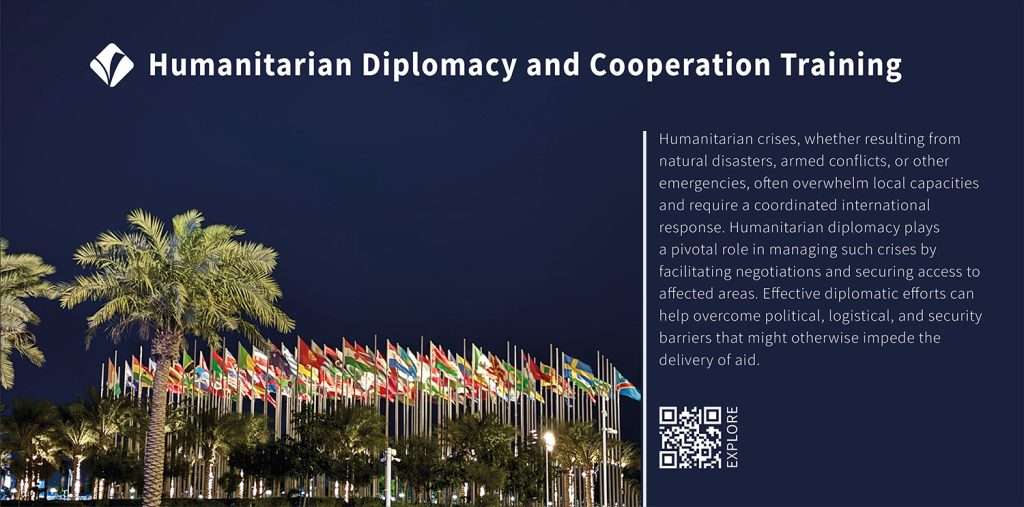
The aim of humanitarian diplomacy is to help alleviate human suffering that is caused by natural disasters, armed conflicts, and other complex crises. It can bridge the gap between political objectives and humanitarian needs when conventional diplomacy efforts fall short. Given its historical importance in the conflict arena, the concept of humanitarian diplomacy has been accepted as an integral part of foreign relations practice, forging cooperation between nations and non-state actors.
This training programme has exclusively been designed by Risalat to help delegates develop essential skills to undertake humanitarian efforts effectively and ethically while navigating evolving political landscapes with discernment. Delivered by Risalat Consultants International in Brussels, Belgium, it combines expert-led sessions, real cases and group work, so that participants can apply what they learn in their own institution.
It is designed for members of humanitarian agencies, international organisations, NGOs, and INGOs, government officials and diplomats, policymakers and advisors and others who want practical, current skills in leadership, management and communication.
El programa fortalece la capacidad institucional en:
- Understanding the concept and scope of humanitarian diplomacy
- Historical context and evolution of humanitarian diplomacy
- The role of diplomacy in complex humanitarian emergencies
- Understanding negotiation and mediation
- Effective negotiation strategies and techniques
- Técnicas de mediación para la resolución de conflictos y la garantía del acceso humanitario
- Strategic planning in humanitarian crises
- Risk assessment and management
- Pensamiento estratégico y definición del rumbo
- Liderar y desarrollar equipos
- Toma de decisiones y resolución de problemas
- Comunicación e influencia
Why this matters now
Las organizaciones necesitan cada vez más profesionales capaces de:
- Setting clear direction and priorities
- Leading and motivating teams through change
- Communicating and negotiating effectively
- Managing performance fairly
- Making sound decisions under pressure
Unos sistemas sólidos de liderazgo, gestión y comunicación ayudan a las organizaciones a:
- Convertir las estrategias en resultados
- Formar equipos motivados y capaces
- Gestionar el cambio con menos resistencia
- Mejorar las relaciones con socios y partes interesadas
Quién debería asistir
Este programa está dirigido a:
- Members of humanitarian agencies, international organisations, NGOs, and INGOs
- Government officials and diplomats
- Policymakers and advisors
- Crisis and emergency managers and response teams
- Advocacy and communication specialists
- Leaders of communities
- Directores y altos directivos
- Jefes de departamento y de unidad
- Mandos intermedios y jefes de equipo
- Gerentes de proyectos y programas
- Personal de RR. HH. y desarrollo organizacional
- Personal que se prepara para funciones de liderazgo
Marque lo que su equipo necesita ser capaz de hacer.
Objetivos del programa
Al final de este programa, los participantes serán capaces de:
- Comprender y aplicar los principios y marcos humanitarios
- Understand how to negotiate humanitarian access and mediate between conflicting parties
- Make informed decisions concerning the prioritisation of humanitarian needs and effectively respond to emergencies
- Establish effective coordination mechanisms for a cohesive response to humanitarian crises
- Hablar sobre cuestiones humanitarias con los responsables políticos, donantes y el público, influyendo en las políticas y asegurando apoyo
- Engage with affected communities in a respectful and culturally sensitive manner
- Explicar los enfoques actuales del liderazgo en las instituciones públicas y privadas
- Fijar la dirección y las prioridades de su equipo
- Liderar, motivar y desarrollar a las personas
- Tomar decisiones con métodos estructurados
Training Structure & Contents
- Understanding the concept and scope of humanitarian diplomacy
- Técnicas de mediación para la resolución de conflictos y la garantía del acceso humanitario
- Managing relationships with donors, local authorities, and affected communities
- Strategies for navigating political obstacles and tensions
- Ethical dilemmas and decision-making frameworks
- Simulaciones de gestión de crisis
- Estilos de liderazgo y sus efectos
- Historical context and evolution of humanitarian diplomacy
- Strategic planning in humanitarian crises
- Construcción de confianza y abordaje de conflictos de interés
- Operational challenges in hostile or restricted environments
- Garantizar la rendición de cuentas y la transparencia en las operaciones humanitarias
- Strategic thinking, priorities, and goals
- Advocacy role plays
- The role of diplomacy in complex humanitarian emergencies
- Risk assessment and management
- Estrategias de promoción y mensajes
- Cultural competence and sensitivity
- Addressing and managing ethical challenges
- Formar y desarrollar equipos
- Motivación y compromiso
- Understanding negotiation and mediation
- Decision-making frameworks and tools
- Techniques for influencing policy decisions at national and international levels
- Techniques for effective cross-cultural communication
- Leveraging technology and data in humanitarian diplomacy
- Scenario-based problem solving
- Clear communication, influence, and persuasion
- Effective negotiation strategies and techniques
- Strategies for fostering collaboration among international organisations, governments, and NGOs
- Engaging with media and public relations to support humanitarian goals
- Engaging with and understanding local customs and practices
- Negotiation simulations, media, and PR exercises
- Planificar y liderar el cambio
- Gestionar la resistencia
Contenido completo día a día
Primer día | Fundamentos del liderazgo
- Understanding the concept and scope of humanitarian diplomacy
- Técnicas de mediación para la resolución de conflictos y la garantía del acceso humanitario
- Managing relationships with donors, local authorities, and affected communities
- Strategies for navigating political obstacles and tensions
- Ethical dilemmas and decision-making frameworks
- Simulaciones de gestión de crisis
- Estilos de liderazgo y sus efectos
Segundo día | Estrategia y decisiones
- Historical context and evolution of humanitarian diplomacy
- Strategic planning in humanitarian crises
- Construcción de confianza y abordaje de conflictos de interés
- Operational challenges in hostile or restricted environments
- Garantizar la rendición de cuentas y la transparencia en las operaciones humanitarias
- Strategic thinking, priorities, and goals
- Advocacy role plays
Tercer día | Personas y equipos
- The role of diplomacy in complex humanitarian emergencies
- Risk assessment and management
- Estrategias de promoción y mensajes
- Cultural competence and sensitivity
- Addressing and managing ethical challenges
- Formar y desarrollar equipos
- Motivación y compromiso
Cuarto día | Comunicación e influencia
- Understanding negotiation and mediation
- Decision-making frameworks and tools
- Techniques for influencing policy decisions at national and international levels
- Techniques for effective cross-cultural communication
- Leveraging technology and data in humanitarian diplomacy
- Scenario-based problem solving
- Clear communication, influence, and persuasion
Quinto día | Liderar el cambio y planificar acciones
- Effective negotiation strategies and techniques
- Strategies for fostering collaboration among international organisations, governments, and NGOs
- Engaging with media and public relations to support humanitarian goals
- Engaging with and understanding local customs and practices
- Negotiation simulations, media, and PR exercises
- Planificar y liderar el cambio
- Gestionar la resistencia
Metodología de formación
Humanitarian diplomacy training has been designed as an active multi-day skills building exercise. It applies systematic methods to increase the competencies of delegates in advocating and managing humanitarian initiatives and interventions. Each of the sessions features a variety of interactive elements. Open presentations are complemented by group assignments, case studies, role plays, scenario analysis, video demonstrations, and panel discussions. Before the programme, a short pre-assessment helps the facilitators understand each participant’s role and priorities, so that examples and exercises can be adjusted to the group. Each day ends with a short reflection in which participants note what they will apply at work.
- Sesiones dirigidas por expertos sobre la práctica actual
- Estudios de caso regionales e internacionales
- Trabajo en grupo y ejercicios prácticos
- Simulaciones y juegos de rol cuando proceda
- Discussion of participants’ own challenges
- Aprendizaje entre pares de distintas instituciones y países
- Herramientas y plantillas prácticas para llevar al trabajo
- Reflexión diaria y planificación de acciones
Resultados esperados
- Fijar una dirección y unas prioridades claras
- Liderar y desarrollar equipos
- Tomar decisiones acertadas
- Comunicar y negociar con eficacia
- Liderar el cambio con menos resistencia
- Planificar su propio desarrollo como líderes
- Acquire practical tools to improve team plans, coaching, change plans, stakeholder communication, and performance reviews
- Develop an actionable institutional plan to take back to work
4.560 £ por participante · factura y transferencia bancaria · los grupos de 5 o más personas reciben un descuento
Cinco o más personas de una misma organización: solicite la tarifa de grupo al pedir la factura.
Ten or more: an in-house version for your institution may cost less per person. Ask for an in-house quote.
La inscripción cierra en 56 días (17 ene 2027)
Pertinencia y aplicación regionales
Europe: European institutions apply leadership, management and communication within detailed regulatory frameworks and reform agendas. Participants from Europe can compare their practice with colleagues from other regions and test how established methods work under different conditions.
Africa: Across Africa, ministries, agencies and project teams working in leadership, management and communication increasingly operate alongside donor-financed programmes that expect clear systems and evidence. The programme helps participants adapt good practice to the institutions and resources they work with.
Middle East: In the Middle East, national development strategies and diversification plans place growing demands on leadership, management and communication. Participants explore how to build these capabilities.
Perfil del país anfitrión
Belgium is a notable contributor to the practice of humanitarian diplomacy. Being an EU member state and a major international actor in various organisations like the UN and NATO, the country participates in the construction of global humanitarian strategies. Being heavily involved in high-level discussions and negotiations, Belgium contributes to crafting humanitarian policies. The country reflects its commitment to addressing global crises by advocating for application of humanitarian principles and protection of civilians. What’s more, Belgium provides substantial financial assistance to a wide range of humanitarian organisations responding to disasters, armed conflicts, and other complex emergencies.
Who Will Deliver This Programme
Each date is delivered by a team assigned from Risalat's expert network for this subject. For this programme we assign:
How we choose them: Experience in the region of the participants or comparable settings; Command of the financier rules that apply (World Bank, ADB, AfDB, EU, UN) where relevant; Delivery in English; other languages on request for in-house groups; No conflict of interest with participants' institutions.
Training courses in BrusselsCursos de capacitación humanitaria
Por qué Bruselas para este programa
Bruselas es la sede de las instituciones de la UE, útil para programas sobre financiación, regulación y políticas de la UE.
El programa de Capacitación en Cooperación Humanitaria y Diplomacia en Bruselas en marzo de 2027 reúne a funcionarios y profesionales de toda Europa, África, Oriente Medio y Asia. Las sesiones combinan breves aportes, estudios de casos y trabajo en grupo sobre los propios expedientes de los participantes, y las instituciones de la ciudad se pueden agregar como visita de estudio previa solicitud.
Cómo llegar: Aeropuerto de Bruselas (BRU).
Compruebe si necesita visado con el Verificador de visados gratuito y solicite una carta de invitación una vez inscrito.
El mismo tema en otras ciudades
Otros programas en Bruselas
- AI Ethics, Risk and Regulation: EU AI Act, OECD and UNESCO Principles Training in Brussels
- Despliegue de recursos humanos del sector salud y retención en clínicas de distrito en Bruselas
- District Health Operational Planning and Primary Care Governance in Brussels
- Emergency Secondary Education Continuity and Accelerated Pedagogy in Brussels
- Development Policy Matrix Execution and Prior Action Oversight in Brussels
Teams often travel here from Albania, Serbia, North Macedonia, Bosnia and Herzegovina, Kosovo, Montenegro. Funding, visa letters and group rates are explained on each country page.
- ReliefWeb OCHA
- Consolidación de la Paz de la ONU Naciones Unidas
Is there leadership and management training for government officials in Brussels in March 2027?
Can "Humanitarian Cooperation and Diplomacy Training in Brussels" be delivered in-house for one organisation?
¿Qué otros programas de liderazgo y gestión imparte Risalat?
¿Cómo se inscriben y pagan las organizaciones?
For teams and institutions
Bring your team
Teams that learn together apply more at work. Tell us how many people and how you would like to take part: we reply with a group quote within two working days.
Other dates and cities for this subject: Humanitarian Programme Management training courses (44 upcoming dates).
Más cursos de formación en Bélgica · Todos los programas en Europa · Calendario de formación completo
Planificar este programa en una hoja de ruta: por qué es importante, por qué aprobarlo, las fechas a planificar y la carrera que construye.