Ключевые факты
- Даты
- 1–5 февр. 2027 (5 дней)
- Где
- Уточняется, Белград, Сербия
- Стоимость на одного участника
- £3 360 (GBP)
- Оплата
- По счету банковским переводом
- Регистрация закрывается
- 23 дек. 2026
- Сертификат
- Сертификат о прохождении
- Корпоративный формат
- Проведите ее для своей команды в удобные вам даты
Обзор программы
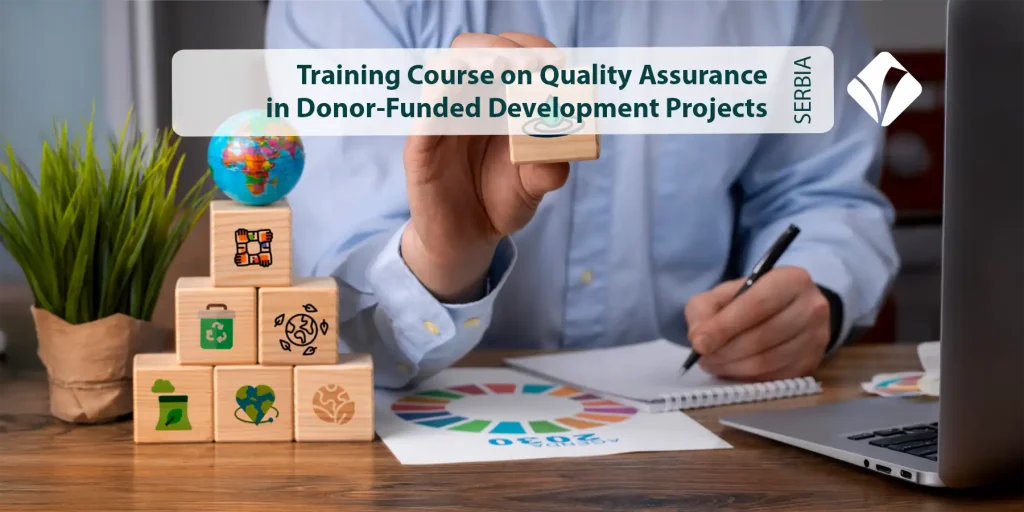
This intensive training programme equips professionals working on donor-funded development projects with the tools and knowledge to implement robust and effective Quality Assurance (QA) systems. Participants will gain a comprehensive understanding of how to integrate QA frameworks into the project lifecycle to enhance transparency, accountability, and results. With a strong focus on international best practices and compliance standards, the programme explores how to align QA procedures with donor procurement guidelines, funding conditions, and national regulatory frameworks. Emphasis is placed on real-world application, drawing on case studies from infrastructure, healthcare, education, and public service delivery sectors. Through interactive learning, practical exercises, and peer exchange, participants will be empowered to strengthen quality outcomes and mitigate performance risks in development interventions.
Целевая аудитория
This Donor-Funded Project Quality Assurance Training is ideal for:
- QA/QC Officers in donor-funded projects
- Project Managers and Coordinators
- Procurement and Contract Management Specialists
- Engineers and Technical Supervisors
- M&E Officers
- Government Regulators and Compliance Auditors
- Development Partners and NGO Implementation Teams
Отметьте, что должна уметь ваша команда.
- Операция
- Учет
- Контроль
- Доказательства
- Заключение
Цели программы
По окончании программы участники смогут:
- Understand key QA principles in the context of development projects.
- Align QA systems with procurement frameworks of major donors (World Bank, ADB, UN, etc.).
- Design and implement project-specific QA plans and quality control measures.
- Identify and mitigate quality-related risks throughout the project lifecycle.
- Conduct QA audits and prepare quality performance reports.
- Promote a culture of continuous improvement within implementing agencies and contractors.
Содержание программы
- Understanding the role of QA in achieving development outcomes
- Key QA terminologies and definitions in donor project contexts
- International QA standards: ISO, FIDIC, and donor-specific protocols
- Differentiating between QA and Quality Control (QC)
- Overview of Quality Management Systems (QMS)
- Mapping quality requirements across different donor agencies
- Institutional responsibilities for QA implementation
- Developing a project-specific Quality Assurance Plan (QAP)
- Quality objectives, criteria, and scope setting
- Identifying QA-related risks and mitigation strategies
- Aligning QA with procurement and contract management
- Embedding QA checkpoints in project timelines
- Stakeholder roles in quality risk assessment
- Integrating QA into project budgeting and resource planning
- QA oversight during project execution and service delivery
- Contractor/supplier quality assurance responsibilities
- On-site inspections and technical supervision techniques
- Non-conformance identification and resolution protocols
- Documenting QA actions and maintaining audit trails
- Tools for construction and service QA monitoring
- Health, safety, and environmental considerations in QA
- Developing KPIs and quality benchmarks aligned with donor expectations
- QA dashboards and performance scorecards
- Designing and conducting quality audits and peer reviews
- Reporting formats and compliance documentation
- Corrective and preventive action (CAPA) systems
- Integrating QA data into project M&E systems
- Communicating quality performance to stakeholders and funders
- Analysis of successful and failed QA case studies in development projects
- Simulation exercise: Drafting a QA plan with compliance checkpoints
- Group presentations and peer review
- Individual assignment: Evaluate a sample QA report
- Trainer-led critique and coaching session
- Q&A session with donor QA expert (optional guest speaker)
- Final feedback, recap, and certification ceremony
Полное содержание по дням
First Day: Fundamentals in Donor-Funded Projects
- Understanding the role of QA in achieving development outcomes
- Key QA terminologies and definitions in donor project contexts
- International QA standards: ISO, FIDIC, and donor-specific protocols
- Differentiating between QA and Quality Control (QC)
- Overview of Quality Management Systems (QMS)
- Mapping quality requirements across different donor agencies
- Institutional responsibilities for QA implementation
Second Day: Quality Planning and Risk-Based Approaches
- Developing a project-specific Quality Assurance Plan (QAP)
- Quality objectives, criteria, and scope setting
- Identifying QA-related risks and mitigation strategies
- Aligning QA with procurement and contract management
- Embedding QA checkpoints in project timelines
- Stakeholder roles in quality risk assessment
- Integrating QA into project budgeting and resource planning
Third Day: Implementation, Supervision & Field QA
- QA oversight during project execution and service delivery
- Contractor/supplier quality assurance responsibilities
- On-site inspections and technical supervision techniques
- Non-conformance identification and resolution protocols
- Documenting QA actions and maintaining audit trails
- Tools for construction and service QA monitoring
- Health, safety, and environmental considerations in QA
Fourth Day: Quality Monitoring, Evaluation, and Reporting
- Developing KPIs and quality benchmarks aligned with donor expectations
- QA dashboards and performance scorecards
- Designing and conducting quality audits and peer reviews
- Reporting formats and compliance documentation
- Corrective and preventive action (CAPA) systems
- Integrating QA data into project M&E systems
- Communicating quality performance to stakeholders and funders
Fifth Day: Case Studies and Practical Simulation
- Analysis of successful and failed QA case studies in development projects
- Simulation exercise: Drafting a QA plan with compliance checkpoints
- Group presentations and peer review
- Individual assignment: Evaluate a sample QA report
- Trainer-led critique and coaching session
- Q&A session with donor QA expert (optional guest speaker)
- Final feedback, recap, and certification ceremony
Методология программы
The Donor-Funded Project Quality Assurance Training will be delivered using a participatory and hands-on methodology designed to maximize practical learning and real-world application. It will combine expert-led presentations with case study analysis, interactive group discussions, role-playing scenarios, and problem-solving exercises tailored to donor-funded project contexts. Participants will work through QA frameworks, tools, and templates used by major donors, and will engage in peer-to-peer learning to exchange regional experiences. Daily reflection sessions and practical assignments will ensure that participants can internalize concepts and directly apply them to their ongoing or upcoming development projects.
Профиль принимающей страны
Belgrade, Serbia, presents an ideal setting for hosting the Training on Quality Assurance in Donor-Funded Development Projects due to its strategic position as a regional hub in Southeast Europe. Serbia actively engages in numerous EU Instrument for Pre-Accession Assistance (IPA) programmes and collaborates with international donors such as the World Bank, UNDP, and EBRD, offering a practical context for examining quality assurance within donor-funded frameworks. Belgrade’s ongoing reforms in public procurement, infrastructure development, and governance further reinforce its relevance to the training themes. The city also boasts accessible transport links, modern training venues, and a dynamic professional community, making it a suitable and inspiring location for regional capacity building.
Результаты курса
Участников ждет полный комплекс услуг, охватывающий все необходимое до, во время и после программы:
До программы
- Предварительная оценка участников для эффективной подготовки
- Бесплатная визовая поддержка и консультации (заявки на электронную визу полностью оформляет наша команда)
Во время программы
- Встреча в аэропорту и приветственное сопровождение
- Проживание с завтраком на весь период
- Приветственный ужин для знакомства с другими участниками и командой Risalat
- Комплект участника Risalat: сумка, бутылка для воды, кружка, футболка, кепка, обложка для паспорта, ручки, блокнот, магнит, брелок
- Ежедневный обед в дни обучения
- Подробное руководство по курсу и учебные материалы
- Проектные шаблоны, инструменты и рабочие листы
- Мини-планшет для удобного доступа к цифровым ресурсам
- Цифровые кейсы, подборки литературы и справочные материалы
- Доступ к образцам наборов данных и практическим упражнениям
- Выездной визит (при наличии)
- Бесплатные кофе-брейки и полный доступ к инфраструктуре места проведения
- Доступ к онлайн-ресурсам для обучения
- Развлекательная экскурсия по городу
- Сертификат о прохождении
- Награда Risalat за участие в программе
После программы
- Поддержка и консультации после обучения
- Отчет по программе
Все программы в БелградеДругие программы по управлению, рискам и соответствию требованиям
Почему эта программа проходит в Белграде
Место проведения программы (Белград, Сербия) выбрано потому, что сюда удобно добираться ожидаемым участникам и здесь есть подходящие площадки для практического интерактивного обучения.
The Training on Quality Assurance in Donor-Funded Development Projects programme in February 2027 brings together officials and professionals. Sessions combine short inputs, case studies and group work on participants' own files, and the city's institutions can be added as a study visit on request.
Узнайте, нужна ли вам виза, с помощью бесплатного сервиса «Проверка визы» и запросите приглашение после регистрации.
£3 360 за участника · счет и банковский перевод · группам от 5 человек предоставляется скидка
Пять и более участников от одной организации: укажите групповой тариф в запросе счета.
Ten or more: an in-house version for your institution may cost less per person. Ask for an in-house quote.
Registration closes in 51 days (23 Dec 2026)
Та же тема в других городах
- Обучение основам строительства и содержания дорог (Ханой)
- Управление изменениями в программах реформ при поддержке доноров (Куала-Лумпур)
- Обучение по добросовестности, этике и противодействию коррупции в государственных закупках (Вена)
- Углубленное обучение по методологии исследований, анализу данных и отчетности на основе фактических данных (Франкфурт)
- Углубленное бюджетирование и контроль затрат для государственных организаций и организаций сферы развития (Бангкок)
- Обучение по стратегическому внутреннему аудиту, рискам и управлению (Баку)
Другие программы в Белграде
Другие учебные курсы в Сербии · Все программы в Европе · Полный календарь обучения