Points clés
- Dates
- 1–5 févr. 2027 (5 jours)
- Lieu
- À confirmer, Belgrade, Serbie
- Frais par participant
- 3 360 £ (GBP)
- Paiement
- Sur facture et par virement bancaire
- Clôture des inscriptions
- 23 déc. 2026
- Certificat
- Certificat de participation
- Option intra
- Organisez-le pour votre équipe, à vos dates
Présentation du programme
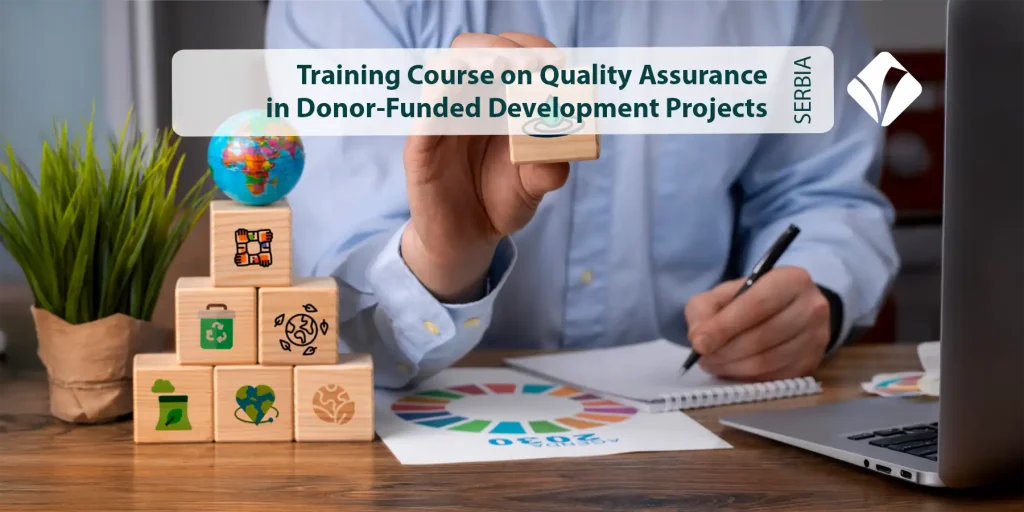
This intensive training programme equips professionals working on donor-funded development projects with the tools and knowledge to implement robust and effective Quality Assurance (QA) systems. Participants will gain a comprehensive understanding of how to integrate QA frameworks into the project lifecycle to enhance transparency, accountability, and results. With a strong focus on international best practices and compliance standards, the programme explores how to align QA procedures with donor procurement guidelines, funding conditions, and national regulatory frameworks. Emphasis is placed on real-world application, drawing on case studies from infrastructure, healthcare, education, and public service delivery sectors. Through interactive learning, practical exercises, and peer exchange, participants will be empowered to strengthen quality outcomes and mitigate performance risks in development interventions.
Public cible
This Donor-Funded Project Quality Assurance Training is ideal for:
- QA/QC Officers in donor-funded projects
- Project Managers and Coordinators
- Procurement and Contract Management Specialists
- Engineers and Technical Supervisors
- M&E Officers
- Government Regulators and Compliance Auditors
- Development Partners and NGO Implementation Teams
Cochez ce que votre équipe doit être capable de faire.
- Opération
- Enregistrement
- Contrôle
- Données probantes
- Opinion
Objectifs du programme
À l'issue du programme, les participants seront en mesure de :
- Understand key QA principles in the context of development projects.
- Align QA systems with procurement frameworks of major donors (World Bank, ADB, UN, etc.).
- Design and implement project-specific QA plans and quality control measures.
- Identify and mitigate quality-related risks throughout the project lifecycle.
- Conduct QA audits and prepare quality performance reports.
- Promote a culture of continuous improvement within implementing agencies and contractors.
Contenu du programme
- Understanding the role of QA in achieving development outcomes
- Key QA terminologies and definitions in donor project contexts
- International QA standards: ISO, FIDIC, and donor-specific protocols
- Differentiating between QA and Quality Control (QC)
- Overview of Quality Management Systems (QMS)
- Mapping quality requirements across different donor agencies
- Institutional responsibilities for QA implementation
- Developing a project-specific Quality Assurance Plan (QAP)
- Quality objectives, criteria, and scope setting
- Identifying QA-related risks and mitigation strategies
- Aligning QA with procurement and contract management
- Embedding QA checkpoints in project timelines
- Stakeholder roles in quality risk assessment
- Integrating QA into project budgeting and resource planning
- QA oversight during project execution and service delivery
- Contractor/supplier quality assurance responsibilities
- On-site inspections and technical supervision techniques
- Non-conformance identification and resolution protocols
- Documenting QA actions and maintaining audit trails
- Tools for construction and service QA monitoring
- Health, safety, and environmental considerations in QA
- Developing KPIs and quality benchmarks aligned with donor expectations
- QA dashboards and performance scorecards
- Designing and conducting quality audits and peer reviews
- Reporting formats and compliance documentation
- Corrective and preventive action (CAPA) systems
- Integrating QA data into project M&E systems
- Communicating quality performance to stakeholders and funders
- Analysis of successful and failed QA case studies in development projects
- Simulation exercise: Drafting a QA plan with compliance checkpoints
- Group presentations and peer review
- Individual assignment: Evaluate a sample QA report
- Trainer-led critique and coaching session
- Q&A session with donor QA expert (optional guest speaker)
- Final feedback, recap, and certification ceremony
Contenu détaillé jour par jour
First Day: Fundamentals in Donor-Funded Projects
- Understanding the role of QA in achieving development outcomes
- Key QA terminologies and definitions in donor project contexts
- International QA standards: ISO, FIDIC, and donor-specific protocols
- Differentiating between QA and Quality Control (QC)
- Overview of Quality Management Systems (QMS)
- Mapping quality requirements across different donor agencies
- Institutional responsibilities for QA implementation
Second Day: Quality Planning and Risk-Based Approaches
- Developing a project-specific Quality Assurance Plan (QAP)
- Quality objectives, criteria, and scope setting
- Identifying QA-related risks and mitigation strategies
- Aligning QA with procurement and contract management
- Embedding QA checkpoints in project timelines
- Stakeholder roles in quality risk assessment
- Integrating QA into project budgeting and resource planning
Third Day: Implementation, Supervision & Field QA
- QA oversight during project execution and service delivery
- Contractor/supplier quality assurance responsibilities
- On-site inspections and technical supervision techniques
- Non-conformance identification and resolution protocols
- Documenting QA actions and maintaining audit trails
- Tools for construction and service QA monitoring
- Health, safety, and environmental considerations in QA
Fourth Day: Quality Monitoring, Evaluation, and Reporting
- Developing KPIs and quality benchmarks aligned with donor expectations
- QA dashboards and performance scorecards
- Designing and conducting quality audits and peer reviews
- Reporting formats and compliance documentation
- Corrective and preventive action (CAPA) systems
- Integrating QA data into project M&E systems
- Communicating quality performance to stakeholders and funders
Fifth Day: Case Studies and Practical Simulation
- Analysis of successful and failed QA case studies in development projects
- Simulation exercise: Drafting a QA plan with compliance checkpoints
- Group presentations and peer review
- Individual assignment: Evaluate a sample QA report
- Trainer-led critique and coaching session
- Q&A session with donor QA expert (optional guest speaker)
- Final feedback, recap, and certification ceremony
Méthodologie du programme
The Donor-Funded Project Quality Assurance Training will be delivered using a participatory and hands-on methodology designed to maximize practical learning and real-world application. It will combine expert-led presentations with case study analysis, interactive group discussions, role-playing scenarios, and problem-solving exercises tailored to donor-funded project contexts. Participants will work through QA frameworks, tools, and templates used by major donors, and will engage in peer-to-peer learning to exchange regional experiences. Daily reflection sessions and practical assignments will ensure that participants can internalize concepts and directly apply them to their ongoing or upcoming development projects.
Profil du pays d'accueil
Belgrade, Serbia, presents an ideal setting for hosting the Training on Quality Assurance in Donor-Funded Development Projects due to its strategic position as a regional hub in Southeast Europe. Serbia actively engages in numerous EU Instrument for Pre-Accession Assistance (IPA) programmes and collaborates with international donors such as the World Bank, UNDP, and EBRD, offering a practical context for examining quality assurance within donor-funded frameworks. Belgrade’s ongoing reforms in public procurement, infrastructure development, and governance further reinforce its relevance to the training themes. The city also boasts accessible transport links, modern training venues, and a dynamic professional community, making it a suitable and inspiring location for regional capacity building.
Livrables de la formation
Les participants bénéficient d'une prise en charge complète couvrant tout ce dont ils ont besoin avant, pendant et après le programme :
Avant le programme
- Pré-évaluation des participants pour une préparation efficace
- Aide et conseils gratuits pour le visa (les demandes de visa électronique sont entièrement traitées par notre équipe)
Pendant le programme
- Accueil à l'aéroport & assistance à l'arrivée
- Hébergement avec petit-déjeuner pendant toute la durée du programme
- Dîner de bienvenue pour faire connaissance avec les autres participants & l'équipe Risalat
- Kit de formation Risalat comprenant : sac, gourde, mug, t-shirt, casquette, protège-passeport, stylos, carnet, magnet, porte-clés
- Déjeuner fourni chaque jour de formation
- Manuel de cours complet & supports de formation
- Modèles, outils et fiches de travail axés sur les projets
- Mini tablette pour un accès pratique aux ressources numériques
- Études de cas numériques, dossiers de lecture & documents de référence
- Accès à des jeux de données d'exemple & à des exercices pratiques
- Visite de terrain (le cas échéant)
- Pauses-café offertes & accès complet aux installations du lieu de formation
- Accès à des ressources d'apprentissage en ligne
- Visite récréative de la ville
- Certificat de participation
- Distinction Risalat de participation au programme
Après le programme
- Accompagnement après la formation & conseils de suivi
- Rapport du programme
Tous les programmes à BelgradePlus de programmes Gouvernance, risques & conformité
Pourquoi Belgrade pour ce programme
Belgrade (Serbie) a été choisie pour ce programme car elle est facile d'accès pour les participants attendus et dispose de lieux adaptés à une formation pratique et interactive.
The Training on Quality Assurance in Donor-Funded Development Projects programme in February 2027 brings together officials and professionals. Sessions combine short inputs, case studies and group work on participants' own files, and the city's institutions can be added as a study visit on request.
Vérifiez si vous avez besoin d'un visa avec le vérificateur de visa gratuit, et demandez une lettre d'invitation une fois inscrit.
3 360 £ par participant · facture et virement bancaire · réduction pour les groupes de 5 personnes ou plus
Cinq personnes ou plus d'une même organisation : demandez le tarif de groupe lors de votre demande de facture.
Ten or more: an in-house version for your institution may cost less per person. Ask for an in-house quote.
Registration closes in 51 days (23 Dec 2026)
Le même thème dans d'autres villes
- Formation aux fondamentaux de la construction & de l'entretien routiers (Hanoï)
- Gestion du changement dans les programmes de réforme financés par les bailleurs (Kuala Lumpur)
- Formation sur l'intégrité, l'éthique & la lutte contre la corruption dans les marchés publics (Vienne)
- Formation avancée en méthodologie de recherche, analyse de données & reporting fondé sur des données probantes (Francfort)
- Budgétisation avancée & maîtrise des coûts pour les organisations publiques et de développement (Bangkok)
- Formation stratégique en audit interne, risques & gouvernance (Bakou)
Autres programmes à Belgrade
Plus de formations en Serbie · Tous les programmes en Europe · Calendrier complet des formations