Ключевые выводы
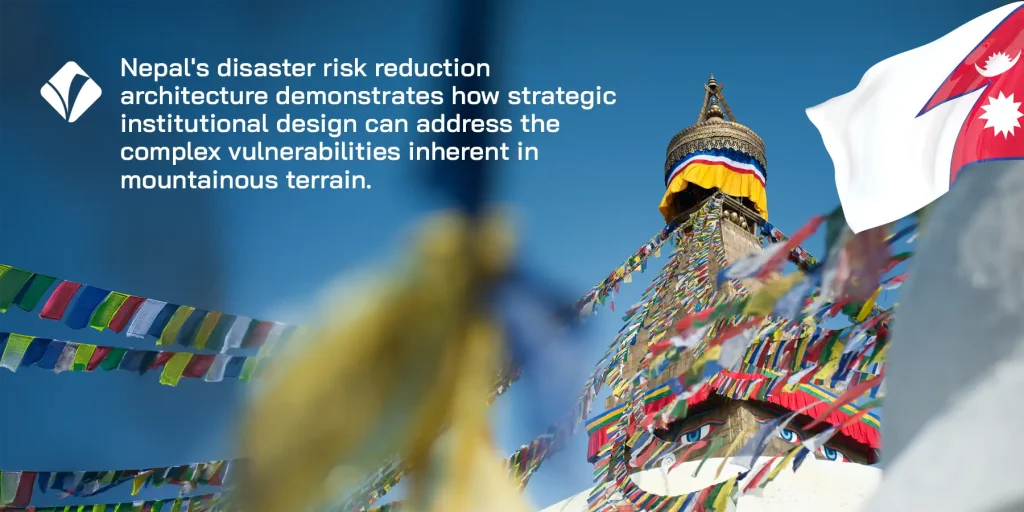
- Nepal’s Disaster Risk Reduction Model: What Makes It Effective in 2025. Nepal’s disaster risk reduction architecture demonstrates how strategic institutional design can address the complex vulnerabilities inherent in mountainous terrain.
- Disaster Risk Reduction in Nepal: Shift from Response to Preparedness. The strategic architecture of Nepal’s disaster risk reduction effectiveness rests upon a fundamental operational transformation: the deliberate pivot from post-catastrophe response…
- Местное самоуправление в снижении риска бедствий: децентрализованный подход Непала…. Архитектурная основа успеха Непала в снижении риска бедствий опирается на продуманное распределение административных полномочий между различными уровнями государственного управления.
- Data-Driven Disaster Risk Reduction: Nepal’s Risk Mapping Approach. The analytical foundation of Nepal’s disaster risk reduction model rests upon rigorous evidence-based planning methodologies.
- Institutional architecture and coordination frameworks. The institutional foundation of Nepal’s disaster risk reduction framework experienced comprehensive restructuring following the nation’s federal transition in 2017.
In short: Nepal’s disaster risk reduction model shows how smart institutional design tackles complex mountain vulnerabilities.
Непал находится на стыке необычайной природной красоты и серьезных геологических проблем, где схождение тектонических сил создает ландшафт одновременно великолепный и опасный. Страна сталкивается с более чем 500 бедствиями ежегодно, включая наводнения, оползни, суровые метеорологические явления и прорывы ледниковых озер. Ускоренное отступление ледников в Гималаях усилило частоту лавин и связанных с ними катастрофических событий, создав условия, которые требуют беспрецедентных стратегических мер по снижению риска бедствий от этой горной республики.
The human cost of these natural forces has been substantial. Statistical records document the loss of 12,315 lives between 2015 and 2021, with female casualties comprising 53% of fatalities and male casualties accounting for 47%. Yet these sobering figures underscore not defeat, but rather the foundation upon which Nepal has constructed one of the most sophisticated disaster risk reduction frameworks observed in contemporary governance. The enactment of the Disaster Risk Reduction and Management Act 2074 established the National Disaster Risk Reduction and Management Authority (NDRRMA), which now serves as the central coordinating mechanism for disaster-related functions across the entire nation.
Nepal’s distinguishing achievement lies in its deliberate evolution from reactive emergency response to anticipatory risk governance. The constitutional transition to federalism facilitated the establishment of disaster risk management institutions across multiple governmental tiers, while concurrent legislative and policy reforms created the operational framework for this institutional architecture. This methodical restructuring enabled the unprecedented training of over 19,900 government officials in disaster risk reduction and management principles across all 753 local municipalities, creating a distributed network of expertise that fundamentally strengthens community resilience.
The United Nations Country Team has forged a strategic research alliance with a consortium of academic institutions over the preceding decade, generating empirical evidence that now informs disaster risk governance decisions. This evidence-driven methodology, coupled with localized implementation protocols, has established Nepal as an exemplary model for effective disaster risk reduction among mountainous, hazard-prone nations worldwide.
Nepal’s Disaster Risk Reduction Model: What Makes It Effective in 2025
Nepal’s disaster risk reduction architecture demonstrates how strategic institutional design can address the complex vulnerabilities inherent in mountainous terrain. The nation’s framework has earned international recognition through its systematic approach to hazard management, which directly confronts the geographical and socio-economic realities that define Himalayan communities.
Эффективность этой модели обусловлена интеграцией локальных систем знаний с современными принципами управления рисками, что позволяет создавать решения, отвечающие потребностям местных сообществ и одновременно соответствующие международным стандартам готовности к стихийным бедствиям. Этот синтез позволил добиться измеримого повышения устойчивости в различных экологических зонах, от равнин Тераи до высокогорных поселений.
Снижение риска бедствий в Непале: переход от реагирования к готовности
The strategic architecture of Nepal’s disaster risk reduction effectiveness rests upon a fundamental operational transformation: the deliberate pivot from post-catastrophe response protocols to anticipatory preparedness systems. This methodical restructuring, formalized through the comprehensive legal framework established in 2017, prioritizes prevention and mitigation strategies over traditional recovery-focused interventions.
Историческая практика управления стихийными бедствиями в Непале действовала в рамках реактивной парадигмы, при которой институциональный ответ активировался только после катастрофических событий. Современная рамка работает на совершенно иных принципах: систематическое прогнозирование опасностей, развитие устойчивой инфраструктуры и механизмы раннего предупреждения, которые предоставляют общинам критические периоды для эвакуации и окна защиты активов.
Financial governance reflects this strategic reorientation. Budgetary allocations for disaster risk reduction now occur systematically across all governmental tiers – federal, provincial, and municipal – representing a departure from ad hoc emergency funding models. Disaster insurance schemes have been instituted to accelerate recovery processes while mitigating long-term economic consequences for affected populations, creating a financial safety net that supports both individual households and broader community resilience.
Local Governance in Disaster Risk Reduction: Nepal’s Decentralized Approach
The architectural foundation of Nepal’s disaster risk reduction success rests upon the deliberate distribution of administrative authority across multiple governmental strata. The constitutional framework of 2015 established a tripartite governance structure that allocates disaster management responsibilities according to institutional capacity and operational proximity to affected populations:
- Federal level: Maintains responsibility for policy architecture, resource distribution mechanisms, and coordination of large-scale emergency responses
- Provincial level: Administers regional preparedness protocols and response coordination systems
- Local level: Executes ground-level prevention strategies and immediate response interventions
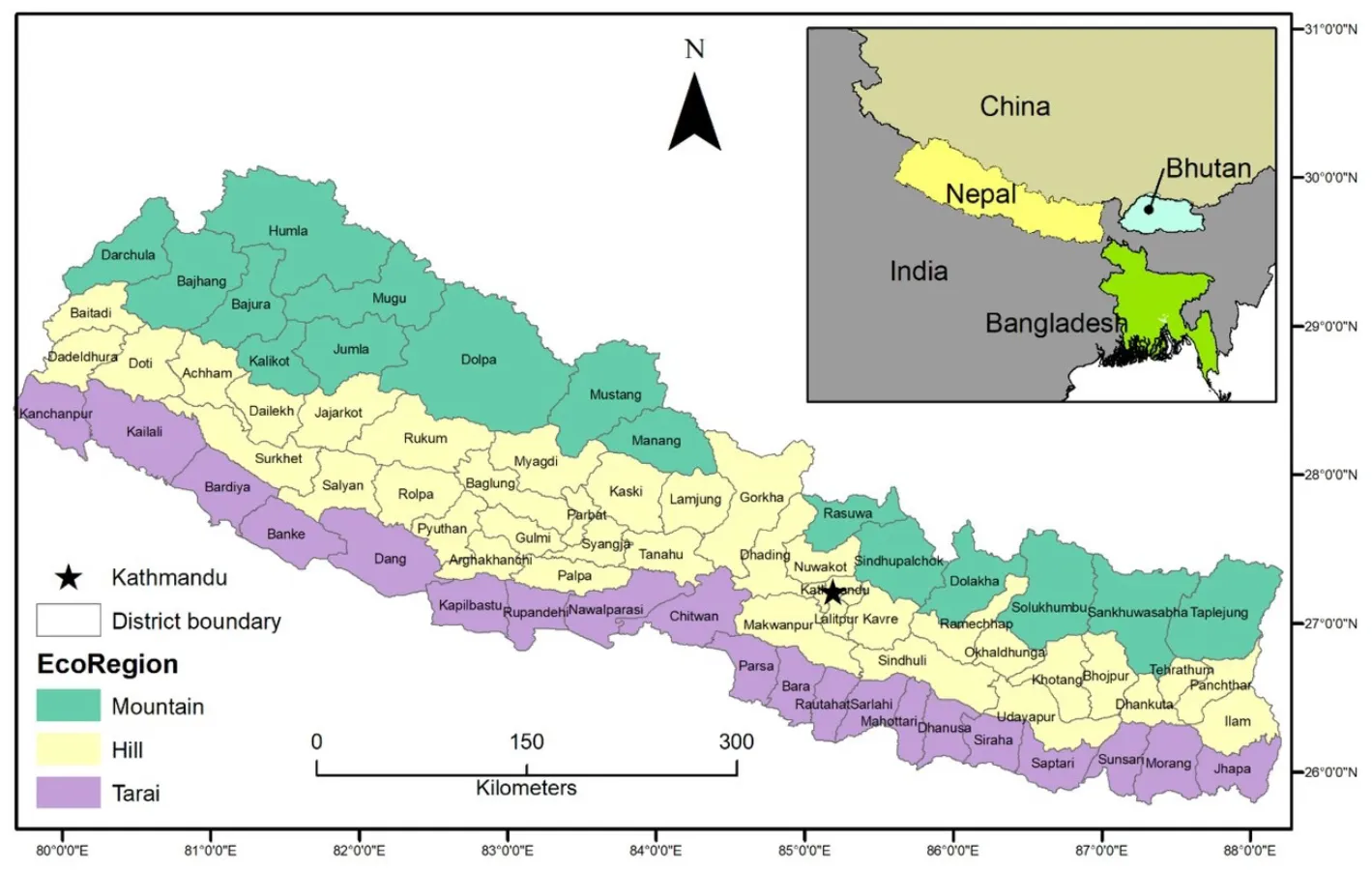
This administrative devolution has cultivated genuine local stewardship of disaster risk reduction programs. Municipal authorities now formulate disaster management frameworks specifically calibrated to their geographical vulnerabilities, whether addressing riverine flooding across the Terai plains, slope instability throughout the hill regions, or avalanche risks within high-altitude zones.
Local ownership has been further institutionalized through the establishment of disaster management committees that incorporate representation from traditionally marginalized populations, ensuring that planning processes reflect diverse community perspectives and implementation strategies remain inclusive. This participatory governance model has demonstrably enhanced community engagement and voluntary participation across both preparedness and response phases of disaster management cycles.
Data-Driven Disaster Risk Reduction: Nepal’s Risk Mapping Approach
Аналитическая основа модели снижения риска бедствий в Непале опирается на строгие методологии планирования, основанные на фактических данных. Стратегическое партнерство с академическими институтами и международными организациями позволило разработать сложные технологии картирования рисков, способные выявлять подверженные опасности районы с исключительной точностью и детализацией.
Multi-hazard risk assessments serve as the primary decision-making instruments for zoning regulations, building codes, and infrastructure development initiatives nationwide. These comprehensive assessments synthesize traditional community knowledge with contemporary scientific data, establishing a holistic understanding of risk variables that spans both empirical observation and indigenous expertise.
Национальное управление по снижению риска бедствий и управлению ими управляет централизованной системой базы данных, которая систематически отслеживает исторические закономерности стихийных бедствий, прогнозы изменения климата и показатели уязвимости на всех административных уровнях. Это всеобъемлющее хранилище информации позволяет властям принимать решения о распределении ресурсов с повышенной эффективностью, уделяя первоочередное внимание мерам вмешательства в наиболее уязвимых сообществах.
Digital innovation constitutes an integral component of this analytical framework, with mobile applications delivering real-time disaster information to both citizens and emergency responders. These technological solutions demonstrate particular effectiveness within remote geographical areas where conventional communication infrastructure remains limited or unreliable.
The integration of these three strategic pillars: preparedness-oriented governance, decentralized institutional authority, and evidence-driven planning methodologies – has established a disaster risk reduction model that systematically addresses Nepal’s distinctive challenges while providing a replicable framework for other disaster-prone nations in 2025.
Institutional architecture and coordination frameworks
The institutional foundation of Nepal’s disaster risk reduction framework experienced comprehensive restructuring following the nation’s federal transition in 2017. This reorganization established a stratified governance architecture where distinct governmental tiers operate with complementary mandates and coordinated responsibilities.
Federal governance structure across three tiers
Nepal’s constitutional framework devolved authority and resources to subnational governments while mandating disaster risk reduction integration across federal, provincial, and local governmental tiers. This federal architecture creates a systematic operational framework:
- Federal level: The Prime Minister chairs the National DRR Council, while the Home Minister leads the Executive Committee. Federal authorities provide strategic direction, formulate national policies, and manage resource distribution.
- Провинциальный уровень: каждая из семи провинций Непала управляет Провинциальным советом по снижению риска бедствий и управлению ими под руководством главного министра и Исполнительным комитетом под руководством министра внутренних дел и права.
- Local level: The 753 municipalities and rural municipalities received authorization through the Local Government Operation Act (2017) to formulate local DRR strategies, develop earthquake-resistant infrastructure, establish Emergency Operation Centers, and enforce construction safety standards.
This decentralized framework originated from the Disaster Risk Reduction and Management Act 2074 (2017), which codified institutional structures and operational responsibilities across all governance levels, acknowledging disaster management as fundamentally a community-driven process.
NDRRMA authority and local government responsibilities
Национальное управление по снижению риска бедствий и управлению ими (NDRRMA), созданное в 2019 году при Министерстве внутренних дел, функционирует в качестве операционного секретариат как для Национального совета по снижению риска бедствий, так и для Исполнительного комитета. Институциональный мандат NDRRMA включает в себя:
- Руководство инициативами по оценке национальных рисков и установление операционных стандартов
- Facilitating coordination across all governmental tiers
- Managing international DRR cooperation alignment with national priorities
- Operating the national disaster information database system
Local governments operate under Section 11(2) of the Local Government Operation Act, which assigns specific duties including local DRR plan development, hazard area mapping, municipal police mobilization for emergency response, and inter-governmental coordination.
The effectiveness of this institutional framework manifests in the successful capacity development of more than 19,900 government officials across all 753 local municipalities. This training initiative has catalyzed local governments to establish legal frameworks, expand disaster risk management budgets, and constitute disaster management committees.
Проблемы координации и адаптивные решения для снижения риска бедствий
While the institutional framework represents substantial advancement, coordination difficulties persist across the system. Specific challenges include:
Дефицит координации возникает как по вертикали между федеральными, провинциальными и местными органами власти, так и по горизонтали между ведомствами, действующими на эквивалентных уровнях. Федеральный переход, несмотря на его преимущества, создал временные трудности с координацией по мере того, как местные органы власти развивают потенциал планирования СМР (снижения риска бедствий).
Several structural constraints intensify these coordination challenges:
- Ambiguous role delineation between governmental tiers
- Ограниченные полномочия NDRRMA вопреки институциональному мандату, включая зависимость от Министерства внутренних дел в принятии решений кабинета министров и ограничения в принятии финансовых решений
- Local governments experiencing technical knowledge gaps, resource constraints, and incomplete operational authority
Nepal has developed innovative mechanisms to address coordination obstacles. The Provincial Focal Point Agencies framework designates UN organizations as governmental liaisons to facilitate information exchange and coordinate development partner engagement. This coordination mechanism demonstrated effectiveness during the COVID-19 pandemic response and the 2023 Jajarkot earthquake emergency operations.
Future institutional development requires NDRRMA restructuring, local government empowerment, and resource mobilization streamlining to strengthen coordination across Nepal’s disaster risk governance architecture.
Community-centered resilience tools and practices
The foundation of Nepal’s disaster risk reduction excellence rests not merely in institutional frameworks, but in the remarkable capacity of communities to architect their own resilience strategies. These grassroots innovations have demonstrated exceptional effectiveness across Nepal’s diverse geographical tapestry, where local knowledge intersects with scientific methodology to create sustainable protective mechanisms.
Местные планы адаптационных мероприятий (МПАМ)
Nepal established global precedence through the Local Adaptation Plans of Action (LAPA) framework in 2011, positioning itself as the foremost exemplar of localized climate adaptation governance. This pioneering initiative aligned precisely with Nepal’s Climate Change Policy directive mandating that 80% of all climate adaptation finance be channeled to local-level implementation. The framework experienced systematic revitalization in 2019, reflecting both Nepal’s federal transformation and the updated Climate Change Policy architecture.
Методология LAPA реализуется посредством тщательно структурированного процесса из семи фаз:
- Climate change sensitization
- Climate vulnerability and adaptation assessment
- Prioritization of adaptation options
- LAPA formulation
- Integration into planning processes
- Реализация
- Progress assessment
Эти стратегические инструменты определяют уязвимые к изменению климата группы населения и задачи по адаптации, определяя приоритетные вмешательства посредством процессов совместного принятия решений на уровне общин до их интеграции в более широкое планирование местного развития. Реалии финансирования создают значительные ограничения. Непал ожидает внутренний потенциал финансирования в размере всего 1,5 млрд долларов США по сравнению с 47,4 млрд долларов США, необходимых для стратегий адаптации на период до 2050 года.
Снижение риска бедствий с учетом интересов детей и гендерных аспектов
UNICEF’s Child-Centered Disaster Risk Reduction Program acknowledges the distinct vulnerabilities children experience during catastrophic events. This initiative enhances children’s hazard recognition capabilities, imparts prevention methodologies, and positions them as community knowledge multipliers. Simultaneously, a collaborative consortium encompassing World Vision International Nepal, Save the Children, and Plan International has delivered specialized training to educators and school management committees across 22 designated institutions in Doti and Kailali districts.
Gender inclusion strategies have materialized through the establishment of 42 Women’s Empowerment Centers (WECs), each incorporating 30 women participants and designed to spearhead disaster risk reduction initiatives within their respective communities. These centers address socio-economic vulnerabilities among women who historically encounter barriers when articulating needs to humanitarian organizations during crisis periods.
Use of participatory mapping and local data
Participatory digital mapping represents an innovative synthesis of community engagement with advanced internet-based analytical techniques. Within Nepal’s flood-susceptible Karnali River basin, researchers from IIASA established collaborative partnerships with Practical Action to facilitate community participation in mapping risk profiles, resource inventories, and capacity assessments. This methodology generates digital cartographic products that demonstrate superior accuracy, enhanced content depth, and simplified updating procedures compared to traditional vulnerability assessment approaches.
The Open Cities Kathmandu project exemplifies this approach through training over 1,500 residents who successfully mapped more than 130,000 buildings utilizing the open-source OpenStreetMap platform. This citizen-generated dataset proved invaluable during the 2015 seismic events, when over 6,000 volunteers contributed to mapping 80% of affected territories, thereby facilitating efficient emergency response coordination among military and humanitarian organizations.
Disaster Risk Reduction Capacity Building in Nepal
Human capital development constitutes the cornerstone of Nepal’s enduring disaster risk reduction strategy. Strategic training initiatives and innovative learning platforms have accelerated the expansion of disaster management capabilities across all governance levels, creating a sophisticated network of expertise that extends from federal institutions to remote municipalities.
Обучение более 19 900 должностных лиц в 753 муниципалитетах
Правительство Непала достигло замечательного результата, обучив более 19 900 должностных лиц во всех 753 муниципалитетах местного уровня и вооружив этих государственных служащих необходимыми компетенциями в области управления стихийными бедствиями. Эта общенациональная инициатива по наращиванию потенциала, осуществленная при поддержке USAID/Непал, была специально направлена на вновь избранные местные органы власти, которым требовалась срочная ориентация в вопросах управления рисками бедствий. Эта training program привели к измеримым результатам, включая разработку нормативно-правовой базы, увеличение бюджетных ассигнований на управление стихийными бедствиями и создание местных комитетов по управлению стихийными бедствиями.
The initiative’s most significant achievement lies in facilitating a fundamental mindset transformation from reactive response protocols to proactive preparedness strategies. The multi-stakeholder implementation approach engaged key institutions including MoFAGA, MoHA, NDRRMA, and various sectoral ministries, working in coordination to deliver comprehensive training modules.
E-learning platforms and simulation exercises
Внедрение цифровых технологий расширило охват тренингов Непала по управлению рисками бедствий за пределы традиционных ограничений классных комнат. Платформа электронного обучения NDRRMA в настоящее время проводит специализированные курсы, охватывающие темы снижения риска бедствий, дополненные специализированным инструментом электронного обучения, разработанным ЭСКАТОМ для инклюзивного снижения риска бедствий для людей с инвалидностью, доступным на английском и непальском языках.
Практические имитационные упражнения служат для проверки и укрепления механизмов реагирования посредством реалистичного обучения на основе сценариев. Ярким примером стала симуляция Центра операций по чрезвычайным ситуациям в здравоохранении, в которой приняли участие 575 участников из 18 организаций, а 13 инструкторов прошли подготовку для проведения будущих учений на провинциальном уровне. Эти упражнения подчеркивают реалистичные сценарии, включая симуляцию землетрясения магнитудой 7,8, проведенную в 2022 году.
Need for a national DRR research and training institute
UNDP has advocated for establishing a National Training Institute to sustain these capacity-building efforts. Rather than direct community-level implementation, this institutional approach would build capacities within NGOs and CSOs for implementing community-based disaster risk management.
The role of donors and international partners
Strategic international collaborations constitute the external architecture that amplifies Nepal’s domestic disaster risk reduction capabilities, creating synergies between national priorities and global expertise in hazard management.
UNDP, EU, ADB and their technical and financial support
Программа развития Организации Объединенных Наций поддерживает Комплексную программу управления рисками бедствий с 2011 года, методично укрепляя институциональные рамки посредством целевых инициатив по наращиванию потенциала в ключевых министерствах и структурах местного самоуправления. Приверженность Азиатского банка развития траектории развития Непала охватывает 519 кредитов государственного сектора, грантов и соглашений о технической помощи на общую сумму по состоянию на декабрь 2024 года. Действующий портфель АБР в настоящее время насчитывает 33 кредита и 10 грантов на сумму более 4 миллиардов долларов США. Европейский союз, действующий через механизм операций по гражданской защите и гуманитарной помощи, поддерживает программы снижения риска бедствий на протяжении почти двух десятилетий.
Эти финансовые инструменты выходят за рамки простого распределения ресурсов, создавая институциональную память и технический потенциал, которые сохраняются долгое время после завершения отдельных циклов проектов.
Cluster contingency planning and anti
cipatory action
Nepal’s anticipatory action framework exemplifies sophisticated inter-agency coordination, wherein four specialized UN agencies – FAO, UNFPA, UNICEF, and WFP – orchestrate the distribution of multi-purpose digital cash payments targeting vulnerable flood-prone households. The Central Emergency Response Fund maintains standby capacity of up to 6 million USD for severe flooding scenarios. The Provincial Focal Point Agencies concept establishes designated UN organizations as formal liaisons with provincial governments, creating systematic channels for coordinating partner support around specific provincial requirements.
This anticipatory approach shifts international assistance from post-disaster relief toward pre-positioned preparedness resources.
Lessons from COVID-19 and Jajarkot earthquake response
The operational effectiveness of these coordination mechanisms demonstrated exceptional value during the COVID-19 pandemic, when movement restrictions required rapid assessment of over 1,000 quarantine facilities. During the 2023 Jajarkot earthquake, the Health Contingency Plan activated immediately, with WFP functioning as the Provincial Focal Point Agency to ensure efficient sectoral information relay.
Partner with Risalat Consultants to build national DRR capacity. Explore our Disaster Risk Governance & Peacebuilding Training for tailored programs.
Free roadmap: Disaster Insurance on the Lookout of Modern Disaster Risk Management: a 12-month plan for your team
Know people who should read this? Become an Ambassador or write with Risalat.
Партнеры в успехе проектов с 2011 года: диагностика, консультационная поддержка и прикладное обучение для министерств, государственных ведомств и проектных команд.
Нужна помощь, чтобы применить это на практике?
Начните с бесплатной 10-минутной диагностики или обратитесь к нашим экспертам.