Points essentiels
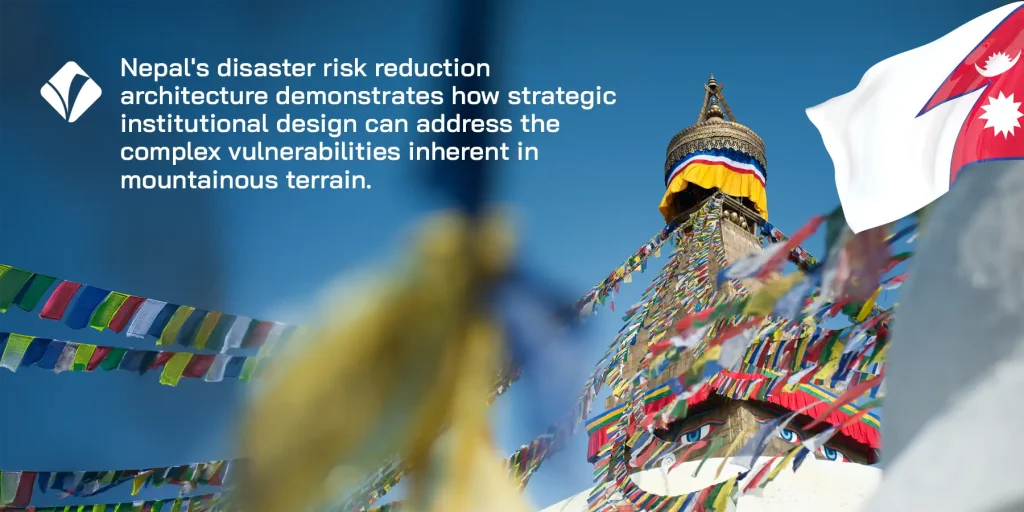
- Nepal’s Disaster Risk Reduction Model: What Makes It Effective in 2025. Nepal’s disaster risk reduction architecture demonstrates how strategic institutional design can address the complex vulnerabilities inherent in mountainous terrain.
- Disaster Risk Reduction in Nepal: Shift from Response to Preparedness. The strategic architecture of Nepal’s disaster risk reduction effectiveness rests upon a fundamental operational transformation: the deliberate pivot from post-catastrophe response…
- Local Governance in Disaster Risk Reduction: Nepal’s Decentralized…. The architectural foundation of Nepal’s disaster risk reduction success rests upon the deliberate distribution of administrative authority across multiple governmental strata.
- Data-Driven Disaster Risk Reduction: Nepal’s Risk Mapping Approach. The analytical foundation of Nepal’s disaster risk reduction model rests upon rigorous evidence-based planning methodologies.
- Institutional architecture and coordination frameworks. The institutional foundation of Nepal’s disaster risk reduction framework experienced comprehensive restructuring following the nation’s federal transition in 2017.
In short: Nepal’s disaster risk reduction model shows how smart institutional design tackles complex mountain vulnerabilities.
Nepal stands at the intersection of extraordinary natural beauty and formidable geological challenges, where the convergence of tectonic forces creates a landscape both magnificent and perilous. The nation confronts more than 500 disaster events annually, encompassing floods, landslides, severe meteorological phenomena, and glacial lake outburst floods. Accelerated glacial retreat across the Himalayan range has intensified the frequency of avalanches and related catastrophic events, establishing conditions that demand unprecedented strategic disaster risk reduction responses from this mountainous republic.
The human cost of these natural forces has been substantial. Statistical records document the loss of 12,315 lives between 2015 and 2021, with female casualties comprising 53% of fatalities and male casualties accounting for 47%. Yet these sobering figures underscore not defeat, but rather the foundation upon which Nepal has constructed one of the most sophisticated disaster risk reduction frameworks observed in contemporary governance. The enactment of the Disaster Risk Reduction and Management Act 2074 established the National Disaster Risk Reduction and Management Authority (NDRRMA), which now serves as the central coordinating mechanism for disaster-related functions across the entire nation.
Nepal’s distinguishing achievement lies in its deliberate evolution from reactive emergency response to anticipatory risk governance. The constitutional transition to federalism facilitated the establishment of disaster risk management institutions across multiple governmental tiers, while concurrent legislative and policy reforms created the operational framework for this institutional architecture. This methodical restructuring enabled the unprecedented training of over 19,900 government officials in disaster risk reduction and management principles across all 753 local municipalities, creating a distributed network of expertise that fundamentally strengthens community resilience.
The United Nations Country Team has forged a strategic research alliance with a consortium of academic institutions over the preceding decade, generating empirical evidence that now informs disaster risk governance decisions. This evidence-driven methodology, coupled with localized implementation protocols, has established Nepal as an exemplary model for effective disaster risk reduction among mountainous, hazard-prone nations worldwide.
Nepal’s Disaster Risk Reduction Model: What Makes It Effective in 2025
Nepal’s disaster risk reduction architecture demonstrates how strategic institutional design can address the complex vulnerabilities inherent in mountainous terrain. The nation’s framework has earned international recognition through its systematic approach to hazard management, which directly confronts the geographical and socio-economic realities that define Himalayan communities.
The effectiveness of this model stems from its integration of local knowledge systems with contemporary risk management principles, creating solutions that resonate with community needs while meeting international standards for disaster preparedness. This synthesis has produced measurable improvements in resilience across diverse ecological zones, from the Terai plains to high-altitude settlements.
Disaster Risk Reduction in Nepal: Shift from Response to Preparedness
The strategic architecture of Nepal’s disaster risk reduction effectiveness rests upon a fundamental operational transformation: the deliberate pivot from post-catastrophe response protocols to anticipatory preparedness systems. This methodical restructuring, formalized through the comprehensive legal framework established in 2017, prioritizes prevention and mitigation strategies over traditional recovery-focused interventions.
Les pratiques historiques de gestion des catastrophes au Népal s'inscrivaient dans un paradigme réactif, où les réponses institutionnelles ne s'activaient qu'à la suite d'événements catastrophiques. Le cadre contemporain repose sur des principes entièrement différents : prévision systématique des risques, développement d'infrastructures résilientes et mécanismes d'alerte précoce offrant aux communautés des périodes d'évacuation cruciales et des fenêtres de protection des biens.
Financial governance reflects this strategic reorientation. Budgetary allocations for disaster risk reduction now occur systematically across all governmental tiers – federal, provincial, and municipal – representing a departure from ad hoc emergency funding models. Disaster insurance schemes have been instituted to accelerate recovery processes while mitigating long-term economic consequences for affected populations, creating a financial safety net that supports both individual households and broader community resilience.
Local Governance in Disaster Risk Reduction: Nepal’s Decentralized Approach
The architectural foundation of Nepal’s disaster risk reduction success rests upon the deliberate distribution of administrative authority across multiple governmental strata. The constitutional framework of 2015 established a tripartite governance structure that allocates disaster management responsibilities according to institutional capacity and operational proximity to affected populations:
- Federal level: Maintains responsibility for policy architecture, resource distribution mechanisms, and coordination of large-scale emergency responses
- Provincial level: Administers regional preparedness protocols and response coordination systems
- Local level: Executes ground-level prevention strategies and immediate response interventions
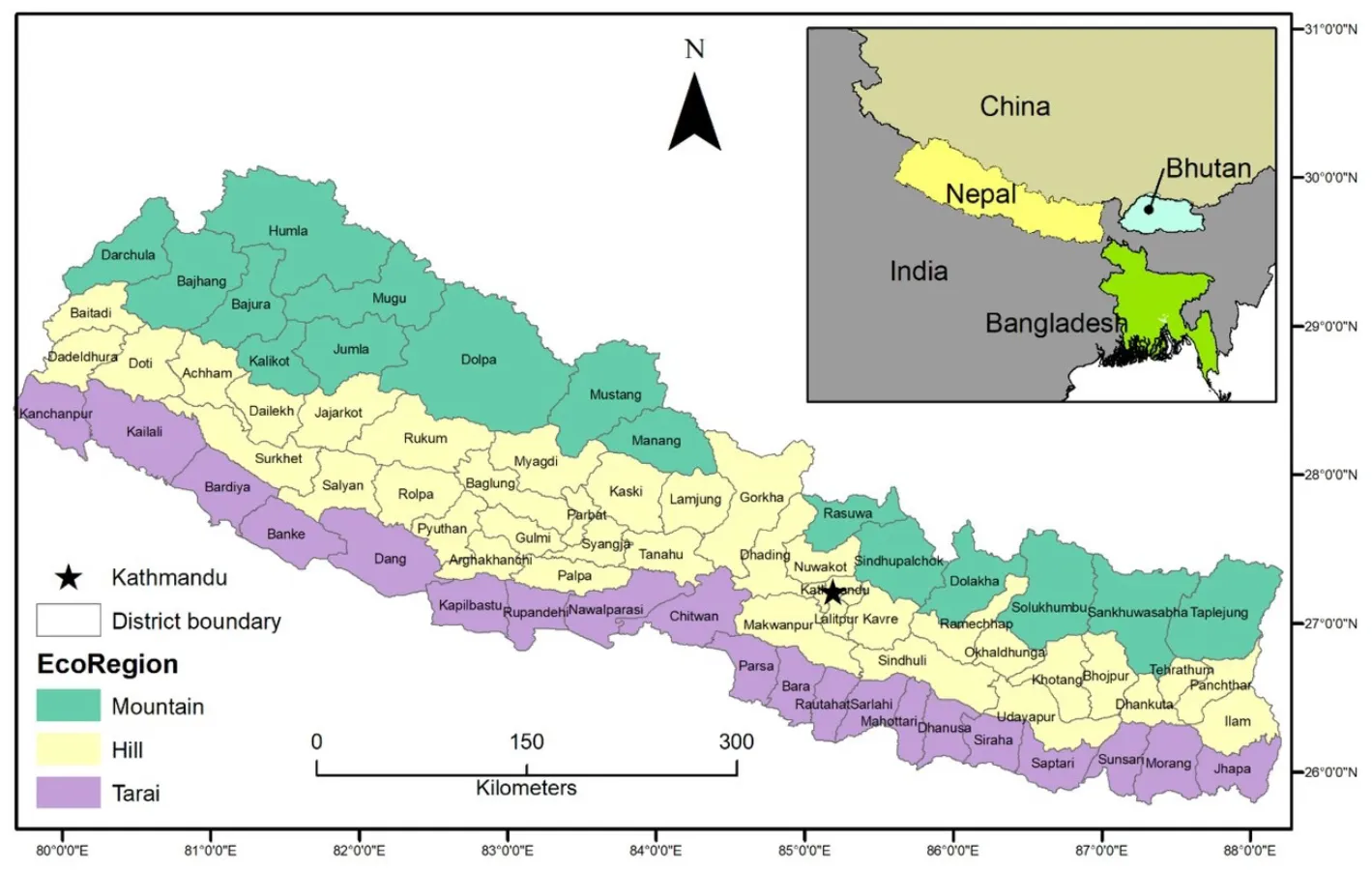
This administrative devolution has cultivated genuine local stewardship of disaster risk reduction programs. Municipal authorities now formulate disaster management frameworks specifically calibrated to their geographical vulnerabilities, whether addressing riverine flooding across the Terai plains, slope instability throughout the hill regions, or avalanche risks within high-altitude zones.
Local ownership has been further institutionalized through the establishment of disaster management committees that incorporate representation from traditionally marginalized populations, ensuring that planning processes reflect diverse community perspectives and implementation strategies remain inclusive. This participatory governance model has demonstrably enhanced community engagement and voluntary participation across both preparedness and response phases of disaster management cycles.
Data-Driven Disaster Risk Reduction: Nepal’s Risk Mapping Approach
The analytical foundation of Nepal’s disaster risk reduction model rests upon rigorous evidence-based planning methodologies. Strategic partnerships with academic institutions and international organizations have enabled the development of sophisticated risk mapping technologies capable of identifying hazard-prone areas with exceptional precision and granularity.
Multi-hazard risk assessments serve as the primary decision-making instruments for zoning regulations, building codes, and infrastructure development initiatives nationwide. These comprehensive assessments synthesize traditional community knowledge with contemporary scientific data, establishing a holistic understanding of risk variables that spans both empirical observation and indigenous expertise.
The National Disaster Risk Reduction and Management Authority operates a centralized database system that systematically tracks historical disaster patterns, climate change projections, and vulnerability indicators across all administrative levels. This comprehensive information repository enables authorities to execute resource allocation decisions with enhanced effectiveness while prioritizing interventions within the most vulnerable communities.
Digital innovation constitutes an integral component of this analytical framework, with mobile applications delivering real-time disaster information to both citizens and emergency responders. These technological solutions demonstrate particular effectiveness within remote geographical areas where conventional communication infrastructure remains limited or unreliable.
The integration of these three strategic pillars: preparedness-oriented governance, decentralized institutional authority, and evidence-driven planning methodologies – has established a disaster risk reduction model that systematically addresses Nepal’s distinctive challenges while providing a replicable framework for other disaster-prone nations in 2025.
Institutional architecture and coordination frameworks
The institutional foundation of Nepal’s disaster risk reduction framework experienced comprehensive restructuring following the nation’s federal transition in 2017. This reorganization established a stratified governance architecture where distinct governmental tiers operate with complementary mandates and coordinated responsibilities.
Federal governance structure across three tiers
Nepal’s constitutional framework devolved authority and resources to subnational governments while mandating disaster risk reduction integration across federal, provincial, and local governmental tiers. This federal architecture creates a systematic operational framework:
- Federal level: The Prime Minister chairs the National DRR Council, while the Home Minister leads the Executive Committee. Federal authorities provide strategic direction, formulate national policies, and manage resource distribution.
- Niveau provincial : Chacune des sept provinces du Nepal gère un Conseil provincial de réduction et de gestion des risques de catastrophe sous la direction du ministre en chef et un comité exécutif dirigé par le ministre de l'Intérieur et du Droit.
- Local level: The 753 municipalities and rural municipalities received authorization through the Local Government Operation Act (2017) to formulate local DRR strategies, develop earthquake-resistant infrastructure, establish Emergency Operation Centers, and enforce construction safety standards.
This decentralized framework originated from the Disaster Risk Reduction and Management Act 2074 (2017), which codified institutional structures and operational responsibilities across all governance levels, acknowledging disaster management as fundamentally a community-driven process.
NDRRMA authority and local government responsibilities
The National Disaster Risk Reduction and Management Authority (NDRRMA), established in 2019 within the Ministry of Home Affairs, functions as the operational secretariat for both the National DRR Council and Executive Committee. NDRRMA’s institutional mandate encompasses:
- Directing national risk assessment initiatives and establishing operational standards
- Facilitating coordination across all governmental tiers
- Managing international DRR cooperation alignment with national priorities
- Operating the national disaster information database system
Local governments operate under Section 11(2) of the Local Government Operation Act, which assigns specific duties including local DRR plan development, hazard area mapping, municipal police mobilization for emergency response, and inter-governmental coordination.
The effectiveness of this institutional framework manifests in the successful capacity development of more than 19,900 government officials across all 753 local municipalities. This training initiative has catalyzed local governments to establish legal frameworks, expand disaster risk management budgets, and constitute disaster management committees.
Coordination challenges and adaptive solutions for disaster risk reduction
While the institutional framework represents substantial advancement, coordination difficulties persist across the system. Specific challenges include:
Les déficits de coordination se produisent à la fois verticalement entre les autorités fédérales, provinciales et locales et horizontalement entre les agences opérant à des niveaux équivalents. La transition fédérale, malgré ses avantages, a généré des complications temporaires de coordination à mesure que les gouvernements locaux développent des capacités de planification de la RRC.
Several structural constraints intensify these coordination challenges:
- Ambiguous role delineation between governmental tiers
- NDRRMA’s constrained authority despite institutional mandate, including Ministry of Home Affairs dependency for cabinet decisions and financial decision-making limitations
- Local governments experiencing technical knowledge gaps, resource constraints, and incomplete operational authority
Nepal has developed innovative mechanisms to address coordination obstacles. The Provincial Focal Point Agencies framework designates UN organizations as governmental liaisons to facilitate information exchange and coordinate development partner engagement. This coordination mechanism demonstrated effectiveness during the COVID-19 pandemic response and the 2023 Jajarkot earthquake emergency operations.
Future institutional development requires NDRRMA restructuring, local government empowerment, and resource mobilization streamlining to strengthen coordination across Nepal’s disaster risk governance architecture.
Community-centered resilience tools and practices
The foundation of Nepal’s disaster risk reduction excellence rests not merely in institutional frameworks, but in the remarkable capacity of communities to architect their own resilience strategies. These grassroots innovations have demonstrated exceptional effectiveness across Nepal’s diverse geographical tapestry, where local knowledge intersects with scientific methodology to create sustainable protective mechanisms.
Plans locaux d'adaptation d'action (LAPA)
Nepal established global precedence through the Local Adaptation Plans of Action (LAPA) framework in 2011, positioning itself as the foremost exemplar of localized climate adaptation governance. This pioneering initiative aligned precisely with Nepal’s Climate Change Policy directive mandating that 80% of all climate adaptation finance be channeled to local-level implementation. The framework experienced systematic revitalization in 2019, reflecting both Nepal’s federal transformation and the updated Climate Change Policy architecture.
La méthodologie LAPA fonctionne selon un processus en sept phases méticuleusement structuré :
- Climate change sensitization
- Évaluation de la vulnérabilité climatique et de l'adaptation
- Prioritization of adaptation options
- Élaboration du plan d'adaptation à l'échelle locale (LAPA)
- Integration into planning processes
- Mise en œuvre
- Progress assessment
Ces instruments stratégiques identifient les populations vulnérables au changement climatique et les impératifs d'adaptation, en établissant des interventions prioritaires par le biais de processus décisionnels communautaires participatifs avant leur intégration dans une planification du développement local plus large. Les réalités financières présentent des contraintes considérables. Le Népal anticipe une capacité de financement national de seulement 1,5 milliard de dollars face aux 47,4 milliards de dollars requis pour les stratégies d'adaptation d'ici 2050.
RDR axée sur l'enfant et sensible au genre
UNICEF’s Child-Centered Disaster Risk Reduction Program acknowledges the distinct vulnerabilities children experience during catastrophic events. This initiative enhances children’s hazard recognition capabilities, imparts prevention methodologies, and positions them as community knowledge multipliers. Simultaneously, a collaborative consortium encompassing World Vision International Nepal, Save the Children, and Plan International has delivered specialized training to educators and school management committees across 22 designated institutions in Doti and Kailali districts.
Gender inclusion strategies have materialized through the establishment of 42 Women’s Empowerment Centers (WECs), each incorporating 30 women participants and designed to spearhead disaster risk reduction initiatives within their respective communities. These centers address socio-economic vulnerabilities among women who historically encounter barriers when articulating needs to humanitarian organizations during crisis periods.
Use of participatory mapping and local data
Participatory digital mapping represents an innovative synthesis of community engagement with advanced internet-based analytical techniques. Within Nepal’s flood-susceptible Karnali River basin, researchers from IIASA established collaborative partnerships with Practical Action to facilitate community participation in mapping risk profiles, resource inventories, and capacity assessments. This methodology generates digital cartographic products that demonstrate superior accuracy, enhanced content depth, and simplified updating procedures compared to traditional vulnerability assessment approaches.
The Open Cities Kathmandu project exemplifies this approach through training over 1,500 residents who successfully mapped more than 130,000 buildings utilizing the open-source OpenStreetMap platform. This citizen-generated dataset proved invaluable during the 2015 seismic events, when over 6,000 volunteers contributed to mapping 80% of affected territories, thereby facilitating efficient emergency response coordination among military and humanitarian organizations.
Disaster Risk Reduction Capacity Building in Nepal
Human capital development constitutes the cornerstone of Nepal’s enduring disaster risk reduction strategy. Strategic training initiatives and innovative learning platforms have accelerated the expansion of disaster management capabilities across all governance levels, creating a sophisticated network of expertise that extends from federal institutions to remote municipalities.
Formation de plus de 19 900 fonctionnaires dans 753 municipalités
Le gouvernement népalais a réalisé la remarquable prouesse de former plus de 19 900 fonctionnaires répartis dans l'ensemble des 753 municipalités locales, dotant ainsi ces agents publics de compétences essentielles en matière de gestion des catastrophes. Cette initiative nationale de renforcement des capacités, menée par l'USAID au Népal, a spécifiquement ciblé les autorités locales nouvellement élues qui avaient besoin d'une orientation immédiate sur la gouvernance des risques de catastrophe. Le training program a généré des résultats mesurables, notamment la formulation de cadres juridiques, l'augmentation des allocations budgétaires pour la gestion des catastrophes et la création de comités locaux de gestion des catastrophes.
The initiative’s most significant achievement lies in facilitating a fundamental mindset transformation from reactive response protocols to proactive preparedness strategies. The multi-stakeholder implementation approach engaged key institutions including MoFAGA, MoHA, NDRRMA, and various sectoral ministries, working in coordination to deliver comprehensive training modules.
E-learning platforms and simulation exercises
L'adoption de la technologie numérique a étendu la portée de la formation à la gestion des catastrophes au Népal au-delà des limites traditionnelles de la classe. La plateforme d'apprentissage en ligne du NDRRMA propose désormais des cours spécialisés couvrant les thèmes de la réduction des risques de catastrophe, complétés par un outil d'apprentissage en ligne sur mesure développé par la CESAP pour la réduction des risques de catastrophe inclusive pour les personnes handicapées, disponible en anglais et en népalais.
Practical simulation exercises serve to test and strengthen response mechanisms through realistic scenario-based training. A notable example involved the Health Emergency Operations Center’s simulation that engaged 575 participants from 18 organizations, with 13 facilitators trained to conduct future exercises at the provincial level. These exercises emphasize realistic scenarios, including the 7.8 magnitude earthquake simulation conducted in 2022.
Need for a national DRR research and training institute
UNDP has advocated for establishing a National Training Institute to sustain these capacity-building efforts. Rather than direct community-level implementation, this institutional approach would build capacities within NGOs and CSOs for implementing community-based disaster risk management.
The role of donors and international partners
Strategic international collaborations constitute the external architecture that amplifies Nepal’s domestic disaster risk reduction capabilities, creating synergies between national priorities and global expertise in hazard management.
UNDP, EU, ADB and their technical and financial support
The United Nations Development Programme has sustained the Comprehensive Disaster Risk Management Program since 2011, methodically strengthening institutional frameworks through targeted capacity development initiatives within key ministries and local government structures. The Asian Development Bank’s commitment to Nepal’s development trajectory encompasses 519 public sector loans, grants, and technical assistance agreements totaling as of December 2024. ADB’s active portfolio currently maintains 33 loans and 10 grants valued at over 4 billion USD. The European Union, operating through its Civil Protection and Humanitarian Aid Operations mechanism, has sustained disaster risk reduction programming for nearly two decades.
Ces instruments financiers vont au-delà de la simple allocation de ressources ; ils créent une mémoire institutionnelle et des capacités techniques qui persistent bien après la fin des cycles de projets individuels.
Cluster contingency planning and anti
cipatory action
Nepal’s anticipatory action framework exemplifies sophisticated inter-agency coordination, wherein four specialized UN agencies – FAO, UNFPA, UNICEF, and WFP – orchestrate the distribution of multi-purpose digital cash payments targeting vulnerable flood-prone households. The Central Emergency Response Fund maintains standby capacity of up to 6 million USD for severe flooding scenarios. The Provincial Focal Point Agencies concept establishes designated UN organizations as formal liaisons with provincial governments, creating systematic channels for coordinating partner support around specific provincial requirements.
This anticipatory approach shifts international assistance from post-disaster relief toward pre-positioned preparedness resources.
Lessons from COVID-19 and Jajarkot earthquake response
The operational effectiveness of these coordination mechanisms demonstrated exceptional value during the COVID-19 pandemic, when movement restrictions required rapid assessment of over 1,000 quarantine facilities. During the 2023 Jajarkot earthquake, the Health Contingency Plan activated immediately, with WFP functioning as the Provincial Focal Point Agency to ensure efficient sectoral information relay.
Partner with Risalat Consultants to build national DRR capacity. Explore our Disaster Risk Governance & Peacebuilding Training for tailored programs.
Free roadmap: Disaster Insurance on the Lookout of Modern Disaster Risk Management: a 12-month plan for your team
Regarder
Know people who should read this? Become an Ambassador or write with Risalat.
Partenaires de la réussite des projets depuis 2011 : diagnostics, conseil et apprentissage appliqué pour les ministères, les organismes publics et les équipes de projet.
Besoin d'aide pour passer à la pratique ?
Commencez par un diagnostic gratuit de 10 minutes ou échangez avec nos experts.