حقائق رئيسية
- المواعيد
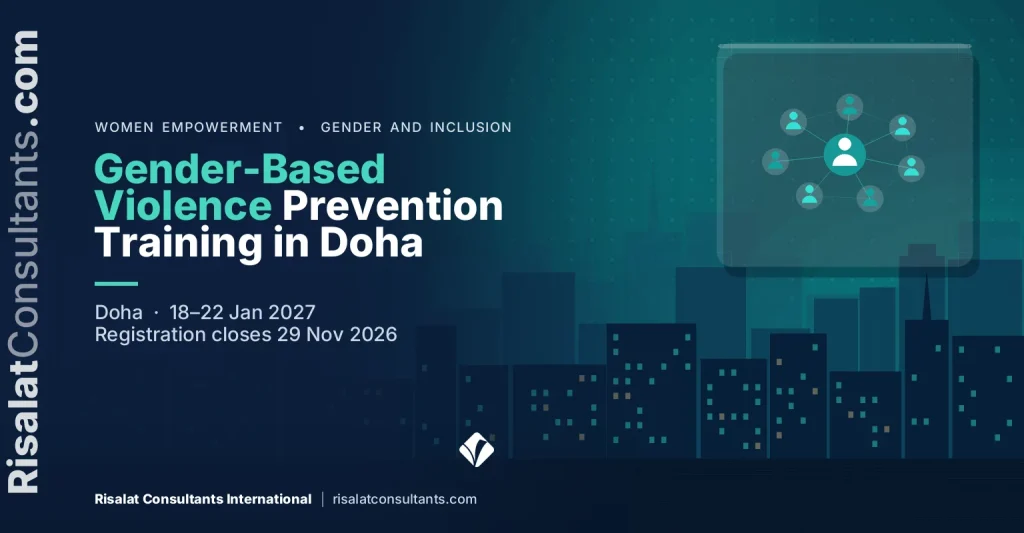
- 18–22 يناير 2027 (5 أيام)
- المكان
- Saphire Plaza Hotel، الدوحة، قطر
- الرسوم لكل مشارك
- £2,860 (جنيه إسترليني)
- الدفع
- بالفاتورة والتحويل المصرفي
- إغلاق التسجيل
- 29 نوفمبر 2026
- الصيغة
- 5-day short course: a practical capacity-building programme for government, NGO and project teams in Doha
- الشهادة
- شهادة إتمام
- الخيار المؤسسي
- نفّذه لفريقك، في المواعيد التي تناسبك
في هذه الصفحة 15 قسماً
نظرة عامة على البرنامج
Gender-Based Violence Prevention Training in Doha gives government agencies, donor-financed project units, public service providers and private-sector teams a practical way to strengthen GBV risk assessment, prevention, safeguarding and survivor-centred referral. The five-day learning journey concentrates on tasks that professionals can demonstrate at work, rather than a collection of unrelated management topics.
The World Health Organization’s 2026 global overview reports that nearly one in three women aged 15 or older have experienced physical or sexual intimate-partner violence, non-partner sexual violence, or both during their lifetime. This is a population estimate, not a prevalence estimate for Qatar.
UNFPA’s inter-agency GBV minimum standards set expectations for prevention and multisectoral support in emergencies. Their core principle is that safety, dignity, informed consent and confidentiality guide decisions rather than administrative convenience.
New UNFPA guidance published in October 2026 addresses safer data practices and integration of sexual and reproductive health and GBV referrals. Public agencies and implementing partners need clear responsibilities even when specialist clinical and protection services are delivered by other institutions.
In a mixed professional group, participants compare the procedures they use, the documents that demonstrate compliance and the decisions for which they are accountable. Every technical case is assessed for practicality, evidence quality and risks that could arise during implementation. The programme is a skills course, not a promise of institutional accreditation or an externally arranged visit.
The Programme Strengthens Institutional Capability
- تحليل النوع الاجتماعي وتوزيع السلطة
- GBV forms and associated risks
- Human rights and non-discrimination
- مبادئ الاستجابة التي تركز على الناجين
- إجراءات الإفصاح الآمنة والطوعية
- Informed consent and confidentiality
- Community-based prevention approaches
- Service mapping and referral pathway design
- Accessible information on support services
- الوقاية من الاستغلال والانتهاء الجنسي ومدونات السلوك الخاصة بالحماية
- Risk mitigation in procurement and works
- Sensitive incident escalation without investigation by untrained staff
- Safe storage and minimisation of case information
- Coordination with specialist health and protection providers
- Training and supervision of focal points
- Ethical monitoring and programme adaptation
The output of the week is an institution-specific working package, combining documented decisions, review checklists, a short executive brief and a realistic adoption plan. Participants are encouraged to bring non-sensitive examples from their own work while all teaching datasets and scenarios can be completed with fictional material.
The Growing Importance of Gender-Based Violence Prevention
ترتبط الكفاءة التقنية في الوقاية من العنف القائم على النوع الاجتماعي والاستجابة الآمنة بشكل متزايد بالمساءلة المؤسسية. تحتاج الفرق إلى معرفة ليس فقط كيف تعمل الأداة أو الإجراء ولكن متى تكون مناسبة، ومن يفوضها، وما هي الأدلة التي يتم الاحتفاظ بها وكيف يتم التصعيد للمشكلات. الممارسة الموثوقة تحسن جودة القرارات مع تقليل إعادة العمل التي يمكن تجنبها.
The World Health Organization’s 2026 global overview reports that nearly one in three women aged 15 or older have experienced physical or sexual intimate-partner violence, non-partner sexual violence, or both during their lifetime. This is a population estimate, not a prevalence estimate for Qatar.
تحتاج المؤسسات بشكل متزايد إلى مهنيين قادرين على:
- Planning gender and power analysis for a defined operational purpose
- Planning gbv forms and associated risks for a defined operational purpose
- Planning human rights and non-discrimination for a defined operational purpose
- Planning survivor-centred response principles for a defined operational purpose
- Planning safe and voluntary disclosure procedures for a defined operational purpose
- الموافقة المستنيرة للتخطيط والسرية لغرض تشغيلي محدد
- Planning community-based prevention approaches for a defined operational purpose
- تخطيط رسم خرائط الخدمات وتصميم مسارات الإحالة لغرض تشغيلي محدد
- Planning accessible information on support services for a defined operational purpose
- Planning psea and safeguarding codes of conduct for a defined operational purpose
- Planning risk mitigation in procurement and works for a defined operational purpose
- التخطيط لتصعيد الحوادث الحساسة دون إجراء تحقيق من قبل موظفين غير مدربين لغرض تشغيلي محدد
Strong gender-based violence prevention and safe response systems help organisations:
- اجعل حقوق الإنسان وعدم التمييز روتينا موثقا بدلا من افتراض غير رسمي
- Make survivor-centred response principles a documented routine instead of an informal assumption
- Make safe and voluntary disclosure procedures a documented routine instead of an informal assumption
- جعل الموافقة المستنيرة والسرية روتيناً موثقاً بدلاً من افتراض غير رسمي
- Make community-based prevention approaches a documented routine instead of an informal assumption
- Make service mapping and referral pathway design a documented routine instead of an informal assumption
- Make accessible information on support services a documented routine instead of an informal assumption
- Make psea and safeguarding codes of conduct a documented routine instead of an informal assumption
- Make risk mitigation in procurement and works a documented routine instead of an informal assumption
An effective institutional approach links senior management ownership with staff capability, written procedures and proportionate monitoring. This programme uses Doha as a professional learning venue while inviting participants to compare methods across agencies and countries.
1. What is a survivor-centred first response to a GBV disclosure?
UNFPA standards prioritise safety, respect, confidentiality and informed consent.
2. What does an increase in reported GBV cases necessarily mean?
UNFPA October 2026 guidance warns that service data do not establish population prevalence.
3. How should an agency share identifiable GBV case information?
UNFPA guidance describes data minimisation and controls through the service data lifecycle.
Who Should Attend This Gender-Based Violence Prevention Training?
صُمم هذا البرنامج من أجل:
- نقاط الاتصال المعنية بالنوع الاجتماعي
- Public health and social development officials
- Government safeguarding teams
- Development project managers
- UN agency programme officers
- مديرو المنظمات غير الحكومية الوطنية
- Protection coordinators
- Community engagement officers
- Human resources safeguarding staff
- Women’s rights advocates
- Health service referral coordinators
- M&E specialists working with sensitive information
- نقاط اتصال الاستغلال والانتهاك الجنسيين (PSEA)
- مسؤولو الأداء الاجتماعي للمقاولين
The course is most useful to people who have a real operational responsibility or are preparing to supervise one. Mixed groups enable a technical specialist to test recommendations with finance, compliance, programme and management colleagues before applying them to an institution.
حدّد ما يحتاج فريقك إلى القدرة على إنجازه.
Gender-Based Violence Prevention Training Objectives
Upon successful completion of this Gender-Based Violence Prevention Training, participants will be able to:
- Explain gender and power analysis and its practical boundaries
- Diagnose gaps in gbv forms and associated risks using appropriate evidence
- تطبيق حقوق الإنسان وعدم التمييز على حالة عمل واقعية
- Choose suitable approaches for survivor-centred response principles
- Prepare defensible records for safe and voluntary disclosure procedures
- Evaluate operational risks associated with informed consent and confidentiality
- فحوصات التصميم لنهج الوقاية المجتمعية
- Coordinate staff responsible for service mapping and referral pathway design
- Interpret data and feedback relating to accessible information on support services
- Communicate decisions about psea and safeguarding codes of conduct to leadership
- وضع خطة مؤسسية على مراحل للتخفيف من المخاطر في عمليات الشراء والأشغال
Each objective is practised through an assessment, demonstration, structured case or group decision. The emphasis is on repeatable methods that can be embedded in existing workflows and adapted to the participant’s legal, organisational and financing constraints.
محتوى البرنامج وهيكله
- تعريف العنف القائم على النوع الاجتماعي وتمييز أشكاله الرئيسية
- Examine gender roles and structural discrimination
- Analyse risk factors without blaming affected people
- Apply human rights and non-discrimination principles
- Understand how crisis and displacement intensify risks
- Distinguish community prevention from specialist response
- مراجعة المشاركة الآمنة للرجال والفتيان في الوقاية
- Identify risks across workplaces services and communities
- Use participatory analysis without soliciting personal disclosures
- Map physical and procedural barriers to safe access
- Integrate GBV mitigation into project design choices
- Design safer consultation and complaint information
- اختر أنشطة الوقاية المجتمعية والشركاء المحليين
- Prepare ethical communications and awareness materials
- Apply safety respect confidentiality and informed consent
- Recognise signs of distress without forcing disclosure
- Distinguish case referral from informal investigation
- Map healthcare psychosocial legal and safety services
- Confirm current contacts and service availability safely
- Practise first-line compassionate communication in simulations
- Define procedures for child safeguarding situations
- Review partner due diligence and safeguarding provisions
- Draft clear codes of conduct and reporting routes
- Establish confidential feedback and complaint options
- Manage service records using data minimisation principles
- حماية الموظفين وأفراد المجتمع ضد الانتقام
- Adapt field activities to disability and language access
- Monitor programme reach without collecting unnecessary identities
- اختبار خطة الوقاية مقابل سيناريوهات الأزمات الواقعية
- إجراء تمرير قرار تخطيطي حول الإفصاحات الآمنة
- مراجعة التنسيق بين وحدات الصحة والحماية للنوع الاجتماعي
- Specify incident escalation and specialist handover limits
- تخطيط تعلم الموظفين والإشراف الداعم
- Define ethically acceptable monitoring and feedback indicators
- Develop budget needs for prevention and referral functions
المحتوى الكامل يوماً بيوم
The five-day sequence moves from understanding the problem and evidence base through operational design and assurance to an actionable institutional plan. The themes are:
- Day one: foundations rights and patterns of gender-based violence
- Day two: risk analysis and prevention programme design
- Day three: survivor-centred support and confidential referrals
- Day four: safe delivery monitoring and accountable partnerships
- Day five: institutional response leadership and learning plan
المحتوى الكامل يوماً بيوم
اليوم الأول | الأسس والحقوق وأنماط العنف القائم على النوع الاجتماعي
- تعريف العنف القائم على النوع الاجتماعي وتمييز أشكاله الرئيسية
- Examine gender roles and structural discrimination
- Analyse risk factors without blaming affected people
- Apply human rights and non-discrimination principles
- Understand how crisis and displacement intensify risks
- Distinguish community prevention from specialist response
- مراجعة المشاركة الآمنة للرجال والفتيان في الوقاية
- Introduce safeguarding and prevention of sexual exploitation
- Map institutional responsibilities and referral limits
Workshop: Baseline assessment
Develop a GBV risk map for a fictional service and document why an ordinary consultation may be unsafe. The group records evidence used, unresolved assumptions, responsible officers and decisions requiring verification. Participants then compare approaches with colleagues, revise their work and identify a practical step for their own institution.
اليوم الثاني | تحليل المخاطر وتصميم برامج الوقاية
- Identify risks across workplaces services and communities
- Use participatory analysis without soliciting personal disclosures
- Map physical and procedural barriers to safe access
- Integrate GBV mitigation into project design choices
- Design safer consultation and complaint information
- اختر أنشطة الوقاية المجتمعية والشركاء المحليين
- Prepare ethical communications and awareness materials
- Set realistic responsibilities and available resources
- Draft a contextual prevention and referral plan
Workshop: Design choices
Design prevention actions for a public works programme with clear referral and safeguarding responsibilities. The group records evidence used, unresolved assumptions, responsible officers and decisions requiring verification. Participants then compare approaches with colleagues, revise their work and identify a practical step for their own institution.
Third Day | Survivor-centred support and confidential referrals
- Apply safety respect confidentiality and informed consent
- Recognise signs of distress without forcing disclosure
- Distinguish case referral from informal investigation
- Map healthcare psychosocial legal and safety services
- Confirm current contacts and service availability safely
- Practise first-line compassionate communication in simulations
- Define procedures for child safeguarding situations
- Develop protected access and minimum-data recording rules
- إعداد مصفوفة إحالة مع قيود الخدمة
Case Study: Risk and decisions
Practise a confidential, non-investigative first response and referral decision using fictional scenarios. The group records evidence used, unresolved assumptions, responsible officers and decisions requiring verification. Participants then compare approaches with colleagues, revise their work and identify a practical step for their own institution.
Fourth Day | Safe delivery monitoring and accountable partnerships
- Review partner due diligence and safeguarding provisions
- Draft clear codes of conduct and reporting routes
- Establish confidential feedback and complaint options
- Manage service records using data minimisation principles
- حماية الموظفين وأفراد المجتمع ضد الانتقام
- Adapt field activities to disability and language access
- Monitor programme reach without collecting unnecessary identities
- Use aggregate indicators without treating reports as prevalence
- Prepare corrective actions for weak referral coverage
Workshop: Operations and assurance
Audit a sample GBV data process for consent, unnecessary identifiers, unsafe sharing and escalation gaps. The group records evidence used, unresolved assumptions, responsible officers and decisions requiring verification. Participants then compare approaches with colleagues, revise their work and identify a practical step for their own institution.
Fifth Day | Institutional response leadership and learning plan
- اختبار خطة الوقاية مقابل سيناريوهات الأزمات الواقعية
- إجراء تمرير قرار تخطيطي حول الإفصاحات الآمنة
- مراجعة التنسيق بين وحدات الصحة والحماية للنوع الاجتماعي
- Specify incident escalation and specialist handover limits
- تخطيط تعلم الموظفين والإشراف الداعم
- Define ethically acceptable monitoring and feedback indicators
- Develop budget needs for prevention and referral functions
- Prepare a 90-day safeguarding improvement roadmap
- Communicate organisational commitments without making false guarantees
Capstone Exercise: Institutional action plan
Present a survivor-centred institutional prevention plan, with ownership and checks for implementation. The group records evidence used, unresolved assumptions, responsible officers and decisions requiring verification. Participants then compare approaches with colleagues, revise their work and identify a practical step for their own institution.
Gender-Based Violence Prevention Training Methodology
Facilitators introduce concepts through short explanations and then ask participants to work through realistic decisions related to GBV risk assessment, prevention, safeguarding and survivor-centred referral. The format uses controlled datasets, fictional records and carefully selected public references; participants are never required to share confidential customer information, protected case files or unpublished institutional records.
يجمع البرنامج بين:
- Instructor-led explanations of terminology and current guidance
- ورش عمل تطبيقية يومية باستخدام تمارين خاصة بالموضوع
- Structured comparison of official policies and standards
- تحليل في مجموعات صغيرة لخيارات التشغيل المتنافسة
- Individual review of an institutional readiness baseline
- Short presentations of decisions and their evidence
- Peer scrutiny of assumptions and implementation risks
- Simulation of procedures and escalation decisions
- تطوير القوالب والتحقق منها مقابل المتطلبات
- Daily reflective notes on changes to working practice
- ملاحظات الميسر على المستندات التي أعدها المشاركون
- Final presentation of a feasible institutional action plan
Before arrival, a short pre-assessment identifies job roles, expected outputs and practical barriers. The trainer uses it to adjust examples while retaining the published technical content. Exercises favour local adaptation over copying another country’s arrangements.
The final peer review tests feasibility, ownership, evidence needs and a realistic timetable for introducing the proposed changes.
النتائج المتوقعة
Upon completion of this Gender-Based Violence Prevention Training, participants will be able to:
- إنتاج مراجعة قابلة للاستخدام أو وثيقة عمل لتحليل الجندر والقدرة
- إنتاج مراجعة قابلة للاستخدام أو وثيقة عمل لنماذج العنف القائم على النوع الاجتماعي والمخاطر المرتبطة بها
- إعداد مراجعة قابلة للاستخدام أو وثيقة عمل لحقوق الإنسان وعدم التمييز
- Produce a usable review or working document for survivor-centred response principles
- Produce a usable review or working document for safe and voluntary disclosure procedures
- Produce a usable review or working document for informed consent and confidentiality
- Produce a usable review or working document for community-based prevention approaches
- Produce a usable review or working document for service mapping and referral pathway design
- إنتاج مراجعة قابلة للاستخدام أو وثيقة عمل لمعلومات يمكن الوصول إليها حول خدمات الدعم
Participants should be able to explain why a selected method is appropriate, what information is still missing and who must authorise its implementation. Their final products are designed for managerial discussion and further adaptation, not as substitutes for professional certification, legal advice or regulatory approval.
£2,860 لكل مشارك · فاتورة وتحويل مصرفي · خصم للمجموعات المكوّنة من 5 مشاركين أو أكثر
خمسة مشاركين أو أكثر من مؤسسة واحدة: اطلبوا سعر المجموعة عند طلب الفاتورة.
عشرة أشخاص أو أكثر: قد تكلف النسخة الداخلية لمؤسستك أقل لكل شخص. اطلب عرض أسعار داخلياً.
Registration closes in 6 days (29 Nov 2026)
Institutional Application of Gender-Based Violence Prevention Training
يدعم هذا البرنامج المؤسسات في تعزيز:
- Governance and staff ownership of gender and power analysis
- Governance and staff ownership of gbv forms and associated risks
- Governance and staff ownership of human rights and non-discrimination
- Governance and staff ownership of survivor-centred response principles
- Governance and staff ownership of safe and voluntary disclosure procedures
- Governance and staff ownership of informed consent and confidentiality
- Governance and staff ownership of community-based prevention approaches
- الحوكمة وملكية الموظفين لتخطيط الخدمات وتصميم مسارات الإحالة
- Governance and staff ownership of accessible information on support services
- Governance and staff ownership of psea and safeguarding codes of conduct
- Governance and staff ownership of risk mitigation in procurement and works
- الحوكمة وملكية الموظفين لتصعيد الحوادث الحساسة دون إجراء تحقيقات من قبل موظفين غير مدربين
يعود المشاركون بأدوات عملية لتحسين:
- A practical checklist or decision record for survivor-centred response principles
- A practical checklist or decision record for safe and voluntary disclosure procedures
- A practical checklist or decision record for informed consent and confidentiality
- قائمة تحقق عملية أو سجل قرار لمناهج الوقاية المجتمعية
- A practical checklist or decision record for service mapping and referral pathway design
- A practical checklist or decision record for accessible information on support services
- قائمة تحقق عملية أو سجل قرار لمدونات السلوك الخاصة بالحماية من الاستغلال والاعتداء الجنسيين وحماية الأطفال
- قائمة تحقق عملية أو سجل قرار لتخفيف المخاطر في المشتريات والأشغال
- A practical checklist or decision record for sensitive incident escalation without investigation by untrained staff
Institutional adaptation begins with a named management sponsor and a narrow process where improvement can be observed. Participants identify baseline records, reporting responsibilities, resources and review dates, then recommend whether to pilot, revise or defer each intervention. A capacity assessment may help the organisation identify readiness gaps.
الأهمية الإقليمية والتطبيق
الشرق الأوسط
Governments and humanitarian actors can adapt the same protection principles to services and programmes while applying their own laws and verified local referral pathways.
أفريقيا
GBV prevention and safe referral are essential considerations for health, education, humanitarian and infrastructure programmes, particularly where access to specialist support is uneven.
آسيا والمحيط الهادئ
Community programmes and donor-financed works can integrate safeguarding into contractors, public consultations and service access without turning general staff into clinical case managers.
The cases are intended as comparative learning, not universal legal advice. Each team must verify the applicable national rules, sector requirements and institutional capacity before adopting a template. For pre-course prioritisation, participants may use Risalat’s Training Needs Assessment.
لمحة عن البلد المضيف – قطر
الدوحة هي عاصمة قطر ومركز دولي للاجتماعات للمهنيين الإنسانيين والحكوميين والتنمويين.
The curriculum is benchmarked against WHO and UNFPA global standards, not against an unverified local institution or a promised specialist facility visit. Facilitators must adapt examples to each participant’s actual legal and service context.
يجب على المندوبين تأكيد متطلبات التأشيرة الوطنية والسفر قبل التسجيل. يتطلب أي ارتباط تقني حضوري موافقة وترتيبات مؤكدة، لا سيما وأنه يجب عدم استخدام خدمات الناجين الحية عروضاً تدريبية.
Gender-Based Violence Prevention Training Deliverables
تهيكل ريسالات هذا البرنامج بناءً على الإعداد والمشاركة العملية والمتابعة. تم تصميم القوالب الخاصة بالموضوعات لتتناسب مع السياق المؤسسي للمشارك. تظل ترتيبات السفر والإقامة والمشاركة خاضعة لشروط الحجز المؤكدة الصادرة عن ريسالات.
قبل البرنامج
- التقييم المسبق للمشاركين
- Gender-Based Violence Prevention Readiness Assessment
- Gender-Based Violence Prevention Resource Pack
- مواد قراءة تحضيرية
- دعم واستشارات مجانية بشأن التأشيرة
أثناء البرنامج
- الاستقبال من المطار والمساعدة عند الوصول
- Accommodation with breakfast: 6 nights, check-in Sunday 17 January 2027, check-out Saturday 23 January 2027 (one night before and one night after the programme)
- عشاء ترحيبي للتعارف
- حقيبة Risalat التدريبية (حقيبة، وقارورة، وكوب، وقميص، وقبعة، وغلاف جواز سفر، وأقلام، ودفتر، ومغناطيس وميدالية مفاتيح)
- Comprehensive Gender-Based Violence Prevention Training Manual
- Practical diagnostic checklist for gender and power analysis
- ورقة عمل رسم العمليات وتحليل خط الأساس
- Risk and controls assessment matrix
- Performance indicator and evidence register
- Case study decision log and peer review form
- Institutional 30, 60 and 90-day action plan template
- ورش عمل عملية ومحاكاة
- مناقشات جماعية وتعلم من الأقران
- غداء ومرطبات يومية
- الاستفادة الكاملة من مرافق مكان التدريب
- جهاز Mini Pad / جهاز لوحي مزود بمواد تعليمية رقمية
- زيارة ميدانية (حسب الاقتضاء)
- جولة ترفيهية في المدينة
بعد البرنامج
- شهادة الإتمام
- جائزة Risalat تقديراً للمشاركة في البرنامج
- مواد مرجعية بعد التدريب
- Completed Gender-Based Violence Prevention case and decision toolkit
- Institutional implementation roadmap
- Selected monitoring and quality review templates
- الدعم بعد التدريب وإرشادات المتابعة
- تقرير البرنامج
Organisations seeking dedicated group delivery, tailored case exercises or additional implementation support can request a tailored in-house proposal.
Common Challenges in Gender-Based Violence Prevention, And How This Training Helps
كيف يمكن للمنظمة تحديد الأولويات عندما تتطلب عدة مشكلات الاهتمام؟
Day one uses gender and power analysis to identify what is known, what is assumed and which operational outcome matters most. The exercise assigns a review owner and produces a practical record of what should change.
How can an organisation find reliable evidence for a difficult decision?
Days one and two develop a documented baseline for human rights and non-discrimination and test whether information is complete and fit for purpose. The exercise assigns a review owner and produces a practical record of what should change.
How can an organisation translate general standards into procedures staff can use?
Day two turns survivor-centred response principles into a practical checklist, record and decision sequence. The exercise assigns a review owner and produces a practical record of what should change.
كيف يمكن للمؤسسة إدارة المخاطر والأخطاء دون إخفائها؟
Days three and four create clear review gates for informed consent and confidentiality and assign accountability for correcting failures. The exercise assigns a review owner and produces a practical record of what should change.
How can an organisation coordinate different units without losing ownership?
تمارين اليوم الرابع تعين الأدوار، وعمليات التسليم والتصعيد حول تعيين الخدمة وتصميم مسار الإحالة. يُعين التمرين مالك مراجعة وينتج سجل عملي لما يجب أن يتغير.
How can an organisation measure improvement when resources and time are limited?
Day five chooses a small set of indicators linked to accessible information on support services and a realistic review cycle. The exercise assigns a review owner and produces a practical record of what should change.
How can an organisation make training useful after participants return to work?
يحول مشروع التخرج النهائي عملية تخفيف المخاطر في المشتريات والأشغال إلى تسلسل زمني مدته 90 يوماً مع تحديد المسؤولين، وقرارات الإدارة، والمخرجات القابلة للملاحظة. يحدد التدريب مسؤولاً للمراجعة وينتج سجلاً عملياً لما ينبغي تغييره.
الأسئلة الشائعة
Who should attend Gender-Based Violence Prevention Training in Doha?
The course is intended for responsible professionals such as gender focal points, public health and social development officials, government safeguarding teams, and cross-functional colleagues whose decisions affect GBV risk assessment, prevention, safeguarding and survivor-centred referral.
Is this a practical course or mainly lectures?
It combines technical explanations with five applied cases, review templates, group decisions and a final action plan linked to gender-based violence prevention and safe response.
What should participants prepare before attending?
Complete the pre-assessment, identify one relevant process or institutional challenge, and bring only public or appropriately anonymised records. Confidential files are not required.
هل يمكن استخدام هذه الطرق في المشاريع الحكومية والمמוولة من الجهات المانحة؟
Yes, the cases can be adapted to public agencies, implementation units and regulated organisations, provided users check applicable national law, donor requirements and organisational controls.
Is a particular institution or technical visit confirmed?
No external institution or visit is represented as confirmed. Any field or technical exposure component depends on prior host acceptance and appropriate safeguarding arrangements.
Who Will Deliver This Programme
Each date is delivered by a team assigned from Risalat's expert network for this subject. For this programme we assign:
How we choose them: Experience in the region of the participants or comparable settings; Command of the financier rules that apply (World Bank, ADB, AfDB, EU, UN) where relevant; Delivery in English; other languages on request for in-house groups; No conflict of interest with participants' institutions.
Training courses in DohaWomen Empowerment training courses
لماذا الدوحة لهذا البرنامج
توفر الدوحة رحلات قصيرة من الخليج وأفريقيا وجنوب آسيا، وأجواء هادئة للدراسة المركّزة.
The Gender-Based Violence Prevention Training in Doha programme in January 2027 brings together officials and professionals from across the Middle East region and beyond. Sessions combine short inputs, case studies and group work on participants' own files, and the city's institutions can be added as a study visit on request.
الوصول: مطار حمد الدولي (DOH).
تحقق مما إذا كنت بحاجة إلى تأشيرة عبر أداة التحقق من التأشيرة المجانية، واطلب خطاب دعوة بعد إتمام تسجيلك.
برامج أخرى في الدوحة
Free roadmap: Violence Against Children: a 12-month plan for your team
للفرق والمؤسسات
Bring your team
Teams that learn together apply more at work. Tell us how many people and how you would like to take part: we reply with a group quote within two working days.
Watch: this programme in short

Other dates and cities for this subject: Gender Mainstreaming and Women's Economic Empowerment training courses (24 upcoming dates).
المزيد من الدورات التدريبية في قطر · جميع البرامج في الشرق الأوسط · تقويم التدريب الكامل
تخطيط هذا البرنامج في خارطة طريق: لماذا هو مهم، ولماذا يجب الموافقة عليه، والتواريخ المراد التخطيط لها، والمسار المهني الذي يبنيه.