Ideas clave
- Understanding the issue and its evidence. Battery-electric vehicles have no exhaust emissions during operation, unlike petrol and diesel cars.
- Design choices and technical delivery. Charging demand differs between private cars, taxis, buses and delivery fleets.
- Financiación, contratación y gobernanza. Los autobuses y las flotas municipales pueden ofrecer una gran utilización diaria, rutas predecibles y un mantenimiento centralizado.
- Implementation, safeguards and measurement. Public subsidies that mainly support expensive private cars may deliver limited benefits for low-income residents.
- Application to public agencies and donor-funded projects. Measure electricity consumption per kilometre, vehicle availability, charger uptime, fleet costs, local pollution and ridership.
In short: A practical guide to electric vehicles and clean transport, with evidence, implementation choices, risks and lessons for ministries, public agencies.
In short: Electric vehicles can reduce local exhaust pollution and, depending on electricity supply and vehicle production, lower lifecycle greenhouse-gas emissions. Their public value depends on charging access, grid readiness, vehicle utilisation and integration with public transport.
The IEA Global EV Outlook 2026 reports that worldwide electric car sales exceeded 20 million in 2025, about one-quarter of new car sales. Growth does not eliminate the need for better urban transport planning.
Esta guía actualizada revisa el artículo original de Risalat y separa los conceptos consolidados de las afirmaciones que requieren nueva evidencia. Está dirigida a profesionales que deben decidir qué financiar, contratar, regular o medir. Los escenarios ilustrativos que siguen son ejemplos didácticos, no informes de proyectos ya concluidos.
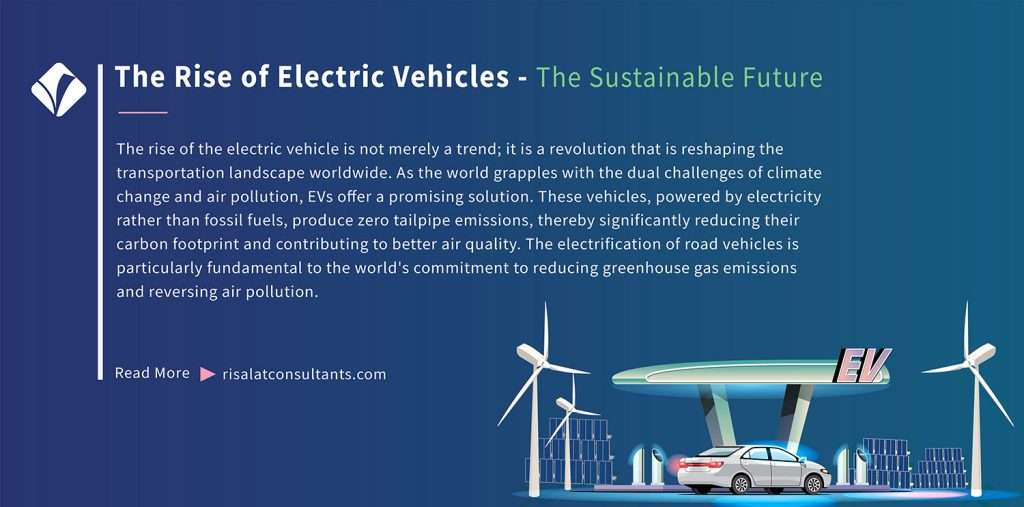
The earlier article also highlighted a continuing consideration: In addition to electric vehicles, other sustainable transportation modes are gaining traction as part of the broader push towards green mobility. The development of extensive bicycle infrastructure, for example, is encouraging more people to cycle, thereby reducing reliance on motorized transport. Similarly, carpooling and ride-sharing options are. The practical implication is to test this proposition against current local evidence before applying it as policy.
The earlier article also highlighted a continuing consideration: Across the globe, numerous clean transport projects are underway, each contributing to the broader goal of a sustainable, zero-emission future. These initiatives range from the electrification of public bus fleets to the development of comprehensive EV charging networks. Such projects are crucial for facilitating the widespread adoption of EVs and. The practical implication is to test this proposition against current local evidence before applying it as policy.
The earlier article also highlighted a continuing consideration: While personal electric vehicles are a key part of the shift towards cleaner transport, they are not the only solution. Public transportation systems around the world are also undergoing a green transformation, with many cities replacing their traditional bus and train fleets with electric alternatives. This shift towards green public transportatio. The practical implication is to test this proposition against current local evidence before applying it as policy.
The earlier article also highlighted a continuing consideration: Sustainability is at the core of the electric vehicle movement. From their manufacturing process to their operation, EVs are designed to minimize environmental impact. By using electricity as a fuel source, these vehicles eliminate the need for combustion, thereby reducing air pollution and contributing to healthier cities. Moreover, many EVs are d. The practical implication is to test this proposition against current local evidence before applying it as policy.
Comprender la cuestión y su evidencia
What electric vehicles change
Battery-electric vehicles have no exhaust emissions during operation, unlike petrol and diesel cars. They still create tyre and road dust, occupy street space and depend on electricity generation and battery supply chains.
Antes de fijar una meta sobre lo que cambian los vehículos eléctricos, el equipo responsable debe definir la población o el activo cubierto, la condición actual y la fuente de su información de referencia. Una línea de base útil registra tanto lo que se sabe como lo que sigue siendo incierto. En la evaluación de un proyecto, esto evita que una narrativa plausible se confunda con evidencia de demanda o impacto.
Lifecycle assessment matters
Compare vehicle manufacture, battery production, fuel or electricity generation, operation and disposal. The emissions advantage depends on the grid, vehicle size, mileage and lifetime; do not assume every purchase has identical environmental benefits.
The practical test for lifecycle assessment matters is whether two independent reviewers would reach a similar conclusion using the same records. Specify the definition of success, the relevant technical standard and the point at which a design needs reconsideration. Document exceptions openly rather than averaging away difficult cases.
Opciones de diseño y ejecución técnica
Charging infrastructure planning
Charging demand differs between private cars, taxis, buses and delivery fleets. Planners should model dwell time, daily kilometres, depot capacity, connection queues and power demand before choosing charger locations.
Consider a hypothetical pilot focused on charging infrastructure planning. The implementation team should begin with a narrowly defined use case, test it under ordinary operating conditions and record user experience alongside technical performance. Procurement should permit correction of design defects before large-scale roll-out.
Grid and tariff coordination
Distribution networks may need upgrades where charging is concentrated. Utilities can use managed charging, time-of-use tariffs and demand forecasting to reduce coincident peaks without compromising essential transport services.
Operational readiness for grid and tariff coordination includes trained staff, a maintenance budget, reliable data and a route for complaints. If one of these is missing, the project may meet its construction or installation milestone while failing to deliver the intended service. Acceptance criteria should therefore include observed performance, not just equipment delivery.
Financiación, contratación y gobernanza
Electric public transport
Buses and municipal fleets can offer high daily utilisation, predictable routes and centralised maintenance. Evaluate vehicle range under local weather, passenger load, air conditioning and route gradients, not only catalogue figures.
For electric public transport, a business case should distinguish initial investment from recurring costs. Compare alternatives on a common time horizon, including training, replacement, supervision and the cost of service interruptions. The cheapest compliant tender may not provide the lowest whole-life cost.
Procurement and total cost
Tender evaluations should consider purchase price, charging works, batteries, energy, spare parts, maintenance, training, warranties and residual value. A low vehicle price may be poor value if downtime or infrastructure costs are high.
Governance of procurement and total cost should clarify who approves changes, who holds the supplier accountable and who pays when assumptions prove wrong. A decision log helps explain trade-offs to auditors and affected communities. Material changes should be reflected in the budget, schedule and risk register before approval.
Control de la decisión: ¿Ha comparado el equipo una línea de base sin intervención, un piloto limitado y una intervención a escala con los mismos criterios de coste, riesgo y resultados? Registre los supuestos de cada opción y el motivo por el que se eligió una de ellas.
Implementación, salvaguardas y medición
Equity and access
Public subsidies that mainly support expensive private cars may deliver limited benefits for low-income residents. Compare incentives with investment in reliable buses, safe walking routes and affordable shared transport.
A practical control for equity and access is to assign an owner, a reporting interval and an action threshold. Monitoring is useful only when findings lead to a decision: investigate, correct, redesign or stop. The threshold should be established before the data are reviewed to reduce pressure to declare success.
Batteries and circularity
Require transparent battery warranties, safe handling, repair capability and responsible end-of-life pathways. Second-life use and recycling may be options, but commercial and technical feasibility must be verified.
Evaluation of batteries and circularity should look for unintended effects as well as intended benefits. Record who gains access, who bears costs and whether outcomes differ across locations or user groups. When attribution is uncertain, describe the limitations instead of presenting a correlation as proof of impact.
Ejercicio práctico: Entregue a un equipo multifuncional la línea de base, el presupuesto y dos diseños alternativos. Pídale que prepare una nota de decisión de una página que identifique la principal incertidumbre, tres riesgos de implementación, la evidencia necesaria para la aprobación y el detonante de las medidas correctivas.
Aplicación en organismos públicos y proyectos financiados por donantes
Monitoring real outcomes
Measure electricity consumption per kilometre, vehicle availability, charger uptime, fleet costs, local pollution and ridership. Separate avoided tailpipe emissions from lifecycle estimates.
A ministry or project implementation unit addressing monitoring real outcomes can start with a short diagnostic: map mandates, list approvals, identify missing skills and test whether the proposed intervention fits existing operating arrangements. The result should be a prioritised workplan with named owners, deadlines and verifiable deliverables.
Donor-funded transition programmes
Project implementation units can sequence feasibility, grid studies, fleet trials, competitive procurement and operator training. Contracts should assign responsibility for chargers, software, maintenance and performance reporting.
In donor-financed work, donor-funded transition programmes should be reflected in procurement specifications, financial planning, stakeholder engagement and reporting where relevant. The financing agreement and applicable national law determine the actual obligations. Teams should verify those instruments rather than assume a single donor procedure applies everywhere.
Primeros 30 días: Verifique la línea de base y consulte a los usuarios u operadores afectados. Examine las cuatro primeras cuestiones de esta guía a la luz de los datos locales disponibles. Elabore una lista breve de lagunas de evidencia y de decisiones que no pueden aplazarse sin riesgo.
Días 31 a 60: Pruebe una intervención viable, perfeccione la especificación técnica y confirme la financiación para todo el ciclo de vida. Acuerde las responsabilidades entre los titulares de las políticas, los organismos ejecutores, los proveedores y los órganos de supervisión. Publique un registro de riesgos y un plan de seguimiento que puedan mantenerse con la capacidad existente.
Días 61 a 90: Revise los primeros resultados con los usuarios y con especialistas independientes, corrija los supuestos débiles y decida si ampliar, rediseñar o interrumpir la intervención. Conserve las lecciones aprendidas en las plantillas de contratación y en los procedimientos operativos para que el siguiente proyecto no repita errores evitables.
Risalat apoya a las instituciones con evaluaciones diagnósticas, aprendizaje aplicado y servicios de asesoría. Los equipos pueden empezar con la evaluación de la capacidad institucional, explorar el centro de diagnóstico y solicitar una propuesta a medida cuando se justifique el apoyo externo.
Evidencia y lecturas complementarias: Las siguientes fuentes primarias han servido de base para esta actualización. Se recomienda consultar las publicaciones originales para conocer su alcance, sus fechas y sus limitaciones metodológicas.
Preguntas frecuentes
What should institutions check about what electric vehicles change?
Battery-electric vehicles have no exhaust emissions during operation, unlike petrol and diesel cars. They still create tyre and road dust, occupy street space and depend on electricity generation and battery supply chains. Check the local baseline, technical requirements and responsibilities before scaling a proposed solution.
What should institutions check about charging infrastructure planning?
Charging demand differs between private cars, taxis, buses and delivery fleets. Planners should model dwell time, daily kilometres, depot capacity, connection queues and power demand before choosing charger locations. Check the local baseline, technical requirements and responsibilities before scaling a proposed solution.
What should institutions check about electric public transport?
Buses and municipal fleets can offer high daily utilisation, predictable routes and centralised maintenance. Evaluate vehicle range under local weather, passenger load, air conditioning and route gradients, not only catalogue figures. Check the local baseline, technical requirements and responsibilities before scaling a proposed solution.
What should institutions check about equity and access?
Public subsidies that mainly support expensive private cars may deliver limited benefits for low-income residents. Compare incentives with investment in reliable buses, safe walking routes and affordable shared transport. Check the local baseline, technical requirements and responsibilities before scaling a proposed solution.
What should institutions check about monitoring real outcomes?
Measure electricity consumption per kilometre, vehicle availability, charger uptime, fleet costs, local pollution and ridership. Separate avoided tailpipe emissions from lifecycle estimates. Check the local baseline, technical requirements and responsibilities before scaling a proposed solution.
Free roadmap: Migration and Development: a 12-month plan for your team
Ver


Know people who should read this? Become an Ambassador or write with Risalat.
Socios para el éxito de los proyectos desde 2011: diagnósticos, asesoría y aprendizaje aplicado para ministerios, organismos públicos y equipos de proyecto.
¿Necesita ayuda para llevar esto a la práctica?
Empiece con un diagnóstico gratuito de 10 minutos o hable con nuestros expertos.