Points essentiels
- Understanding the issue and its evidence. Battery-electric vehicles have no exhaust emissions during operation, unlike petrol and diesel cars.
- Design choices and technical delivery. Charging demand differs between private cars, taxis, buses and delivery fleets.
- Financing, procurement and governance. Buses and municipal fleets can offer high daily utilisation, predictable routes and centralised maintenance.
- Implementation, safeguards and measurement. Public subsidies that mainly support expensive private cars may deliver limited benefits for low-income residents.
- Application to public agencies and donor-funded projects. Measure electricity consumption per kilometre, vehicle availability, charger uptime, fleet costs, local pollution and ridership.
In short: A practical guide to electric vehicles and clean transport, with evidence, implementation choices, risks and lessons for ministries, public agencies.
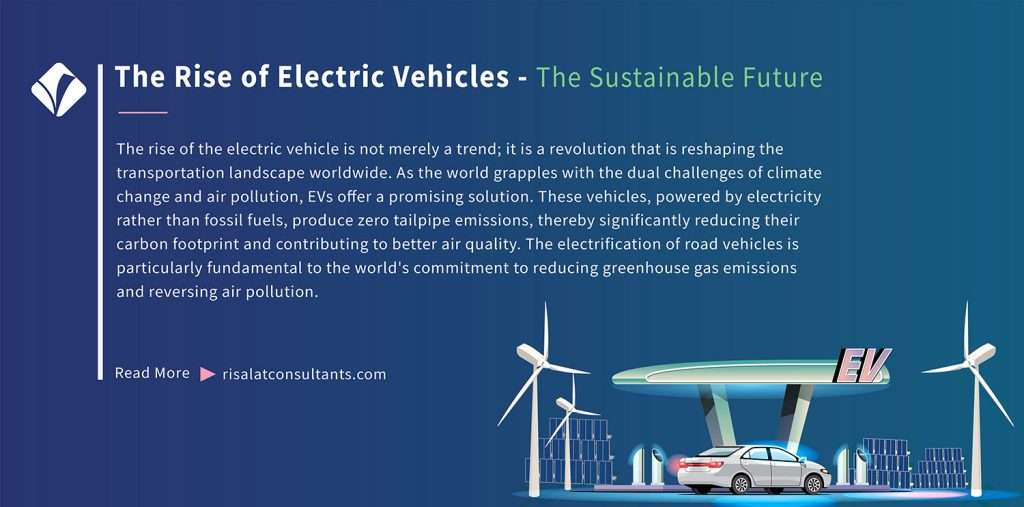
In short: Electric vehicles can reduce local exhaust pollution and, depending on electricity supply and vehicle production, lower lifecycle greenhouse-gas emissions. Their public value depends on charging access, grid readiness, vehicle utilisation and integration with public transport.
The IEA Global EV Outlook 2026 reports that worldwide electric car sales exceeded 20 million in 2025, about one-quarter of new car sales. Growth does not eliminate the need for better urban transport planning.
Ce guide actualisé revisite l'article d'origine de Risalat en distinguant les concepts établis des affirmations qui exigent de nouvelles données probantes. Il s'adresse aux praticiens qui doivent décider quoi financer, acheter, réglementer ou mesurer. Les scénarios illustratifs ci-dessous sont des exemples pédagogiques, et non des comptes rendus de projets achevés.
The earlier article also highlighted a continuing consideration: In addition to electric vehicles, other sustainable transportation modes are gaining traction as part of the broader push towards green mobility. The development of extensive bicycle infrastructure, for example, is encouraging more people to cycle, thereby reducing reliance on motorized transport. Similarly, carpooling and ride-sharing options are. The practical implication is to test this proposition against current local evidence before applying it as policy.
The earlier article also highlighted a continuing consideration: Across the globe, numerous clean transport projects are underway, each contributing to the broader goal of a sustainable, zero-emission future. These initiatives range from the electrification of public bus fleets to the development of comprehensive EV charging networks. Such projects are crucial for facilitating the widespread adoption of EVs and. The practical implication is to test this proposition against current local evidence before applying it as policy.
The earlier article also highlighted a continuing consideration: While personal electric vehicles are a key part of the shift towards cleaner transport, they are not the only solution. Public transportation systems around the world are also undergoing a green transformation, with many cities replacing their traditional bus and train fleets with electric alternatives. This shift towards green public transportatio. The practical implication is to test this proposition against current local evidence before applying it as policy.
The earlier article also highlighted a continuing consideration: Sustainability is at the core of the electric vehicle movement. From their manufacturing process to their operation, EVs are designed to minimize environmental impact. By using electricity as a fuel source, these vehicles eliminate the need for combustion, thereby reducing air pollution and contributing to healthier cities. Moreover, many EVs are d. The practical implication is to test this proposition against current local evidence before applying it as policy.
Comprendre l'enjeu et les données probantes
What electric vehicles change
Battery-electric vehicles have no exhaust emissions during operation, unlike petrol and diesel cars. They still create tyre and road dust, occupy street space and depend on electricity generation and battery supply chains.
Before setting a target for what electric vehicles change, the responsible team should define the population or asset covered, the current condition and the source of its baseline information. A useful baseline records both what is known and what remains uncertain. In a project appraisal, this prevents a plausible narrative from being mistaken for evidence of demand or impact.
L'analyse du cycle de vie importe
Compare vehicle manufacture, battery production, fuel or electricity generation, operation and disposal. The emissions advantage depends on the grid, vehicle size, mileage and lifetime; do not assume every purchase has identical environmental benefits.
The practical test for lifecycle assessment matters is whether two independent reviewers would reach a similar conclusion using the same records. Specify the definition of success, the relevant technical standard and the point at which a design needs reconsideration. Document exceptions openly rather than averaging away difficult cases.
Choix de conception et mise en œuvre technique
Charging infrastructure planning
Charging demand differs between private cars, taxis, buses and delivery fleets. Planners should model dwell time, daily kilometres, depot capacity, connection queues and power demand before choosing charger locations.
Consider a hypothetical pilot focused on charging infrastructure planning. The implementation team should begin with a narrowly defined use case, test it under ordinary operating conditions and record user experience alongside technical performance. Procurement should permit correction of design defects before large-scale roll-out.
Grid and tariff coordination
Distribution networks may need upgrades where charging is concentrated. Utilities can use managed charging, time-of-use tariffs and demand forecasting to reduce coincident peaks without compromising essential transport services.
Operational readiness for grid and tariff coordination includes trained staff, a maintenance budget, reliable data and a route for complaints. If one of these is missing, the project may meet its construction or installation milestone while failing to deliver the intended service. Acceptance criteria should therefore include observed performance, not just equipment delivery.
Financement, passation des marchés et gouvernance
Electric public transport
Buses and municipal fleets can offer high daily utilisation, predictable routes and centralised maintenance. Evaluate vehicle range under local weather, passenger load, air conditioning and route gradients, not only catalogue figures.
For electric public transport, a business case should distinguish initial investment from recurring costs. Compare alternatives on a common time horizon, including training, replacement, supervision and the cost of service interruptions. The cheapest compliant tender may not provide the lowest whole-life cost.
Procurement and total cost
Tender evaluations should consider purchase price, charging works, batteries, energy, spare parts, maintenance, training, warranties and residual value. A low vehicle price may be poor value if downtime or infrastructure costs are high.
Governance of procurement and total cost should clarify who approves changes, who holds the supplier accountable and who pays when assumptions prove wrong. A decision log helps explain trade-offs to auditors and affected communities. Material changes should be reflected in the budget, schedule and risk register before approval.
Contrôle de la décision : L'équipe a-t-elle comparé un scénario sans intervention, un pilote limité et une intervention à grande échelle selon les mêmes critères de coût, de risque et de résultat ? Consignez les hypothèses qui sous-tendent chaque option et la raison du choix retenu.
Mise en œuvre, sauvegardes et mesure
Equity and access
Public subsidies that mainly support expensive private cars may deliver limited benefits for low-income residents. Compare incentives with investment in reliable buses, safe walking routes and affordable shared transport.
A practical control for equity and access is to assign an owner, a reporting interval and an action threshold. Monitoring is useful only when findings lead to a decision: investigate, correct, redesign or stop. The threshold should be established before the data are reviewed to reduce pressure to declare success.
Batteries and circularity
Require transparent battery warranties, safe handling, repair capability and responsible end-of-life pathways. Second-life use and recycling may be options, but commercial and technical feasibility must be verified.
Evaluation of batteries and circularity should look for unintended effects as well as intended benefits. Record who gains access, who bears costs and whether outcomes differ across locations or user groups. When attribution is uncertain, describe the limitations instead of presenting a correlation as proof of impact.
Exercice pratique : Remettez à une équipe pluridisciplinaire la situation de référence, le budget et deux conceptions alternatives. Demandez-lui de préparer une note de décision d'une page indiquant la principale incertitude, trois risques de mise en œuvre, les éléments probants requis pour l'approbation et le déclencheur d'une action corrective.
Application aux organismes publics et aux projets financés par les bailleurs
Monitoring real outcomes
Measure electricity consumption per kilometre, vehicle availability, charger uptime, fleet costs, local pollution and ridership. Separate avoided tailpipe emissions from lifecycle estimates.
A ministry or project implementation unit addressing monitoring real outcomes can start with a short diagnostic: map mandates, list approvals, identify missing skills and test whether the proposed intervention fits existing operating arrangements. The result should be a prioritised workplan with named owners, deadlines and verifiable deliverables.
Donor-funded transition programmes
Project implementation units can sequence feasibility, grid studies, fleet trials, competitive procurement and operator training. Contracts should assign responsibility for chargers, software, maintenance and performance reporting.
In donor-financed work, donor-funded transition programmes should be reflected in procurement specifications, financial planning, stakeholder engagement and reporting where relevant. The financing agreement and applicable national law determine the actual obligations. Teams should verify those instruments rather than assume a single donor procedure applies everywhere.
30 premiers jours : Vérifiez la situation de référence et consultez les usagers ou opérateurs concernés. Examinez les quatre premières questions de ce guide au regard des données locales disponibles. Dressez une courte liste des lacunes en matière de données et des décisions qui ne peuvent être reportées sans risque.
Jours 31 à 60 : Testez une intervention réalisable, affinez la spécification technique et confirmez le financement sur l'ensemble du cycle de vie. Convenez des responsabilités entre les responsables des politiques, les agences d'exécution, les fournisseurs et les organes de contrôle. Publiez un registre des risques et un plan de suivi qui puissent être tenus avec les capacités existantes.
Jours 61 à 90 : Examinez les premiers résultats avec les usagers et des spécialistes indépendants, corrigez les hypothèses fragiles et décidez d'étendre, de reconcevoir ou d'arrêter l'intervention. Intégrez les enseignements dans les modèles de passation des marchés et les procédures opérationnelles afin que le projet suivant ne répète pas des erreurs évitables.
Risalat accompagne les institutions par des évaluations diagnostiques, une formation appliquée et des services de conseil. Les équipes peuvent commencer par l'évaluation des capacités institutionnelles, explorer le Centre de diagnostic et demander une proposition sur mesure lorsqu'un soutien extérieur se justifie.
Données probantes et lectures complémentaires : Les sources primaires suivantes ont éclairé cette mise à jour. Les lecteurs sont invités à consulter les publications d'origine pour leur champ, leurs dates et leurs limites méthodologiques.
Questions fréquentes
What should institutions check about what electric vehicles change?
Battery-electric vehicles have no exhaust emissions during operation, unlike petrol and diesel cars. They still create tyre and road dust, occupy street space and depend on electricity generation and battery supply chains. Check the local baseline, technical requirements and responsibilities before scaling a proposed solution.
What should institutions check about charging infrastructure planning?
Charging demand differs between private cars, taxis, buses and delivery fleets. Planners should model dwell time, daily kilometres, depot capacity, connection queues and power demand before choosing charger locations. Check the local baseline, technical requirements and responsibilities before scaling a proposed solution.
What should institutions check about electric public transport?
Buses and municipal fleets can offer high daily utilisation, predictable routes and centralised maintenance. Evaluate vehicle range under local weather, passenger load, air conditioning and route gradients, not only catalogue figures. Check the local baseline, technical requirements and responsibilities before scaling a proposed solution.
What should institutions check about equity and access?
Public subsidies that mainly support expensive private cars may deliver limited benefits for low-income residents. Compare incentives with investment in reliable buses, safe walking routes and affordable shared transport. Check the local baseline, technical requirements and responsibilities before scaling a proposed solution.
What should institutions check about monitoring real outcomes?
Measure electricity consumption per kilometre, vehicle availability, charger uptime, fleet costs, local pollution and ridership. Separate avoided tailpipe emissions from lifecycle estimates. Check the local baseline, technical requirements and responsibilities before scaling a proposed solution.
Free roadmap: Migration and Development: a 12-month plan for your team
Regarder


Know people who should read this? Become an Ambassador or write with Risalat.
Partenaires de la réussite des projets depuis 2011 : diagnostics, conseil et apprentissage appliqué pour les ministères, les organismes publics et les équipes de projet.
Besoin d'aide pour passer à la pratique ?
Commencez par un diagnostic gratuit de 10 minutes ou échangez avec nos experts.