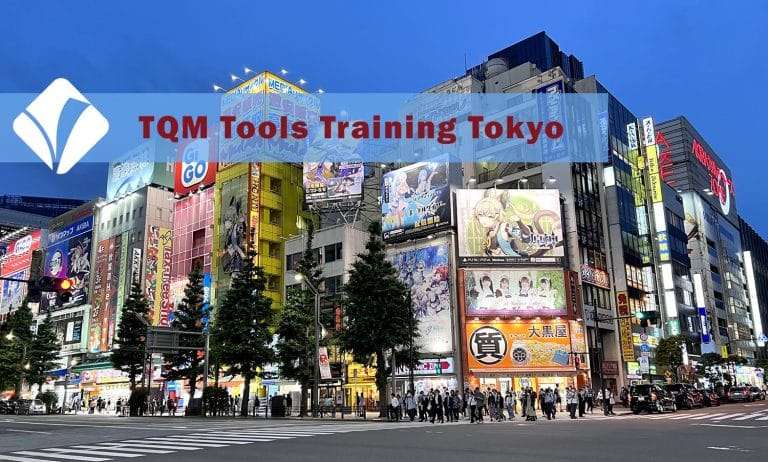
Why train in Tokyo
Tokyo offre des exemples en matière de gestion des risques de catastrophe, de gestion de la qualité et d'infrastructures.
Risalat has scheduled 6 programmes in Tokyo, and the subjects run most often here are climate change and environment, infrastructure and urban development and audit and internal control.
Sessions combine short inputs, case studies and group work on participants' own files, so officials and project staff leave with work they can use. Courses in Tokyo are open to participants from any country, and suit delegations from across the Asia region.
Training courses in Tokyo by field
Practical information for Tokyo
- Lieux
- Hotel Niwa Tokyo (the venue of each date is on its programme page).
- Airport
- Haneda (HND) and Narita (NRT)
- Local time
- GMT+9 at the time of the next course
- Visa
- Check what you need with the free Visa Check (nationality, residence and destination: Japan).
- Invitation letter
- Registered participants can request an invitation letter for the visa application.
- Idéal pour
- Participants from the Asia region, and teams from any country who want an open course with other institutions.
- Durée habituelle
- 5 jours
- Paiement
- By invoice and bank transfer; no card payment is taken on the website.
Related expertise and free tools
Risalat conseille également les institutions sur ces sujets :
Free tools to prepare before a course:
Training courses in other cities nearby
Elsewhere in Japan
Elsewhere in Asia
What teams can learn in Tokyo
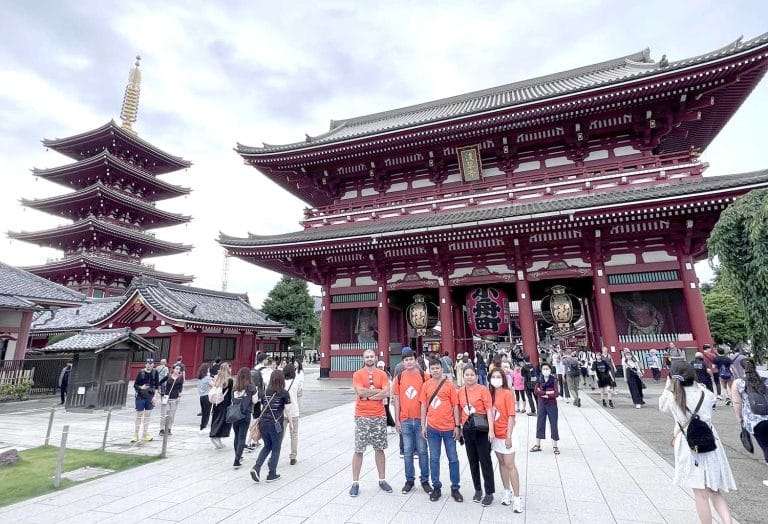
Tokyo offers visiting officials direct exposure to world-class public infrastructure, disaster risk governance, and municipal administration. The Tokyo Metropolitan Government manages one of the most complex urban environments globally, demonstrating effective cross-sectoral coordination and digital public services. Delegates can study the Metropolitan Area Outer Underground Discharge Channel, an engineering system designed to mitigate regional flood risks, alongside earthquake preparedness frameworks and seismic building standards. Japan's highly integrated urban railway networks, managed by public and private entities, illustrate exceptional transport planning and asset management. The city also showcases municipal solid waste management, circular economy practices, and the work of national ministries like the Ministry of Land, Infrastructure, Transport and Tourism in long-term resilience and spatial planning.
Programmes focusing on disaster risk reduction, sustainable urban mobility, resilient infrastructure, and advanced public administration suit Tokyo best due to its global benchmark status in these fields.
A programme week in Tokyo
Participants usually arrive the day before the programme through Haneda (HND) and Narita (NRT), are met at the airport and settle into the hotel. Sessions run from about 9:00 to 16:00 local time (GMT+9), with practical work on the participants' own cases each day. Where the programme includes one, a field or study visit takes place mid-week, and a city tour and a welcome dinner give the group time to know each other. On the last day each participant presents an action plan and receives a certificate that anyone can verify online.
To join from abroad, register and complete payment at least 40 days before the start; the invitation letter for the visa is issued after registration, and the free Visa Check shows what your passport needs for Japan.
Teams travelling to Tokyo
Choose your country to see the programmes that fit its current projects and reforms, and the cities its teams can reach most easily.
Central Asia and the Caucasus
Plan your training in Tokyo
Free planning tools for participants and HR teams:
Blueprints that match the fields taught here (free, step by step):
What the fee includes in Tokyo
Fees for the programmes in Tokyo range from £2,200 to £6,750 per participant, and each fee is all-inclusive:
- Accommodation with breakfast from the night before the programme starts to the night it ends (one night before and one after; for example 6 nights for a 5-day programme)
- Accueil à l'aéroport et assistance à l'arrivée
- Visa support and an invitation letter
- Déjeuner et pauses-café quotidiens
- Training manual, tools and templates, and a tablet with the digital materials
- Risalat training kit, welcome dinner and a city tour
- Certificate of completion, verifiable online, and post-training support
Payment is by invoice and bank transfer. Groups from one organisation receive a group rate, and any programme can be delivered in-house.
Choosing a training provider for Tokyo
Ratings and testimonials say how a course felt. Institutions investing public or project funds should also check:
- The evidence behind the programme: which projects, reforms or reports it was designed from
- The day-by-day content and the practical outputs participants take home
- Exactly what the fee includes and what is extra
- How certificates can be verified by an employer
- What support follows the programme
Comment Risalat garantit la qualité · Verify a Risalat certificate
Short courses and capacity-building programmes in Tokyo
Whether you are looking for a short course in Tokyo, a training programme for your ministry or agency, or a capacity-building programme for a project team, the 6 programmes on this page are open to individual participants and to groups. Most run for 5 days.
They are designed for officials of ministries and public agencies, staff of project implementation units on World Bank, AfDB, ADB and UN-financed projects, NGOs and development partners, and professionals from the private sector. Each one can also run in-house for one organisation, in Tokyo, in your own country or online.
Training in Tokyo by subject
Questions about training courses in Tokyo
How many training courses are there in Tokyo?
There are 6 upcoming training courses in Tokyo, Japan, starting between 25 Jan 2027 and 15 Feb 2027, in Climate Change & Environment, Accounting & Finance, Banking & Insurance, Construction & Engineering and Quality and Productivity.
How much do training courses in Tokyo cost?
Les frais pour les cours à venir varient de 2 200 £ à 6 750 £ par participant. Chaque page de programme indique ses propres frais. Le paiement s'effectue par facture et virement bancaire.
When does the next training course in Tokyo start?
The next one is Construction Quality Control Training in Tokyo, 25-29 Jan 2027 (5 days). Registration closes on 6 Dec 2026.
Can a course be run in-house for our organisation?
Yes. Any Risalat programme can be delivered in-house for one institution, in Tokyo, in your own country or online, on dates that suit your team and adapted to your own documents. Request a proposal.
Ai-je besoin d'un visa pour une formation à Tokyo et Risalat peut-il m'envoyer une lettre d'invitation ?
It depends on your passport: the free Visa Check shows the visa type, processing time and documents for Japan. Registered participants can request an invitation letter: self-funded participants receive it after full payment, sponsored participants on receipt of an official nomination letter and a payment commitment. Embassies can check the letter online.
Do participants receive a certificate?
Yes. Participants receive a Risalat certificate with its own code and QR code, which anyone can check online at risalatconsultants.com/verify.
Are there group discounts?
You qualify for the discount if you register as a group. See the discount plans and cancellation policy.
Which language are the courses taught in?
Open courses are delivered in English. If your team needs another language, say so when you request an in-house proposal.