Ключевые факты
- Даты
- 15–19 февр. 2027 (5 дней)
- Где
- Rosedale Hotel & Suites, Guangzhou, China
- Стоимость на одного участника
- £3 850 (GBP)
- Оплата
- По счету банковским переводом
- Регистрация закрывается
- 27 дек. 2026
- Для кого
- Logistics and supply chain managers; Import-export officers and coordinators; Customs and border management officials
- Сертификат
- Сертификат о прохождении
- Корпоративный формат
- Проведите ее для своей команды в удобные вам даты
Обзор программы
Logistics Management, Transportation & Import-Export Operations Training focuses on strengthening the capacity of organizations, government institutions, customs authorities, and trade-related agencies to manage efficient logistics systems, transportation networks, and international import-export operations across complex supply chains.
Across public and private sectors, logistics inefficiencies, weak transportation planning, customs delays, and poor import-export coordination can lead to increased costs, operational disruptions, delayed deliveries, and reduced trade competitiveness. Many institutions face challenges in supply chain visibility, trade compliance, freight coordination, customs procedures, and risk management across domestic and international logistics operations.
This programme addresses these challenges by equipping participants with practical tools, internationally aligned frameworks, and strategic approaches to logistics planning, transportation management, customs operations, trade facilitation, and import-export compliance. It integrates best practices used in supply chain optimization, port operations, freight management, and global trade systems, including approaches applied in Logistics & Supply Chain Management programmes.
Participants will gain hands-on experience in transportation planning, warehouse coordination, customs documentation, import-export procedures, freight operations, supplier coordination, and logistics performance monitoring, including practical approaches applied in Supply Chain Management Workshop in Almaty to improve operational efficiency and supply chain resilience.
Strong logistics and trade systems are essential for economic growth, supply chain resilience, trade competitiveness, and successful project implementation across national and international markets.
Целевая аудитория
This programme is designed for professionals involved in logistics, transportation, customs, procurement, and international trade operations, including:
- Logistics and supply chain managers
- Import-export officers and coordinators
- Customs and border management officials
- Port and terminal operations professionals
- Procurement and contract management teams
- Государственные служащие и сотрудники госсектора
- Trade facilitation and transport authorities
- Warehouse and distribution managers
- Партнеры по развитию и сотрудники проектов, финансируемых донорами
- Consultants working on logistics and trade systems
Отметьте, что должна уметь ваша команда.
Objectives of Logistics Management, Transportation & Import-Export Operations Training
По завершении участники смогут:
- Strengthen logistics planning and transportation systems
- Improve import-export coordination and customs compliance
- Manage freight operations and supplier relationships effectively
- Optimize warehouse, inventory, and distribution systems
- Understand international trade procedures and documentation
- Improve port operations and transportation efficiency
- Strengthen supply chain visibility and risk management
- Align logistics operations with institutional and trade objectives
- Improve compliance with customs regulations and trade standards
- Develop practical action plans for logistics and trade performance improvement
Logistics Management, Transportation & Import-Export Operations Training Structure & Content
- Principles of logistics management and transportation systems
- Supply chain structures and operational flows
- Global trade systems and import-export operations
- Trade facilitation and customs management principles
- Stakeholder roles across logistics and transportation networks
- Transportation modes and route optimization
- Freight planning, scheduling, and carrier coordination
- Cost control and transportation efficiency – Sustainable transport systems and operational efficiency are also strengthened through approaches applied in Clean Transport and Urban Sustainability Training.
- Port operations and cargo handling systems
- Contractual responsibilities in freight and logistics services
- Import-export regulations and international trade compliance
- Customs documentation and clearance procedures
- Tariffs, duties, and trade agreements
- Border controls and customs risk management
- Managing supplier and shipment documentation
- Warehouse operations and inventory optimization
- Distribution planning and last-mile delivery systems
- Logistics risk identification and mitigation
- Supply chain disruptions and contingency planning, including approaches applied in Humanitarian Logistics & Emergency Response Training for high-risk operational environments
- Compliance, governance, and anti-fraud measures in logistics operations
- Building logistics performance management systems
- Integrating transportation planning with organizational strategy
- Strengthening customs compliance and trade governance
- Linking logistics operations with institutional outcomes
- Developing sustainable logistics and trade improvement plans aligned with sustainable supply chain practices and long-term operational resilience
Полное содержание по дням
First Day | Foundations of Logistics and Trade Operations
- Principles of logistics management and transportation systems
- Supply chain structures and operational flows
- Global trade systems and import-export operations
- Trade facilitation and customs management principles
- Stakeholder roles across logistics and transportation networks
Exercise: Mapping logistics and trade operations
Second Day | Transportation Planning and Freight Management
- Transportation modes and route optimization
- Freight planning, scheduling, and carrier coordination
- Cost control and transportation efficiency – Sustainable transport systems and operational efficiency are also strengthened through approaches applied in Clean Transport and Urban Sustainability Training.
- Port operations and cargo handling systems
- Contractual responsibilities in freight and logistics services
These systems are closely aligned with advanced logistics and supply chain management frameworks used in high-volume logistics operations.
Workshop: Transportation planning and freight coordination
Third Day | Import-Export Procedures and Customs Compliance
- Import-export regulations and international trade compliance
- Customs documentation and clearance procedures
- Tariffs, duties, and trade agreements
- Border controls and customs risk management
- Managing supplier and shipment documentation
Case Study: Customs delay and corrective action planning
Fourth Day | Warehouse, Distribution and Risk Management
- Warehouse operations and inventory optimization
- Distribution planning and last-mile delivery systems
- Logistics risk identification and mitigation
- Supply chain disruptions and contingency planning, including approaches applied in Humanitarian Logistics & Emergency Response Training for high-risk operational environments
- Compliance, governance, and anti-fraud measures in logistics operations
Simulation: Supply chain disruption response scenario
День пятый | Институциональное укрепление и стратегическая интеграция
- Building logistics performance management systems
- Integrating transportation planning with organizational strategy
- Strengthening customs compliance and trade governance
- Linking logistics operations with institutional outcomes
- Developing sustainable logistics and trade improvement plans aligned with sustainable supply chain practices and long-term operational resilience
Capstone Exercise: Institutional logistics improvement strategy
Effective logistics governance integrates transportation planning, customs compliance, trade facilitation, and operational oversight within institutional decision-making systems.
Методология программы
This Logistics Management, Transportation & Import-Export Operations Training uses an applied, practice-oriented methodology combining expert-led sessions, real-world case studies, simulations, and interactive workshops.
Participants will engage in hands-on exercises focused on transportation planning, customs procedures, freight coordination, warehouse operations, and logistics risk management to ensure direct application within their organizations.
Основные методы обучения:
- Case studies from real logistics and trade operations
- Практические упражнения и симуляции
- Customs compliance and documentation workshops
- Freight and transportation planning exercises
- Групповые дискуссии и обмен опытом
- Institutional logistics action planning sessions
Expected Outcomes of Logistics Management, Transportation & Import-Export Operations Training
Participants will strengthen their ability to manage logistics operations, improve transportation systems, and ensure effective import-export performance.
Они смогут:
- Improve transportation planning and logistics coordination
- Strengthen customs compliance and trade facilitation systems
- Reduce delays, operational risks, and supply chain disruptions
- Improve warehouse efficiency and distribution performance
- Strengthen procurement and supplier coordination
- Enhance institutional governance and trade accountability
- Support successful implementation of national and international logistics programmes
Применение в организации
This programme supports organizations in strengthening logistics systems, improving transportation planning, and enhancing import-export performance across public and private sector environments.
Participants will return with practical tools to improve operational controls, strengthen supply chain accountability, and support efficient trade and logistics execution.
Strong logistics and transportation systems are essential for safeguarding institutional performance, improving service delivery, and ensuring trade competitiveness across regional and international markets.
These approaches are further strengthened through integrated procurement, customs, and performance management systems aligned with international best practices.
Regional Relevance & Application of Logistics Management Training
Logistics inefficiencies, customs bottlenecks, and transportation challenges continue to affect trade operations, infrastructure projects, and donor-funded development programmes across rapidly growing regions where supply chain systems and institutional controls are evolving.
This Logistics Management, Transportation & Import-Export Operations Training is highly relevant for professionals working in:
- Africa, where trade corridors, ports, and customs modernization require stronger logistics oversight and transport coordination
- South Asia, where expanding industrial production and import-export growth increase pressure on logistics systems and customs operations
- Southeast Asia, where major trade hubs and regional integration demand stronger freight management and transportation efficiency
- Middle East, where strategic logistics hubs and infrastructure investments require advanced supply chain governance and trade compliance systems
Across these regions, institutions face increasing pressure to improve efficiency, strengthen customs governance, and ensure compliance with international trade standards set by development partners and regulatory bodies.
This programme equips participants with practical tools and globally aligned methodologies to improve logistics systems, manage transportation risks effectively, and strengthen institutional performance across complex trade environments.
Host Country Profile – Guangzhou, China
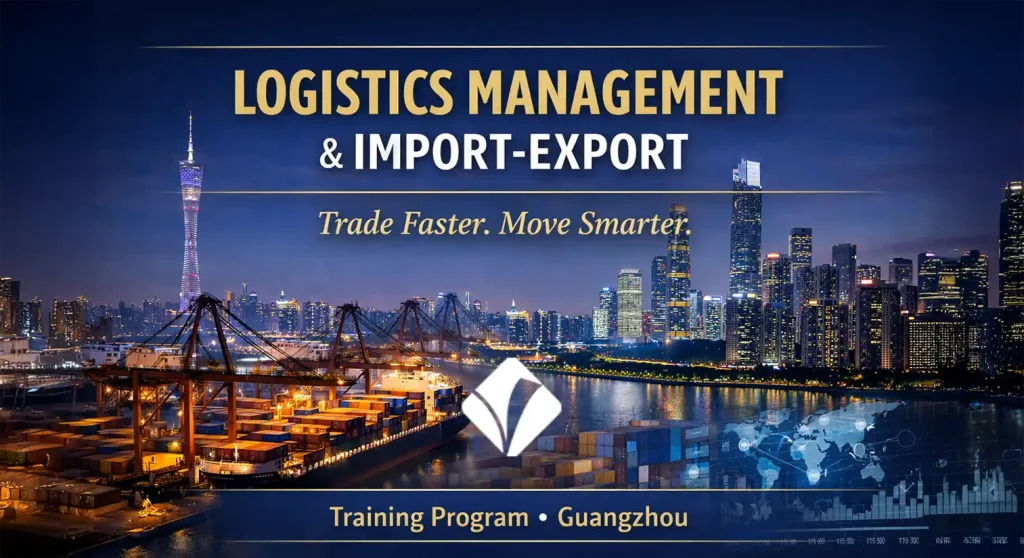
Guangzhou provides a highly strategic and practical environment for logistics management and import-export operations training, supported by its position as one of Asia’s leading trade, manufacturing, and supply chain hubs.
As a major center for port operations, international trade, customs activity, and industrial logistics, Guangzhou offers valuable exposure to real-world transportation systems, warehouse operations, freight management, and cross-border trade processes. Its strong connection to global supply chains makes it a highly relevant destination for executive and government-focused professional training.
Guangzhou is internationally recognized through major trade platforms such as the Canton Fair, reinforcing its role as a gateway for import-export operations and international business connectivity across Asia and beyond.
China’s emphasis on customs modernization, trade facilitation, and supply chain efficiency aligns closely with global efforts to strengthen logistics performance and international trade competitiveness, supported by institutions such as the Port of Guangzhou, the official Guangzhou International Government Portal, and the General Administration of Customs of China, which play key roles in advancing international trade systems, customs governance, and logistics efficiency.
Hosting this programme in Guangzhou allows participants to gain practical insights into global best practices in transportation planning, customs compliance, logistics governance, and import-export operations while benefiting from direct exposure to one of the region’s most active trade ecosystems.
Результаты курса
Участников ждет комплексный и высококачественный опыт, направленный на эффективное обучение, практическое применение и долгосрочное влияние на организацию.
До программы
- Participant Pre-Assessment aligned with logistics and trade management competencies
- Customized preparatory materials on transportation systems and import-export operations
- Бесплатная визовая поддержка и консультации
- Встреча в аэропорту и приветственное сопровождение
- Проживание с ежедневным завтраком на весь период программы
- Приветственный ужин для нетворкинга с участниками и командой Risalat
Во время программы
- Комплект участника Risalat Executive: сумка, бутылка для воды, кружка, футболка, кепка, обложка для паспорта, ручки, блокнот, магнит и брелок
- Мини-планшет с предустановленными учебными материалами (остается у участника)
- Подробное руководство по курсу и учебные материалы
- Logistics and Trade Operations Toolkit including templates, compliance checklists, freight planning tools, and customs documentation guides
- Sample logistics dashboards, transportation monitoring tools, and warehouse management templates
- Практические упражнения, симуляции и групповые семинары
- Ежедневный обед и кофе-брейки во время занятий
- Полный доступ к инфраструктуре места проведения и учебным ресурсам
- Доступ к онлайн-материалам и ресурсам после занятий
- Field visit (where applicable) to observe port operations, logistics systems, customs facilities, or warehouse operations
- Развлекательная экскурсия по городу и знакомство с культурой
После программы
- Сертификат о прохождении
- Награда Risalat за участие в программе
- Поддержка и консультации после обучения
- Access to additional tools, templates, and updated logistics resources
- Отчет по программе и сводка результатов обучения
Participants will leave equipped with practical tools, strategic frameworks, and applied knowledge to strengthen logistics systems, improve transportation efficiency, enhance customs compliance, and deliver stronger institutional trade outcomes.
Для группового участия, индивидуального формата или институционального сотрудничества свяжитесь с Risalat Consultants International, чтобы забронировать места и подобрать индивидуальные варианты программы. Ограниченное число мест обеспечивает сфокусированное и результативное обучение.
All programmes in GuangzhouДругие программы по инфраструктуре, планированию и развитию
Why Guangzhou for this programme
Guangzhou, China, was chosen for this programme because it is easy to reach for the participants we expect and has suitable venues for practical, interactive training.
The Logistics Management, Transportation and Import-Export Operations Training in China programme in February 2027 brings together officials and professionals. Sessions combine short inputs, case studies and group work on participants' own files, and the city's institutions can be added as a study visit on request.
Узнайте, нужна ли вам виза, с помощью бесплатного сервиса «Проверка визы» и запросите приглашение после регистрации.
£3 850 за участника · счет и банковский перевод · группам от 5 человек предоставляется скидка
Пять и более участников от одной организации: укажите групповой тариф в запросе счета.
Ten or more: an in-house version for your institution may cost less per person. Ask for an in-house quote.
Registration closes in 55 days (27 Dec 2026)
Та же тема в других городах
Другие учебные курсы в Китае · Все программы в Азии · Полный календарь обучения