Points clés
- Dates
- 15–19 févr. 2027 (5 jours)
- Lieu
- Rosedale Hotel & Suites, Guangzhou, China
- Frais par participant
- 3 850 £ (GBP)
- Paiement
- Sur facture et par virement bancaire
- Clôture des inscriptions
- 27 déc. 2026
- Format
- 5-day short course: a practical capacity-building programme for government, NGO and project teams in Guangzhou
- Option intra
- Organisez-le pour votre équipe, à vos dates
Sur cette page 12 sections
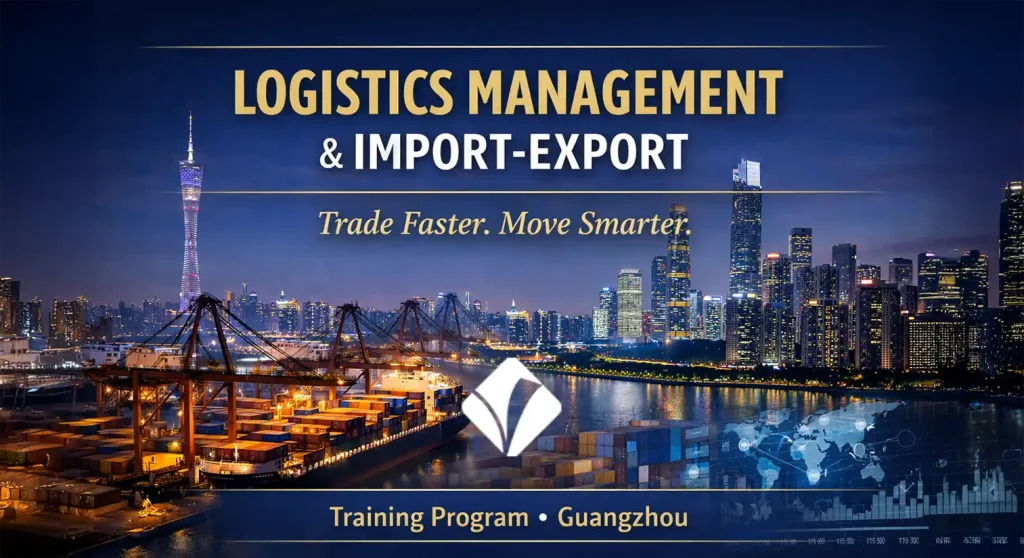
Formation à la gestion logistique, au transport et aux opérations d'import-export en Chine
Présentation du programme
Logistics Management, Transportation and Import-Export Operations Training focuses on strengthening the capacity of organisations, government institutions, customs authorities, and trade-related agencies to manage efficient logistics systems, transportation networks, and international import-export operations across complex supply chains. Across public and private sectors, logistics inefficiencies, weak transportation planning, customs delays, and poor import-export coordination can lead to increased costs, operational disruptions, delayed deliveries, and reduced trade competitiveness. Many institutions face challenges in supply chain visibility, trade compliance, freight coordination, customs procedures, and risk management across domestic and international logistics operations.
Free self-check: the procurement maturity assessment gives 30 questions on planning, tendering, contract management, integrity and e-procurement, with a score per area, in about 10 minutes.
This programme addresses these challenges by equipping participants with practical tools, internationally aligned frameworks, and strategic approaches to logistics planning, transportation management, customs operations, trade facilitation, and import-export compliance. It integrates best practices used in supply chain optimisation, port operations, freight management, and global trade systems, including approaches applied in Logistics and Supply Chain Management programmes.
Participants will gain hands-on experience in transportation planning, warehouse coordination, customs documentation, import-export procedures, freight operations, supplier coordination, and logistics performance monitoring, including practical approaches applied in Supply Chain Management Workshop in Almaty to improve operational efficiency and supply chain resilience. Strong logistics and trade systems are essential for economic growth, supply chain resilience, trade competitiveness, and successful project implementation across national and international markets.
Le programme renforce les capacités institutionnelles en matière de :
- Logistics planning and transportation systems management
- Import-export coordination and international trade compliance
- Freight operations and carrier coordination
- Warehouse, inventory, and distribution management
- Port operations, cargo handling, and trade facilitation
- Supply chain risk management and disruption mitigation
- Customs procedures, tariffs, and border management
Why this matters now
Operational and Institutional Challenges
- Logistics inefficiencies and weak transportation planning resulting in increased operational costs and delayed deliveries
- Customs delays, complex clearance procedures, and regulatory compliance risks
- Limited supply chain visibility, freight coordination issues, and disruption vulnerabilities
- Weak integration of transportation planning and logistics operations with institutional strategy
Strategic and Economic Drivers
- Growing necessity for supply chain resilience and trade competitiveness across national and international markets
- Adoption of modern customs governance, trade facilitation, and border control standards
- Need for enhanced freight planning, route optimisation, and sustainable transport practices
- Requirements for robust compliance, anti-fraud measures, and risk mitigation in global trade
Public concerné
Ce programme s'adresse à :
- Logistics and supply chain managers
- Import-export officers and coordinators
- Customs and border management officials
- Professionnels des opérations portuaires et des terminaux
- Procurement and contract management teams
- Fonctionnaires et agents du secteur public
- Trade facilitation and transport authorities
- Warehouse and distribution managers
- Partenaires du développement et personnel des projets financés par les bailleurs
- Consultants working on logistics and trade systems
Cochez ce que votre équipe doit être capable de faire.
Objectifs du programme
À l'issue de ce programme, les participants seront en mesure de :
- Strengthen logistics planning and transportation systems
- Improve import-export coordination and customs compliance
- Manage freight operations and supplier relationships effectively
- Optimise warehouse, inventory, and distribution systems
- Understand international trade procedures and documentation
- Améliorer les opérations portuaires et l'efficacité du transport
- Strengthen supply chain visibility and risk management
- Align logistics operations with institutional and trade objectives
- Améliorer la conformité aux réglementations douanières et aux normes commerciales
- Develop practical action plans for logistics and trade performance improvement
Training Structure & Contents
- Principles of logistics management and transportation systems
- Supply chain structures and operational flows
- Systèmes commerciaux mondiaux et opérations d'import-export
- Trade facilitation and customs management principles
- Stakeholder roles across logistics and transportation networks
- Exercise: Mapping logistics and trade operations
- Transportation modes and route optimisation
- Freight planning, scheduling, and carrier coordination
- Cost control and transportation efficiency, incorporating clean transport and urban sustainability approaches
- Port operations and cargo handling systems
- Contractual responsibilities in freight and logistics services
- Application of advanced logistics and supply chain frameworks used in high-volume operations
- Workshop: Transportation planning and freight coordination
- Import-export regulations and international trade compliance
- Customs documentation and clearance procedures
- Tariffs, duties, and trade agreements
- Border controls and customs risk management
- Managing supplier and shipment documentation
- Effective procurement and contract coordination to reduce operational delays
- Case Study: Customs delay and corrective action planning
- Warehouse operations and inventory optimisation
- Distribution planning and last-mile delivery systems
- Logistics risk identification and mitigation
- Supply chain disruptions and contingency planning, including humanitarian logistics and emergency response approaches
- Compliance, governance, and anti-fraud measures in logistics operations
- Governance, visibility, and performance monitoring for operational continuity
- Simulation: Supply chain disruption response scenario
- Building logistics performance management systems
- Integrating transportation planning with organizational strategy
- Renforcement de la conformité douanière et de la gouvernance commerciale
- Linking logistics operations with institutional outcomes
- Developing sustainable logistics and trade improvement plans
- Effective logistics governance and operational oversight within decision-making systems
- Capstone Exercise: Institutional logistics improvement strategy
Contenu détaillé jour par jour
First Day | Foundations of Logistics and Trade Operations
- Principles of logistics management and transportation systems
- Supply chain structures and operational flows
- Systèmes commerciaux mondiaux et opérations d'import-export
- Trade facilitation and customs management principles
- Stakeholder roles across logistics and transportation networks
- Exercise: Mapping logistics and trade operations
Second Day | Transportation Planning and Freight Management
- Transportation modes and route optimisation
- Freight planning, scheduling, and carrier coordination
- Cost control and transportation efficiency, incorporating clean transport and urban sustainability approaches
- Port operations and cargo handling systems
- Contractual responsibilities in freight and logistics services
- Application of advanced logistics and supply chain frameworks used in high-volume operations
- Workshop: Transportation planning and freight coordination
Third Day | Import-Export Procedures and Customs Compliance
- Import-export regulations and international trade compliance
- Customs documentation and clearance procedures
- Tariffs, duties, and trade agreements
- Border controls and customs risk management
- Managing supplier and shipment documentation
- Effective procurement and contract coordination to reduce operational delays
- Case Study: Customs delay and corrective action planning
Fourth Day | Warehouse, Distribution and Risk Management
- Warehouse operations and inventory optimisation
- Distribution planning and last-mile delivery systems
- Logistics risk identification and mitigation
- Supply chain disruptions and contingency planning, including humanitarian logistics and emergency response approaches
- Compliance, governance, and anti-fraud measures in logistics operations
- Governance, visibility, and performance monitoring for operational continuity
- Simulation: Supply chain disruption response scenario
Jour 5 | Renforcement institutionnel et intégration stratégique
- Building logistics performance management systems
- Integrating transportation planning with organizational strategy
- Renforcement de la conformité douanière et de la gouvernance commerciale
- Linking logistics operations with institutional outcomes
- Developing sustainable logistics and trade improvement plans
- Effective logistics governance and operational oversight within decision-making systems
- Capstone Exercise: Institutional logistics improvement strategy
Méthodologie de formation
This Logistics Management, Transportation and Import-Export Operations Training uses an applied, practice-oriented methodology combining expert-led sessions, real-world case studies, simulations, and interactive workshops. Participants will engage in hands-on exercises focused on transportation planning, customs procedures, freight coordination, warehouse operations, and logistics risk management to ensure direct application within their organisations.
- Case studies from real logistics and trade operations
- Exercices pratiques et simulations
- Ateliers sur la conformité douanière et la documentation
- Exercices de planification du transport de marchandises et des transports
- Discussions de groupe et apprentissage entre pairs
- Institutional logistics action planning sessions
Résultats attendus
- Improve transportation planning and logistics coordination
- Strengthen customs compliance and trade facilitation systems
- Reduce delays, operational risks, and supply chain disruptions
- Améliorer l'efficacité des entrepôts et les performances de distribution
- Strengthen procurement and supplier coordination
- Enhance institutional governance and trade accountability
- Support successful implementation of national and international logistics programmes
3 850 £ par participant · facture et virement bancaire · réduction pour les groupes de 5 personnes ou plus
Cinq personnes ou plus d'une même organisation : demandez le tarif de groupe lors de votre demande de facture.
Dix personnes ou plus : une version interne pour votre institution peut coûter moins cher par personne. Demandez un devis pour une formation interne.
Registration closes in 35 days (27 Dec 2026)
Pertinence régionale & mise en application
Logistics inefficiencies, customs bottlenecks, and transportation challenges continue to affect trade operations, infrastructure projects, and donor-funded development programmes across rapidly growing regions where supply chain systems and institutional controls are evolving. This training is highly relevant for professionals working in:
- Africa, where trade corridors, ports, and customs modernisation require stronger logistics oversight and transport coordination
- South Asia, where expanding industrial production and import-export growth increase pressure on logistics systems and customs operations
- Southeast Asia, where major trade hubs and regional integration demand stronger freight management and transportation efficiency
- Middle East, where strategic logistics hubs and infrastructure investments require advanced supply chain governance and trade compliance systems
Across these regions, institutions face increasing pressure to improve efficiency, strengthen customs governance, and ensure compliance with international trade standards set by development partners and regulatory bodies. This programme equips participants with practical tools and globally aligned methodologies to improve logistics systems, manage transportation risks effectively, and strengthen institutional performance across complex trade environments.
Profil du pays d'accueil
Guangzhou provides a highly strategic and practical environment for logistics management and import-export operations training, supported by its position as one of Asia’s leading trade, manufacturing, and supply chain hubs. As a major centre for port operations, international trade, customs activity, and industrial logistics, Guangzhou offers valuable exposure to real-world transportation systems, warehouse operations, freight management, and cross-border trade processes. Its strong connection to global supply chains makes it a highly relevant destination for executive and government-focused professional training.
Guangzhou is internationally recognised through major trade platforms such as the Canton Fair, reinforcing its role as a gateway for import-export operations and international business connectivity across Asia and beyond. China’s emphasis on customs modernisation, trade facilitation, and supply chain efficiency aligns closely with global efforts to strengthen logistics performance and international trade competitiveness, supported by institutions such as the Port of Guangzhou, the official Guangzhou International Government Portal, and the General Administration of Customs of China, which play key roles in advancing international trade systems, customs governance, and logistics efficiency.
Hosting this programme in Guangzhou allows participants to gain practical insights into global best practices in transportation planning, customs compliance, logistics governance, and import-export operations while benefiting from direct exposure to one of the region’s most active trade ecosystems.
Who Will Deliver This Programme
Each date is delivered by a team assigned from Risalat's expert network for this subject. For this programme we assign:
How we choose them: Experience in the region of the participants or comparable settings; Command of the financier rules that apply (World Bank, ADB, AfDB, EU, UN) where relevant; Delivery in English; other languages on request for in-house groups; No conflict of interest with participants' institutions.
Livrables de la formation
Avant le programme
- Participant Pre-Assessment aligned with logistics and trade systems
Training courses in GuangzhouCours de formation en approvisionnement, chaîne d'approvisionnement et logistique
Why Guangzhou for this programme
Guangzhou is a major commercial and administrative hub in southern China with extensive transport infrastructure. Visiting officials can examine large-scale transport networks, the Canton Fair complex, and urban planning initiatives across the Pearl River Delta. The city is straightforward to reach internationally through its major airport and high-speed rail connections.
Le programme de formation en gestion logistique, transport et opérations d'import-export en Chine, en février 2027, rassemble des fonctionnaires et des professionnels de la région Asie et d'ailleurs. Les sessions associent de brèves présentations, des études de cas et des travaux de groupe sur les propres dossiers des participants, et les institutions de la ville peuvent être ajoutées en tant que visite d'étude sur demande.
Getting there: Guangzhou Baiyun International Airport (CAN).
Vérifiez si vous avez besoin d'un visa avec le vérificateur de visa gratuit, et demandez une lettre d'invitation une fois inscrit.
Le même thème dans d'autres villes
- Open Contracting Partnership Open Contracting Partnership
- OCDE (Organisation de coopération et de développement économiques) OCDE
Is there supply chain and logistics training for government officials in Guangzhou in February 2027?
La formation "Gestion logistique, transport et opérations d'import-export en Chine" peut-elle être dispensée en interne pour une seule organisation ?
Which other supply chain and logistics programmes does Risalat run?
Comment les organisations s'inscrivent-elles et paient-elles ?
Pour les équipes et les institutions
Bring your team
Teams that learn together apply more at work. Tell us how many people and how you would like to take part: we reply with a group quote within two working days.
Watch: this programme in short


Other dates and cities for this subject: Infrastructure, Roads and Transport Projects training courses (161 upcoming dates).
Plus de formations en Chine · Tous les programmes en Asie · Calendrier complet des formations
Plan this programme in a roadmap: why it matters, why to approve it, the dates to plan and the career it builds.