Points clés
- Dates
- 1–5 févr. 2027 (5 jours)
- Lieu
- Nippon Hotel, Istanbul, Türkiye
- Frais par participant
- 4 150 £ (GBP)
- Paiement
- Sur facture et par virement bancaire
- Clôture des inscriptions
- 23 déc. 2026
- Format
- 5-day short course: a practical capacity-building programme for government, NGO and project teams in Istanbul
- Option intra
- Organisez-le pour votre équipe, à vos dates
Sur cette page 12 sections
Présentation du programme
Supply chain management is an integral part of organisational processes. Effective supply chain management systems can increase customer satisfaction levels, reduce operating costs, and improve the entity’s financial position. Logistics, as an indispensable component of supply chain management, aligns the complex features of import-export operations, transportation, shipping, receiving, warehousing, inventory management, and production planning. Evidence proves that organisations with constructive logistics and supply chain management systems attain greater sustainability in the contemporary global marketplace.
Free self-check: the procurement maturity assessment gives 30 questions on planning, tendering, contract management, integrity and e-procurement, with a score per area, in about 10 minutes.
Throughout this training programme, participants are introduced to the fundamental aspects and features of the vast global supply chain environment. Delegates gain an all-inclusive understanding of the key drivers in supply chain and logistics management and acquire the necessary skills for building and maintaining corresponding networks. The course addresses foundations of supply chain management, operations in global supply chains, designing and planning effective supply chains, lean and agile supply management, purchasing, supplier selection, relationship integration, managing logistics, and future challenges.
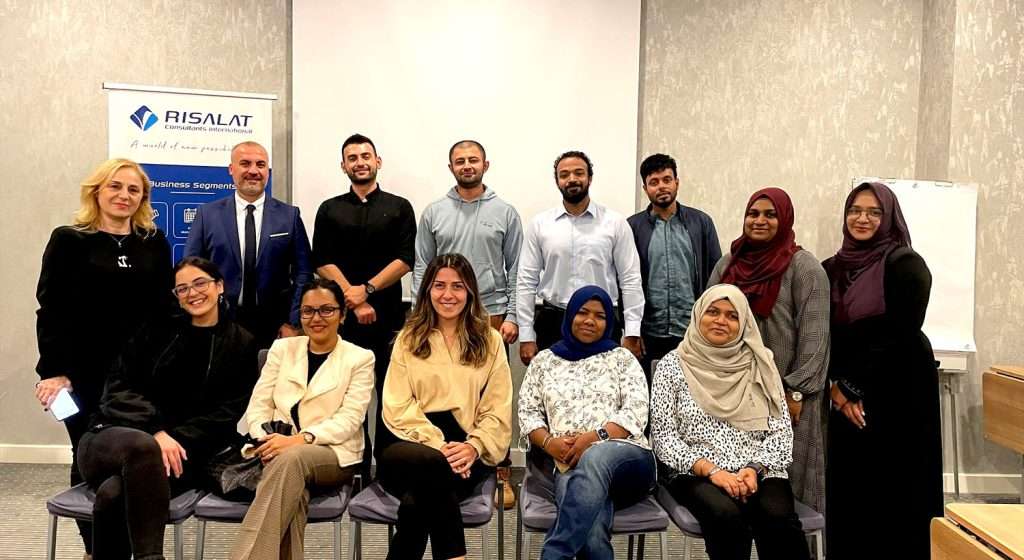
Delivered by Risalat Consultants International in Istanbul, Türkiye, the programme combines expert-led sessions, real cases, and group work, enabling participants to apply what they learn directly within their own institutions.
Le programme renforce les capacités institutionnelles en matière de :
- Planification des achats et analyse de marché
- Choisir les méthodes et approches de passation des marchés
- Rédiger des spécifications et des termes de référence
- Dossiers d'appel d'offres et critères d'évaluation
- Évaluation des offres et recommandations d'attribution
- Contract management and performance monitoring
- Variations, claims, and dispute avoidance
- Integrity, complaints, and record keeping
Why this matters now
Les organisations ont de plus en plus besoin de professionnels capables de :
- Planifier des marchés adaptés aux besoins et au calendrier du projet
- Rédiger des spécifications et des critères d'évaluation clairs
- Évaluer les offres de manière cohérente et défendre la décision
- Manage contracts, variations, and performance
- Tenir des dossiers complets pour l'audit et l'examen
Des systèmes solides de passation et de gestion des marchés aident les organisations à :
- Réduire les retards de passation des marchés et les appels d'offres infructueux
- Optimiser l'utilisation des ressources
- Réduire le risque de plaintes et d'observations d'audit
- Exécuter les contrats dans les délais et selon la qualité requise
Public concerné
Ce programme s'adresse à :
- Responsables et chargés de la passation des marchés
- Gestionnaires et administrateurs de contrats
- Gestionnaires de projets et de programmes
- Spécialistes en passation des marchés des UGP
- Membres des commissions d'évaluation
- Responsables financiers et budgétaires
- Personnel technique chargé de rédiger les spécifications
- Auditeurs internes et personnel chargé de la conformité
- Conseillers juridiques travaillant sur les contrats
- Fournisseurs et entrepreneurs travaillant avec des organismes publics
Cochez ce que votre équipe doit être capable de faire.
Objectifs du programme
À l'issue de ce programme, les participants seront en mesure de :
- Understand the complexities of logistics and supply chain management and planning
- Assess the benefits of good logistics and supply chain management
- Design an effective supply chain and logistics plan
- Establish constructive supplier relationships and administer effective distribution networks
- Master the tools required to achieve significant savings on inventory cost while keeping high customer service
- Identify the current trends in supply chain and logistics management
- Expliquer le cycle de passation des marchés et les règles qui s'y appliquent
- Élaborer un plan de passation des marchés lié au calendrier du projet
- Choisir une méthode et une approche du marché adaptées
- Rédiger des spécifications et des critères d'évaluation clairs
Training Structure & Contents
- Principles: value for money, fairness, and transparency
- Règles de passation des marchés nationales et des bailleurs
- Roles and responsibilities in the cycle
- Common causes of delay and failure
- Discussion de cas : un appel d'offres qui a mal tourné
- Atelier : le cycle de passation des marchés et ses règles, application à votre institution
- Analyse des besoins et étude de marché
- Planification et calendrier de passation des marchés
- Choosing the method and contract type
- Rédiger des spécifications et des termes de référence
- Exercise: specification for a real requirement
- Atelier : planification et spécifications, application à votre institution
- Dossiers d'appel d'offres et critères d'évaluation
- Commissions d'évaluation et conflits d'intérêts
- Évaluation technique et financière
- Rapport d'évaluation et recommandation d'attribution
- Exercise: evaluate sample bids with a scoring sheet
- Étude de cas : l'appel d'offres et l'évaluation en pratique
- Démarrage et lancement du contrat
- Suivi et reporting de l'exécution
- Variations, claims, and extensions
- Payments, guarantees, and retention
- Case study: managing a difficult contract
- Atelier : gestion des contrats, application à votre institution
- Signaux d'alerte et risques de fraude dans la passation des marchés
- Plaintes et délai d'attente
- Dossiers et préparation aux audits
- Performance indicators for procurement
- Plan d'action personnel pour votre unité
- Capstone Exercise: Logistics & Supply Chain Management Action Plan for Your Institution
Contenu détaillé jour par jour
Premier jour | Le cycle de passation des marchés et ses règles
- Principles: value for money, fairness, and transparency
- Règles de passation des marchés nationales et des bailleurs
- Roles and responsibilities in the cycle
- Common causes of delay and failure
- Discussion de cas : un appel d'offres qui a mal tourné
- Atelier : le cycle de passation des marchés et ses règles, application à votre institution
Deuxième jour | Planification et spécifications
- Analyse des besoins et étude de marché
- Planification et calendrier de passation des marchés
- Choosing the method and contract type
- Rédiger des spécifications et des termes de référence
- Exercise: specification for a real requirement
- Atelier : planification et spécifications, application à votre institution
Troisième jour | Appel d'offres et évaluation
- Dossiers d'appel d'offres et critères d'évaluation
- Commissions d'évaluation et conflits d'intérêts
- Évaluation technique et financière
- Rapport d'évaluation et recommandation d'attribution
- Exercise: evaluate sample bids with a scoring sheet
- Étude de cas : l'appel d'offres et l'évaluation en pratique
Quatrième jour | Gestion des contrats
- Démarrage et lancement du contrat
- Suivi et reporting de l'exécution
- Variations, claims, and extensions
- Payments, guarantees, and retention
- Case study: managing a difficult contract
- Atelier : gestion des contrats, application à votre institution
Cinquième jour | Intégrité, plaintes et plan d'action
- Signaux d'alerte et risques de fraude dans la passation des marchés
- Plaintes et délai d'attente
- Dossiers et préparation aux audits
- Performance indicators for procurement
- Plan d'action personnel pour votre unité
- Capstone Exercise: Logistics & Supply Chain Management Action Plan for Your Institution
Méthodologie de formation
The methodology applied throughout the course encourages the maximum participation of all attendees through an interactive contemporary adult learning approach. The tools deployed include open presentation, group discussions, video examples, individual assignments, and case studies. On the final day of the session, a practical exposure visit is arranged to observe the factual application of the theoretical concepts covered. Before the programme, a short pre-assessment helps facilitators understand each participant’s role and priorities to adjust examples and exercises, while each day concludes with a reflection on practical workplace application.
- Sessions animées par des experts sur les pratiques actuelles
- Études de cas régionales et internationales
- Travaux de groupe et exercices pratiques
- Simulations et jeux de rôle le cas échéant
- Discussion des défis rencontrés par les participants dans l’exercice de leurs fonctions
- Apprentissage entre pairs, d'institutions et de pays différents
- Des outils et modèles pratiques à réutiliser au travail
- Réflexion quotidienne et plan d'action
Résultats attendus
- Planifier des marchés adaptés aux besoins et au calendrier du projet
- Rédiger des spécifications et des critères d'évaluation clairs
- Évaluer les offres et documenter des décisions défendables
- Gérer l'exécution des contrats et les avenants
- Traiter correctement les signaux d'alerte et les plaintes
- Tenir des dossiers complets pour l'audit
4 150 £ par participant · facture et virement bancaire · remise pour les groupes de 5 personnes ou plus
Cinq personnes ou plus d'une même organisation : demandez le tarif de groupe lors de votre demande de facture.
Dix personnes ou plus : une version interne pour votre institution peut coûter moins cher par personne. Demandez un devis pour une formation interne.
Registration closes in 31 days (23 Dec 2026)
Profil du pays d'accueil
Istanbul is one of the world’s most strategically positioned logistics hubs, making it an ideal location for a Supply Chain Management Workshop. Situated at the crossroads of Europe and Asia, the city serves as a major global gateway for air, sea, rail, and road transport. Türkiye has a rapidly growing logistics sector ranked among the most dynamic in the region, featuring advanced ports, extensive free-trade zones, and strong integration with trans-Eurasian trade corridors such as the Middle Corridor and Belt & Road routes. Istanbul’s modern infrastructure, thriving manufacturing base, and expanding warehouse and distribution networks make it a living laboratory for logistics professionals. Participants gain direct exposure to regional logistics challenges and innovations, including multimodal transport, customs operations, digital supply-chain systems, and international trade facilitation. The city’s blend of modern industry and cultural dynamism creates a highly engaging environment for experiential learning and professional development.
Pertinence régionale & mise en application
Europe: European institutions apply procurement and contract management within detailed regulatory frameworks and reform agendas. Participants from Europe can compare their practice with colleagues from other regions and test how established methods work under different conditions.
Africa: Across Africa, ministries, agencies, and project teams working in procurement and contract management increasingly operate alongside donor-financed programmes that expect clear systems and evidence.
Who Will Deliver This Programme
Each date is delivered by a team assigned from Risalat's expert network for this subject. For this programme we assign:
How we choose them: Experience in the region of the participants or comparable settings; Command of the financier rules that apply (World Bank, ADB, AfDB, EU, UN) where relevant; Delivery in English; other languages on request for in-house groups; No conflict of interest with participants' institutions.
Training courses in IstanbulCours de formation en approvisionnement, chaîne d'approvisionnement et logistique
Pourquoi Istanbul pour ce programme
Istanbul se trouve entre l'Europe et l'Asie, avec des vols directs depuis la plupart des capitales et un visa facile à obtenir pour de nombreuses délégations.
The Logistics & Supply Chain Management Training in Istanbul programme in February 2027 brings together officials and professionals from across the Europe and Asia region and beyond. Sessions combine short inputs, case studies and group work on participants' own files, and the city's institutions can be added as a study visit on request.
Accès : aéroport d'Istanbul (IST).
Vérifiez si vous avez besoin d'un visa avec le vérificateur de visa gratuit, et demandez une lettre d'invitation une fois inscrit.
Le même thème dans d'autres villes
- Disaster Risk Management and Early Warning Systems in Sapporo (Sapporo)
- Mini Degree in Donor-Funded Project Management in Dubai (Dubai)
- Disaster Risk Management and Early Warning Systems in Kobe (Kobe)
- Mini Degree in Procurement and Contract Management in Dubai (Dubai)
- AI for Agriculture and Food Security Training in Accra (Accra)
- School Pedagogical Supervision, Inspection and Headteacher Coaching in Dakar (Dakar)
Autres programmes à Istanbul
- Mini Degree in Environmental and Social Safeguards in Istanbul
- AI for Public Procurement and Contract Management Training in Istanbul
- Risk-Based Internal Audit in the Public Sector in Istanbul
- AI Governance, Ethics and Risk in Istanbul
- Social Registry Dynamic Expansion and Shock-Triggered Cash Delivery in Istanbul
Teams often travel here from Pakistan, Afghanistan, Mongolia, Kazakhstan, Uzbekistan, Kyrgyzstan, Tajikistan, Turkmenistan. Funding, visa letters and group rates are explained on each country page.
- Cadre de passation des marchés et Règlement applicable aux projets Banque mondiale
- World Bank Projects and Operations Banque mondiale
Is there supply chain and logistics training for government officials in Istanbul in February 2027?
Can "Logistics & Supply Chain Management Training in Istanbul" be delivered in-house for one organisation?
Which other supply chain and logistics programmes does Risalat run?
Comment les organisations s'inscrivent-elles et paient-elles ?
Pour les équipes et les institutions
Bring your team
Teams that learn together apply more at work. Tell us how many people and how you would like to take part: we reply with a group quote within two working days.
Watch: this programme in short


Plus de formations en Türkiye · Tous les programmes en Europe · Calendrier complet des formations
Plan this programme in a roadmap: why it matters, why to approve it, the dates to plan and the career it builds.