要点总结
- Understanding the issue and its evidence. Unlike a watch or rigid medical sensor, an epidermal patch can conform closely to moving skin.
- Design choices and technical delivery. Electrical skin interfaces can support measurements such as electrophysiological signals, depending on design.
- Financing, procurement and governance. Touch, gesture or muscle-signal interfaces may be explored for accessibility and human-machine interaction.
- Implementation, safeguards and measurement. Continuous sensing can reveal sensitive health or behavioural patterns.
- Application to public agencies and donor-funded projects. Potential users include clinicians, rehabilitation teams, researchers and people requiring less obtrusive interfaces.
In short: Digital tattoos, also called epidermal electronics or electronic skin, are thin and flexible devices designed to follow the skin and collect or transmit signals. Some applications are promising research prototypes; claims of routine continuous blood-glucose or blood-pressure measurement need device-specific clinical evidence.
Research on stretchable and permeable epidermal electrodes shows advances in adhesion, conductivity and comfort. This does not mean that all advertised biometric functions have been clinically validated.
This updated guide revisits the original Risalat article while separating established concepts from claims that require fresh evidence. It is written for practitioners who must decide what to fund, procure, regulate or measure. Illustrative scenarios below are teaching examples, not reports of completed projects.
The earlier article also highlighted a continuing consideration: Privacy and security concerns also warrant careful consideration, as these devices will handle sensitive biometric data. Robust encryption protocols and stringent data protection measures must be implemented to safeguard users’ personal information from potential breaches or misuse. The practical implication is to test this proposition against current local evidence before applying it as policy.
The earlier article also highlighted a continuing consideration: As with any emerging technology, the development of digital tattoos faces several challenges. Ensuring long-term durability and reliability is paramount, as these devices must withstand the rigors of daily life while maintaining accurate data collection. Additionally, comfort and aesthetics play a crucial role in user adoption, as digital tattoos m. The practical implication is to test this proposition against current local evidence before applying it as policy.
The earlier article also highlighted a continuing consideration: While their potential in healthcare is undeniable, digital tattoos are not limited to mere monitoring functions. These advanced devices can also serve as interactive interfaces, allowing users to control and communicate with various electronic devices. Imagine being able to unlock your smartphone, adjust the settings on your smart home appliances. The practical implication is to test this proposition against current local evidence before applying it as policy.
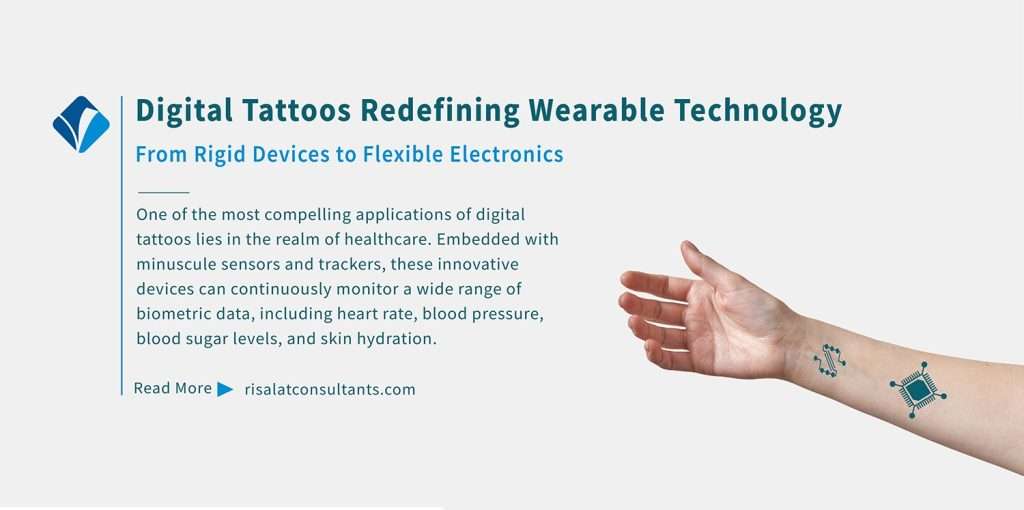
The earlier article also highlighted a continuing consideration: Unlike traditional wearable devices that often feel obtrusive or cumbersome, digital tattoos merge the artistry of body art with cutting-edge scientific advancements. These ultra-thin, flexible patches are designed to adhere directly to the skin, blending seamlessly with the contours of the human form. Crafted from innovative materials like graphen. The practical implication is to test this proposition against current local evidence before applying it as policy.
Understanding the issue and its evidence
What makes a digital tattoo different
Unlike a watch or rigid medical sensor, an epidermal patch can conform closely to moving skin. Thin conductive traces, flexible substrates and soft adhesives help maintain contact during ordinary movement.
Before setting a target for what makes a digital tattoo different, the responsible team should define the population or asset covered, the current condition and the source of its baseline information. A useful baseline records both what is known and what remains uncertain. In a project appraisal, this prevents a plausible narrative from being mistaken for evidence of demand or impact.
Materials and manufacturing
Researchers investigate conductive polymers, carbon-based materials and patterned metals. Engineering trade-offs include stretchability, electrical noise, skin irritation, sweat exposure and manufacturing consistency.
The practical test for materials and manufacturing is whether two independent reviewers would reach a similar conclusion using the same records. Specify the definition of success, the relevant technical standard and the point at which a design needs reconsideration. Document exceptions openly rather than averaging away difficult cases.
Design choices and technical delivery
Established and experimental measurements
Electrical skin interfaces can support measurements such as electrophysiological signals, depending on design. Non-invasive glucose estimates, continuous blood pressure and diagnostic claims require separate validation against appropriate reference methods.
Consider a hypothetical pilot focused on established and experimental measurements. The implementation team should begin with a narrowly defined use case, test it under ordinary operating conditions and record user experience alongside technical performance. Procurement should permit correction of design defects before large-scale roll-out.
Data quality and clinical usefulness
A sensor that produces frequent readings is not necessarily clinically useful. Researchers must establish accuracy, repeatability, artefact handling, calibration requirements and meaningful decision thresholds.
Operational readiness for data quality and clinical usefulness includes trained staff, a maintenance budget, reliable data and a route for complaints. If one of these is missing, the project may meet its construction or installation milestone while failing to deliver the intended service. Acceptance criteria should therefore include observed performance, not just equipment delivery.
Financing, procurement and governance
Interactive interfaces
Touch, gesture or muscle-signal interfaces may be explored for accessibility and human-machine interaction. Practical deployment requires reliable signal interpretation, fail-safe behaviour and user control.
For interactive interfaces, a business case should distinguish initial investment from recurring costs. Compare alternatives on a common time horizon, including training, replacement, supervision and the cost of service interruptions. The cheapest compliant tender may not provide the lowest whole-life cost.
Comfort, durability and maintenance
Adhesion may change with perspiration, movement and washing. Trials should test different skin types, activity levels, wear durations and safe removal procedures rather than relying on a laboratory demonstration.
Governance of comfort, durability and maintenance should clarify who approves changes, who holds the supplier accountable and who pays when assumptions prove wrong. A decision log helps explain trade-offs to auditors and affected communities. Material changes should be reflected in the budget, schedule and risk register before approval.
Decision check: Has the team compared a do-nothing baseline, a limited pilot and a scaled intervention using the same cost, risk and outcome criteria? Record the assumptions behind each option and the reason for selecting one.
Implementation, safeguards and measurement
Privacy of biometric information
Continuous sensing can reveal sensitive health or behavioural patterns. Data minimisation, encryption, consent, retention limits and clear rules on secondary use should be designed before deployment.
A practical control for privacy of biometric information is to assign an owner, a reporting interval and an action threshold. Monitoring is useful only when findings lead to a decision: investigate, correct, redesign or stop. The threshold should be established before the data are reviewed to reduce pressure to declare success.
Clinical regulation and procurement
A wellness prototype and a regulated medical device are not interchangeable. Buyers should check intended use, clinical evidence, applicable approval pathways and post-market responsibilities.
Evaluation of clinical regulation and procurement should look for unintended effects as well as intended benefits. Record who gains access, who bears costs and whether outcomes differ across locations or user groups. When attribution is uncertain, describe the limitations instead of presenting a correlation as proof of impact.
Practical exercise: Give a cross-functional team the baseline, budget and two alternative designs. Ask it to prepare a one-page decision note identifying the main uncertainty, three implementation risks, the evidence required for approval and the trigger for corrective action.
Application to public agencies and donor-funded projects
Workforce and accessibility implications
Potential users include clinicians, rehabilitation teams, researchers and people requiring less obtrusive interfaces. Co-design with intended users helps avoid devices that are technically impressive but uncomfortable or inaccessible.
A ministry or project implementation unit addressing workforce and accessibility implications can start with a short diagnostic: map mandates, list approvals, identify missing skills and test whether the proposed intervention fits existing operating arrangements. The result should be a prioritised workplan with named owners, deadlines and verifiable deliverables.
Public-sector pilots
A public hospital pilot should define a clinical question, comparison standard, consent process, incident pathway and independent evaluation. Procurement should avoid assuming that future research capabilities are already available commercially.
In donor-financed work, public-sector pilots should be reflected in procurement specifications, financial planning, stakeholder engagement and reporting where relevant. The financing agreement and applicable national law determine the actual obligations. Teams should verify those instruments rather than assume a single donor procedure applies everywhere.
First 30 days: Verify the baseline and consult affected users or operators. Review the first four issues in this guide against available local data. Produce a short list of evidence gaps and decisions that cannot safely be deferred.
Days 31 to 60: Test one feasible intervention, refine the technical specification and confirm whole-life financing. Agree responsibilities between policy owners, implementing agencies, suppliers and oversight bodies. Publish a risk register and a monitoring plan that can be maintained with existing capacity.
Days 61 to 90: Review early results with users and independent specialists, correct weak assumptions and decide whether to expand, redesign or discontinue the intervention. Preserve the lessons in procurement templates and operating procedures so the next project does not repeat avoidable mistakes.
For a field review of privacy of biometric information, collect the relevant operating records and speak separately with service users, front-line personnel and the budget holder. Compare their descriptions of the problem and record where they disagree. A discrepancy can indicate a missing measurement, an incentive problem or a genuine difference in experience. A pilot should be designed to resolve that specific uncertainty before public funds are committed to expansion.
Risalat supports institutions with diagnostic assessments, applied learning and advisory services. Teams can begin with the institutional capacity assessment, explore the diagnostic centre and request a tailored proposal where external support is justified.
Evidence and further reading: The following primary sources informed this update. Readers should consult the underlying publications for scope, dates and methodological limitations.
常见问题
What should institutions check about what makes a digital tattoo different?
Unlike a watch or rigid medical sensor, an epidermal patch can conform closely to moving skin. Thin conductive traces, flexible substrates and soft adhesives help maintain contact during ordinary movement. Check the local baseline, technical requirements and responsibilities before scaling a proposed solution.
What should institutions check about established and experimental measurements?
Electrical skin interfaces can support measurements such as electrophysiological signals, depending on design. Non-invasive glucose estimates, continuous blood pressure and diagnostic claims require separate validation against appropriate reference methods. Check the local baseline, technical requirements and responsibilities before scaling a proposed solution.
What should institutions check about interactive interfaces?
Touch, gesture or muscle-signal interfaces may be explored for accessibility and human-machine interaction. Practical deployment requires reliable signal interpretation, fail-safe behaviour and user control. Check the local baseline, technical requirements and responsibilities before scaling a proposed solution.
What should institutions check about privacy of biometric information?
Continuous sensing can reveal sensitive health or behavioural patterns. Data minimisation, encryption, consent, retention limits and clear rules on secondary use should be designed before deployment. Check the local baseline, technical requirements and responsibilities before scaling a proposed solution.
What should institutions check about workforce and accessibility implications?
Potential users include clinicians, rehabilitation teams, researchers and people requiring less obtrusive interfaces. Co-design with intended users helps avoid devices that are technically impressive but uncomfortable or inaccessible. Check the local baseline, technical requirements and responsibilities before scaling a proposed solution.
认识应该阅读本文的人?成为Risalat大使,或以您本人名义与Risalat合作撰写文章。
自2011年以来始终是项目成功的合作伙伴,为政府部委、公共机构和项目团队提供诊断评估、咨询支持与应用型学习。