关键信息
- 日期
- 2027年2月1–5日(5天)
- 地点
- Four Points by Sheraton Ljubljana Mons, Ljubljana, Slovenia
- 每位学员费用
- £3,910(英镑)
- 付款
- 通过发票和银行转账付款
- 报名截止
- 2026年12月23日
- 证书
- 结业证书
- 内训选项
- 按您的日期,为您的团队专场举办
培训项目概述
Sustainable Tourism Training has become increasingly important as governments, tourism authorities, municipalities, development partners, and local communities seek to strengthen sustainable economic growth, protect natural and cultural assets, improve destination competitiveness, and create inclusive livelihood opportunities. Tourism is no longer measured solely by visitor numbers but by its contribution to local prosperity, environmental sustainability, cultural preservation, community wellbeing, and long-term resilience.
Around the world, governments are adopting integrated approaches that combine sustainable destination management, community-based tourism, creative economies, cultural heritage, environmental stewardship, smart tourism, and local enterprise development. These approaches help destinations diversify local economies, strengthen regional competitiveness, create employment opportunities, encourage private-sector investment, and improve visitor experiences while preserving the unique identity of communities.
This Sustainable Tourism, Destination Management & Local Economic Development Training equips participants with practical knowledge, internationally recognized frameworks, standards, and best practices, and implementation-focused strategies to strengthen tourism governance, destination planning, community participation, tourism value chains, creative economy development, sustainable investment, climate resilience, and local economic development.
Participants will explore sustainable tourism policies, destination management systems, tourism governance, visitor experience design, creative industries, tourism entrepreneurship, destination branding, rural tourism, digital tourism, tourism investment, climate-resilient destinations, smart tourism, Artificial Intelligence applications in tourism, tourism data analytics, and public-private partnerships that strengthen sustainable tourism ecosystems.
Professionals seeking stronger capabilities in tourism planning, hospitality excellence, and destination competitiveness may also benefit from our Customer Service Excellence, Professional Ethics & Tour Guiding Training.
本培训项目可在以下方面加强机构能力
- Sustainable tourism policy
- 目的地管理
- Tourism governance
- Community-based tourism
- Rural tourism development
- Local economic development
- Tourism value chain development
- Creative economy
- 文化遗产管理
- Tourism entrepreneurship
- SME development
- Tourism investment promotion
- Sustainable destination branding
- Tourism infrastructure planning
- Visitor experience management
- Smart tourism
- Digital tourism
- Artificial Intelligence in tourism
- Tourism data analytics
- Climate-resilient tourism
- Green destination management
- Circular tourism economy
- 公私合作伙伴关系
- Women and youth entrepreneurship
- Tourism marketing
- Tourism quality standards
- Institutional coordination
- Regional competitiveness
The programme combines internationally recognized sustainable tourism frameworks with practical applications relevant to tourism ministries, municipalities, destination management organizations, regional development agencies, donor-funded projects, NGOs, investment promotion agencies, cultural institutions, national parks authorities, and organizations responsible for sustainable tourism and local economic development.
- 资金
- 实体
- 项目
- 结果
- MRV(监测、报告与核查)
The Growing Importance of Sustainable Tourism, Destination Management & Local Economic Development
Tourism has become one of the world’s largest economic sectors and an increasingly important driver of employment, entrepreneurship, regional development, foreign investment, and community wellbeing. Governments are increasingly recognizing that sustainable tourism supports not only visitor growth but also environmental conservation, cultural preservation, climate resilience, and inclusive economic development.
Destinations that successfully integrate sustainability into tourism planning are better positioned to attract responsible investment, improve visitor satisfaction, strengthen local enterprises, create quality employment opportunities, and preserve natural and cultural resources for future generations.
Modern tourism systems increasingly combine destination governance, digital innovation, community participation, smart infrastructure, environmental management, and creative industries to build resilient visitor economies that benefit both residents and visitors.
各机构日益需要具备以下能力的专业人员:
- Developing sustainable tourism policies
- Strengthening destination governance
- Supporting community-based tourism
- Promoting local enterprise development
- Improving destination competitiveness
- Managing tourism value chains
- Enhancing visitor experiences
- Developing destination brands
- Supporting tourism investment
- Integrating digital tourism technologies
- Applying Artificial Intelligence in tourism
- Managing tourism data
- Promoting sustainable mobility
- Strengthening public-private partnerships
- Supporting climate adaptation
- Building resilient tourism destinations
Strong sustainable tourism systems help organizations:
- Increase tourism competitiveness
- Generate local employment
- Strengthen SMEs
- Improve visitor satisfaction
- Protect natural resources
- Preserve cultural heritage
- Support rural development
- Improve destination resilience
- Increase tourism investment
- Strengthen institutional coordination
- Promote inclusive economic growth
- Improve long-term sustainability
Weak destination planning, fragmented governance, poor visitor management, inadequate infrastructure, limited community participation, and unsustainable tourism practices can reduce competitiveness, damage natural resources, weaken local economies, and limit long-term tourism growth.
As tourism continues to evolve, destinations are increasingly integrating smart technologies, Artificial Intelligence, sustainable mobility, digital marketing, visitor analytics, climate adaptation, and regenerative tourism principles to create more resilient, competitive, and sustainable tourism ecosystems.
Who Should Attend This Sustainable Tourism Training?
本培训项目适合:
- Tourism Ministry Officials
- 市政府官员
- Destination Management Organizations
- Tourism Board Executives
- Local Government Authorities
- Regional Development Agencies
- Community Development Specialists
- Economic Development Officers
- Urban and Regional Planners
- Cultural Heritage Professionals
- National Parks Authorities
- Protected Area Managers
- Tourism Investment Promotion Agencies
- Hospitality Managers
- Tourism Consultants
- SME Development Agencies
- Entrepreneurship Support Organizations
- Chambers of Commerce
- NGOs and INGOs
- 捐助方资助项目团队
- World Bank, UN and ADB Project Staff
- Women and Youth Development Programme Managers
- Local Economic Development Specialists
- Tourism Researchers
- Sustainable Development Professionals
勾选您的团队需要具备的能力。
Sustainable Tourism Training Objectives
Upon successful completion of this Sustainable Tourism Training, participants will be able to:
- Develop sustainable tourism policies and destination management strategies.
- Strengthen tourism governance and institutional coordination.
- Design community-based tourism initiatives that generate inclusive local livelihoods.
- Promote creative economy development and tourism-related entrepreneurship.
- Apply sustainable destination planning and visitor management approaches.
- Integrate cultural heritage and natural assets into tourism development strategies.
- Strengthen tourism value chains and local SME participation.
- Enhance destination branding, marketing, and competitiveness.
- Promote women and youth participation in tourism economies.
- Improve tourism investment planning and public-private partnerships.
- Apply digital technologies, Artificial Intelligence, and tourism data analytics to improve destination management.
- Support climate-resilient, regenerative, and environmentally sustainable tourism practices.
- Develop practical institutional action plans to strengthen sustainable tourism and local economic development.
This programme strengthens organizational capability in sustainable tourism governance, destination competitiveness, tourism investment, creative economy development, community engagement, environmental sustainability, digital tourism, and long-term regional economic resilience.
培训项目内容与结构
- Global trends in sustainable tourism
- Principles of sustainable destination development
- Tourism governance and institutional coordination
- Tourism policy and regulatory frameworks
- Destination competitiveness
- Tourism value chains and local economic development
- Community participation in tourism
- Community-based tourism models
- Rural tourism development
- Creative economy ecosystems
- Cultural heritage tourism
- Tourism entrepreneurship
- Local products and value-added industries
- Tourism-linked MSMEs
- Destination branding strategies
- Place marketing
- Visitor experience management
- Tourism quality standards
- Tourism infrastructure planning
- Investment promotion
- Tourism public-private partnerships
- Smart tourism ecosystems
- Digital tourism transformation
- Artificial Intelligence applications in tourism
- Tourism data analytics
- Digital visitor engagement
- Smart destination management
- Climate change and tourism
- Technical visits to sustainable tourism destinations in Slovenia (subject to availability)
- Green destination management practices
- Community tourism initiatives
- Heritage conservation and visitor management
- Tourism entrepreneurship and local enterprise development
- Destination governance in practice
- Lessons from Slovenia’s sustainable tourism model
完整的每日课程内容
First Day | Foundations of Sustainable Tourism, Destination Management & Tourism Governance
- Global trends in sustainable tourism
- Principles of sustainable destination development
- Tourism governance and institutional coordination
- Tourism policy and regulatory frameworks
- Destination competitiveness
- Tourism value chains and local economic development
- Community participation in tourism
- Responsible tourism principles
- Tourism stakeholder engagement
- Sustainable tourism performance indicators
Workshop: Sustainable Tourism Destination Assessment
Modern tourism destinations increasingly integrate environmental sustainability, community participation, economic development, and effective governance to strengthen long-term competitiveness and visitor satisfaction.
Second Day | Community-Based Tourism, Creative Economy & Local Livelihood Development
- Community-based tourism models
- Rural tourism development
- Creative economy ecosystems
- Cultural heritage tourism
- Tourism entrepreneurship
- Local products and value-added industries
- Tourism-linked MSMEs
- Women and youth entrepreneurship
- Agritourism development
- Tourism value chain integration
Workshop: Designing Community Tourism & Local Enterprise Development Strategies
Successful destinations create sustainable economic opportunities by strengthening local businesses, preserving cultural identity, and increasing community participation throughout the tourism value chain.
Third Day | Destination Branding, Visitor Experience & Tourism Investment
- Destination branding strategies
- Place marketing
- Visitor experience management
- Tourism quality standards
- Tourism infrastructure planning
- Investment promotion
- Tourism public-private partnerships
- Sustainable accommodation and hospitality
- Events and cultural tourism
- Tourism competitiveness benchmarking
Case Study: Building Competitive and Sustainable Tourism Destinations
High-performing destinations combine strong branding, quality services, sustainable investment, and exceptional visitor experiences to remain competitive in international tourism markets.
Fourth Day | Smart Tourism, Digital Innovation & Climate-Resilient Destinations
- Smart tourism ecosystems
- Digital tourism transformation
- Artificial Intelligence applications in tourism
- Tourism data analytics
- Digital visitor engagement
- Smart destination management
- Climate change and tourism
- Regenerative tourism
- Circular tourism economy
- Sustainable mobility
- Environmental certification and green destination standards
Workshop: Developing a Smart & Sustainable Tourism Strategy
Digital technologies, Artificial Intelligence, and sustainability innovations are transforming how destinations manage visitors, improve services, protect natural resources, and enhance competitiveness.
Fifth Day | Technical Visits, International Best Practices & Institutional Action Planning
- Technical visits to sustainable tourism destinations in Slovenia (subject to availability)
- Green destination management practices
- Community tourism initiatives
- Heritage conservation and visitor management
- Tourism entrepreneurship and local enterprise development
- Destination governance in practice
- Lessons from Slovenia’s sustainable tourism model
- Institutional benchmarking
- Developing tourism transformation roadmaps
- Building implementation partnerships
Capstone Exercise: Sustainable Tourism & Destination Development Action Plan
Participants develop practical institutional action plans to strengthen tourism governance, improve destination competitiveness, promote inclusive local economic development, and implement sustainable tourism strategies within their own organizations.
Sustainable Tourism Training Methodology
This Sustainable Tourism Training adopts a highly practical, participant-centered, and implementation-oriented learning approach that combines internationally recognized sustainable tourism frameworks with successful destination management practices from Slovenia and other leading tourism destinations worldwide.
本培训项目融合了:
- Executive-led presentations
- International tourism case studies
- Destination management workshops
- Sustainable tourism policy analysis
- Community-based tourism simulations
- Creative economy and entrepreneurship exercises
- Destination branding workshops
- Visitor experience design activities
- Tourism investment and public-private partnership discussions
- Smart tourism and Artificial Intelligence demonstrations
- Group discussions and executive peer learning
- 机构自我评估
- Technical visits (where applicable)
- Development of organization-specific Sustainable Tourism Action Plans
Throughout the programme, participants will work on practical scenarios reflecting challenges commonly encountered by tourism ministries, municipalities, destination management organizations, development agencies, donor-funded projects, and tourism investment authorities.
By the end of the programme, participants will develop practical institutional action plans outlining priority initiatives to strengthen tourism governance, improve destination competitiveness, enhance community participation, promote sustainable local economic development, and support long-term tourism resilience.
- 收集
- 清洗
- 存储
- 分析
- 决策
预期成果
Upon completion of this Sustainable Tourism Training, participants will be able to:
- Develop sustainable tourism policies and destination strategies
- Strengthen tourism governance and institutional coordination
- Improve destination management and visitor experience
- Promote community-based tourism initiatives
- Support creative economy and cultural enterprise development
- Enhance tourism value chains and local enterprise participation
- Strengthen tourism investment promotion
- Improve destination branding and competitiveness
- Integrate digital technologies and Artificial Intelligence into tourism management
- Promote climate-resilient and environmentally sustainable tourism
- Develop practical institutional action plans for sustainable tourism and local economic development
Participants will leave the programme with practical tools, internationally recognized frameworks, and implementation strategies that strengthen destination competitiveness, improve tourism governance, enhance community livelihoods, and promote sustainable economic growth.
每位学员£3,910 · 通过发票和银行转账付款 · 5人及以上团体报名可享优惠
同一机构五人及以上:请在申请发票时索取团体价。
Ten or more: an in-house version for your institution may cost less per person. Ask for an in-house quote.
Registration closes in 51 days (23 Dec 2026)
Institutional Application of Sustainable Tourism Training
本培训项目帮助机构加强:
- Sustainable tourism governance
- Destination management systems
- Tourism policy development
- Community-based tourism
- Creative economy initiatives
- 文化遗产管理
- Tourism entrepreneurship
- Local economic development
- Tourism investment promotion
- 公私合作伙伴关系
- Smart tourism initiatives
- Climate-resilient tourism planning
- Tourism marketing and branding
- Institutional coordination
- Regional competitiveness
学员将带着实用工具回到工作岗位,以提升:
- Tourism planning
- Destination competitiveness
- Visitor experience
- Local business participation
- Tourism investment
- 社区参与
- Sustainable destination management
- Tourism service quality
- Institutional collaboration
- Long-term tourism resilience
Strong sustainable tourism systems enable destinations to generate inclusive economic growth, strengthen local enterprises, preserve natural and cultural assets, improve visitor satisfaction, and enhance long-term regional competitiveness.
区域相关性与应用
欧洲
Supporting sustainable destination management, green tourism, cultural heritage preservation, rural tourism, smart destinations, and regional economic competitiveness.
非洲
Strengthening community-based tourism, eco-tourism, cultural tourism, tourism investment, SME development, and tourism-led local economic growth.
中东
Supporting destination diversification, cultural tourism, heritage conservation, tourism governance, sustainable investment, and visitor experience enhancement.
亚洲
Strengthening tourism competitiveness, smart tourism, sustainable destination planning, digital tourism transformation, creative economy development, and tourism innovation.
太平洋地区
Supporting sustainable island tourism, eco-tourism, climate-resilient tourism development, community participation, and destination sustainability.
Across these regions, governments and development partners increasingly require professionals capable of strengthening tourism governance, promoting sustainable destinations, supporting local livelihoods, enhancing destination competitiveness, and building resilient tourism economies.
Host Country Profile – Slovenia
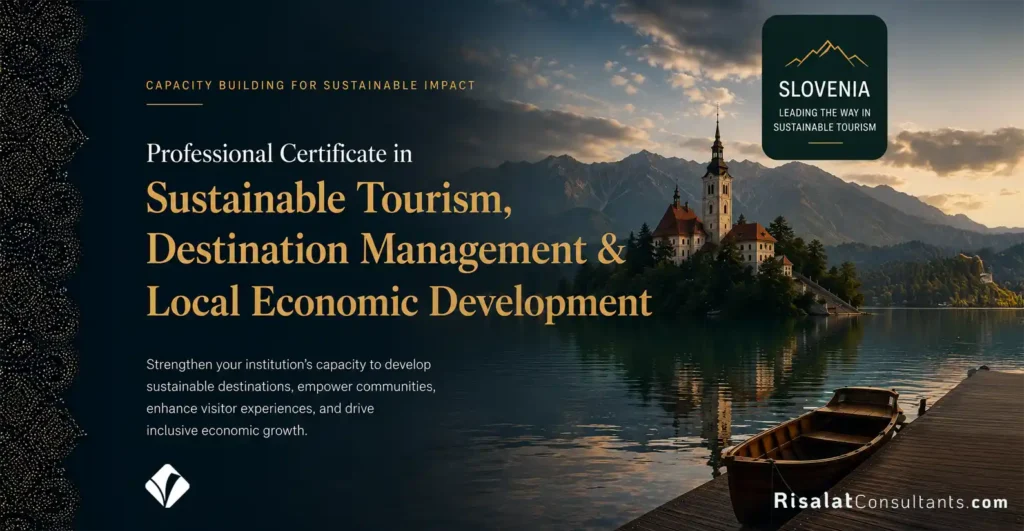
Slovenia has established itself as one of Europe’s leading sustainable tourism destinations and is internationally recognized for its commitment to green destination management, environmental stewardship, community participation, and responsible tourism development. Through its nationally recognized Slovenia Green programme and sustainable destination certification initiatives, the country has become a global model for balancing tourism growth with environmental protection, cultural preservation, and local economic development.
Ljubljana, the capital of Slovenia and a recipient of numerous international sustainability awards, provides participants with valuable exposure to integrated destination management, sustainable urban tourism, smart mobility, green public spaces, cultural heritage conservation, and visitor-centered tourism planning. Beyond the capital, Slovenia’s renowned destinations, including Lake Bled, Postojna Cave, and its rural tourism regions, demonstrate successful approaches to community-based tourism, nature conservation, local entrepreneurship, agri-tourism, and regional destination development.
Participants will gain practical insights into sustainable tourism governance, destination branding, tourism investment, visitor experience management, climate-resilient tourism, and public-private collaboration that can be adapted to strengthen tourism development, local livelihoods, and institutional performance within their own countries.
Sustainable Tourism Training Deliverables
学员将享受全方位服务,涵盖培训前、培训期间和培训后所需的一切。
培训开始前
- 学员训前评估
- Sustainable Tourism & Destination Management Readiness Assessment
- Institutional Tourism Capacity Assessment
- 培训项目简介与课前阅读资料
- Sustainable Tourism Reference Resources
- 免费签证支持与咨询
- 抵达前协调与出行指引
培训期间
- 机场接机与欢迎协助
- 住宿(含每日早餐)
- 欢迎交流晚宴
- Risalat Executive Training Kit (Bag, Water Bottle, Coffee Mug, T-Shirt, Cap, Passport Cover, Pens, Notebook, Magnet & Keychain)
- 全面的培训手册
- Sustainable Tourism Toolkit
- Destination Management Frameworks
- Community-Based Tourism Planning Toolkit
- Tourism Value Chain Assessment Templates
- Tourism Investment & Public-Private Partnership Resources
- Destination Branding & Marketing Toolkit
- Visitor Experience Management Guide
- Sustainable Tourism Case Studies
- Smart Tourism & Artificial Intelligence Resources
- Tourism Data Analytics Templates
- Interactive Workshops & Group Exercises
- Executive Peer Learning Sessions
- 每日午餐与茶歇
- 全面使用培训场地设施
- 迷你平板电脑中的数字学习资料(学员可保留设备)
- Technical Study Visits (where applicable)
- 城市休闲观光
- 结业证书
- Risalat培训项目参与表彰奖
培训结束后
- Electronic Training Materials
- Sustainable Tourism Toolkit
- Destination Planning Templates
- Institutional Action Planning Framework
- 机构落地实施的实用建议
- Three (3) Months of Post-Training Technical Support
- 培训项目报告
- 获取最新学习资源(如有)
Common Challenges in Sustainable Tourism, And How This Training Helps
How can destinations balance tourism growth with environmental sustainability?
Participants learn internationally recognized approaches to sustainable destination planning, environmental management, visitor carrying capacity, and responsible tourism that support long-term tourism growth while protecting natural and cultural assets.
How can governments strengthen destination competitiveness?
The programme explores destination governance, tourism policy, investment promotion, visitor experience management, and destination branding strategies that improve competitiveness and attract responsible tourism investment.
How can communities benefit more from tourism?
Participants examine practical approaches to community-based tourism, local enterprise development, tourism value chains, and inclusive economic participation that increase employment and strengthen local livelihoods.
How can tourism authorities improve destination management?
The training provides practical guidance on integrated destination management, stakeholder coordination, tourism planning, public-private partnerships, and institutional governance that support sustainable tourism development.
How can destinations improve visitor experiences?
Participants learn practical techniques for visitor journey mapping, tourism service quality, destination interpretation, tourism infrastructure planning, and customer experience management that increase visitor satisfaction and destination loyalty.
How can tourism organizations embrace digital transformation?
The programme demonstrates how smart tourism technologies, Artificial Intelligence, tourism analytics, digital marketing, and data-driven decision-making improve operational efficiency, destination promotion, and visitor engagement.
How can destinations become more resilient to climate change?
Participants explore climate adaptation strategies, regenerative tourism, green infrastructure, sustainable mobility, circular tourism practices, and resilience planning that strengthen destination sustainability and long-term competitiveness.
How can tourism investment support sustainable local development?
The programme examines investment attraction, tourism entrepreneurship, SME development, destination financing, and public-private partnerships that promote inclusive economic growth while preserving environmental and cultural resources.
How can tourism organizations prepare for the future of sustainable tourism?
Participants gain practical knowledge of emerging trends including Artificial Intelligence, smart destinations, regenerative tourism, digital visitor management, sustainable certification, tourism innovation, and future-ready destination strategies.
All programmes in Ljubljana更多气候变化与环境培训项目
Why Ljubljana for this programme
Ljubljana, Slovenia, was chosen for this programme because it is easy to reach for the participants we expect and has suitable venues for practical, interactive training.
The Professional Certificate in Sustainable Tourism, Destination Management & Local Economic Development programme in February 2027 brings together officials and professionals. Sessions combine short inputs, case studies and group work on participants' own files, and the city's institutions can be added as a study visit on request.
使用免费的签证查询工具确认您是否需要签证,完成报名后即可申请邀请函。