关键信息
- 日期
- 2027年2月8–12日(5天)
- 地点
- 格鲁吉亚巴统Grand Gloria酒店
- 每位学员费用
- £3,525 (GBP)
- 付款
- 通过发票和银行转账付款
- 报名截止
- 2026年12月30日
- 适用对象
- Development and Humanitarian Programme Managers; Conflict Prevention and Peacebuilding Specialists; Project and Programme Officers
- 证书
- 结业证书
- 内训选项
- 按您的日期,为您的团队专场举办
培训项目介绍
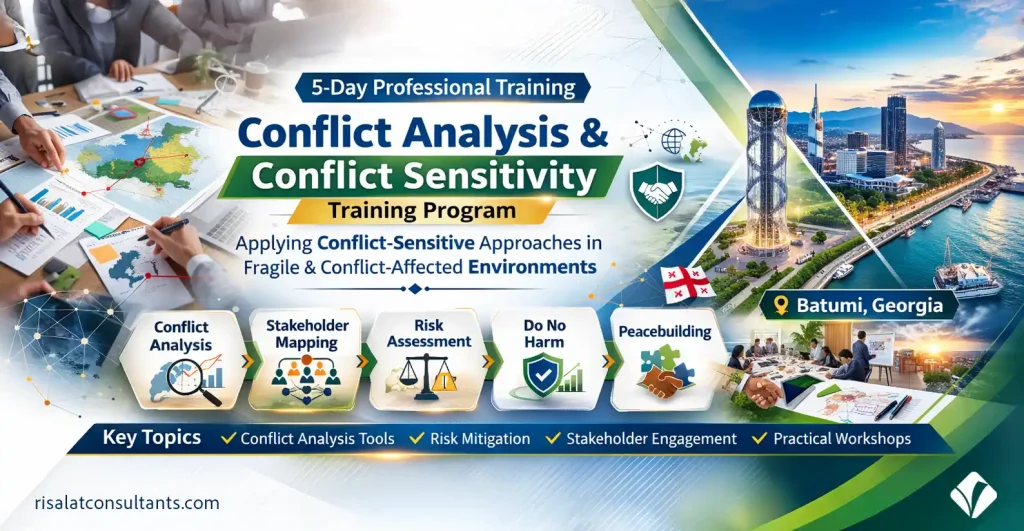
Conflict Analysis & Conflict Sensitivity Training focuses on strengthening the analytical and operational capacities required to design and implement programmes in fragile, conflict-affected, and politically sensitive environments. In many development, humanitarian, and governance contexts, projects operate in complex environments where social, political, and economic tensions influence programme outcomes. Understanding conflict dynamics and applying conflict-sensitive approaches are therefore essential to ensure that interventions do not unintentionally exacerbate tensions.
This Conflict Analysis & Conflict Sensitivity Training equips professionals with practical tools to assess conflict drivers, map key actors, and integrate conflict-sensitive approaches into project planning and implementation. Participants will explore analytical frameworks used in development and humanitarian programming to understand conflict dynamics, stakeholder relationships, and structural drivers of instability.
The programme introduces practical conflict analysis tools such as conflict mapping, stakeholder analysis, conflict tree analysis, and context mapping techniques used by international organizations. Participants will learn how to interpret conflict dynamics and apply “Do No Harm” principles to ensure that development or humanitarian interventions contribute positively to social stability and peacebuilding.
The training emphasizes applied learning through case studies, group exercises, and scenario-based simulations that allow participants to practice conflict analysis techniques and integrate conflict-sensitive strategies within project management processes.
Organizations working in fragile and conflict-affected environments must integrate conflict-sensitive planning into development interventions. Professionals seeking broader approaches to peacebuilding and conflict resolution may also explore our Conflict Management & Peacebuilding Course in Istanbul.
This programme reflects internationally recognized conflict sensitivity and peacebuilding approaches widely used in development cooperation, humanitarian programming, governance reform, and community development initiatives.
Target Audience for Conflict Analysis & Conflict Sensitivity Training
This programme is designed for professionals working in development, humanitarian, governance, and community-based programmes operating in fragile or conflict-sensitive environments, including:
- Development and Humanitarian Programme Managers
- Conflict Prevention and Peacebuilding Specialists
- Project and Programme Officers
- NGO and International Organization Staff
- Monitoring and Evaluation Specialists
- Government Officials involved in community development programmes
- Policy Advisors and Governance Experts
- Field Coordinators and Community Development Practitioners
- Researchers working on conflict and social stability
勾选您的团队需要具备的能力。
Programme Objectives of Conflict Analysis & Conflict Sensitivity Training
成功完成本培训后,学员将能够:
- Understand key concepts and frameworks used in conflict analysis
- Identify structural drivers, triggers, and dynamics of conflict
- Map key stakeholders and actors influencing conflict situations
- Apply conflict analysis tools to development and humanitarian programmes
- Integrate conflict sensitivity approaches within programme design and implementation
- Apply “Do No Harm” principles in fragile and conflict-affected contexts
- Strengthen risk analysis and conflict mitigation strategies
- Improve programme effectiveness in conflict-sensitive environments
Programme Structure & Content – Conflict Analysis Framework
- Introduction to conflict theory and conflict dynamics
- Understanding structural and proximate causes of conflict
- Conflict drivers and conflict triggers
- Understanding fragility and political economy of conflict
- Actors and stakeholder analysis
- Conflict Tree Analysis
- Conflict Mapping Techniques
- Conflict Iceberg Model
- Conflict Escalation Framework
- Stakeholder and power analysis
- Gender dimensions in conflict analysis
- Understanding conflict sensitivity in development programming
- Dividers and connectors analysis
- Identifying unintended programme impacts
- Integrating conflict-sensitive approaches into project planning
- Peace and Conflict Impact Assessment (PCIA)
- Conflict-sensitive programme design
- Conflict risk assessment in development projects
- Stakeholder engagement strategies in fragile contexts
- Conflict-sensitive budgeting and resource allocation
- Adaptive programming in dynamic conflict environments
- Conflict-sensitive monitoring and evaluation
- Early warning indicators and conflict monitoring systems
- Managing operational risks in fragile environments
- Community engagement and dialogue mechanisms
- Institutional strategies for conflict-sensitive programming
完整的每日课程内容
First Day | Foundations of Conflict Analysis
- Introduction to conflict theory and conflict dynamics
- Understanding structural and proximate causes of conflict
- Conflict drivers and conflict triggers
- Understanding fragility and political economy of conflict
- Actors and stakeholder analysis
Applied Exercise: Conflict context mapping
Second Day | Conflict Analysis Tools and Frameworks
- Conflict Tree Analysis
- Conflict Mapping Techniques
- Conflict Iceberg Model
- Conflict Escalation Framework
- Stakeholder and power analysis
- Gender dimensions in conflict analysis
Workshop: Conflict analysis tool application
Conflict-sensitive development also requires strong monitoring and evaluation systems that assess how programmes influence local dynamics and community outcomes. Participants interested in strengthening results measurement approaches may also explore our Monitoring & Evaluation for Community Development Projects Training in Taiwan.
Third Day | Conflict Sensitivity and the “Do No Harm” Approach
- Understanding conflict sensitivity in development programming
- Dividers and connectors analysis
- Identifying unintended programme impacts
- Integrating conflict-sensitive approaches into project planning
- Peace and Conflict Impact Assessment (PCIA)
Simulation: Do No Harm programming exercise
A relevant case study on applying conflict sensitivity during public health emergencies, developed by CDA, provides practical guidance from the COVID-19 pandemic and other crises.
Integrating conflict-sensitive approaches into project planning
Fourth Day | Integrating Conflict Analysis into Project Design
- Conflict-sensitive programme design
- Conflict risk assessment in development projects
- Stakeholder engagement strategies in fragile contexts
- Conflict-sensitive budgeting and resource allocation
- Adaptive programming in dynamic conflict environments
Practical Exercise: Conflict-sensitive project design
Fifth Day | Monitoring Conflict Dynamics and Programme Impact
- Conflict-sensitive monitoring and evaluation
- Early warning indicators and conflict monitoring systems
- Managing operational risks in fragile environments
- Community engagement and dialogue mechanisms
- Institutional strategies for conflict-sensitive programming
Capstone Exercise: Conflict-sensitive action planning
Training Methodology – Conflict Analysis Training Approach
This Conflict Analysis & Conflict Sensitivity Training uses an applied learning methodology combining:
- 专家主讲的技术课程
- Real conflict case studies from development and humanitarian contexts
- Scenario-based group exercises
- Conflict mapping and stakeholder analysis workshops
- Practical simulations and role-play exercises
- Peer discussions and collaborative problem-solving
Participants leave with practical analytical tools and conflict-sensitive programming strategies that can be applied within their organizations and field operations.
- 投入
- 活动
- 产出
- 成果
- 影响
Expected Outcomes of Conflict Analysis & Conflict Sensitivity Training
Through this training, participants will strengthen their ability to analyze conflict dynamics and integrate conflict-sensitive approaches into development and humanitarian programming.
学员将能够:
- Conduct structured conflict analysis in fragile environments
- Identify conflict drivers and assess political economy dynamics
- Apply conflict-sensitive planning within project design
- Strengthen stakeholder engagement strategies
- Reduce risks of unintended negative programme impacts
- Integrate conflict-sensitive monitoring and evaluation practices
- Improve programme effectiveness in fragile and conflict-affected contexts
Participants return equipped to design programmes that are more responsive to local dynamics and contribute to stability, resilience, and sustainable development outcomes.
Risalat Consultants has delivered specialized training programmes on conflict analysis and sensitivity for development practitioners and institutional partners. Learn more about previous implementations in our Conflict Analysis & Sensitivity Training Portfolio.
£3,525 per participant · invoice and bank transfer · groups of 5 or more receive a discount
同一机构五人及以上:请在申请发票时索取团体价。
Ten or more: an in-house version for your institution may cost less per person. Ask for an in-house quote.
Registration closes in 58 days (30 Dec 2026)
机构应用
Participants will return with practical conflict analysis frameworks, stakeholder mapping tools, and conflict-sensitive programming strategies that can be directly applied within development and humanitarian projects.
This Conflict Analysis & Conflict Sensitivity Training supports organizations in strengthening risk-aware programme design and ensuring that development interventions contribute to stability, resilience, and social cohesion in fragile contexts.
Related capacity development initiatives are also available across our Humanitarian, Governance, and Community Development training portfolio, supporting institutions working in complex and politically sensitive operating environments.
Professionals interested in strengthening leadership and decision-making capabilities in complex environments may also explore our Dynamics of Leadership Workshop in Skopje, which focuses on leadership strategies for navigating organizational and stakeholder challenges.
Host Country Profile – Batumi, Georgia
Batumi, located on the Black Sea coast of Georgia, has emerged as a dynamic regional destination for international training, professional conferences, and development dialogue. The city combines modern infrastructure with a growing economic environment, making it an attractive setting for global learning events and professional capacity-building programmes.
Batumi’s strategic position connecting Europe, Central Asia, and the wider Caucasus region provides a meaningful context for discussions on governance, regional cooperation, and conflict-sensitive development approaches. Hosting this programme in Batumi allows participants to exchange international perspectives while learning in an engaging coastal environment that supports professional networking and knowledge exchange.
课程成果
培训开始前
- 培训前需求评估
- 培训项目简介与课前资料
- Conflict analysis readiness checklist
- 后勤与参训指引
培训期间
- 与培训师和学员的欢迎交流会
- 住宿(含每日早餐)
- Comprehensive conflict analysis training manual
- Conflict analysis toolkits and templates
- 案例研究与应用模拟
- 培训资料与文具
- 使用培训设施和学习资源
- Draft conflict-sensitive programme action plans
- 用于数字资料的迷你平板电脑(学员可保留)
- 每日午餐与茶歇
- 结业证书
- 培训项目参与表彰奖
培训结束后
- 培训后参考资料
- Conflict analysis tools and templates
- Guidance on integrating conflict sensitivity into projects
- Recommendations for institutional conflict risk management
- 通过后续专业支持保持持续联系
为保持专注、高质量的学习环境,本培训项目的参训人数有限。建议尽早确认以确保名额。
This Conflict Analysis & Conflict Sensitivity Training may also be delivered on alternative dates or customized to align with specific institutional mandates, sector priorities, or regional operational contexts.
如需定制授课形式或在本国举办,欢迎联系Risalat Consultants International,商讨培训项目的调整方案。
为何选择在巴统举办本培训项目
本培训项目选在格鲁吉亚巴统举办,因为预期学员前往交通便利,且当地拥有适合开展实践性、互动式培训的场地。
The Training Course on Conflict Analysis and Sensitivity programme in February 2027 brings together officials and professionals. Sessions combine short inputs, case studies and group work on participants' own files, and the city's institutions can be added as a study visit on request.
使用免费的签证查询工具确认您是否需要签证,完成报名后即可申请邀请函。
其他城市的同主题培训
- 伊斯坦布尔洪灾重建环境与社会风险管理培训(伊斯坦布尔)
- 面向政府官员的谈判与利益相关方外交(日内瓦)
- 捐助方推动的改革项目中的变革管理(吉隆坡)
- 以更优立法为目标的监管影响分析培训(维也纳)
- 生态旅游与可持续旅行的创新策略(圣何塞)
- 马尔代夫风险管理与技术培训(马累)
巴统的其他培训项目
格鲁吉亚更多培训课程 · 亚洲所有培训项目 · 完整培训日历