Key Takeaways
Road maintenance in Zambia depends on three things working together: steady money, good contracts and timely payment. Recent audits and financed projects show where the system is under pressure and what can be done about it.
- Arrears – A special audit reported that the Road Development Agency owed contractors and consultants about K9.89 billion at the end of 2022 and accrued K1.3 billion in interest for late payment.
- Variations – Fourteen contracts valued at K4.53 billion grew to K6.65 billion, adding K2.13 billion.
- Handover – The World Bank-financed Improved Rural Connectivity Project, which used performance-based contracts for feeder roads, reached its closing date at the end of 2025.
- New obligations – TRACER, a US$270 million World Bank grant, and 11 reported road concessions add long-term maintenance and contract commitments.
- Next step – Linking maintenance plans, contract commitments and cash forecasts is the most practical way to protect road budgets.
Introduction
Zambia has invested heavily in roads, from feeder roads in rural districts to dual carriageways and regional corridors. The harder task is keeping those roads in good condition year after year. Road maintenance in Zambia is financed mainly through the Road Fund and tolling, managed by the National Road Fund Agency (NRFA), and delivered through contracts let by the Road Development Agency (RDA) and local road authorities.
Audit reports, World Bank project documents and recent agency statements give a useful picture of where the system works and where money is lost before it reaches the road. This article brings them together and sets out practical steps for agencies, the Ministry of Finance and National Planning and project teams. It uses only published sources.
How Road Maintenance in Zambia Is Financed
The NRFA mobilises and manages road sector funds, while the RDA is responsible for constructing and maintaining public roads and oversees projects such as the National Road Tolling Programme. A UNDP road safety investment case notes, citing the NRFA’s 2020 annual report, that the Road Fund received ZMK 8.87 billion in 2020.
Revenue is only part of the picture. A simplified version of the Auditor General’s 2023 report, published with Transparency International Zambia, notes that the NRFA over-collected by K657 million but allowed overloaded trucks to pass without fines. Overloading accelerates pavement damage, so enforcement is itself a maintenance financing issue.
Parliament has also considered an Auditor General report on the utilisation of the Road Fund for road maintenance over 2020–2024, which shows how closely the use of maintenance money is now being followed.
Arrears and Interest: What the RDA Special Audit Found
The special audit of the RDA for 2017–2022, issued by the Acting Auditor General, is the clearest evidence of how late payment drains road budgets. It reported that:
- the RDA contracted 24 companies for 24 projects with contract sums of about K9.80 billion between 2017 and 2022;
- at 31 December 2022, the RDA owed contractors and consultants about K9.89 billion;
- failure to settle bills on time led to K1.3 billion in interest charges;
- 14 contracts originally valued at about K4.53 billion were varied to about K6.65 billion, an increase of K2.13 billion;
- advance payments of about K90.95 million had not been recovered from three contractors.
The audit recommended that the RDA prioritise and budget projects in line with Ministry of Finance and National Planning approvals, follow finance and procurement regulations, and meet quality assurance requirements before payment.
| Finding (RDA special audit, 2017–2022) | Amount |
|---|---|
| Owed to contractors and consultants at end-2022 | about K9.89 billion |
| Interest from late payment | about K1.3 billion |
| Added through variations on 14 contracts | about K2.13 billion |
| Unrecovered advance payments (three contractors) | about K90.95 million |
How arrears build up
Arrears rarely come from a single decision. They build up when several contracts are signed in the same budget year on the assumption that funding will follow, when certificates wait for approval at several levels, and when exchange rate movements or variations raise the amount due. Each step looks reasonable on its own; together they produce a stock of unpaid bills that attracts interest and weakens contractors, who may then slow down or claim for delay.
Why interest is the most avoidable cost
Interest on late payment buys no road. It arises when contracts are signed beyond the cash that will be available, or when certificates sit in approval queues. Matching commitments to medium-term budget ceilings, and tracking certificates to payment, are among the lowest-cost reforms available.
Contract Management Beyond the RDA
The same themes appear elsewhere in government. The Auditor General’s report for 2024 recorded 33 critical findings unresolved at the end of September 2025 and called for tighter procurement oversight and improved contract management. It noted, for example, that the Ministry of Water Development and Sanitation terminated contracts worth K48.4 million with K15.4 million in advance payments unrecovered. The 2024 parastatal report found that the Rural Electrification Authority had K22.5 million exposed through unrecovered advances, missing guarantees and uncharged liquidated damages.
For road agencies, these findings point to three routine controls: a register of every advance payment and the guarantee that secures it, with expiry dates; a clear rule for charging liquidated damages; and a variation procedure with approval thresholds linked to the budget.
After the World Bank OPRCs: Who Keeps Feeder Roads Open?
In 2017 the World Bank approved a US$200 million credit for the Improved Rural Connectivity Project, noting that only 17% of Zambia’s rural population lived within 2 km of a good road. The project used output and performance-based road contracts (OPRC), in which contractors are paid for keeping roads at agreed service levels rather than for quantities of work.
The project’s closing date was 31 December 2025. Its results framework includes an indicator on whether government-funded road maintenance contracts exist for continued upkeep after the Bank-supported OPRC contracts end. That is the practical test now. Without a funded maintenance plan, gains on feeder roads can be lost within a few rainy seasons.
What a sound handover looks like
- A list of every road section that left an OPRC contract, with its condition at handover
- A costed annual maintenance need for those sections, included in the Road Fund allocation
- A contracting model, performance-based or routine, with clear service levels
- Assigned responsibilities between the RDA and local road authorities
New Commitments: TRACER and Road Concessions
In February 2024 the World Bank approved a US$270 million grant for the TRACER project, which will rehabilitate the Serenje–Mpika section of the Dar es Salaam corridor, build a One Stop Border Post at Nakonde and convert the corridor into a SMART corridor. Project documents include support to regional corridor management and institutional capacity building in government entities.
The RDA has also reported 11 PPP concession agreements to upgrade and maintain over 1,002 km of roads, including the Lusaka–Ndola dual carriageway. An AfDB-supported pipeline study reviews Zambia’s PPP framework under the 2023 PPP Act and includes building the capacity of local practitioners to monitor and develop the pipeline. Concessions shift construction finance to private partners, but they create long-term monitoring duties and possible contingent liabilities that need clear reporting.
Lessons From Kenya’s Road Levy
Kenya offers a useful comparison. It raised its Road Maintenance Levy from Sh18 to Sh25 per litre in July 2024, and the Kenya Roads Board distributes it to national, urban, rural and county road authorities. Kenya Roads Board data shows a public network of 239,122 km in 2024 and an annual maintenance financing gap of Sh63 billion. In the year to June 2025, roads repaired fell 28% to 35,965 km after part of the levy was redirected. The lesson is that a dedicated fund helps, but only if its allocation rules are protected and transparent.
A Practical Agenda for 2027
None of the steps below needs new legislation or large new budgets. Most are management routines that road agencies, road funds and the finance ministry can agree and start within a year. Together they address the main sources of loss identified in the audits: commitments made without matching cash, payments delayed in approval queues, variations approved without budget checks and securities that are not tracked.
| Action | Lead | What it prevents |
|---|---|---|
| Annual maintenance needs estimate from condition data, linked to Road Fund allocations | RDA, NRFA, local road authorities | Deterioration of rehabilitated roads |
| Commitment check against medium-term budget ceilings before signing contracts | RDA, Ministry of Finance and National Planning | New arrears and interest |
| Certificate-to-payment tracking with target timelines | RDA, NRFA | Interest on late payment |
| Single register of advance payments, guarantees and expiry dates | RDA contracts unit | Unrecovered advances |
| Variation approval thresholds with budget confirmation | RDA management and board | Uncontrolled growth in contract values |
| Funded maintenance plan for every former OPRC section | RDA, local road authorities | Loss of feeder road gains |
| Monitoring plan and fiscal risk reporting for each concession | RDA, PPP institutions, Ministry of Finance | Unplanned contingent liabilities |
| Audit recommendation tracker reported quarterly | All road sector bodies | Repeat findings |
Protecting the road from overloading
Maintenance financing is also about reducing damage in the first place. Heavy vehicles that exceed axle load limits shorten pavement life. Consistent weighbridge enforcement, accurate fine collection and data sharing between weighbridge operators and the road fund reduce the maintenance bill and support the case for protecting road fund revenue. Corridor projects that include new weighbridge facilities, as TRACER does at Mpika, are a good place to set these routines from the start.
Building skills across institutions
Most of these routines sit between institutions: the road agency, the road fund, local road authorities and the finance ministry. Joint training and shared tools, such as a common contract register format and an agreed maintenance needs method, help teams work from the same numbers and reduce the delays that occur at each hand-off.
Critical Questions Government and Project Leaders Should Be Asking
Do our contract commitments match the cash we expect?
Compare signed contract values and expected certificates with the medium-term budget for each year. Any gap will become arrears and interest.
Which roads left donor-financed maintenance contracts, and who maintains them now?
Every former OPRC section should have a named maintenance arrangement and budget line for 2027.
Can we see every advance payment and guarantee in one place?
A single register with expiry dates prevents payments against expired securities and unrecovered advances.
How are variations approved?
Set thresholds that require budget confirmation before a variation is signed, and record the reason for each one.
How will we monitor concessions for 20 years or more?
Each concession needs a monitoring plan covering performance standards, toll revenue, maintenance obligations, handback and fiscal commitments.
Are audit recommendations closed with evidence?
Track each finding with an owner, action, date and evidence, and report progress to the board and Parliament.
How Risalat Can Help
Risalat Consultants International partners with road agencies, road funds and finance ministries on maintenance planning, contract management and PPP oversight. Our Road Maintenance Financing & Contract Oversight Training in Nairobi works through these issues with Zambian and regional cases, and can be delivered in-house. Teams can also review their procurement systems with our free procurement maturity diagnostic.
Frequently Asked Questions
Who funds road maintenance in Zambia?
Mainly the Road Fund and tolling, managed by the National Road Fund Agency, with works delivered by the Road Development Agency and local road authorities.
What did the RDA special audit find?
About K9.89 billion owed to contractors and consultants at end-2022, K1.3 billion in interest for late payment and K2.13 billion added through variations on 14 contracts.
What is an OPRC contract?
An output and performance-based road contract pays the contractor for keeping a road at agreed service levels rather than for quantities of work; Zambia's World Bank-financed IRCP used this model.
How many road concessions does Zambia have?
The RDA has reported 11 PPP concession agreements to upgrade and maintain over 1,002 km of roads.
Sources
- Zambia Monitor, special audit of the Road Development Agency 2017–2022
- Zambia Monitor, RDA special audit (contract sums)
- Zambia Monitor, Auditor General's 2024 report
- Zambia Monitor, Auditor General's 2024 parastatal report
- Transparency International Zambia, simplified Auditor General report 2023
- UNDP, Zambia road safety investment case
- World Bank press release, IRCP approval, May 2017
- World Bank project page, IRCP (P159330)
- World Bank press release, TRACER, February 2024
- TRACER project information document (P180801)
- Zambia Monitor, RDA concession agreements
- Aninver, PPP project pipeline development in Zambia (AfDB)
- National Assembly of Zambia, committee report on Road Fund utilisation 2020–2024
- Business Daily, Kenya road maintenance levy
- Business Daily, Kenya road maintenance drops to six-year low
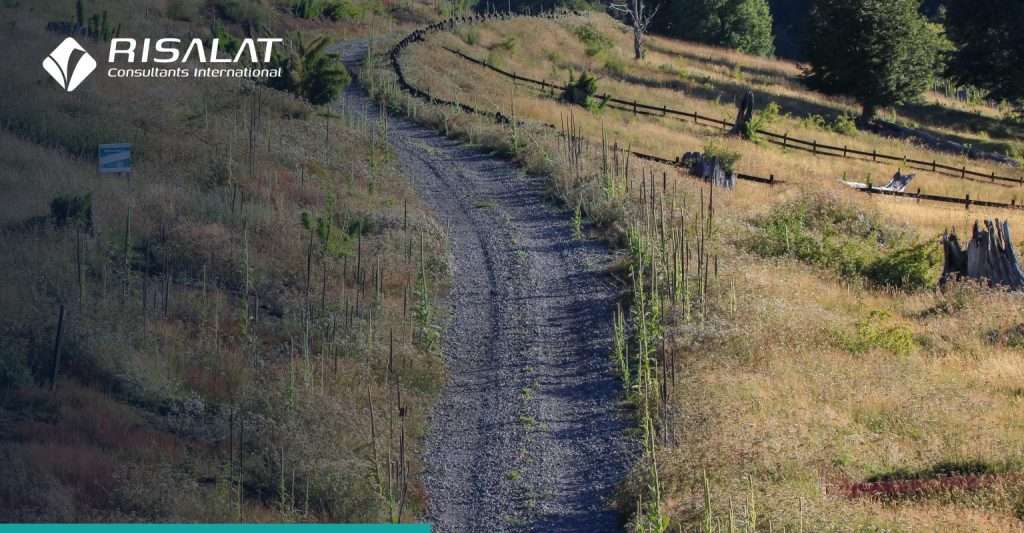
Cover image: Photo: Rural Gravel Road in Malalcahuello by Robert Motecinos Holda (CC0 1.0) https://commons.wikimedia.org/w/index.php?curid=183863327
Partners in project success since 2011, diagnostics, advisory support and applied learning for ministries, public agencies and project teams.
Need help putting this into practice?
Start with a free 10-minute diagnostic or talk to our experts.