Ideas clave
- Why teacher development matters. The starting point is to distinguish a credible mechanism from a guaranteed outcome.
- Designing relevant professional learning. A mathematics teacher may need support diagnosing misconceptions about fractions, while a language teacher may need strategies for reading comprehension.
- Coaching, feedback and inclusion. An instructional coach can observe a short lesson segment, identify one actionable improvement and revisit it.
- Measuring whether practice changes. Training completion is an output. Changes in questioning, lesson planning and student understanding are stronger indicators of implementation.
- Public education systems and donor projects. Ministries can link teacher standards, curriculum reform, mentoring and school inspection without making professional learning punitive.
In short: Teacher Professional Development That Improves Learning requires decisions based on evidence, operational constraints and measurable outcomes. The useful starting point is to identify the real problem, compare feasible responses and test whether a proposed solution improves results for the people affected.
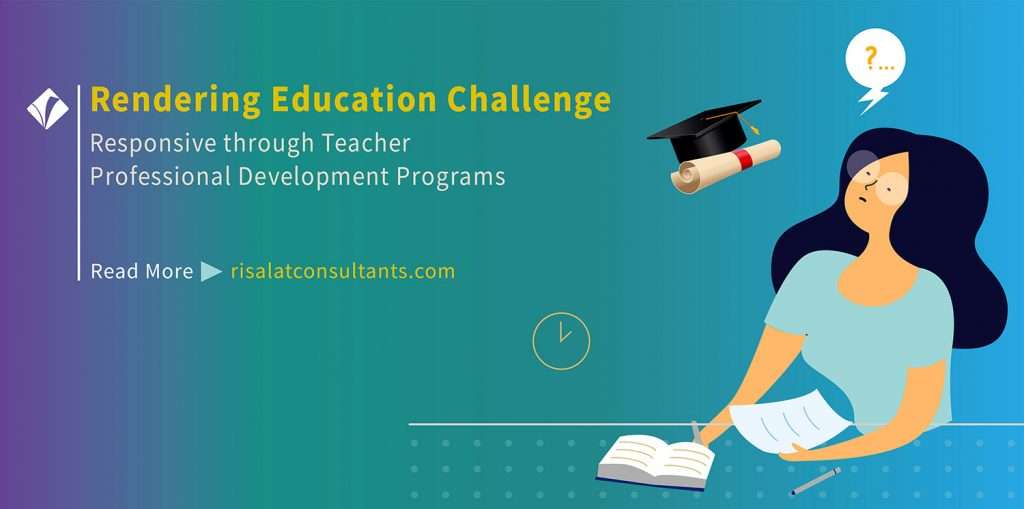
This guide updates Risalat’s earlier discussion of teacher professional development. It preserves the underlying concepts that remain useful while treating historical forecasts, unverified percentages and vendor claims cautiously. Examples are illustrative unless a specific official source is named. The emphasis is on practical choices for managers, regulators, implementing agencies and development partners.
Why teacher development matters
The starting point is to distinguish a credible mechanism from a guaranteed outcome. Teacher professional development involves interacting technical, financial and institutional factors. A solution may work in one setting and fail in another because capacity, incentives, infrastructure or user needs differ. The sections below therefore pair each concept with a decision that can be checked in practice.
Teaching quality and student experience
Teachers shape subject understanding, classroom climate, confidence and participation. A professional development programme should therefore examine what students experience in lessons, rather than count attendance certificates.
Use classroom observation, teacher self-assessment and student work to identify the specific instructional problem.
For implementation, distinguish what is under the team’s control from what requires action by a regulator, funder, supplier or service user. In the case of teaching quality and student experience, a credible proposal should describe its operating assumptions, the evidence used to select the approach and the consequences if those assumptions prove wrong. It should also explain which people may benefit, which people could face additional costs and how concerns will be addressed.
A practical review can start with three questions: What problem will be measurably smaller? What baseline information exists today? Who will verify the result after implementation? Teams should document answers before approving a major commitment. This helps prevent attractive technology, a fashionable policy or an ambitious target from displacing the original public-service objective.
From one-off workshops to sustained practice
A lecture about formative assessment rarely changes daily teaching without rehearsal, observation and feedback. Teachers need time to test methods, compare results and adapt to the curriculum.
Plan a cycle of demonstration, practice, feedback and follow-up rather than a single event.
For implementation, distinguish what is under the team’s control from what requires action by a regulator, funder, supplier or service user. In the case of from one-off workshops to sustained practice, a credible proposal should describe its operating assumptions, the evidence used to select the approach and the consequences if those assumptions prove wrong. It should also explain which people may benefit, which people could face additional costs and how concerns will be addressed.
A practical review can start with three questions: What problem will be measurably smaller? What baseline information exists today? Who will verify the result after implementation? Teams should document answers before approving a major commitment. This helps prevent attractive technology, a fashionable policy or an ambitious target from displacing the original public-service objective.
Designing relevant professional learning
Curriculum and subject focus
A mathematics teacher may need support diagnosing misconceptions about fractions, while a language teacher may need strategies for reading comprehension. Generic motivational training cannot substitute for subject-specific pedagogical knowledge.
Select two or three high-priority curriculum concepts and define what better teaching will look like.
For implementation, distinguish what is under the team’s control from what requires action by a regulator, funder, supplier or service user. In the case of curriculum and subject focus, a credible proposal should describe its operating assumptions, the evidence used to select the approach and the consequences if those assumptions prove wrong. It should also explain which people may benefit, which people could face additional costs and how concerns will be addressed.
A practical review can start with three questions: What problem will be measurably smaller? What baseline information exists today? Who will verify the result after implementation? Teams should document answers before approving a major commitment. This helps prevent attractive technology, a fashionable policy or an ambitious target from displacing the original public-service objective.
Active learning and collaborative planning
Teachers can analyse anonymised pupil work, jointly plan a lesson, rehearse explanations and discuss alternative responses. Collaboration is productive when it has a clear task and protected time.
Use model lessons, peer observation and structured reflection; record agreed changes rather than general impressions.
For implementation, distinguish what is under the team’s control from what requires action by a regulator, funder, supplier or service user. In the case of active learning and collaborative planning, a credible proposal should describe its operating assumptions, the evidence used to select the approach and the consequences if those assumptions prove wrong. It should also explain which people may benefit, which people could face additional costs and how concerns will be addressed.
A practical review can start with three questions: What problem will be measurably smaller? What baseline information exists today? Who will verify the result after implementation? Teams should document answers before approving a major commitment. This helps prevent attractive technology, a fashionable policy or an ambitious target from displacing the original public-service objective.
Coaching, feedback and inclusion
Instructional coaching
An instructional coach can observe a short lesson segment, identify one actionable improvement and revisit it. Feedback should describe evidence rather than judge personality.
Agree on confidentiality, observation rubrics and the distinction between development support and formal appraisal.
For implementation, distinguish what is under the team’s control from what requires action by a regulator, funder, supplier or service user. In the case of instructional coaching, a credible proposal should describe its operating assumptions, the evidence used to select the approach and the consequences if those assumptions prove wrong. It should also explain which people may benefit, which people could face additional costs and how concerns will be addressed.
A practical review can start with three questions: What problem will be measurably smaller? What baseline information exists today? Who will verify the result after implementation? Teams should document answers before approving a major commitment. This helps prevent attractive technology, a fashionable policy or an ambitious target from displacing the original public-service objective.
Inclusive and safe classrooms
Professional learning should address disability inclusion, language barriers, safeguarding, classroom management and the participation of disadvantaged learners. A method that works for confident pupils may exclude quieter students.
Disaggregate classroom participation evidence and test adjustments with learners who face barriers.
For implementation, distinguish what is under the team’s control from what requires action by a regulator, funder, supplier or service user. In the case of inclusive and safe classrooms, a credible proposal should describe its operating assumptions, the evidence used to select the approach and the consequences if those assumptions prove wrong. It should also explain which people may benefit, which people could face additional costs and how concerns will be addressed.
A practical review can start with three questions: What problem will be measurably smaller? What baseline information exists today? Who will verify the result after implementation? Teams should document answers before approving a major commitment. This helps prevent attractive technology, a fashionable policy or an ambitious target from displacing the original public-service objective.
Illustrative management exercise: assemble a small cross-functional team, provide the relevant budget, operating data and stakeholder concerns, and ask members to compare two realistic options. Require them to show assumptions, implementation sequence, risks and evidence of success. A useful decision note is short enough for senior managers to act on but detailed enough for independent review.
Measuring whether practice changes
Evidence beyond attendance
Training completion is an output. Changes in questioning, lesson planning and student understanding are stronger indicators of implementation. Student test results may be influenced by many other factors.
Use pre- and post-observation with comparable rubrics and explain why results cannot automatically be attributed to training.
For implementation, distinguish what is under the team’s control from what requires action by a regulator, funder, supplier or service user. In the case of evidence beyond attendance, a credible proposal should describe its operating assumptions, the evidence used to select the approach and the consequences if those assumptions prove wrong. It should also explain which people may benefit, which people could face additional costs and how concerns will be addressed.
A practical review can start with three questions: What problem will be measurably smaller? What baseline information exists today? Who will verify the result after implementation? Teams should document answers before approving a major commitment. This helps prevent attractive technology, a fashionable policy or an ambitious target from displacing the original public-service objective.
Teacher workload and retention
Additional training hours can create stress when teachers already face heavy workloads. School leaders should protect preparation time and align professional development with existing priorities.
Budget substitute cover, coaching time and accessible materials before announcing a programme.
For implementation, distinguish what is under the team’s control from what requires action by a regulator, funder, supplier or service user. In the case of teacher workload and retention, a credible proposal should describe its operating assumptions, the evidence used to select the approach and the consequences if those assumptions prove wrong. It should also explain which people may benefit, which people could face additional costs and how concerns will be addressed.
A practical review can start with three questions: What problem will be measurably smaller? What baseline information exists today? Who will verify the result after implementation? Teams should document answers before approving a major commitment. This helps prevent attractive technology, a fashionable policy or an ambitious target from displacing the original public-service objective.
A short implementation checklist should cover the baseline, legal authority, responsible owner, funding source, data quality, accessibility, supplier obligations, safeguards, monitoring frequency and corrective-action trigger. These are not interchangeable. A good technical specification cannot substitute for public accountability, and a signed contract does not establish that the intended benefit has been delivered.
Public education systems and donor projects
System-level professional development
Ministries can link teacher standards, curriculum reform, mentoring and school inspection without making professional learning punitive. Donor-financed education projects should coordinate with national systems.
Specify who owns the content, coaching network, data and ongoing budget after external funding ends.
For implementation, distinguish what is under the team’s control from what requires action by a regulator, funder, supplier or service user. In the case of system-level professional development, a credible proposal should describe its operating assumptions, the evidence used to select the approach and the consequences if those assumptions prove wrong. It should also explain which people may benefit, which people could face additional costs and how concerns will be addressed.
A practical review can start with three questions: What problem will be measurably smaller? What baseline information exists today? Who will verify the result after implementation? Teams should document answers before approving a major commitment. This helps prevent attractive technology, a fashionable policy or an ambitious target from displacing the original public-service objective.
A practical district pilot
A district could pilot reading instruction support in a small school cluster, measure teacher practice and pupil progress, and adjust before expansion. Local supervisors should help interpret findings.
Document implementation fidelity, teacher feedback, equity and unit cost before making a scale-up decision.
For implementation, distinguish what is under the team’s control from what requires action by a regulator, funder, supplier or service user. In the case of a practical district pilot, a credible proposal should describe its operating assumptions, the evidence used to select the approach and the consequences if those assumptions prove wrong. It should also explain which people may benefit, which people could face additional costs and how concerns will be addressed.
A practical review can start with three questions: What problem will be measurably smaller? What baseline information exists today? Who will verify the result after implementation? Teams should document answers before approving a major commitment. This helps prevent attractive technology, a fashionable policy or an ambitious target from displacing the original public-service objective.
For ministries, public agencies and donor-funded projects, the key distinction is between completing activities and achieving institutional change. Project implementation units should connect procurement, financial management, environmental and social safeguards, monitoring and evaluation, and post-project operating arrangements. This reduces the risk that a completed asset, training event or software deployment becomes unusable when external funding ends.
One practical sequence is to complete a baseline assessment, consult the intended users, compare options, define responsibilities, pilot where appropriate and commission an independent review of results. Management should record unresolved risks and the reasons for its decisions. If outcomes are weak, the appropriate response is to adapt the intervention rather than report only the number of activities completed.
Institutions can start with Risalat’s institutional capacity assessment, review the project health diagnostic and request a tailored advisory or training proposal where additional support is justified.
Preguntas frecuentes
What is the first step in teacher professional development?
Define the operational problem and establish a reliable baseline before choosing a method or purchasing a solution.
How should institutions compare approaches?
Compare feasibility, total cost, risks, inclusion, required skills and evidence of outcomes using the same decision criteria.
What evidence shows that an intervention works?
Use baseline and follow-up measures, verified implementation records and feedback from affected people; distinguish outputs from outcomes.
What is the main implementation risk?
The main risk is often a mismatch between the proposed solution and local capacity, incentives, financing or user needs.
How can donor-funded projects apply these lessons?
Integrate procurement, safeguards, finance and monitoring into one accountable delivery plan with a sustainable operating model.
¿Conoce a personas que deberían leer esto? Hágase embajador de Risalat o escriba un artículo con Risalat con su propio nombre.
Socios para el éxito de los proyectos desde 2011: diagnósticos, asesoría y aprendizaje aplicado para ministerios, organismos públicos y equipos de proyecto.
¿Necesita ayuda para llevar esto a la práctica?
Empiece con un diagnóstico gratuito de 10 minutos o hable con nuestros expertos.