Ideas clave
- Antecedentes y significado práctico. Nuestras elecciones diarias afectan al medio ambiente más que nunca.
- Estrategias de reducción de residuos. Adoptamos un enfoque práctico para la reducción de residuos.
- Zero-waste lifestyle tips. Zero waste isn't about perfection – it's about progress.
- Alternative transportation methods. A variety of transportation options creates the best eco-friendly results.
- Application for public agencies and donor-funded projects. Seasonal eating brings more benefits than just helping the environment.
In short: Explore how to embrace sustainable living for a greener future with practical examples, implementation risks and clear steps for institutions, public.
In short: How to Embrace Sustainable Living for a Greener Future requires practical choices about resources, evidence and implementation. This guide explains the main opportunities and constraints, and how organisations can turn the underlying ideas into measurable decisions.
Contexto e importancia práctica
Contexto e importancia práctica
Our daily choices affect the environment more than ever before. Recent studies reveal that a single household can cut its carbon footprint by up to 48% through sustainable living. These numbers demonstrate our ability to create positive change.
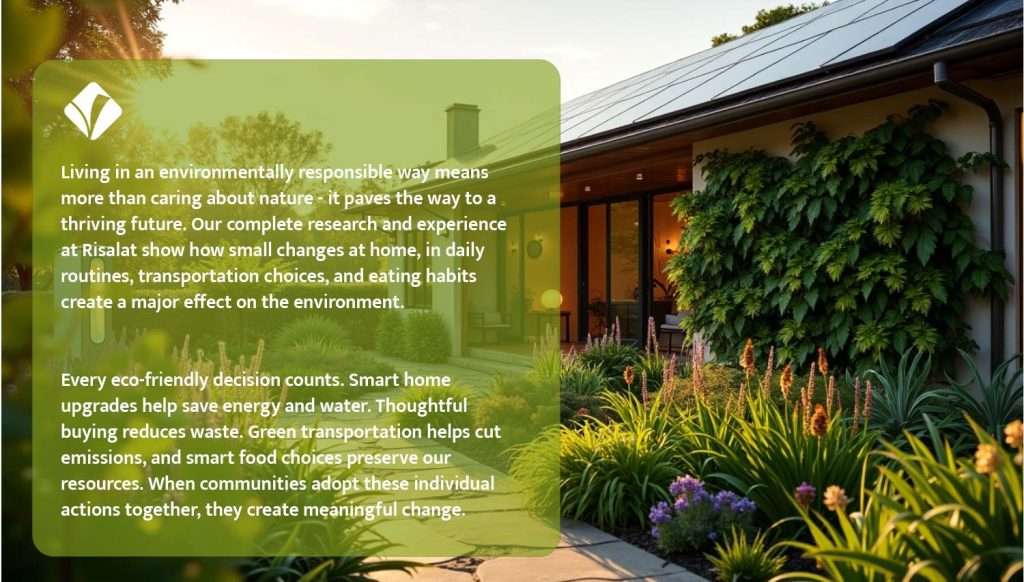
The transition to an eco-friendly lifestyle might seem daunting at first. Our team at Risalat has created a complete guide that will help you welcome eco-friendly practices. We believe in realistic and future-focused solutions. Your journey toward creating an energy-efficient home and building eco-friendly communities starts with practical steps that make a difference.
Proven strategies for sustainable living await your discovery. The guide covers home improvements, daily habits, transportation choices, and food practices. These changes will help you create a greener future for the next generations.
Creating a Sustainable Home Foundation
Un hogar sostenible comienza por sus cimientos. En Risalat, creemos que construir un espacio de vida sostenible requiere una planificación cuidadosa y una implementación inteligente de sistemas probados.
Energy-efficient home improvements
Our experience shows that proper insulation is the life-blood of an energy-efficient home. Homeowners can cut their energy costs by 5% to 30% annually with complete insulation solutions. The best results come from focusing on these core areas:
Attic and roof insulation
Wall cavity insulation
Floor and basement sealing
Window and door weatherstripping
Low-E coated energy-efficient windows reduce heat transfer by a lot. You can earn up to AED 11,750.21 in tax credits through 2032 with qualified improvements.
Water conservation systems
Smart water management is a vital part of sustainable living. Low-flow fixtures deliver remarkable savings – about 11,000 gallons of water per person annually. A family of four can save around AED 807.83 yearly.
The quickest way to improve water efficiency:
Water-efficient toilets use 1.6 gallons per flush instead of 3-5 gallons, saving about 12 gallons daily per person
Los cabezales de ducha de bajo caudal ahorran alrededor de 1.000 galones al año por persona
Efficient faucet aerators can save roughly 2,000 gallons yearly per person
For how to embrace sustainable living for a greener future, a useful implementation plan should explicitly consider learning outcomes, institutional roles and the time available for implementation. A responsible decision starts by identifying who experiences the problem, who has authority to respond, and what information would change the proposed action. These questions help separate an attractive concept from a feasible intervention.
Por ejemplo, una organización que estudia una nueva iniciativa puede documentar el proceso existente, consultar a quienes lo utilizan, seleccionar un piloto manejable y registrar su línea de base. El piloto debe contar con un responsable designado, un calendario de ejecución, una vía para presentar reclamaciones y un presupuesto operativo realista. Los avances deben juzgarse por los resultados observados y no por el número de reuniones, talleres o anuncios realizados.
Estrategias de reducción de residuos
Estrategias de reducción de residuos
We take a practical approach to waste reduction. EPA data shows that yard waste and food scraps make up 30% of household waste – all of which could be composted. Your home needs a complete waste management system with proper sorting facilities and recycling bins.
Los materiales reutilizables funcionan mejor para las tareas de limpieza junto con el uso adecuado de los productos. El aislamiento hecho de papel y vidrio reciclados tiene sentido durante las renovaciones. Estos materiales reducen los residuos y proporcionan una excelente protección térmica.
These foundational changes create sustainable homes and build a more resilient future. Each improvement adds to our broader goal of sustainable living, no matter its size.
Sustainable Daily Practices
Green practices are the life-blood of environmental stewardship in our daily routine. At Risalat, lasting change stems from consistent and mindful practices that people can maintain.
Mindful consumption habits
Products we purchase leave an environmental footprint, from manufacturing to disposal. These proven consumption habits can make a difference:
Review purchase necessity before buying
Choose products with minimal packaging
Opt for secondhand items when possible
Support local and seasonal products
Ask about borrowing instead of buying
La familia estadounidense promedio desperdicia más de 2.350 AED cada año solo en alimentos descartados. Las prácticas de compra consciente pueden reducir sustancialmente el desperdicio financiero y los efectos ambientales.
Para saber cómo adoptar una vida sostenible para un futuro más verde, un plan de implementación útil debe considerar explícitamente los costos, las opciones de adquisición, los incentivos de las partes interesadas y los riesgos de la expansión prematura. Una decisión responsable comienza por identificar quién experimenta el problema, quién tiene la autoridad para responder y qué información cambiaría la acción propuesta. Estas preguntas ayudan a separar un concepto atractivo de una intervención factible.
Por ejemplo, una organización que estudia una nueva iniciativa puede documentar el proceso existente, consultar a quienes lo utilizan, seleccionar un piloto manejable y registrar su línea de base. El piloto debe contar con un responsable designado, un calendario de ejecución, una vía para presentar reclamaciones y un presupuesto operativo realista. Los avances deben juzgarse por los resultados observados y no por el número de reuniones, talleres o anuncios realizados.
Zero-waste lifestyle tips
Zero-waste lifestyle tips
El cero residuos no trata sobre la perfección, sino sobre el progreso. Los expertos ambientales dicen que hasta el 40% de los alimentos comestibles se desperdician en los Estados Unidos. Las cinco erres pueden ayudar a frenar esto: Rechazar, Reducir, Reutilizar, Reciclar y Rotar (compostaje).
Simple swaps lead to successful zero-waste and sustainable living. To cite an instance, reusable containers instead of foil and plastic wrap can cut household waste substantially. Our clients see amazing results when they switch to cloth napkins from paper towels and use rechargeable batteries.
Eco-friendly cleaning solutions
Natural cleaning alternatives create healthier homes and protect our environment. Here are our best eco-friendly cleaning tips:
Use plant-based cleaning products free from phthalates and harmful chemicals
Choose concentrated cleaners to reduce packaging waste
Opt for reusable cleaning tools over disposable ones
Select products with minimal or recyclable packaging
Eco-friendly cleaning products reduce household chemical exposure while cleaning effectively. To cite an instance, natural bathroom cleaners with vinegar and citric acid tackle soap scum without harsh chemicals.
These green practices in our daily routines contribute to a larger movement toward environmental consciousness. Each small action builds a more sustainable future.
Green Transportation Choices
Transportation choices stand among the most effective ways to reduce our environmental footprint. Our team at Risalat has witnessed how thoughtful mobility decisions create lasting positive changes for our planet and communities.
Electric vehicle options
Transportation technology continues to evolve rapidly. Today's electric vehicles (EVs) can reach 130 MPGe and cover 100 miles with just 25-40 kWh of energy. Switching to EVs brings several compelling advantages:
Zero tailpipe emissions that lead to cleaner air
Energy efficiency reaches 60% compared to 17-21% in conventional vehicles
Fewer moving parts mean lower maintenance costs
Fuel costs drop well below traditional vehicles
Drivers can access more than 53,000 public charging stations nationwide
For how to embrace sustainable living for a greener future, a useful implementation plan should explicitly consider quality assurance, privacy or environmental safeguards where relevant, and transparent reporting. A responsible decision starts by identifying who experiences the problem, who has authority to respond, and what information would change the proposed action. These questions help separate an attractive concept from a feasible intervention.
Por ejemplo, una organización que estudia una nueva iniciativa puede documentar el proceso existente, consultar a quienes lo utilizan, seleccionar un piloto manejable y registrar su línea de base. El piloto debe contar con un responsable designado, un calendario de ejecución, una vía para presentar reclamaciones y un presupuesto operativo realista. Los avances deben juzgarse por los resultados observados y no por el número de reuniones, talleres o anuncios realizados.
Alternative transportation methods
Alternative transportation methods
A variety of transportation options creates the best eco-friendly results. People who take public transportation instead of driving alone cut their CO2 emissions by 45%. Public transportation in the U.S. saves 37 million metric tons of carbon dioxide each year.
Walking and cycling remain the greenest transportation choices. Riders who choose a bike over a car once daily reduce their transportation-related emissions by 67%. A few bike trips can lower a household's carbon footprint by up to 1,000 pounds yearly.
Reducción de la huella de carbono en los viajes
These proven strategies help minimize travel-related emissions:
Las rutas de vuelo directo producen menos contaminantes, ya que los aviones emiten la mayor parte durante el despegue y el aterrizaje
Train and bus travel for intercity trips cuts emissions by 50-80% compared to flying
Sharing rides helps split the environmental load
Lighter luggage improves fuel efficiency – cutting 15 pounds of baggage reduces emissions by about 80 pounds on a ten-hour flight
Daily commutes work best with mixed approaches. Many transit systems now offer bike racks that let riders combine cycling with mass transit for longer trips. This flexibility helps people overcome common barriers to eco-friendly transportation while maximizing environmental benefits.
Sustainable Food and Nutrition
Food choices are central to sustainable living and they affect our health and the environment. Our team at Risalat has seen how conscious eating habits create waves of change throughout our ecosystem and communities.
For how to embrace sustainable living for a greener future, a useful implementation plan should explicitly consider the difference between a pilot that works once and a process that an institution can sustain. A responsible decision starts by identifying who experiences the problem, who has authority to respond, and what information would change the proposed action. These questions help separate an attractive concept from a feasible intervention.
Por ejemplo, una organización que estudia una nueva iniciativa puede documentar el proceso existente, consultar a quienes lo utilizan, seleccionar un piloto manejable y registrar su línea de base. El piloto debe contar con un responsable designado, un calendario de ejecución, una vía para presentar reclamaciones y un presupuesto operativo realista. Los avances deben juzgarse por los resultados observados y no por el número de reuniones, talleres o anuncios realizados.
Aplicación en organismos públicos y proyectos financiados por donantes
Local and seasonal eating
Seasonal eating brings more benefits than just helping the environment. Locally grown, seasonal produce gives us fruits and vegetables that taste better and pack more nutrients. The prices are substantially lower because of simple supply and demand. Seasonal eating makes a difference because:
Vine-ripened produce has higher nutrients
Los alimentos viajan menos: el promedio actual supera las 1,500 millas
Food tastes better and stays fresh longer
Las economías locales se fortalecen
Peak seasons mean lower food costs
Reducing food waste
Las cifras de desperdicio de alimentos son alarmantes: perdemos o desperdiciamos un tercio de todos los alimentos producidos a nivel mundial entre la granja y la mesa. Esto suma más de 1 000 millones de toneladas. La economía mundial pierde más de 3,67 billones de AED cada año debido a este desperdicio.
These proven strategies can help curb this waste:
Make meal plans and shopping lists before buying groceries
Keep food fresh – set refrigerator temperature at 40°F or below
Know your labels – "best before" is not the same as "use-by" dates
Freeze foods that are close to expiring
Turn food scraps into compost to enrich soil
Plant-based diet options
Los patrones dietéticos se orientan hacia opciones que favorecen tanto la salud como el medio ambiente. Las investigaciones muestran que sustituir la mitad de los productos cárnicos y lácteos por alternativas de origen vegetal para 2050 puede reducir las emisiones de gases de efecto invernadero procedentes de la agricultura y el uso de la tierra en un 31%. Las dietas basadas en plantas necesitan f
For how to embrace sustainable living for a greener future, a useful implementation plan should explicitly consider the needs of implementing agencies, suppliers, community representatives and development partners. A responsible decision starts by identifying who experiences the problem, who has authority to respond, and what information would change the proposed action. These questions help separate an attractive concept from a feasible intervention.
Por ejemplo, una organización que estudia una nueva iniciativa puede documentar el proceso existente, consultar a quienes lo utilizan, seleccionar un piloto manejable y registrar su línea de base. El piloto debe contar con un responsable designado, un calendario de ejecución, una vía para presentar reclamaciones y un presupuesto operativo realista. Los avances deben juzgarse por los resultados observados y no por el número de reuniones, talleres o anuncios realizados.
For a ministry or project implementation unit, the practical sequence is to agree the public purpose, map responsibilities across agencies, identify procurement and safeguard requirements, and record the evidence needed for approval. Where a donor finances the work, the project team should use the applicable financing agreement, procurement framework and environmental and social commitments rather than assuming that one generic procedure applies to every project.
Pensemos en un programa hipotético financiado por donantes con un periodo de ejecución limitado. El gestor del proyecto podría encargar una evaluación de línea de base, implicar a las partes interesadas locales en la definición de los estándares de servicio, probar la intervención propuesta en un número reducido de emplazamientos y evaluar el desempeño antes de ampliarla. Una revisión independiente del gasto y de los resultados puede revelar si el programa llega a los beneficiarios previstos y si el organismo ejecutor puede mantenerlo cuando termine la financiación externa.
Lista de verificación para la implementación
- Defina la decisión y los beneficiarios previstos.
- Confirme las restricciones jurídicas, financieras y operativas.
- Establezca una línea de base e indicadores medibles.
- Asigne responsables y establezca mecanismos de retroalimentación de las partes interesadas.
- Realice un piloto, evalúe y ajuste antes de ampliar la escala.
Preguntas frecuentes
¿Cuál es el principal beneficio práctico?
Ayuda a los responsables de la toma de decisiones a vincular el tema con necesidades definidas, recursos realistas y resultados observables.
¿Qué debe evaluar primero una organización?
Comience con una línea de base, las necesidades de las partes interesadas, las responsabilidades de ejecución y los requisitos legales aplicables.
¿Qué riesgos de implementación merecen atención?
Preste atención a la asequibilidad, la capacidad institucional, la inclusión, la calidad de los datos y el mantenimiento continuo.
¿Cómo pueden medirse los avances?
Utilice un conjunto reducido de indicadores vinculados a la línea de base, la retroalimentación de los usuarios y revisiones independientes periódicas.
¿Cómo se aplica esto a los proyectos financiados por donantes?
Aplique el convenio de financiación del proyecto y las obligaciones pertinentes de contratación, salvaguardas, seguimiento e información.
Ver

Know people who should read this? Become an Ambassador or write with Risalat.
Socios para el éxito de los proyectos desde 2011: diagnósticos, asesoría y aprendizaje aplicado para ministerios, organismos públicos y equipos de proyecto.
¿Necesita ayuda para llevar esto a la práctica?
Empiece con un diagnóstico gratuito de 10 minutos o hable con nuestros expertos.