关键信息
- 日期
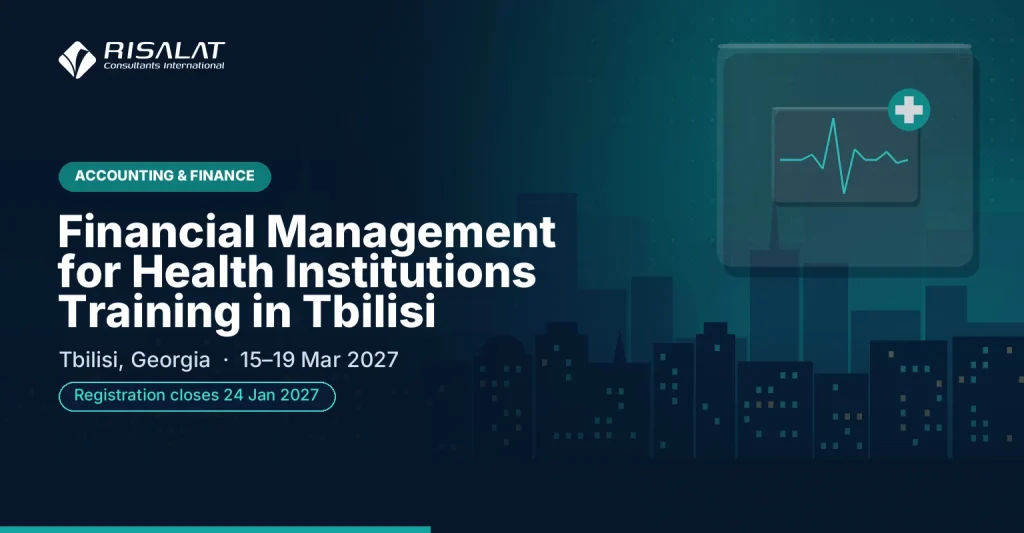
- 2027年3月15–19日(5天)
- 地点
- 格鲁吉亚第比利斯Regus Tbilisi - Vazha Pshavela
- 每位学员费用
- £2,650 (GBP)
- 付款
- 通过发票和银行转账付款
- 报名截止
- 2027年1月24日
- 证书
- 结业证书
- 内训选项
- 按您的日期,为您的团队专场举办
培训项目概述
Hospitals, clinics, health agencies and ministries are expected to deliver safe, high-quality care while keeping their finances sustainable over many years. Every management decision, from staffing a ward to buying equipment, has a financial consequence that sound financial management makes visible in advance.
Public health spending has grown quickly in many countries, and Georgia is a clear example. The 2022 PEFA assessment of Georgia’s public finances shows the healthcare share of consolidated budget expenditure rising from 9.2% in 2019 to 10.9% in 2020 and 13.4% in 2021. The IMF’s fiscal transparency work notes that health’s share of general government spending rose from about 5% to 13% between 2002 and 2021, and that long-term health cost pressures need fuller analysis.
At the same time, accounting rules for public entities are changing. Georgia’s budgetary organisations have reported on accrual-based standards derived from IPSAS since 2020 for central entities and 2021 for municipalities, and the IPSAS Board’s new standards on revenue (IPSAS 47) and transfer expenses (IPSAS 48) took effect on 1 January 2026. These standards change how grants, insurance-type payments and service contracts are recognised, which matters directly to public hospitals and health purchasers.
Financial Management for Health Institutions Training in Tbilisi brings these threads together over five practical days. It covers the economics and financing of health systems, health accounts, budgeting and cash flow, service costing and pricing, provider payment, financial statements and reporting, financial analysis for decisions, and the controls and audit expectations that protect public money.
The programme is designed for both finance staff and the clinical and administrative managers who make spending decisions. Participants build costing and budget models they can adapt at home.
本培训项目可在以下方面加强机构能力
- Health financing functions: revenue collection, pooling and purchasing
- Programme-based budgeting for health ministries and agencies
- Cash-flow forecasting and working capital management
- Direct and indirect cost allocation for health services
- Unit costing of procedures, bed-days and outpatient visits
- Pricing and tariff analysis for publicly purchased services
- Case-based and other provider payment methods
- Accrual-based financial statements for health entities
- Recognition of grants, transfers and service revenue under current IPSAS
- Financial ratio and performance analysis
- Economic evaluation of health programmes
- Internal control over payments, procurement and inventories
- Preparation for external audit and audit follow-up
- Donor-funded health project financial management
The aim is a finance function that clinical leaders trust and use, where budgets, costs and reports support better care rather than sitting apart from it.
The Growing Importance of Financial Management in Health Institutions
Health now absorbs a larger share of public budgets than it did a decade ago, and governments are asking what they receive for that money. In Georgia, statistics on the main health programmes of the ministry responsible for health are published monthly by the Social Service Agency and the National Center for Disease Control and Public Health, and the State Audit Office carried out performance audits of the ministry’s programmes between 2019 and 2021.
Reporting rules are tightening too. The IFAC and CIPFA International Public Sector Financial Accountability Index 2025 projects that 56% of jurisdictions will report on an accrual basis by 2030, and that 81% of those will base their reporting on IPSAS. For health entities, accrual reporting brings equipment, leases, receivables, payables and employee obligations onto the balance sheet, and with them a need for better asset registers and costing.
各机构日益需要具备以下能力的专业人员:
- Explaining how health financing arrangements shape an institution’s revenue
- Reading national health expenditure data and comparing it with peers
- Preparing realistic budgets linked to service volumes and outputs
- Forecasting cash needs month by month
- Calculating the full cost of a service, department or programme
- Separating fixed, variable, direct and indirect costs correctly
- Assessing whether tariffs and payment rates cover real costs
- Preparing and interpreting accrual-based financial statements
- Applying current IPSAS requirements on revenue, transfers, leases and assets
- Using financial ratios to spot risk early
- Designing internal controls proportionate to risk
- Responding to audit findings with credible action plans
Strong financial management systems help organisations:
- Protect service continuity when funding is delayed or reduced
- Allocate resources to the services with the greatest health benefit
- Negotiate with purchasers using evidence on costs
- Reduce waste in supplies, pharmaceuticals and overtime
- Plan equipment replacement and maintenance on time
- Earn clean audit opinions and public confidence
- Meet the financial reporting conditions of donors and lenders
- Link spending to measurable results
The gains come from consistent habits: a costing model kept up to date, a cash forecast reviewed weekly and statements that managers actually read.
Source: Georgia PEFA 2022 assessment (World Bank document, Table C).
1. From which date do IPSAS 47 Revenue and IPSAS 48 Transfer Expenses apply?
The IPSASB states that IPSAS 47 and IPSAS 48 have an effective date of 1 January 2026, with earlier application permitted.
2. How did the healthcare share of Georgia's consolidated budget expenditure change between 2019 and 2021?
The 2022 PEFA assessment of Georgia reports a rise from 9.2% in 2019 to 13.4% in 2021.
3. Which older standards does IPSAS 47 Revenue replace?
According to the IPSASB, IPSAS 47 replaces IPSAS 9, IPSAS 11 and IPSAS 23.
Who Should Attend This Health Financial Management Training?
本培训项目适合:
- Chief financial officers and finance directors of hospitals
- Hospital and clinic general managers
- Middle and senior health managers responsible for programme administration
- Budget and planning officers in ministries of health
- Finance staff of health insurance funds and purchasing agencies
- Accountants in public and private health facilities
- Clinical heads of department who manage budgets
- Financial management specialists in health project implementation units
- Internal auditors working in the health sector
- Health economists and policy analysts
- Procurement and supply managers in health institutions
- Officials of ministries of finance covering the health sector
- Administrators and consultants who manage health project budgets
No advanced accounting background is required. Non-financial managers gain confidence with numbers, while finance professionals deepen health-specific practice.
勾选您的团队需要具备的能力。
Health Financial Management Training Objectives
Upon successful completion of this Health Financial Management Training, participants will be able to:
- Explain the economic and financial drivers of health systems, including market failure and the public-private mix
- Compare tax-funded, social insurance, private insurance and direct payment financing models
- Use health accounts data to describe who pays for health care and for what
- Prepare an annual budget and a cash-flow budget for a health institution
- Allocate direct and indirect costs and calculate unit costs for key services
- Assess prices, tariffs and user fees, including exemption mechanisms
- Describe how provider payment methods change incentives and financial risk
- Prepare and interpret the main accrual-based financial statements
- Apply current IPSAS requirements relevant to health entities
- Analyse financial performance with ratios and variance analysis
- Carry out a simple economic evaluation of a health programme
- Strengthen internal controls and prepare for external audit
Each objective is linked to a workshop output that participants take home.
培训项目内容与结构
- Introduction to financial management in health institutions
- Fundamentals of healthcare finance and key terms
- Economics of health systems: demand, supply and market failure
- Health financing functions: collection, pooling and purchasing
- Public-private mix in financing and delivery
- Introduction to insurance and comparison of insurance models
- Direct payment and user fees: elasticity, evidence and exemptions
- Financial functions, processes and procedures in a health institution
- Programme-based and activity-based budgeting in health
- Linking budgets to service volumes and outputs
- Financial planning and budget calculation methods
- Incorporating budget justifications for ministries and donors
- Developing monthly cash-flow budgets
- Managing receivables from purchasers and insurers
- Measuring, understanding and reducing healthcare costs
- Direct and indirect costs, fixed and variable costs
- Cost centres and step-down allocation of overheads
- Unit costs for bed-days, procedures and outpatient visits
- Using cost data in planning and service development
- Pricing healthcare services and setting tariffs
- Provider payment methods: line-item, capitation, fee-for-service and case-based payment
- Producing financial reports for health entities
- Statement of financial position, financial performance and cash flows
- Accrual-based reporting in the public sector: why it matters for health
- Revenue and transfers under IPSAS 47 and IPSAS 48 (effective 2026)
- Medical equipment and buildings under IPSAS 45 and measurement under IPSAS 46
- Leased equipment under IPSAS 43
- Management accounting and controlling
- Internal control over payments, payroll, inventories and pharmaceuticals
- Fraud and leakage risks in health financing
- 做好外部审计准备并回应审计发现
- Financial management of donor-funded health projects
- Introduction to economic evaluation of health programmes
- Cost-effectiveness and cost-benefit concepts for managers
- Fiscal risks and long-term cost pressures in health
完整的每日课程内容
The five days move from the wider health financing system to the institution, then to costing, reporting and decision-making.
- Day 1: Health systems economics and financing models
- Day 2: Budgeting, cash flow and financial planning
- Day 3: Costing, pricing and provider payment
- Day 4: Financial statements, IPSAS and performance analysis
- Day 5: Controls, audit, evaluation and action planning
完整的每日课程内容
First Day | Health Systems Economics and Financing Models
- Introduction to financial management in health institutions
- Fundamentals of healthcare finance and key terms
- Economics of health systems: demand, supply and market failure
- Health financing functions: collection, pooling and purchasing
- Public-private mix in financing and delivery
- Introduction to insurance and comparison of insurance models
- Direct payment and user fees: elasticity, evidence and exemptions
- Global patterns of health expenditure
- Health accounts: what they measure and how to use them
- Laws, regulations and financial responsibilities of health entities
Case Study: Reading the Numbers Behind Georgia’s Health Budget
Teams examine the growth of health spending in Georgia’s consolidated budget between 2019 and 2021, as reported in the 2022 PEFA assessment, together with the IMF’s observation on long-term health cost pressures. They identify what drove the growth, which risks it creates for providers and purchasers, and what additional financial information a ministry would need to plan the next five years.
Second Day | Budgeting, Cash Flow and Financial Planning
- Financial functions, processes and procedures in a health institution
- Programme-based and activity-based budgeting in health
- Linking budgets to service volumes and outputs
- Financial planning and budget calculation methods
- Incorporating budget justifications for ministries and donors
- Developing monthly cash-flow budgets
- Managing receivables from purchasers and insurers
- Working capital, payables and supplier payment discipline
- Budget monitoring and variance reporting
- Planning, managing and controlling the money
Workshop: Building a Hospital Budget and Cash-Flow Plan
Using a model district hospital, participants prepare a one-year budget driven by admissions, outpatient visits and staffing norms, then convert it into a monthly cash-flow budget. The facilitator introduces a three-month delay in purchaser payments, and teams must show how they would protect salaries, medicines and essential services, and what they would report to the board.
Third Day | Costing, Pricing and Provider Payment
- Measuring, understanding and reducing healthcare costs
- Direct and indirect costs, fixed and variable costs
- Cost centres and step-down allocation of overheads
- Unit costs for bed-days, procedures and outpatient visits
- Using cost data in planning and service development
- Pricing healthcare services and setting tariffs
- Provider payment methods: line-item, capitation, fee-for-service and case-based payment
- Incentives and financial risk under each payment method
- Tools for cost monitoring and cost containment
- Planning for healthcare investments
Workshop: Costing a Service and Testing the Tariff
Teams receive departmental cost and activity data and allocate overheads to clinical departments using a step-down method. They calculate a unit cost for two common services, compare it with an illustrative purchaser tariff and decide whether to expand, redesign or renegotiate the service.
Fourth Day | Financial Statements, IPSAS and Performance Analysis
- Producing financial reports for health entities
- Statement of financial position, financial performance and cash flows
- Accrual-based reporting in the public sector: why it matters for health
- Revenue and transfers under IPSAS 47 and IPSAS 48 (effective 2026)
- Medical equipment and buildings under IPSAS 45 and measurement under IPSAS 46
- Leased equipment under IPSAS 43
- Management accounting and controlling
- Measuring financial performance with ratios
- Tools for financial analysis and decision-making
- Presenting financial information to non-financial managers
Case Study: From Cash Records to Accrual Statements
Drawing on Georgia’s move to accrual-based standards for budgetary organisations and the challenges its Treasury reports, such as incomplete asset registers, participants convert a simplified set of clinic cash records into accrual-based statements. They recognise a government grant, a leased scanner and unpaid supplier invoices, then analyse what the new statements reveal that the cash records hid.
Fifth Day | Controls, Audit, Evaluation and Action Planning
- Internal control over payments, payroll, inventories and pharmaceuticals
- Fraud and leakage risks in health financing
- 做好外部审计准备并回应审计发现
- Financial management of donor-funded health projects
- Introduction to economic evaluation of health programmes
- Cost-effectiveness and cost-benefit concepts for managers
- Fiscal risks and long-term cost pressures in health
- Financial dashboards for boards and ministries
- Building an institutional improvement plan
Capstone Exercise: A Financial Recovery and Improvement Plan
Each team takes a health institution facing rising costs, delayed payments and a qualified audit opinion. Using the tools from the week, they prepare a 12-month plan covering budget and cash measures, a costing review, accounting and reporting improvements, control fixes and a short economic case for one service change. Plans are presented to a mock ministry and purchaser panel.
Health Financial Management Training Methodology
The programme uses adult learning methods that keep participants working with numbers and real situations for most of each day.
本培训项目融合了:
- Short expert presentations on each topic
- Open discussion of participants’ own institutions
- Numerical examples worked step by step
- Spreadsheet-based budgeting and costing exercises
- Case studies drawn from public reports on real health systems
- Group and individual assignments
- Role plays with purchasers, boards and auditors
- 团队成果同伴互评
- A field visit to a health or public finance institution, where confirmed
- A capstone plan for each participant’s own institution
Facilitators combine finance and health management experience.
技术参观与现场考察安排
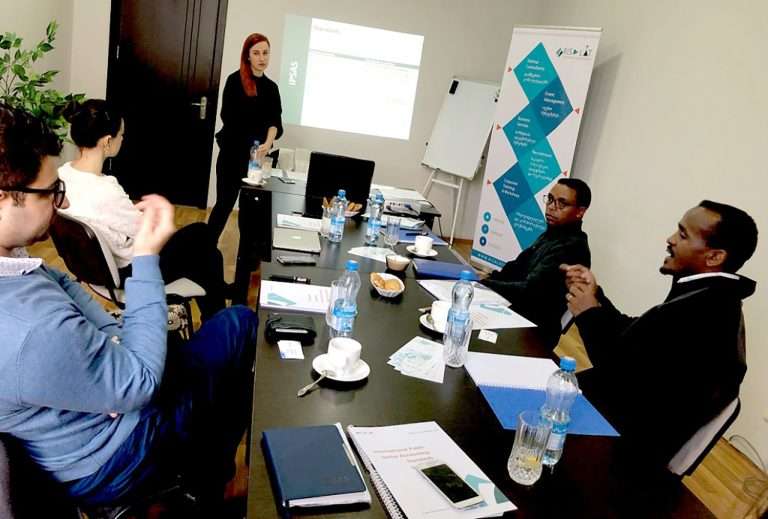
The programme includes a half-day technical visit in Tbilisi to a health facility, health agency or public finance institution, to see how budgeting, costing and reporting work in practice. Visits are confirmed with host organisations closer to the programme dates.
预期成果
Upon completion of this Health Financial Management Training, participants will be able to:
- Prepare a volume-driven budget and a monthly cash-flow forecast
- Calculate unit costs for core services and explain the results to clinicians
- Judge whether tariffs and payment methods cover costs and share risk fairly
- Read and explain accrual-based financial statements of a health entity
- Identify which current IPSAS requirements affect their institution
- Use ratios and variance analysis to report financial performance
- Build a simple economic case for a service change
- Strengthen controls in high-risk areas such as medicines and payroll
- Present a practical improvement plan to their management
Participants return with working spreadsheets, a costing template and an action plan that their institution can adopt immediately.
£2,650 per participant · invoice and bank transfer · groups of 5 or more receive a discount
同一机构五人及以上:请在申请发票时索取团体价。
Ten or more: an in-house version for your institution may cost less per person. Ask for an in-house quote.
Registration closes in 83 days (24 Jan 2027)
Institutional Application of Health Financial Management Training
本培训项目帮助机构加强:
- Budget preparation and approval processes
- Cash management and liquidity planning
- Cost accounting and service costing systems
- Negotiation with purchasers and insurers
- Accrual-based financial reporting
- Asset registers and equipment planning
- Management reporting to boards and ministries
- 内部控制与风险管理
- Audit readiness and follow-up
- Evidence-based investment decisions
学员将带着实用工具回到工作岗位,以提升:
- Annual budget templates linked to activity
- Monthly cash-flow forecasts
- Step-down cost allocation models
- Unit cost and tariff comparison sheets
- Financial ratio dashboards
- Accrual adjustment checklists
- Internal control self-assessments
- Audit action plan trackers
Institutions that want to measure their starting point can use Risalat’s free institutional capacity assessment or training needs assessment before nominating participants.
区域相关性与应用
欧洲
Across Europe and Central Asia, finance ministries are working with sector ministries to extend accrual reporting and treasury coverage. In May 2025 Georgia’s Ministry of Finance hosted a PEMPAL treasury study visit in Tbilisi attended by officials from 16 countries, which shows the region’s interest in Georgia’s experience. Health institutions in the region face the same task of connecting their costing and budgets to these new reporting systems.
非洲
Kenya’s National Treasury gazetted the national government’s move to accrual-based IPSAS in 2024, with the first accrual financial statements expected for the year ending 30 June 2025, and stated that the transition also applies to county governments. Counties deliver much of Kenya’s health care, so hospital finance teams there need accrual, asset and costing skills of the kind covered in this programme.
中东
Saudi Arabia has pursued a phased move from cash to accrual accounting since 2017 under Vision 2030, coordinated by an accrual accounting centre within the Ministry of Finance, according to a World Bank account of the reform. Large public health systems in the Gulf and the wider region are reporting on new bases and need managers who can use accrual data for decisions.
亚洲
Central Asian countries including Kazakhstan, the Kyrgyz Republic, Tajikistan and Uzbekistan took part in the 2025 Tbilisi treasury study visit. Health ministries there increasingly need reliable service costing as purchasing arrangements develop.
In every region the core skills are the same: budgeting from activity, knowing service costs and reporting on an accrual basis.
东道国概况:格鲁吉亚
Tbilisi, Georgia’s capital, sits at the crossroads of Europe and Asia and offers modern business facilities, a good range of hotels and moderate costs for a five-day programme.
Georgia is a useful benchmark for public financial management. It ranked first of 125 countries for budget transparency in the 2023 Open Budget Survey with a score of 87 out of 100, according to the Ministry of Finance. Its budgetary organisations moved to accrual-based standards derived from IPSAS from 2020, and its Treasury Single Account has been extended over time to municipalities, public law entities and other units. Health is now one of the largest areas of its public spending, which makes the country’s experience directly relevant to health finance managers.
Tbilisi International Airport has regular connections with Europe, the Middle East and Central Asia. Citizens of many countries can enter Georgia without a visa for short stays, while others apply for an e-visa or a visa in advance. Entry rules change from time to time, so participants should check the official guidance of the Ministry of Foreign Affairs of Georgia; Risalat provides visa support letters and advice on request.
Health Financial Management Training Deliverables
Every participant receives preparation, learning and follow-up support, with tools designed for health institutions.
培训开始前
- 学员课前评估
- Health Financial Management Readiness Assessment
- Health Financial Management Resource Pack
- 课前阅读资料
- 免费签证支持与咨询
- 机场接机与欢迎协助
- 住宿(含早餐)
- 欢迎交流晚宴
培训期间
- Risalat培训礼包(背包、水瓶、马克杯、T恤、帽子、护照套、笔、笔记本、冰箱贴及钥匙扣)
- Comprehensive Health Financial Management Training Manual
- Hospital Budget and Cash-Flow Template
- Step-Down Cost Allocation Model
- Unit Cost and Tariff Comparison Tool
- Financial Ratio Dashboard
- Accrual Adjustment Checklist for Health Entities
- Internal Control Self-Assessment for Health Institutions
- 实践研讨与模拟演练
- 小组讨论与同伴学习
- 每日午餐与茶歇
- 全面使用培训场地设施
- 装有数字学习资料的迷你平板电脑
- 实地考察(如适用)
- 城市休闲观光
培训结束后
- 结业证书
- Risalat培训项目参与表彰奖
- 培训后参考资料
- Institutional Financial Improvement Plan Template
- Health Costing Reference Guide
- IPSAS Update Note for Health Entities
- 培训后支持与跟进指导
- 培训项目报告
Ministries, hospitals, insurance funds and project teams can also request a tailored in-house version of this programme, built around their own budgets, cost data and reporting requirements. Please request a proposal and our team will respond with a design and quotation.
Common Challenges in Health Financial Management, And How This Training Helps
How can a hospital plan when health spending is growing but payments arrive late?
Growing budgets do not guarantee timely cash. Day 2 shows how to build a volume-driven budget and a monthly cash-flow forecast, test it against payment delays and agree priority payments in advance.
How can managers find out what a service really costs?
Many institutions know total spending but not the cost of a bed-day or procedure. Day 3 walks through cost centres, step-down allocation and unit costing using a practical spreadsheet model.
How can an institution show a purchaser that a tariff is too low?
Negotiation needs evidence. Day 3 compares unit costs with tariffs and explains how different payment methods shift financial risk, so teams can make a reasoned case.
How do the new IPSAS standards on revenue and transfers affect health entities?
IPSAS 47 and IPSAS 48 took effect on 1 January 2026 and change how grants and transfers are recognised. Day 4 explains what this means for hospitals, purchasers and programme budgets.
How can a health entity move from cash records to accrual statements?
Incomplete asset registers and missing payables data are common obstacles, as Georgia’s own reform reports show. The Day 4 case study practises the key adjustments step by step.
How can finance teams make reports that clinical managers use?
Reports often go unread because they are too technical. Days 4 and 5 cover ratio dashboards and simple presentation techniques for boards and department heads.
How can institutions respond to qualified audit opinions?
Day 5 covers internal control in high-risk areas, audit preparation and practical action plans that address findings rather than repeating them each year.
How can a manager justify investing in a new service or piece of equipment?
Day 3 introduces investment planning and Day 5 covers simple economic evaluation, so participants can present costs, benefits and risks in a form decision-makers accept.
常见问题
Do I need an accounting background to attend?
No. The programme is designed for both finance staff and non-financial managers such as doctors and department heads. Concepts are explained from first principles and practised with guided exercises.
Does the programme cover the latest IPSAS changes?
Yes. Day 4 covers the standards most relevant to health entities, including IPSAS 47 Revenue and IPSAS 48 Transfer Expenses, which took effect on 1 January 2026, as well as IPSAS 43 Leases and IPSAS 45 Property, Plant and Equipment.
Will we work with real data?
Participants work with realistic hospital and programme datasets and case studies based on published public finance reports. You are welcome to bring anonymised data from your own institution for the workshops.
是否安排实地考察?
A half-day technical visit to a health or public finance institution in Tbilisi is planned. Visits are confirmed with host organisations closer to the programme dates.
本培训项目能否以内训形式举办?
Yes. Ministries, hospitals, insurance funds and project units can request a tailored in-house version built around their own budgets, cost data and reporting rules.
为何选择在第比利斯举办本培训项目
第比利斯以公共服务大厅和反腐败改革而闻名,并对许多国家提供便利的签证政策。
The Financial Management for Health Institutions Training in Tbilisi programme in March 2027 brings together officials and professionals from across the Caucasus region and beyond. Sessions combine short inputs, case studies and group work on participants' own files, and the city's institutions can be added as a study visit on request.
交通:第比利斯国际机场(TBS)。
使用免费的签证查询工具确认您是否需要签证,完成报名后即可申请邀请函。
其他城市的同主题培训
- 迪拜公用事业收入保护与损耗降低培训(迪拜)
- 数字社会保障培训:人工智能赋能的社会保障与综合个案管理(里斯本)
- 发展项目的成果交付与综合监测评估(M&E)(苏瓦)
- 公共采购中的廉洁、道德与反腐败培训(维也纳)
- 薪酬编制、分析与管理培训(雅加达)
- 孟买市场营销与推广管理培训(孟买)
第比利斯的其他培训项目
格鲁吉亚更多培训课程 · 亚洲所有培训项目 · 完整培训日历