要点总结
- Understanding the issue and its evidence. Organic standards regulate specified production practices, while agroecology also examines social relationships and food systems.
- Design choices and technical delivery. Diversified rotations, biological control and monitoring can reduce reliance on some pesticides.
- Financing, procurement and governance. Conversion can change yields, labour demand and input costs.
- Implementation, safeguards and measurement. Policy should protect affordable nutrition, not only expand premium products.
- Application to public agencies and donor-funded projects. Track soil indicators, input use, yields, farm income, biodiversity proxies and water outcomes over several seasons.
In short: A practical guide to organic farming and resilient food systems, with evidence, implementation choices, risks and lessons for ministries, public.
In short: Organic farming limits certain synthetic inputs and emphasises soil health, biodiversity and ecological processes, but it is not automatically more productive, affordable or climate-friendly in every setting. Sustainable agrifood policy should compare yields, livelihoods, environmental outcomes and food access together.
FAO describes agroecology as an integrated approach linking ecological practices with social and economic conditions. Organic certification is one possible production framework, not a substitute for wider food-system assessment.
本更新版指南重新审视了Risalat原文,同时将已确立的概念与需要新证据支持的论断区分开来。本指南面向必须决定资助、采购、监管或衡量哪些事项的从业人员。下文的说明性情景均为教学示例,并非已完成项目的报告。
The earlier article also highlighted a continuing consideration: – Enhance physical soil properties from granulation and root penetration to aeration and water-holding capacity. The practical implication is to test this proposition against current local evidence before applying it as policy.
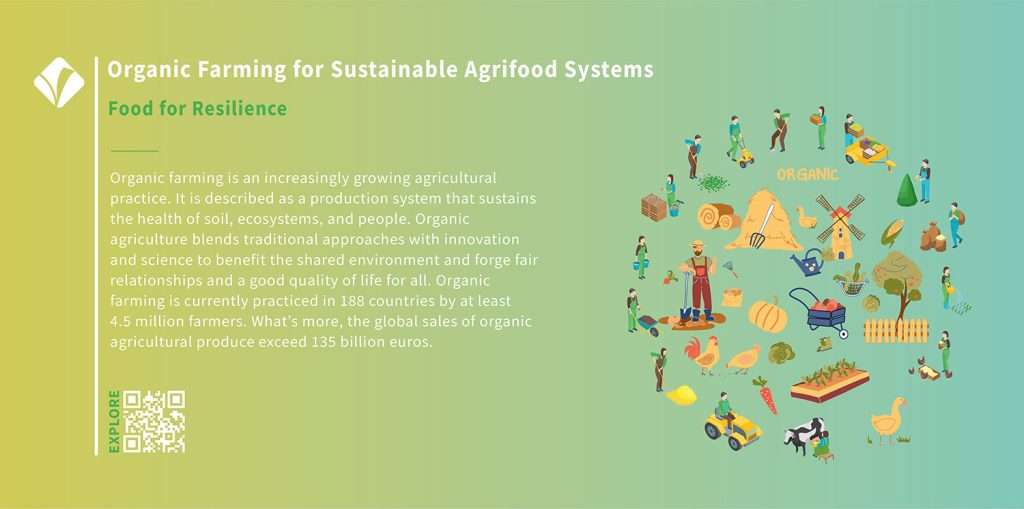
The earlier article also highlighted a continuing consideration: Organic agriculture is a viable alternative to its conventional counterpart. Its practices significantly contribute to shaping sustainable agrifood systems by maintaining biological production at carrying capacity – without neglecting human health and environmental well-being. The guiding philosophy and practice behind organic farming chart a way f. The practical implication is to test this proposition against current local evidence before applying it as policy.
The earlier article also highlighted a continuing consideration: The use of synthetic chemical fertilizers and pesticides has substantially affected agricultural lands resulting in rapid soil erosion and loss. As organic material and humus levels decrease in soil, beneficial microorganisms diminish. Erosion eventually leads to desertification, threatening overall food production. Moreover, degraded soil also rel. The practical implication is to test this proposition against current local evidence before applying it as policy.
The earlier article also highlighted a continuing consideration: Organic farming is not just about excluding synthetically compound fertilizers and pesticides from agricultural processes. Rather, it is a philosophy of working hand in hand with nature to construct a socially, environmentally, and economically sustainable food production system. The practical implication is to test this proposition against current local evidence before applying it as policy.
理解问题及其证据
Organic and agroecological approaches
Organic standards regulate specified production practices, while agroecology also examines social relationships and food systems. The two overlap but should not be treated as identical.
Before setting a target for organic and agroecological approaches, the responsible team should define the population or asset covered, the current condition and the source of its baseline information. A useful baseline records both what is known and what remains uncertain. In a project appraisal, this prevents a plausible narrative from being mistaken for evidence of demand or impact.
Soil fertility and nutrient cycles
Compost, cover crops and rotations can improve soil structure and nutrient cycling. Nutrient balances still matter: farms can deplete soils if harvested nutrients are not adequately replaced.
The practical test for soil fertility and nutrient cycles is whether two independent reviewers would reach a similar conclusion using the same records. Specify the definition of success, the relevant technical standard and the point at which a design needs reconsideration. Document exceptions openly rather than averaging away difficult cases.
设计选择与技术实施
Pest and disease management
Diversified rotations, biological control and monitoring can reduce reliance on some pesticides. Farmers need timely advice and contingency plans because outbreaks can still cause severe losses.
Consider a hypothetical pilot focused on pest and disease management. The implementation team should begin with a narrowly defined use case, test it under ordinary operating conditions and record user experience alongside technical performance. Procurement should permit correction of design defects before large-scale roll-out.
Water use and climate resilience
Mulching, soil organic matter and appropriate irrigation can improve water management in some conditions. Resilience depends on crop choice, rainfall, drainage and access to reliable forecasts.
Operational readiness for water use and climate resilience includes trained staff, a maintenance budget, reliable data and a route for complaints. If one of these is missing, the project may meet its construction or installation milestone while failing to deliver the intended service. Acceptance criteria should therefore include observed performance, not just equipment delivery.
融资、采购与治理
Yields, labour and transition costs
转型可能会改变产量、劳动力需求和投入成本。农民需要现实的预算、技术支持和市场准入,而不是自动盈利的承诺。
For yields, labour and transition costs, a business case should distinguish initial investment from recurring costs. Compare alternatives on a common time horizon, including training, replacement, supervision and the cost of service interruptions. The cheapest compliant tender may not provide the lowest whole-life cost.
Certification and market trust
Third-party certification may open premium markets but carries audit and compliance costs. Participatory guarantee systems can be relevant in some local markets where rules allow them.
Governance of certification and market trust should clarify who approves changes, who holds the supplier accountable and who pays when assumptions prove wrong. A decision log helps explain trade-offs to auditors and affected communities. Material changes should be reflected in the budget, schedule and risk register before approval.
决策核查:团队是否使用相同的成本、风险和成果标准,对不作为基线、有限试点和规模化干预进行了比较?记录每个方案背后的假设以及最终选择的理由。
实施、保障与衡量
Food security and affordability
Policy should protect affordable nutrition, not only expand premium products. Assess staple-crop supply, seasonal prices, distribution losses and whether vulnerable households benefit.
A practical control for food security and affordability is to assign an owner, a reporting interval and an action threshold. Monitoring is useful only when findings lead to a decision: investigate, correct, redesign or stop. The threshold should be established before the data are reviewed to reduce pressure to declare success.
Value chains and post-harvest losses
冷藏、集货、运输和质量保证与农场生产实践同样重要。如果腐烂变质导致产品无法送到买家手中,再高的农场收购价也毫无用处。
Evaluation of value chains and post-harvest losses should look for unintended effects as well as intended benefits. Record who gains access, who bears costs and whether outcomes differ across locations or user groups. When attribution is uncertain, describe the limitations instead of presenting a correlation as proof of impact.
实践练习:向一个跨职能团队提供基线、预算和两套备选设计。要求其准备一页决策说明,指出主要的不确定性、三项实施风险、审批所需的证据以及启动纠正措施的触发条件。
在公共机构和捐助方资助项目中的应用
监测环境成果
Track soil indicators, input use, yields, farm income, biodiversity proxies and water outcomes over several seasons. Compare like-for-like farms and document weather differences.
A ministry or project implementation unit addressing monitoring environmental results can start with a short diagnostic: map mandates, list approvals, identify missing skills and test whether the proposed intervention fits existing operating arrangements. The result should be a prioritised workplan with named owners, deadlines and verifiable deliverables.
Government and donor applications
Agriculture programmes can combine extension services, farmer organisations, soil testing, market infrastructure and independent evaluation. Support should be tailored to local agronomic and economic conditions rather than a single label.
In donor-financed work, government and donor applications should be reflected in procurement specifications, financial planning, stakeholder engagement and reporting where relevant. The financing agreement and applicable national law determine the actual obligations. Teams should verify those instruments rather than assume a single donor procedure applies everywhere.
前30天:核实基线,并征询受影响用户或运营方的意见。根据现有的本地数据审查本指南中的前四个问题。列出一份简短清单,说明证据缺口以及不能安全推迟的决策。
第31至60天:测试一项可行的干预措施,完善技术规格,并确认全生命周期资金。商定政策负责人、实施机构、供应商和监督机构之间的职责。发布一份可依靠现有能力维护的风险登记册和监测计划。
第61至90天:与用户和独立专家一起审查早期结果,纠正不可靠的假设,并决定扩大、重新设计还是终止该干预措施。将经验教训固化到采购模板和操作程序中,使下一个项目不再重犯本可避免的错误。
为了对粮食安全和承受能力进行实地审查,请收集相关的运营记录,并分别与服务使用者、一线人员和预算负责人进行交谈。比较他们对问题的描述,并记录他们意见不一致的地方。分歧可能表明存在未测量的指标、激励问题或实际体验的差异。在将公共资金投入扩张之前,应设计一个试点项目来解决该特定的不确定性。
Risalat通过诊断评估、应用型学习和咨询服务为各机构提供支持。团队可以从机构能力评估入手,浏览诊断中心,并在确有必要寻求外部支持时申请定制方案。
证据与延伸阅读:本次更新参考了以下一手来源。读者应查阅原始出版物,了解其范围、日期和方法上的局限。
常见问题
What should institutions check about organic and agroecological approaches?
Organic standards regulate specified production practices, while agroecology also examines social relationships and food systems. The two overlap but should not be treated as identical. Check the local baseline, technical requirements and responsibilities before scaling a proposed solution.
What should institutions check about pest and disease management?
多样化轮作、生物防治和监测可以减少对某些杀虫剂的依赖。由于爆发仍可能造成严重损失,农民需要及时的建议和应急计划。在推广拟议的解决方案之前,请检查当地的基准、技术要求和职责。
What should institutions check about yields, labour and transition costs?
Conversion can change yields, labour demand and input costs. Farmers need realistic budgets, technical support and market access rather than promises of automatic profitability. Check the local baseline, technical requirements and responsibilities before scaling a proposed solution.
What should institutions check about food security and affordability?
Policy should protect affordable nutrition, not only expand premium products. Assess staple-crop supply, seasonal prices, distribution losses and whether vulnerable households benefit. Check the local baseline, technical requirements and responsibilities before scaling a proposed solution.
What should institutions check about monitoring environmental results?
Track soil indicators, input use, yields, farm income, biodiversity proxies and water outcomes over several seasons. Compare like-for-like farms and document weather differences. Check the local baseline, technical requirements and responsibilities before scaling a proposed solution.
Free roadmap: Training and Capacity Building: a 12-month plan for your team
观看


Know people who should read this? Become an Ambassador or write with Risalat.
自2011年以来始终是项目成功的合作伙伴,为政府部委、公共机构和项目团队提供诊断评估、咨询支持与应用型学习。