要点总结
- Why harvesting is changing. The starting point is to distinguish a credible mechanism from a guaranteed outcome.
- How harvesting robots work. A harvesting robot must locate ripe produce, estimate its position, navigate foliage and pick without damage.
- Economics and practical constraints. A machine can reduce some labour needs yet add capital, servicing, software and downtime costs.
- Workers, sustainability and data. Automation may shift labour from repetitive picking to maintenance, quality inspection and supervision.
- Agricultural ministries and donor projects. A public agricultural programme can run comparative trials across farm sizes and crop varieties rather than subsidise one vendor without testing.
In short: The Future of Crop Harvesting requires decisions based on evidence, operational constraints and measurable outcomes. The useful starting point is to identify the real problem, compare feasible responses and test whether a proposed solution improves results for the people affected.
This guide updates Risalat’s earlier discussion of robotic crop harvesting. It preserves the underlying concepts that remain useful while treating historical forecasts, unverified percentages and vendor claims cautiously. Examples are illustrative unless a specific official source is named. The emphasis is on practical choices for managers, regulators, implementing agencies and development partners.
Why harvesting is changing
The starting point is to distinguish a credible mechanism from a guaranteed outcome. Robotic crop harvesting involves interacting technical, financial and institutional factors. A solution may work in one setting and fail in another because capacity, incentives, infrastructure or user needs differ. The sections below therefore pair each concept with a decision that can be checked in practice.
Labour shortages and seasonality
Fruit and vegetable harvests often require large numbers of workers during short windows. Availability, wages, housing and migration rules affect costs, but conditions differ substantially by crop and country.
Estimate peak labour demand and crop losses from missed picking windows before considering automation.
For implementation, distinguish what is under the team’s control from what requires action by a regulator, funder, supplier or service user. In the case of labour shortages and seasonality, a credible proposal should describe its operating assumptions, the evidence used to select the approach and the consequences if those assumptions prove wrong. It should also explain which people may benefit, which people could face additional costs and how concerns will be addressed.
A practical review can start with three questions: What problem will be measurably smaller? What baseline information exists today? Who will verify the result after implementation? Teams should document answers before approving a major commitment. This helps prevent attractive technology, a fashionable policy or an ambitious target from displacing the original public-service objective.
Precision farming and mechanisation
Sensors, mapping and machinery can improve timing and resource use. Robotic harvesting is one component of agricultural automation, not a replacement for irrigation, agronomy or logistics.
Identify the bottleneck in the whole production chain rather than buying equipment because it is new.
For implementation, distinguish what is under the team’s control from what requires action by a regulator, funder, supplier or service user. In the case of precision farming and mechanisation, a credible proposal should describe its operating assumptions, the evidence used to select the approach and the consequences if those assumptions prove wrong. It should also explain which people may benefit, which people could face additional costs and how concerns will be addressed.
A practical review can start with three questions: What problem will be measurably smaller? What baseline information exists today? Who will verify the result after implementation? Teams should document answers before approving a major commitment. This helps prevent attractive technology, a fashionable policy or an ambitious target from displacing the original public-service objective.
How harvesting robots work
Vision, sensing and picking
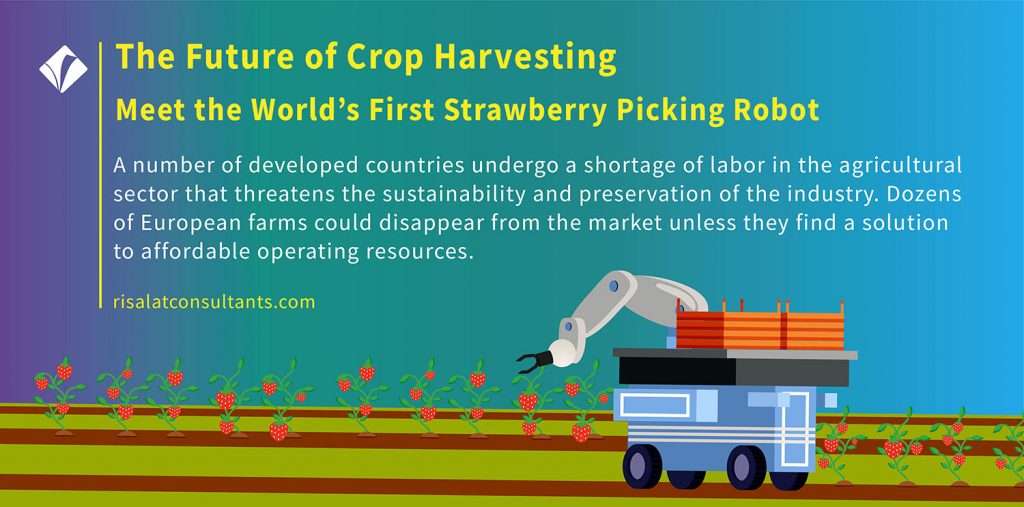
A harvesting robot must locate ripe produce, estimate its position, navigate foliage and pick without damage. Lighting, occlusion and variation in fruit shape complicate these tasks.
Measure detection accuracy, successful picks per hour and bruising under real field conditions.
For implementation, distinguish what is under the team’s control from what requires action by a regulator, funder, supplier or service user. In the case of vision, sensing and picking, a credible proposal should describe its operating assumptions, the evidence used to select the approach and the consequences if those assumptions prove wrong. It should also explain which people may benefit, which people could face additional costs and how concerns will be addressed.
A practical review can start with three questions: What problem will be measurably smaller? What baseline information exists today? Who will verify the result after implementation? Teams should document answers before approving a major commitment. This helps prevent attractive technology, a fashionable policy or an ambitious target from displacing the original public-service objective.
The strawberry robot example
Belgian developer Octinion demonstrated the Rubion strawberry-picking robot for elevated growing systems. Such systems illustrate engineering progress but do not prove universal commercial viability across open-field crops.
Ask for independent trial results and compare the specific crop geometry and farm layout.
For implementation, distinguish what is under the team’s control from what requires action by a regulator, funder, supplier or service user. In the case of the strawberry robot example, a credible proposal should describe its operating assumptions, the evidence used to select the approach and the consequences if those assumptions prove wrong. It should also explain which people may benefit, which people could face additional costs and how concerns will be addressed.
A practical review can start with three questions: What problem will be measurably smaller? What baseline information exists today? Who will verify the result after implementation? Teams should document answers before approving a major commitment. This helps prevent attractive technology, a fashionable policy or an ambitious target from displacing the original public-service objective.
Economics and practical constraints
Cost per marketable kilogram
A machine can reduce some labour needs yet add capital, servicing, software and downtime costs. Faster picking is valuable only when produce meets quality requirements.
Calculate total cost per marketable kilogram, including missed fruit and maintenance.
For implementation, distinguish what is under the team’s control from what requires action by a regulator, funder, supplier or service user. In the case of cost per marketable kilogram, a credible proposal should describe its operating assumptions, the evidence used to select the approach and the consequences if those assumptions prove wrong. It should also explain which people may benefit, which people could face additional costs and how concerns will be addressed.
A practical review can start with three questions: What problem will be measurably smaller? What baseline information exists today? Who will verify the result after implementation? Teams should document answers before approving a major commitment. This helps prevent attractive technology, a fashionable policy or an ambitious target from displacing the original public-service objective.
Farm design and interoperability
Robots may need standardised row spacing, stable paths, power supply and compatible packaging. Retrofitting farms can be expensive.
Test the equipment during the actual harvest season and verify parts and technical support availability.
For implementation, distinguish what is under the team’s control from what requires action by a regulator, funder, supplier or service user. In the case of farm design and interoperability, a credible proposal should describe its operating assumptions, the evidence used to select the approach and the consequences if those assumptions prove wrong. It should also explain which people may benefit, which people could face additional costs and how concerns will be addressed.
A practical review can start with three questions: What problem will be measurably smaller? What baseline information exists today? Who will verify the result after implementation? Teams should document answers before approving a major commitment. This helps prevent attractive technology, a fashionable policy or an ambitious target from displacing the original public-service objective.
Illustrative management exercise: assemble a small cross-functional team, provide the relevant budget, operating data and stakeholder concerns, and ask members to compare two realistic options. Require them to show assumptions, implementation sequence, risks and evidence of success. A useful decision note is short enough for senior managers to act on but detailed enough for independent review.
Workers, sustainability and data
Changing farm jobs
Automation may shift labour from repetitive picking to maintenance, quality inspection and supervision. Training needs and effects on seasonal workers should be assessed openly.
Include worker consultation and transition plans in the business case.
For implementation, distinguish what is under the team’s control from what requires action by a regulator, funder, supplier or service user. In the case of changing farm jobs, a credible proposal should describe its operating assumptions, the evidence used to select the approach and the consequences if those assumptions prove wrong. It should also explain which people may benefit, which people could face additional costs and how concerns will be addressed.
A practical review can start with three questions: What problem will be measurably smaller? What baseline information exists today? Who will verify the result after implementation? Teams should document answers before approving a major commitment. This helps prevent attractive technology, a fashionable policy or an ambitious target from displacing the original public-service objective.
Environmental claims
Automation can improve precision but also consumes energy and materials. Its net environmental benefit depends on equipment life, power source and changes in inputs and waste.
Use life-cycle assumptions and avoid claiming emissions savings without evidence.
For implementation, distinguish what is under the team’s control from what requires action by a regulator, funder, supplier or service user. In the case of environmental claims, a credible proposal should describe its operating assumptions, the evidence used to select the approach and the consequences if those assumptions prove wrong. It should also explain which people may benefit, which people could face additional costs and how concerns will be addressed.
A practical review can start with three questions: What problem will be measurably smaller? What baseline information exists today? Who will verify the result after implementation? Teams should document answers before approving a major commitment. This helps prevent attractive technology, a fashionable policy or an ambitious target from displacing the original public-service objective.
A short implementation checklist should cover the baseline, legal authority, responsible owner, funding source, data quality, accessibility, supplier obligations, safeguards, monitoring frequency and corrective-action trigger. These are not interchangeable. A good technical specification cannot substitute for public accountability, and a signed contract does not establish that the intended benefit has been delivered.
Agricultural ministries and donor projects
Responsible demonstration projects
A public agricultural programme can run comparative trials across farm sizes and crop varieties rather than subsidise one vendor without testing.
Publish baseline labour costs, yield quality, downtime and farmer feedback.
For implementation, distinguish what is under the team’s control from what requires action by a regulator, funder, supplier or service user. In the case of responsible demonstration projects, a credible proposal should describe its operating assumptions, the evidence used to select the approach and the consequences if those assumptions prove wrong. It should also explain which people may benefit, which people could face additional costs and how concerns will be addressed.
A practical review can start with three questions: What problem will be measurably smaller? What baseline information exists today? Who will verify the result after implementation? Teams should document answers before approving a major commitment. This helps prevent attractive technology, a fashionable policy or an ambitious target from displacing the original public-service objective.
Access for smallholders
Small farms may benefit more from shared machinery services than individual ownership. Financing and repair networks matter as much as the machine.
Assess cooperatives, service providers, affordability and local technical capacity before scaling.
For implementation, distinguish what is under the team’s control from what requires action by a regulator, funder, supplier or service user. In the case of access for smallholders, a credible proposal should describe its operating assumptions, the evidence used to select the approach and the consequences if those assumptions prove wrong. It should also explain which people may benefit, which people could face additional costs and how concerns will be addressed.
A practical review can start with three questions: What problem will be measurably smaller? What baseline information exists today? Who will verify the result after implementation? Teams should document answers before approving a major commitment. This helps prevent attractive technology, a fashionable policy or an ambitious target from displacing the original public-service objective.
For ministries, public agencies and donor-funded projects, the key distinction is between completing activities and achieving institutional change. Project implementation units should connect procurement, financial management, environmental and social safeguards, monitoring and evaluation, and post-project operating arrangements. This reduces the risk that a completed asset, training event or software deployment becomes unusable when external funding ends.
One practical sequence is to complete a baseline assessment, consult the intended users, compare options, define responsibilities, pilot where appropriate and commission an independent review of results. Management should record unresolved risks and the reasons for its decisions. If outcomes are weak, the appropriate response is to adapt the intervention rather than report only the number of activities completed.
Institutions can start with Risalat’s institutional capacity assessment, review the project health diagnostic and request a tailored advisory or training proposal where additional support is justified.
常见问题
What is the first step in robotic crop harvesting?
Define the operational problem and establish a reliable baseline before choosing a method or purchasing a solution.
How should institutions compare approaches?
Compare feasibility, total cost, risks, inclusion, required skills and evidence of outcomes using the same decision criteria.
What evidence shows that an intervention works?
Use baseline and follow-up measures, verified implementation records and feedback from affected people; distinguish outputs from outcomes.
What is the main implementation risk?
The main risk is often a mismatch between the proposed solution and local capacity, incentives, financing or user needs.
How can donor-funded projects apply these lessons?
Integrate procurement, safeguards, finance and monitoring into one accountable delivery plan with a sustainable operating model.
认识应该阅读本文的人?成为Risalat大使,或以您本人名义与Risalat合作撰写文章。
自2011年以来始终是项目成功的合作伙伴,为政府部委、公共机构和项目团队提供诊断评估、咨询支持与应用型学习。