Advanced Public Financial Management Training – Programme Overview
Effective Public Financial Management (PFM) is central to fiscal discipline, service delivery, transparency, and long-term economic stability. As public institutions face growing fiscal pressures, climate risks, and accountability demands, finance professionals must move beyond transactional budgeting toward strategic, data-driven, and risk-aware financial management.
This Advanced Public Financial Management Training Programme is designed to strengthen participants’ ability to plan, manage, control, and report on public resources in line with internationally recognized good practices. The programme integrates budgeting, fiscal control, financial reporting, risk management, and sustainability considerations, equipping participants with practical tools to improve governance, accountability, and institutional resilience.
Watch a short overview of how this programme strengthens public financial management capacity through practical, real-world application.
Target Audience
Advanced Public Financial Management Training in Bucharest, Romania is suitable for:
- Public finance and budget officers
- Senior and mid-level government financial managers
- Auditors and internal control officers
- Policy makers involved in fiscal planning and reform
- Public sector project and programme managers
Tick what your team needs to be able to do.
Programme Objectives
By the end of this training course, participants will gain a strong understanding of advanced public financial management and be prepared to work directly with financial professionals and auditors in public or third sector organizations.
- Understand modern public financial management systems and frameworks
- Strengthen budget planning, execution, and fiscal discipline
- Apply effective financial controls and risk management tools
- Improve financial reporting, transparency, and data use for decision-making
- Enhance long-term fiscal sustainability, asset management, and institutional resilience
Advanced Public Financial Management Training – Programme Structure
- Performance-based budgeting and results-oriented planning
- Medium-term expenditure frameworks (MTEFs)
- Budget execution, variance analysis, and corrective actions
- Debt financing vs. capital financing strategies
- Public investment appraisal and lifecycle costing
Full day-by-day contents
First Day – Public Financial Management Foundations & Fiscal Frameworks
Aligned with international public financial management good practices on fiscal reporting and budget reliability
Key Topics
- Principles and objectives of modern public financial management
- Government funds, budget classifications, and fiscal space
- Operating budgets vs. capital budgets in the public sector
- Time value of money for public sector investment decisions
- Financial models: public sector vs. private and nonprofit organizations
Learning Outcome: Participants gain a solid foundation in how public finance systems function and how they differ from private-sector financial models.
Second Day – Budgeting, Planning & Fiscal Discipline
Aligned with policy-based budgeting and medium-term fiscal frameworks
Key Topics
Strategic and operational budgeting processes
- Performance-based budgeting and results-oriented planning
- Medium-term expenditure frameworks (MTEFs)
- Budget execution, variance analysis, and corrective actions
- Debt financing vs. capital financing strategies
- Public investment appraisal and lifecycle costing
Third Day – Financial Controls, Risk Management & Audit
Aligned with global standards on fiscal risk management and internal controls
Key Topics
- Internal control systems and fiscal discipline
- Financial risk identification and mitigation
- Early warning indicators of financial stress
- Audit processes, compliance, and accountability
- Responding to audit findings and improving controls
Fourth Day – Financial Reporting, Transparency & Analysis
Aligned with international public sector accounting and fiscal transparency principles
Key Topics
- Public sector financial reporting standards and frameworks
- Interpreting balance sheets, income statements, and cash flow reports
- Public sector financial analysis techniques
- Improving financial data presentation for decision-makers
- Transparency, disclosure, and accountability mechanisms
Learning Outcome: Participants develop stronger analytical skills to support oversight, policy decisions, and performance management.
Fifth Day – Fiscal Sustainability, Asset Management & Long-Term Resilience
Aligned with asset and liability management and fiscal sustainability principles
Key Topics
- Asset management planning and infrastructure finance
- Long-term fiscal sustainability and reserve funds
- Managing contingent liabilities and government guarantees
- Linking public financial management to governance reforms
- Institutional action planning and application
Training Methodology – Advanced Public Financial Management
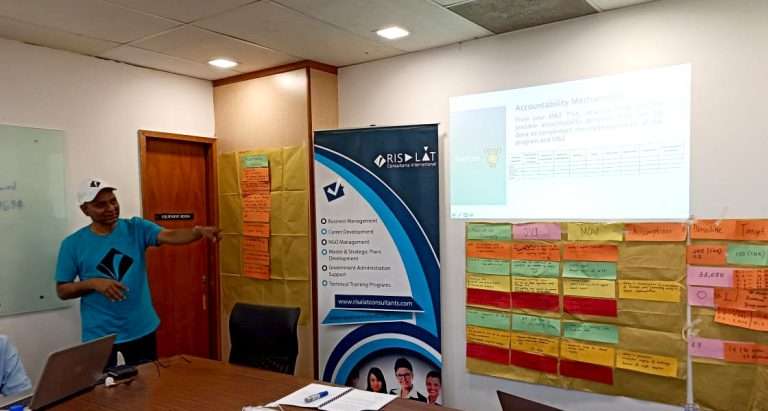
The programme is delivered using a practical, adult-learning approach that combines expert-led sessions, real-world case studies, group discussions, and applied exercises. Participants engage in budgeting simulations, financial analysis workshops, and scenario-based problem solving to translate theory into practice. Peer learning and guided discussions ensure relevance to participants’ institutional contexts, enabling immediate application of acquired skills.
The methodology reflects widely accepted public financial management good practices used in public sector reform and capacity-building programmes worldwide and is designed to complement specialized learning on subnational finance and intergovernmental fiscal systems, including our Fiscal Decentralization Training Programme in Belgrade, Serbia
Host Country Profile forAdvanced Public Financial Management Training
Romania provides a strong and relevant setting for the Advanced Public Financial Management Training Programme, reflecting the fiscal governance challenges and reform priorities faced by many middle-income and transition economies. As a member of the European Union, Romania has undertaken extensive public financial management reforms focused on budget credibility, fiscal transparency, public investment efficiency, and compliance with EU fiscal and reporting standards. Key institutions such as the National Agency for Fiscal Administration (ANAF) play a central role in revenue administration, tax compliance, and fiscal enforcement, offering participants valuable exposure to real-world public finance systems operating within a rules-based and performance-oriented framework.
Hosting the programme in Bucharest, Romania’s political and administrative center, allows participants to engage with an environment shaped by ongoing budget modernization, public sector performance improvement, and institutional capacity-building initiatives. The city’s concentration of central government institutions, regulatory bodies, and public finance professionals creates a rich learning context for peer exchange, comparative analysis, and the practical application of advanced public financial management tools relevant to diverse national and institutional settings.
Course Deliverables
Participants will enjoy a full-service experience that covers everything needed before, during, and after the programme:
Before the Programme
- Participant Pre-Assessment to ensure effective preparation
- Complimentary Visa Support & Advisory (E-visa applications are fully processed by our team)
- Airport Pickup & Welcome Assistance
- Accommodation with Breakfast for the full duration
- Welcome Dinner for networking and connecting with fellow Participants & the Risalat Team
During the Programme
- Risalat Training Kit, including: bag, water bottle, coffee mug, t-shirt, cap, passport cover, pens, notebook, magnet, keychain
- Lunch Provided Daily during training days
- Comprehensive Course Manual & Training Materials
- Project-Based Templates, Tools, and Worksheets
- Mini pad / tablet provided for convenient access to digital resources, which participants may keep after the programme.
- Digital Case Studies, Reading Packs & Reference Materials
- Access to Sample Datasets & Practical Exercises
- Field Visit (where applicable)
- Complimentary Refreshments & Full Training Venue Facilities
- Access to Online Learning Resources
- Entertaining City Tour
- Certificate of Completion
- Risalat Programme Participation Recognition Award
After the Programme
- Post-Training Support & Follow-Up Guidance
- Programme Report
£2,960 per participant · invoice and bank transfer · groups of 5 or more receive a discount
Five or more from one organisation: ask for the group rate on the invoice request.
Ten or more: an in-house version for your institution may cost less per person. Ask for an in-house quote.
Registration closes in 77 days (3 Jan 2027)