حقائق رئيسية
- المواعيد
- 26–29 يناير 2027 (4 أيام)
- المكان
- Inntel Hotels Rotterdam Centre، روتردام، هولندا
- الرسوم لكل مشارك
- £3,950 (GBP)
- الدفع
- بالفاتورة والتحويل المصرفي
- إغلاق التسجيل
- 17 ديسمبر 2026
- الصيغة
- 4-day short course: a practical capacity-building programme for government, NGO and project teams in Rotterdam
- الخيار المؤسسي
- نفّذه لفريقك، في المواعيد التي تناسبك
في هذه الصفحة 12 قسماً
نظرة عامة على البرنامج
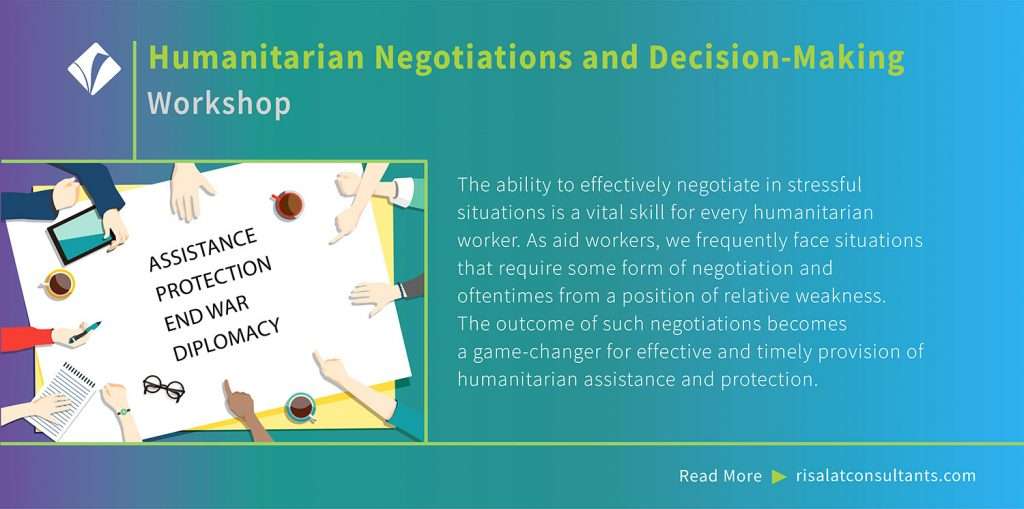
The ability to effectively negotiate in stressful situations is a vital skill for every humanitarian worker. Aid workers frequently face situations that require some form of negotiation, oftentimes from a position of relative weakness. The outcome of such negotiations becomes a game-changer for effective and timely provision of humanitarian assistance and protection. Volatile contexts, short time, and limited power to exert influence on the parties are the characteristics that make humanitarian negotiations unique.
Training on Humanitarian Negotiations and Decision-Making has been designed to target the improvement in individual and organizational negotiation skills. The programme actively works to equip participants with a set of practical tools, methods, and skills that help them analyse the environment where the humanitarian negotiation takes place and build the strategy for achieving desired objectives.
يُقدّم هذا البرنامج Risalat Consultants International في روتردام بهولندا، ويجمع بين جلسات يقودها خبراء ودراسة حالات واقعية والعمل الجماعي، ليتمكن المشاركون من تطبيق ما يتعلمونه في مؤسساتهم.
يعزز البرنامج القدرات المؤسسية في:
- Understanding Humanitarian Negotiations and accompanying challenges
- Humanitarian Negotiations and International Humanitarian Law
- أنماط مختلفة للتفاوض
- Characteristics of humanitarian engagement and negotiations with armed groups
- Characteristics of humanitarian negotiations with government authorities
- Humanitarian Negotiations with Donors
- Humanitarian Negotiations with Civilians
- Multi-Party Humanitarian Negotiations
- التفكير الاستراتيجي وتحديد الاتجاه
- قيادة الفرق وتطويرها
- اتخاذ القرار وحل المشكلات
- التواصل والتأثير
Why this matters now
تحتاج المؤسسات بشكل متزايد إلى مهنيين قادرين على:
- حدّد اتجاهاً وأولويات واضحة
- قيادة الفرق وتحفيزها خلال التغيير
- التواصل والتفاوض بفعالية
- أدِر الأداء بإنصاف
- اتخذ قرارات سليمة تحت الضغط
تساعد الأنظمة القوية في القيادة والإدارة والتواصل المؤسسات على:
- حوّل الاستراتيجيات إلى نتائج
- ابنِ فرقاً متحفزة وقادرة
- أدِر التغيير بمقاومة أقل
- تحسين العلاقات مع الشركاء وأصحاب المصلحة
من ينبغي له الحضور
صُمم هذا البرنامج من أجل:
- Improve interpersonal, communication, and diplomatic skills
- Master advocacy tools and techniques
- Learn how to negotiate the best agreement from the position of relative weakness
- قيادة والمشاركة في المفاوضات في سياقات الإنسانية والحماية
- Effectively analyze negotiating environment and build negotiation strategies under time-stress
- Comprehend the peculiarities of humanitarian negotiations with governments, military, armed groups, donors, and civilians
- المديرون وكبار المسؤولين
- رؤساء الإدارات والوحدات
- المديرون المتوسطون وقادة الفرق
- مديرو المشاريع والبرامج
- موظفو الموارد البشرية والتطوير التنظيمي
- الموظفون الذين يستعدون لتولي أدوار قيادية
حدّد ما يحتاج فريقك إلى القدرة على إنجازه.
أهداف البرنامج
بنهاية هذا البرنامج سيتمكن المشاركون من:
- شرح المناهج الحالية للقيادة في المؤسسات العامة والخاصة
- تحديد الاتجاه والأولويات لفرقهم
- قيادة الأفراد وتحفيزهم وتطويرهم
- اتخاذ القرارات باستخدام أساليب منهجية
- التواصل بوضوح والتأثير في الآخرين
- التفاوض وإدارة النزاعات
- التخطيط للتغيير وقيادته
- أدِر الأداء بإنصاف
- إعداد خطة شخصية لتطوير القيادة
Training Structure & Contents
- Understanding Humanitarian Negotiations and accompanying challenges
- Humanitarian Negotiations and International Humanitarian Law
- أنماط مختلفة للتفاوض
- Characteristics of humanitarian engagement and negotiations with armed groups
- Characteristics of humanitarian negotiations with government authorities
- Humanitarian Negotiations with Donors and Civilians
- Workshop: Applying methods to institutional examples and agreeing practical next steps
- Defining the motivation for negotiation
- Setting Negotiation Objectives
- Partners in humanitarian negotiations
- Interests, Position, and Power in humanitarian negotiations
- Stress and Time-Pressure in Humanitarian Negotiations
- Assessing Leverage and Maximizing Compatibility and Leverage
- Workshop: Applying negotiation objectives and leverage to institutional settings
- Diplomacy in Humanitarian Negotiations
- Personal Negotiation Styles
- Face-to-face negotiation and building relationship
- Managing cultural differences
- Language and Interpreters
- Dealing with Failure in Negotiation and following through
- Case Study: Diplomacy and negotiation styles in practice
- Peer-to-peer workshop
- Review of negotiation strategies under time-stress
- Integrating multi-party humanitarian negotiations
- Capstone Exercise: Action plan for participant institutions
- Setting priorities, owners and first steps
- Presenting action plans for peer and facilitator feedback
- Consolidation of individual and organizational negotiation skills
- Frameworks for leading and motivating teams through change
- Structured tools for decision-making under pressure
- Communication and stakeholder engagement review
- Finalising the personal leadership and negotiation development plan
المحتوى الكامل يوماً بيوم
First Day | Understanding Humanitarian Negotiations and accompanying challenges
- Understanding Humanitarian Negotiations and accompanying challenges
- Humanitarian Negotiations and International Humanitarian Law
- أنماط مختلفة للتفاوض
- Characteristics of humanitarian engagement and negotiations with armed groups
- Characteristics of humanitarian negotiations with government authorities
- Humanitarian Negotiations with Donors and Civilians
- Workshop: Applying methods to institutional examples and agreeing practical next steps
اليوم الثاني | تحديد دوافع التفاوض، تحديد أهداف التفاوض
- Defining the motivation for negotiation
- Setting Negotiation Objectives
- Partners in humanitarian negotiations
- Interests, Position, and Power in humanitarian negotiations
- Stress and Time-Pressure in Humanitarian Negotiations
- Assessing Leverage and Maximizing Compatibility and Leverage
- Workshop: Applying negotiation objectives and leverage to institutional settings
اليوم الثالث | الدبلوماسية في المفاوضات الإنسانية، أساليب التفاوض الشخصية
- Diplomacy in Humanitarian Negotiations
- Personal Negotiation Styles
- Face-to-face negotiation and building relationship
- Managing cultural differences
- Language and Interpreters
- Dealing with Failure in Negotiation and following through
- Case Study: Diplomacy and negotiation styles in practice
Fourth Day | Peer-to-peer workshop and Institutional Action Planning
- Peer-to-peer workshop
- Review of negotiation strategies under time-stress
- Integrating multi-party humanitarian negotiations
- Capstone Exercise: Action plan for participant institutions
- Setting priorities, owners and first steps
- Presenting action plans for peer and facilitator feedback
Fifth Day | Consolidation and Implementation Framework
- Consolidation of individual and organizational negotiation skills
- Frameworks for leading and motivating teams through change
- Structured tools for decision-making under pressure
- Communication and stakeholder engagement review
- Finalising the personal leadership and negotiation development plan
منهجية التدريب
Humanitarian Negotiations and Decision-Making is a highly interactive training with particular emphasis on knowledge exchange. The presenter uses proven adult-learning techniques to facilitate the conversation between the delegates. Several case studies and scenarios are discussed, and participants engage in real-life simulations where they can practise communication skills and work on personal negotiation styles. A short pre-assessment helps facilitators understand roles and priorities, and each day ends with a short reflection on practical application.
- جلسات يقودها خبراء حول الممارسات الحالية
- دراسات حالة إقليمية ودولية
- عمل جماعي وتمارين عملية
- محاكاة ولعب أدوار حسب الحاجة
- مناقشة التحديات الخاصة بالمشاركين
- التعلم من الأقران عبر المؤسسات والدول
- أدوات ونماذج عملية تعود بها إلى العمل
- تأمل يومي وتخطيط للعمل
النتائج المتوقعة
- حدّد اتجاهاً وأولويات واضحة
- قيادة الفرق وتطويرها
- اتخاذ قرارات سليمة
- التواصل والتفاوض بفعالية
- قيادة التغيير بمقاومة أقل
- التخطيط لتطورهم الذاتي كقادة
- Return with a personal action plan and practical tools for immediate institutional use
- Establish shared methods and templates across organisational teams
£3,950 لكل مشارك · فاتورة وتحويل مصرفي · تحصل المجموعات المكونة من 5 مشاركين أو أكثر على خصم
خمسة مشاركين أو أكثر من مؤسسة واحدة: اطلبوا سعر المجموعة عند طلب الفاتورة.
Ten or more: an in-house version for your institution may cost less per person. Ask for an in-house quote.
Registration closes in 24 days (17 Dec 2026)
الأهمية الإقليمية والتطبيق
Europe: European institutions apply leadership, management and communication within detailed regulatory frameworks and reform agendas. Participants from Europe can compare their practice with colleagues from other regions and test how established methods work under different conditions.
Africa: Across Africa, ministries, agencies and project teams working in leadership, management and communication increasingly operate alongside donor-financed programmes that expect clear systems and evidence. The programme helps participants adapt good practice to the institutions and resources they work with.
Middle East: In the Middle East, national development strategies and diversification plans place growing demands on leadership, management and communication. Participants explore how to build the capability these plans need inside public bodies and companies.
Asia: Institutions across Asia combine rapid growth with ambitious modernisation programmes. Participants from Asia can share their experience of scaling systems quickly and learn from approaches used elsewhere.
Pacific: Small island and Pacific states face particular constraints of size, distance and capacity. The programme highlights practical, proportionate approaches to leadership, management and communication that suit smaller institutions.
نبذة عن البلد المضيف
Rotterdam, Netherlands: Studying away from their own country gives participants time to reflect away from daily pressures, compare how leadership, management and communication is handled in different settings, and build professional networks.
Who Will Deliver This Programme
Each date is delivered by a team assigned from Risalat's expert network for this subject. For this programme we assign:
How we choose them: Experience in the region of the participants or comparable settings; Command of the financier rules that apply (World Bank, ADB, AfDB, EU, UN) where relevant; Delivery in English; other languages on request for in-house groups; No conflict of interest with participants' institutions.
Training courses in Rotterdamالدورات التدريبية للعاملين في المجال الإنساني
لماذا روتردام لهذا البرنامج
Rotterdam is home to Europe's largest seaport, offering direct insight into international trade, modern logistics, and maritime management. Visiting officials can examine flood protection infrastructure such as the Maeslantkering and observe urban regeneration projects across the city. The location is easily accessible through Rotterdam The Hague Airport and frequent rail connections from Amsterdam Airport Schiphol.
The Training on Humanitarian Negotiations and Decision-Making programme in January 2027 brings together officials and professionals from across Europe, Africa, the Middle East and Asia. Sessions combine short inputs, case studies and group work on participants' own files, and the city's institutions can be added as a study visit on request.
Getting there: Rotterdam The Hague Airport (RTM).
تحقق مما إذا كنت بحاجة إلى تأشيرة عبر أداة التحقق من التأشيرة المجانية، واطلب خطاب دعوة بعد إتمام تسجيلك.
الموضوع نفسه في مدن أخرى
- برنامج تدريبي متقدم في إدارة المشتريات والمفاوضات الاستراتيجية (تبليسي)
- Humanitarian Cooperation and Diplomacy Training in Brussels (Brussels)
برامج أخرى في روتردام
- Urban Flood Risk Reduction and Drainage Master Planning in Rotterdam
- Urban Flood Resilience & Nature-Based Stormwater Drainage Engineering in Rotterdam
- Inland Waterway Navigation Systems & Multimodal Corridor Modernisation in Rotterdam
- تدريب إدارة ممرات النقل وتمويل الطرق في روتردام
- برنامج تدريبي في أساسيات الحوكمة البيئية والاجتماعية والمؤسسية (ESG)
- ReliefWeb OCHA
Is there negotiation and communication training for government officials in Rotterdam in January 2027?
Can "Training on Humanitarian Negotiations and Decision-Making" be delivered in-house for one organisation?
Which other negotiation and communication programmes does Risalat run?
كيف تسجّل المؤسسات وتسدّد الرسوم؟
للفرق والمؤسسات
Bring your team
Teams that learn together apply more at work. Tell us how many people and how you would like to take part: we reply with a group quote within two working days.
تواريخ ومدن أخرى لهذا الموضوع: دورات التدريب على إدارة البرامج الإنسانية (44 موعداً قادماً).
More training courses in the Netherlands · جميع البرامج في أوروبا · تقويم التدريب الكامل
تخطيط هذا البرنامج في خارطة طريق: لماذا هو مهم، ولماذا يجب الموافقة عليه، والتواريخ المراد التخطيط لها، والمسار المهني الذي يبنيه.