Key facts
- Dates
- 1–3 Feb 2027 (3 days)
- Where
- Holiday Inn Tbilisi, 26 May Square (proposed), Tbilisi, Georgia
- Fee per participant
- £2,350 (GBP)
- Payment
- By invoice and bank transfer
- Registration closes
- 23 Dec 2026
- Format
- 3-day short course: a practical capacity-building programme for government, NGO and project teams in Tbilisi
- Certificate
- Certificate of completion
- Groups
- Teams of 3 or more qualify for a group discount, offered case by case: ask for a group quote.
- In-house option
- Run it for your team, on your dates
On this page 9 sections
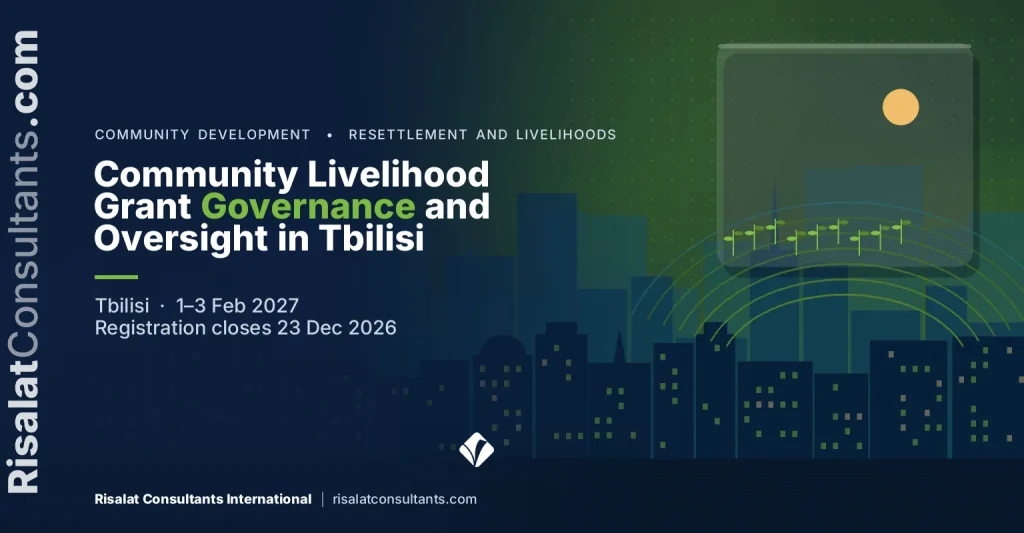
Community Livelihood Grant Governance and Oversight in Tbilisi
Programme Overview
Community livelihood grants serve as critical financial instruments for socio-economic inclusion, targeted microenterprise development, and self-employment promotion among vulnerable populations. However, delivering small grants across decentralised project locations exposes public institutions and project implementation units to substantial operational, fiduciary, and reputational risks. This executive workshop in Tbilisi equips professionals with the operational controls and oversight mechanisms required to protect grant integrity, maintain transparent selection processes, and ensure that disbursed donor funds achieve measurable local economic development outcomes.
Free self-check: the governance self-audit gives a quick check of governance, controls and accountability, in about 10 minutes.
Participants explore the core architecture of grant governance, focusing on the composition, independence, and operational protocols of community-level selection panels. The curriculum addresses the practical challenges of safeguarding microenterprise financing against elite capture, conflict of interest, and leakage. By examining field-tested control frameworks aligned with multilateral development bank standards, attendees learn to establish robust appraisal pipelines, formalise beneficiary scoring rubrics, and install transparent vetting protocols that endure public scrutiny and meet strict donor accountability mandates.
Beyond initial selection, the programme provides exhaustive guidance on downstream accountability, field-based asset verification, and post-distribution monitoring. Participants review internal audit methodologies tailored to community-driven development, structure operational grievance redress mechanisms compliant with international standards, and formulate fraud prevention strategies. Practical exercises, real-world case simulations, and comparative analysis enable project teams to construct resilient supervisory workflows that detect anomalies early, verify physical capital procurement, and document compliance for external financial evaluations.
The programme strengthens institutional capability in:
- International standards for sub-grant governance in World Bank, ADB, and UN-financed operations
- Structuring community selection committees: member criteria, independence, and mitigating elite capture
- Defining eligibility standards, vulnerability matrices, and objective business plan scoring systems
- Conflict of interest declarations, code of conduct enforcement, and vetting committee decisions
- Practical design of transparent public notice procedures and beneficiary shortlist disclosures
- Pre-disbursement fiduciary screening and milestone-based micro-grant tranche release models
- Field-level asset verification: supplier checks, physical capital validation, and geo-tagged tracking
- Fraud typology analysis: identification of phantom beneficiaries, invoice manipulation, and kickbacks
- Environmental and social risk screening
- Assessment instruments and management plans
- Stakeholder engagement planning
- Grievance mechanisms that work
Why this matters now
Organisations increasingly require professionals capable of:
- Screen and classify environmental and social risks
- Prepare and implement management plans
- Engage stakeholders meaningfully throughout the project
- Run grievance mechanisms that resolve issues
- Monitor and report on commitments to financiers
Strong environmental, social and stakeholder management systems help organisations:
- Avoid delays and suspended disbursements
- Protect communities and workers
- Meet financier standards and commitments
- Build trust with affected people and the public
Who Should Attend
This programme is designed for:
- Grant management officers overseeing community-driven microenterprise funds
- Internal auditors working within donor-funded project implementation units
- Project directors and compliance coordinators from public agencies in Azerbaijan
- Monitoring and evaluation specialists responsible for grant portfolio verification
- Fiduciary and procurement specialists administering sub-grant allocation schemes
- Grievance redress officers and social accountability focal points in public programmes
- Field operations supervisors overseeing local livelihood support interventions
- Finance officers managing micro-grant disbursements and post-award reporting
- Technical advisers supporting employment generation and vulnerable community integration
- Environmental and social specialists
- Safeguards officers in PIUs
- Project and programme managers
Tick what your team needs to be able to do.
Programme Objectives
By the end of this programme participants will be able to:
- Establish transparent grant governance structures aligned with international donor fiduciary standards
- Design objective scoring criteria and operational terms of reference for beneficiary selection committees
- Formulate comprehensive fraud risk registers and mitigation protocols for community grant disbursements
- Develop robust physical asset verification procedures to confirm the genuine purchase of microenterprise tools
- Structure accessible, multi-tiered grievance redress mechanisms that incorporate confidential reporting and protection
- Draft risk-based post-distribution audit plans to evaluate compliance across decentralised beneficiary cohorts
- Implement corrective action frameworks to manage non-compliance, asset liquidation, and misuse of allocated funds
- Explain the environmental and social standards that apply to their projects
- Screen and classify risks and impacts
- Prepare the key instruments and management plans
Training Structure & Contents
- International standards for sub-grant governance in World Bank, ADB, and UN-financed operations
- Structuring community selection committees: member criteria, independence, and mitigating elite capture
- Defining eligibility standards, vulnerability matrices, and objective business plan scoring systems
- Conflict of interest declarations, code of conduct enforcement, and vetting committee decisions
- Practical design of transparent public notice procedures and beneficiary shortlist disclosures
- Workshop: Grant Governance Frameworks, Committee Architecture, and Beneficiary Appraisal: Applying It to Your Institution
- Pre-disbursement fiduciary screening and milestone-based micro-grant tranche release models
- Field-level asset verification: supplier checks, physical capital validation, and geo-tagged tracking
- Fraud typology analysis: identification of phantom beneficiaries, invoice manipulation, and kickbacks
- Developing internal fraud mitigation registers tailored to vulnerable community support projects
- Standard operating procedures for managing suspected fund diversion and immediate remedial actions
- Workshop: Asset Verification Protocols, Fiduciary Safeguards, and Fraud Prevention: Applying It to Your Institution
- Designing accessible project-level grievance redress mechanisms compliant with donor environmental and social frameworks
- Intake, logging, investigation workflows, and timeline enforcement for community grant appeals
- Planning post-distribution monitoring missions: sampling strategies and beneficiary interview protocols
- Conducting risk-based internal audits of grant portfolios and reconciling expenditure documentation
- Drafting comprehensive grant completion audits, lessons learned reports, and institutional corrective plans
- Capstone Exercise: Community Livelihood Grant Governance and Oversight in Tbilisi Action Plan for Your Institution
- Application of multilateral development bank standards to community livelihood programmes
- Screening and classifying environmental and social risks across decentralised locations
- Developing proportionate environmental and social management plans
- Stakeholder engagement planning and meaningful consultation methods
- Safeguarding vulnerable groups and preventing community tensions
- Action planning for institutional environmental and social risk procedures
- Preparing projects for multilateral donor oversight reviews and external evaluations
- Addressing elite capture and leakage across employment support initiatives
- Implementing corrective action frameworks for non-compliance and fund misuse
- Developing sustainable monitoring systems for long-term livelihood outcomes
- Final presentation of institutional action plans with priorities, owners, and first steps
- Facilitated peer review and feedback session on institutional deliverables
Full day-by-day contents
First Day | Grant Governance Frameworks, Committee Architecture, and Beneficiary Appraisal
- International standards for sub-grant governance in World Bank, ADB, and UN-financed operations
- Structuring community selection committees: member criteria, independence, and mitigating elite capture
- Defining eligibility standards, vulnerability matrices, and objective business plan scoring systems
- Conflict of interest declarations, code of conduct enforcement, and vetting committee decisions
- Practical design of transparent public notice procedures and beneficiary shortlist disclosures
- Workshop: Grant Governance Frameworks, Committee Architecture, and Beneficiary Appraisal: Applying It to Your Institution
Second Day | Asset Verification Protocols, Fiduciary Safeguards, and Fraud Prevention
- Pre-disbursement fiduciary screening and milestone-based micro-grant tranche release models
- Field-level asset verification: supplier checks, physical capital validation, and geo-tagged tracking
- Fraud typology analysis: identification of phantom beneficiaries, invoice manipulation, and kickbacks
- Developing internal fraud mitigation registers tailored to vulnerable community support projects
- Standard operating procedures for managing suspected fund diversion and immediate remedial actions
- Workshop: Asset Verification Protocols, Fiduciary Safeguards, and Fraud Prevention: Applying It to Your Institution
Third Day | Grievance Redress, Post-Distribution Monitoring, and Risk-Based Audit
- Designing accessible project-level grievance redress mechanisms compliant with donor environmental and social frameworks
- Intake, logging, investigation workflows, and timeline enforcement for community grant appeals
- Planning post-distribution monitoring missions: sampling strategies and beneficiary interview protocols
- Conducting risk-based internal audits of grant portfolios and reconciling expenditure documentation
- Drafting comprehensive grant completion audits, lessons learned reports, and institutional corrective plans
- Capstone Exercise: Community Livelihood Grant Governance and Oversight in Tbilisi Action Plan for Your Institution
Fourth Day | Environmental and Social Risk Screening and Management
- Application of multilateral development bank standards to community livelihood programmes
- Screening and classifying environmental and social risks across decentralised locations
- Developing proportionate environmental and social management plans
- Stakeholder engagement planning and meaningful consultation methods
- Safeguarding vulnerable groups and preventing community tensions
- Action planning for institutional environmental and social risk procedures
Fifth Day | Downstream Accountability, Oversight Reviews, and Institutional Action Planning
- Preparing projects for multilateral donor oversight reviews and external evaluations
- Addressing elite capture and leakage across employment support initiatives
- Implementing corrective action frameworks for non-compliance and fund misuse
- Developing sustainable monitoring systems for long-term livelihood outcomes
- Final presentation of institutional action plans with priorities, owners, and first steps
- Facilitated peer review and feedback session on institutional deliverables
Training Methodology
The training employs an applied adult-learning methodology combining structured technical presentations, comparative regulatory reviews, and interactive working sessions. Participants examine actual fiduciary failures and successes through practical case scenarios from donor-financed programmes. Working in peer teams, attendees evaluate anonymised grant dossiers, conduct simulated committee selection exercises, and draft risk registers for high-risk field activities. Facilitated plenary debates and targeted peer reviews encourage operational knowledge exchange between project implementation teams, ensuring direct applicability to domestic grant administration portfolios.
- Expert-led sessions on current practice
- Regional and international case studies
- Group work and practical exercises
- Simulations and role plays where relevant
Who Will Deliver This Programme
Each date is delivered by a team assigned from Risalat's expert network for this subject. For this programme we assign:
How we choose them: Experience in the region of the participants or comparable settings; Command of the financier rules that apply (World Bank, ADB, AfDB, EU, UN) where relevant; Delivery in English; other languages on request for in-house groups; No conflict of interest with participants' institutions.
Training courses in TbilisiCommunity Development training courses
Why Tbilisi for this programme
Tbilisi is known for public service halls and anti-corruption reforms, and has easy visas for many countries.
The Community Livelihood Grant Governance and Oversight in Tbilisi programme in February 2027 brings together officials and professionals from across the Caucasus region and beyond. Sessions combine short inputs, case studies and group work on participants' own files, and the city's institutions can be added as a study visit on request.
Getting there: Tbilisi International (TBS).
Check whether you need a visa with the free Visa Checker, and ask for an invitation letter once you are registered.
The same topic in other cities
- Women Livelihood Grants Administration and GBV Prevention Integration in Nairobi (Nairobi)
- Community-Based Social Cohesion and Local Livelihood Project Design in Tunis (Tunis)
- Urban Public Works, Youth Apprenticeships and Micro-Enterprise Grants in Kigali (Kigali)
- Grant Structuring & Incubation for Cultural and Creative Industries in Dubai (Dubai)
- Microfinance Facility Design & Community Livelihoods Grant Oversight in Cairo (Cairo)
- Creative Industries Incubation & Cultural Enterprise Development for Youth in Cairo (Cairo)
Other programmes in Tbilisi
- Performance Management in Government in Tbilisi
- Irrigation Modernisation and Dam Safety Oversight in Tbilisi
- School Infrastructure Standards, Seismic Retrofitting and Green Building in Tbilisi
- Agro-Logistics Hub Infrastructure and Regional Value Chain Linkages in Tbilisi
- Early Childhood Development Interventions and Facility Commissioning in Tbilisi
Questions before you nominate your team? Book a 30-minute call with us, or ask for this programme in-house.
£2,350 per participant · invoice and bank transfer · groups of 5 or more receive a discount
Five or more from one organisation: ask for the group rate on the invoice request.
Ten or more: an in-house version for your institution may cost less per person. Ask for an in-house quote.
Registration closes in 23 days (23 Dec 2026)
Teams often travel here from Azerbaijan, Georgia, Armenia, Ukraine, Moldova, Albania, Serbia, North Macedonia. Funding, visa letters and group rates are explained on each country page.
Local participant, or arranging your own stay?
The fee without accommodation is £2,050 per participant instead of £2,350 (£100 less for each of the 3 days). Everything else in the package stays the same: training, materials, lunches, the kit, the city tour and the certificate.
Register without accommodation →Venue: Holiday Inn Tbilisi, 26 May Square. Proposed venue, or a similar hotel with a training room; it may change with circumstances, and participants are told at once of any change.
Is there governance and anti-corruption training for government officials in Tbilisi in February 2027?
Can "Community Livelihood Grant Governance and Oversight in Tbilisi" be delivered in-house for one organisation?
Which other governance and anti-corruption programmes does Risalat run?
How do organisations register and pay?
For teams and institutions
Bring your team
Teams that learn together apply more at work. Tell us how many people and how you would like to take part: we reply with a group quote within two working days.
Watch: this programme in short

Other dates and cities for this subject: Resettlement and Livelihood Restoration training courses (21 upcoming dates).
More training courses in Georgia · All programmes in Asia · Full training calendar
Plan this programme in a roadmap: why it matters, why to approve it, the dates to plan and the career it builds.