Points clés
- Dates
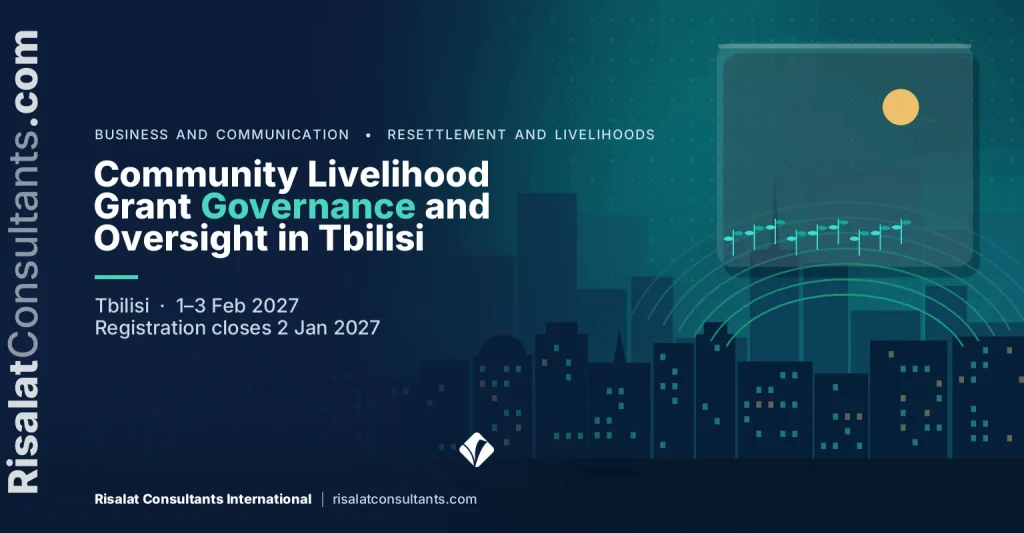
- 1–3 févr. 2027 (3 jours)
- Lieu
- Tbilissi, Géorgie
- Frais par participant
- 1 650 £ (GBP)
- Paiement
- Sur facture et par virement bancaire
- Clôture des inscriptions
- 2 janv. 2027
- Certificat
- Certificat de participation
- Option intra
- Organisez-le pour votre équipe, à vos dates
Sur cette page 15 sections
Présentation du programme
Community livelihood grants serve as critical financial instruments for socio-economic inclusion, targeted microenterprise development, and self-employment promotion among vulnerable populations. However, delivering small grants across decentralised project locations exposes public institutions and project implementation units to substantial operational, fiduciary, and reputational risks. This three-day executive workshop in Tbilisi equips professionals with the operational controls and oversight mechanisms required to protect grant integrity, maintain transparent selection processes, and ensure that disbursed donor funds achieve measurable local economic development outcomes.
Participants explore the core architecture of grant governance, focusing on the composition, independence, and operational protocols of community-level selection panels. The curriculum addresses the practical challenges of safeguarding microenterprise financing against elite capture, conflict of interest, and leakage. By examining field-tested control frameworks aligned with multilateral development bank standards, attendees learn to establish robust appraisal pipelines, formalise beneficiary scoring rubrics, and install transparent vetting protocols that endure public scrutiny and meet strict donor accountability mandates.
Beyond initial selection, the programme provides exhaustive guidance on downstream accountability, field-based asset verification, and post-distribution monitoring. Participants review internal audit methodologies tailored to community-driven development, structure operational grievance redress mechanisms compliant with international standards, and formulate fraud prevention strategies. Practical exercises, real-world case simulations, and comparative analysis enable project teams to construct resilient supervisory workflows that detect anomalies early, verify physical capital procurement, and document compliance for external financial evaluations.
Public agencies and implementation units managing large-scale interventions, such as employment support initiatives and internally displaced persons livelihoods operations, face mounting pressure to deliver swift yet fully accountable micro-level assistance. As community financing components expand across the South Caucasus, fiduciary teams must balance rapid disbursement to vulnerable households with stringent control over micro-grant allocation. Implementing sound governance arrangements, verifiable asset tracing, and transparent complaint channels is vital to prevent misallocation, satisfy multilateral oversight reviews, and guarantee that socio-economic investments translate into viable, sustained livelihoods.
Dispensé par Risalat Consultants International à Tbilissi (Géorgie), il associe sessions animées par des experts, cas réels et travaux de groupe, afin que les participants puissent appliquer ce qu'ils apprennent dans leur propre institution.
The Programme Strengthens Institutional Capability
- International standards for sub-grant governance in World Bank, ADB, and UN-financed operations
- Structuring community selection committees: member criteria, independence, and mitigating elite capture
- Defining eligibility standards, vulnerability matrices, and objective business plan scoring systems
- Conflict of interest declarations, code of conduct enforcement, and vetting committee decisions
- Practical design of transparent public notice procedures and beneficiary shortlist disclosures
- Pre-disbursement fiduciary screening and milestone-based micro-grant tranche release models
- Field-level asset verification: supplier checks, physical capital validation, and geo-tagged tracking
- Fraud typology analysis: identification of phantom beneficiaries, invoice manipulation, and kickbacks
- Tri préliminaire des risques environnementaux et sociaux
- Instruments d'évaluation et plans de gestion
- Planification de la mobilisation des parties prenantes
- Des mécanismes de gestion des plaintes qui fonctionnent
It is designed for grant management officers overseeing community-driven microenterprise funds, internal auditors working within donor-funded project implementation units, project directors and compliance coordinators from public agencies in Azerbaijan and others who want practical, current skills in environmental, social and stakeholder management.
The Growing Importance of Community Livelihood Grant Governance and Oversight in Tbilisi
Les bailleurs de fonds exigent désormais que les projets identifient et gèrent les risques environnementaux et sociaux dès le départ, et qu'ils associent les personnes concernées. Une gestion insuffisante des sauvegardes entraîne des retards, des suspensions de décaissements et des dommages durables pour les communautés.
De bonnes pratiques en matière de mobilisation des parties prenantes, de traitement des plaintes, d'inclusion et de réinstallation protègent les personnes et maintiennent les projets sur la bonne voie. Les équipes qui comprennent les normes et les appliquent tôt gagnent du temps et instaurent la confiance.
Les organisations ont de plus en plus besoin de professionnels capables de :
- Trier et classer les risques environnementaux et sociaux
- Préparer et mettre en œuvre les plans de gestion
- Mobiliser les parties prenantes de manière constructive tout au long du projet
- Gérer des mécanismes de plainte qui résolvent les problèmes
- Suivre les engagements pris envers les bailleurs de fonds et en rendre compte
Des systèmes solides de gestion environnementale, sociale et des parties prenantes aident les organisations à :
- Éviter les retards et les suspensions de décaissements
- Protéger les communautés et les travailleurs
- Respecter les normes et engagements des bailleurs de fonds
- Instaurer la confiance avec les personnes concernées et le public
This Community Livelihood Grant Governance and Oversight in Tbilisi programme brings these elements together in a practical format, so that participants understand not only what good practice looks like but also how to introduce it in their own setting, with the people and resources they have.
Who Should Attend This Community Livelihood Grant Governance and Oversight in Tbilisi Training?
Ce programme s'adresse à :
- Grant management officers overseeing community-driven microenterprise funds
- Internal auditors working within donor-funded project implementation units
- Project directors and compliance coordinators from public agencies in Azerbaijan
- Monitoring and evaluation specialists responsible for grant portfolio verification
- Fiduciary and procurement specialists administering sub-grant allocation schemes
- Grievance redress officers and social accountability focal points in public programmes
- Field operations supervisors overseeing local livelihood support interventions
- Finance officers managing micro-grant disbursements and post-award reporting
- Technical advisers supporting employment generation and vulnerable community integration
- Spécialistes environnementaux et sociaux
- Responsables des sauvegardes au sein des UGP
- Gestionnaires de projets et de programmes
Le programme convient aussi bien aux professionnels expérimentés qu’à ceux qui prennent de nouvelles responsabilités. Les groupes réunissant plusieurs institutions et pays sont encouragés, car les participants apprennent beaucoup de l’expérience des autres.
Cochez ce que votre équipe doit être capable de faire.
Community Livelihood Grant Governance and Oversight in Tbilisi Training Objectives
Upon successful completion of this Community Livelihood Grant Governance and Oversight in Tbilisi Training, participants will be able to:
- Establish transparent grant governance structures aligned with international donor fiduciary standards
- Design objective scoring criteria and operational terms of reference for beneficiary selection committees
- Formulate comprehensive fraud risk registers and mitigation protocols for community grant disbursements
- Develop robust physical asset verification procedures to confirm the genuine purchase of microenterprise tools
- Structure accessible, multi-tiered grievance redress mechanisms that incorporate confidential reporting and protection
- Draft risk-based post-distribution audit plans to evaluate compliance across decentralised beneficiary cohorts
- Implement corrective action frameworks to manage non-compliance, asset liquidation, and misuse of allocated funds
- Expliquer les normes environnementales et sociales applicables à leurs projets
- Trier et classer les risques et les impacts
- Préparer les principaux instruments et plans de gestion
Chaque objectif est mis en pratique pendant le programme à travers des exercices, des études de cas ou des travaux de groupe, afin que les participants repartent capables de le faire, et pas seulement de le décrire.
Contenu et structure du programme
- International standards for sub-grant governance in World Bank, ADB, and UN-financed operations
- Structuring community selection committees: member criteria, independence, and mitigating elite capture
- Defining eligibility standards, vulnerability matrices, and objective business plan scoring systems
- Conflict of interest declarations, code of conduct enforcement, and vetting committee decisions
- Practical design of transparent public notice procedures and beneficiary shortlist disclosures
- Pre-disbursement fiduciary screening and milestone-based micro-grant tranche release models
- Field-level asset verification: supplier checks, physical capital validation, and geo-tagged tracking
- Fraud typology analysis: identification of phantom beneficiaries, invoice manipulation, and kickbacks
- Developing internal fraud mitigation registers tailored to vulnerable community support projects
- Standard operating procedures for managing suspected fund diversion and immediate remedial actions
- Designing accessible project-level grievance redress mechanisms compliant with donor environmental and social frameworks
- Intake, logging, investigation workflows, and timeline enforcement for community grant appeals
- Planning post-distribution monitoring missions: sampling strategies and beneficiary interview protocols
- Conducting risk-based internal audits of grant portfolios and reconciling expenditure documentation
- Drafting comprehensive grant completion audits, lessons learned reports, and institutional corrective plans
Contenu détaillé jour par jour
Le programme se déroule sur 3 jours. Chaque journée associe apports d'experts, travail pratique et un atelier ou une étude de cas de clôture :
- First Day: Grant Governance Frameworks, Committee Architecture, and Beneficiary Appraisal
- Second Day: Asset Verification Protocols, Fiduciary Safeguards, and Fraud Prevention
- Third Day: Grievance Redress, Post-Distribution Monitoring, and Risk-Based Audit
Contenu détaillé jour par jour
First Day | Grant Governance Frameworks, Committee Architecture, and Beneficiary Appraisal
- International standards for sub-grant governance in World Bank, ADB, and UN-financed operations
- Structuring community selection committees: member criteria, independence, and mitigating elite capture
- Defining eligibility standards, vulnerability matrices, and objective business plan scoring systems
- Conflict of interest declarations, code of conduct enforcement, and vetting committee decisions
- Practical design of transparent public notice procedures and beneficiary shortlist disclosures
Workshop: Grant Governance Frameworks, Committee Architecture, and Beneficiary Appraisal: Applying It to Your Institution
En petits groupes, les participants appliquent les méthodes du jour à des exemples tirés de leurs institutions et conviennent d'étapes concrètes pour la suite.
Second Day | Asset Verification Protocols, Fiduciary Safeguards, and Fraud Prevention
- Pre-disbursement fiduciary screening and milestone-based micro-grant tranche release models
- Field-level asset verification: supplier checks, physical capital validation, and geo-tagged tracking
- Fraud typology analysis: identification of phantom beneficiaries, invoice manipulation, and kickbacks
- Developing internal fraud mitigation registers tailored to vulnerable community support projects
- Standard operating procedures for managing suspected fund diversion and immediate remedial actions
Workshop: Asset Verification Protocols, Fiduciary Safeguards, and Fraud Prevention: Applying It to Your Institution
En petits groupes, les participants appliquent les méthodes du jour à des exemples tirés de leurs institutions et conviennent d'étapes concrètes pour la suite.
Third Day | Grievance Redress, Post-Distribution Monitoring, and Risk-Based Audit
- Designing accessible project-level grievance redress mechanisms compliant with donor environmental and social frameworks
- Intake, logging, investigation workflows, and timeline enforcement for community grant appeals
- Planning post-distribution monitoring missions: sampling strategies and beneficiary interview protocols
- Conducting risk-based internal audits of grant portfolios and reconciling expenditure documentation
- Drafting comprehensive grant completion audits, lessons learned reports, and institutional corrective plans
Capstone Exercise: Community Livelihood Grant Governance and Oversight in Tbilisi Action Plan for Your Institution
Les participants synthétisent la semaine dans un plan d'action pour leur institution, avec des priorités, des responsables et des premières étapes, puis le présentent à leurs pairs et aux animateurs pour recueillir leurs retours.
Community Livelihood Grant Governance and Oversight in Tbilisi Training Methodology
The training employs an applied adult-learning methodology combining structured technical presentations, comparative regulatory reviews, and interactive working sessions. Participants examine actual fiduciary failures and successes through practical case scenarios from donor-financed programmes. Working in peer teams, attendees evaluate anonymised grant dossiers, conduct simulated committee selection exercises, and draft risk registers for high-risk field activities. Facilitated plenary debates and targeted peer reviews encourage operational knowledge exchange between project implementation teams, ensuring direct applicability to domestic grant administration portfolios.
Le programme associe :
- Sessions animées par des experts sur les pratiques actuelles
- Études de cas régionales et internationales
- Travaux de groupe et exercices pratiques
- Simulations et jeux de rôle le cas échéant
- Discussion des défis rencontrés par les participants dans l'exercice de leurs fonctions
- Apprentissage entre pairs, d'institutions et de pays différents
- Des outils et modèles pratiques à réutiliser au travail
- Réflexion quotidienne et plan d'action
Avant le programme, une courte pré-évaluation aide les animateurs à comprendre le rôle et les priorités de chaque participant, afin d’adapter les exemples et les exercices au groupe. Chaque journée se termine par une brève réflexion au cours de laquelle les participants notent ce qu’ils appliqueront dans leur travail.
Résultats attendus
Upon completion of this Community Livelihood Grant Governance and Oversight in Tbilisi Training, participants will be able to:
- Institutional capacity to design grant selection frameworks that withstand external donor evaluations
- Operational capability to run independent, audit-compliant beneficiary selection panels
- Standardised field procedures to verify the procurement and retention of grant-funded physical assets
- Functional grievance management systems that address community complaints systematically and transparently
- Enhanced internal audit approaches targeting high-risk operational nodes within decentralised livelihoods portfolios
- Clear remediation protocols to respond promptly to instances of fraud, waste, or breach of grant agreements
- Trier et classer les risques environnementaux et sociaux
- Préparer et appliquer les plans de gestion
Les participants repartent avec un plan d'action personnel et des outils pratiques utilisables dans leur institution dès la première semaine de retour. Les institutions qui envoient plusieurs participants peuvent s'appuyer sur le programme pour convenir de méthodes et de modèles communs entre équipes, ce qui facilite la pérennité des améliorations.
1 650 £ par participant · facture et virement bancaire · remise pour les groupes de 5 personnes ou plus
Cinq personnes ou plus d'une même organisation : demandez le tarif de groupe lors de votre demande de facture.
À partir de dix participants, une version intra pour votre institution peut revenir moins cher par personne. Demander un devis intra.
Clôture des inscriptions dans 51 jours (2 janv. 2027)
Institutional Application of Community Livelihood Grant Governance and Oversight in Tbilisi Training
Ce programme aide les organisations à renforcer :
- Gestion des risques environnementaux et sociaux
- Mobilisation des parties prenantes
- Gestion des plaintes
- Gestion des entrepreneurs
- Inclusion des groupes vulnérables
Les participants repartent avec des outils pratiques pour améliorer :
- Plans de gestion
- Plans de mobilisation
- Registres des plaintes
- Rapports de suivi
- Signalement des incidents
Le programme est conçu pour que l'apprentissage passe de la salle de formation à l'institution. Les participants travaillent, dans la mesure du possible, sur leurs propres processus et documents, et repartent avec un plan d'action que leurs responsables peuvent examiner et soutenir.
Pertinence régionale & mise en application
Europe
Les institutions européennes pratiquent la gestion environnementale, sociale et des parties prenantes dans des cadres réglementaires détaillés et des programmes de réforme. Les participants européens peuvent comparer leurs pratiques avec celles de collègues d'autres régions et vérifier comment des méthodes éprouvées fonctionnent dans d'autres conditions.
Afrique
Partout en Afrique, les ministères, organismes et équipes de projet qui interviennent dans la gestion environnementale, sociale et des parties prenantes travaillent de plus en plus aux côtés de programmes financés par les bailleurs, qui attendent des systèmes et des données probantes clairs. Le programme aide les participants à adapter les bonnes pratiques aux institutions et aux ressources dont ils disposent.
Moyen-Orient
Au Moyen-Orient, les stratégies nationales de développement et les plans de diversification imposent des exigences croissantes en matière de gestion environnementale, sociale et des parties prenantes. Les participants examinent comment développer, au sein des organismes publics et des entreprises, les capacités dont ces plans ont besoin.
Asie
Les institutions asiatiques conjuguent croissance rapide et programmes de modernisation ambitieux. Les participants venus d'Asie peuvent partager leur expérience du déploiement rapide de systèmes à grande échelle et découvrir les approches adoptées ailleurs.
Pacifique
Les petits États insulaires et du Pacifique font face à des contraintes particulières de taille, de distance et de capacités. Le programme met en avant des approches pratiques et proportionnées de gestion environnementale, sociale et des parties prenantes, adaptées aux petites institutions.
Holding the programme in Tbilisi, Georgia brings participants together away from their daily pressures, so they can compare how environmental, social and stakeholder management is handled in different settings. The same programme can also be delivered in-house for one institution, in its own country or online, with cases taken from its current work.
Profil du pays d'accueil – Géorgie
Programmes, ateliers, immersions et formations à Tbilissi, Géorgie, par Risalat Consultants International
Se former hors de son pays permet aux participants de se concentrer, de porter un regard neuf sur leur propre institution et de constituer un réseau avec des collègues d'autres pays.
Community Livelihood Grant Governance and Oversight in Tbilisi Training Deliverables
Les participants sont accompagnés avant, pendant et après le programme, afin que la préparation, l'apprentissage et le suivi forment une expérience continue.
Avant le programme
- Pré-évaluation des participants
- Community Livelihood Grant Governance and Oversight in Tbilisi Readiness Assessment
- Community Livelihood Grant Governance and Oversight in Tbilisi Resource Pack
- Lectures préparatoires
- Aide et conseils gratuits pour le visa
Pendant le programme
- Accueil à l'aéroport & assistance à l'arrivée
- Hébergement avec petit-déjeuner
- Dîner de bienvenue et de réseautage
- Kit de formation Risalat (sac, gourde, mug, t-shirt, casquette, protège-passeport, stylos, carnet, magnet & porte-clés)
- Comprehensive Community Livelihood Grant Governance and Oversight in Tbilisi Training Manual
- Liste de contrôle pour le tri préliminaire des risques
- Modèle de plan de mobilisation des parties prenantes
- Modèle de registre des plaintes
- Modèle de suivi environnemental et social
- Ateliers pratiques & simulations
- Discussions de groupe & apprentissage entre pairs
- Déjeuner et pauses-café quotidiens
- Accès complet aux installations du lieu de formation
- Mini tablette avec supports pédagogiques numériques
- Visite de terrain (le cas échéant)
- Visite récréative de la ville
Après le programme
- Certificat de participation
- Distinction Risalat de participation au programme
- Documents de référence après la formation
- Fiche de suivi des engagements
- Liste de contrôle de conformité des entrepreneurs
- Accompagnement après la formation & conseils de suivi
- Rapport du programme
Les institutions peuvent aussi demander une version intra sur mesure de ce programme, dispensée dans leurs locaux ou en ligne. Demander une proposition.
Common Challenges in Community Livelihood Grant Governance and Oversight in Tbilisi, And How This Training Helps
Comment les institutions peuvent-elles trier et classer les risques environnementaux et sociaux ?
The programme addresses this directly on the first day (Grant Governance Frameworks, Committee Architecture, and Beneficiary Appraisal), where participants practise the methods involved and adapt them to their own institution, then build it into their action plan.
Comment les institutions peuvent-elles préparer et mettre en œuvre des plans de gestion ?
The programme addresses this directly on the second day (Asset Verification Protocols, Fiduciary Safeguards, and Fraud Prevention), where participants practise the methods involved and adapt them to their own institution, then build it into their action plan.
Comment les institutions peuvent-elles mobiliser les parties prenantes de manière constructive tout au long du projet ?
The programme addresses this directly on the third day (Grievance Redress, Post-Distribution Monitoring, and Risk-Based Audit), where participants practise the methods involved and adapt them to their own institution, then build it into their action plan.
Comment les institutions peuvent-elles gérer des mécanismes de plainte qui résolvent les problèmes ?
The programme addresses this directly on the first day (Grant Governance Frameworks, Committee Architecture, and Beneficiary Appraisal), where participants practise the methods involved and adapt them to their own institution, then build it into their action plan.
Comment les institutions peuvent-elles suivre les engagements pris envers les bailleurs de fonds et en rendre compte ?
The programme addresses this directly on the second day (Asset Verification Protocols, Fiduciary Safeguards, and Fraud Prevention), where participants practise the methods involved and adapt them to their own institution, then build it into their action plan.
Questions fréquentes
When and where does the Community Livelihood Grant Governance and Oversight in Tbilisi programme take place?
It runs from 1 Feb 2027 to 3 Feb 2027, in Tbilisi, Georgia. The registration deadline is shown at the top of this page.
Qui devrait participer ?
The programme is designed for grant management officers overseeing community-driven microenterprise funds, internal auditors working within donor-funded project implementation units, project directors and compliance coordinators from public agencies in Azerbaijan, monitoring and evaluation specialists responsible for grant portfolio verification, and others who want practical skills in environmental, social and stakeholder management.
Recevrai-je un certificat ?
Oui. Les participants qui terminent le programme reçoivent un certificat de participation délivré par Risalat Consultants International.
Ce programme peut-il être dispensé pour notre seule institution ?
Oui. Nous pouvons proposer une version intra sur mesure dans vos locaux, dans une autre ville ou en ligne, construite autour de vos propres cas. Utilisez la demande de proposition sur cette page.
Faut-il une expérience préalable en gestion environnementale, sociale et des parties prenantes ?
Aucune formation spécialisée n'est requise au-delà d'une expérience dans une fonction similaire. Une courte pré-évaluation aide les animateurs à adapter les sessions au groupe.
Who Will Deliver This Programme
Each date is delivered by a team assigned from Risalat's expert network for this subject. For this programme we assign:
How we choose them: Experience in the region of the participants or comparable settings; Command of the financier rules that apply (World Bank, ADB, AfDB, EU, UN) where relevant; Delivery in English; other languages on request for in-house groups; No conflict of interest with participants' institutions.
Names and short CVs of the assigned experts are shared with registered participants and sponsoring organisations before the programme, on request. Are you an expert in this subject? Join our expert network.
Training courses in TbilisiCommunity Development training courses
Pourquoi Tbilissi pour ce programme
Tbilissi est réputée pour ses maisons de services publics et ses réformes anticorruption, et l'obtention du visa y est facile pour de nombreux pays.
The Community Livelihood Grant Governance and Oversight in Tbilisi programme in February 2027 brings together officials and professionals from across the Caucasus region and beyond. Sessions combine short inputs, case studies and group work on participants' own files, and the city's institutions can be added as a study visit on request.
Accès : aéroport international de Tbilissi (TBS).
Vérifiez si vous avez besoin d'un visa avec le vérificateur de visa gratuit, et demandez une lettre d'invitation une fois inscrit.
Le même thème dans d'autres villes
- Women Livelihood Grants Administration and GBV Prevention Integration in Nairobi (Nairobi)
- Community-Based Social Cohesion and Local Livelihood Project Design in Tunis (Tunis)
- Urban Public Works, Youth Apprenticeships and Micro-Enterprise Grants in Kigali (Kigali)
- Grant Structuring & Incubation for Cultural and Creative Industries in Dubai (Dubai)
- Microfinance Facility Design & Community Livelihoods Grant Oversight in Cairo (Cairo)
- Internally Displaced Persons Economic Inclusion Strategies in Tbilisi (Tbilisi)
Autres programmes à Tbilissi
- Mountain Highway Slope Protection and Mudflow Barrier Engineering in Tbilisi
- Hydro Plant Electro-Mechanical Refurbishment and Turbine Rehab in Tbilisi
- Modern Irrigation Scheme Modernisation and Water Conveyance Systems in Tbilisi
- Secondary Road Rehabilitation and Climate-Proof Pavement Design in Tbilisi
- School Mental Health and Psychosocial Support Service Delivery in Tbilisi
For teams and institutions
Bring your team
Teams that learn together apply more at work. Tell us how many people and how you would like to take part: we reply with a group quote within two working days.
Other dates and cities for this subject: Resettlement and Livelihood Restoration training courses (20 upcoming dates).
Plus de formations en Géorgie · Tous les programmes en Asie · Calendrier complet des formations
Plan this programme in a roadmap: why it matters, why to approve it, the dates to plan and the career it builds.