Datos clave
- Fechas
- 1–5 feb 2027 (5 días)
- Dónde
- Samnang Laor Hotel, Nom Pen, Camboya
- Tarifa por participante
- 3.750 £ (GBP)
- Pago
- Mediante factura y transferencia bancaria
- Cierre de inscripciones
- 23 dic 2026
- A quién va dirigido
- Rural road infrastructure project planning heads, managers, and coordinators; Road engineers and designers; Environmental and Social Safeguards spe…
- Certificado
- Certificado de finalización
- Opción interna
- Impártalo para su equipo, en sus fechas
Descripción del programa
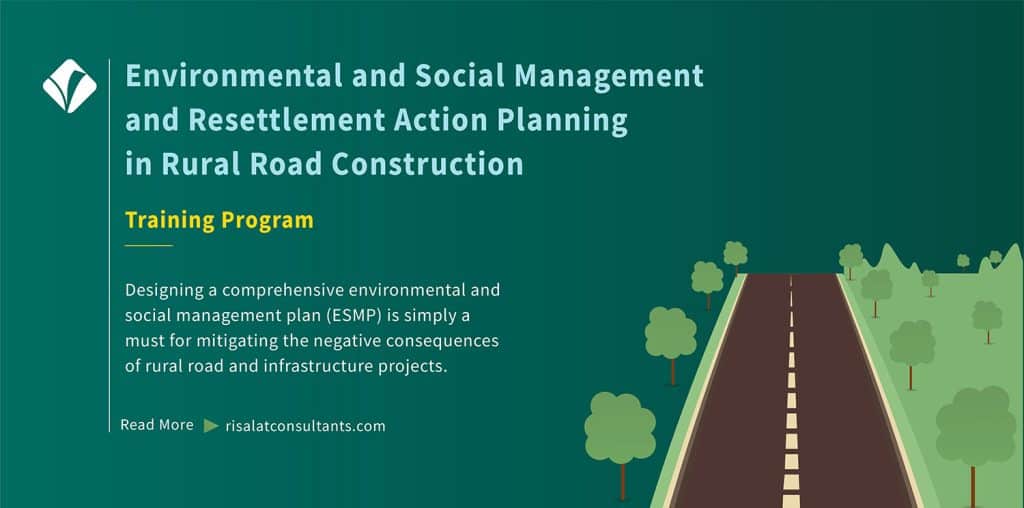
According to the ADB, nearly one billion people globally have limited access to road infrastructure. The absence of roads is particularly critical for the rural population. It not only impedes their mobility but also curbs their potential to benefit from development initiatives. Rural connectivity is a critical pathway to poverty alleviation, serving as the basis for inclusive socioeconomic growth. However, as rural areas frequently host fragile ecosystems and strong social patterns, construction activities might also result in undue harm. Therefore, designing a comprehensive environmental and social management plan (ESMP) is simply a must for the mitigation of such negative consequences.
This training programme has exclusively been developed by Risalat to aid governmental staff and development personnel in the design and implementation of rural road construction projects with environmental and social implications in mind. Programme content is aligned with the guidelines of major donor institutions financing infrastructure development. As a result of this programme, its delegates are expected to demonstrate a detailed understanding of environmental and social management and resettlement action planning. Moreover, they shall develop and enhance key skills required for responsible and sustainable infrastructure expansion groundwork.
Público destinatario
Training on Environmental and Social Management and Resettlement Action Planning has primarily been designed for governmental personnel and development practitioners. This is due to the role they play in initiating, coordinating, and implementing infrastructure projects. Having programmatic knowledge is essential for their work performance and is required and expected from international donor institutions. However, training content can prove highly beneficial for a diverse range of professionals including but not limited to:
- Rural road infrastructure project planning heads, managers, and coordinators
- Road engineers and designers
- Environmental and Social Safeguards specialists
- Desarrollo comunitario specialists
- Governmental personnel
- Profesionales del desarrollo
- Resettlement and livelihoods specialists
- Miembros de ONG / ONGI
- Financiers and Donor Agencies
- Líderes comunitarios
- Contractors and construction workers
Marque lo que su equipo necesita ser capaz de hacer.
Objetivos del programa
The programme intends to enable its delegates to effectively manage the environmental, social, and resettlement aspects of rural road projects. Its graduates shall form a part of a well-informed and skilled cohort of professionals who can contribute to responsible, sustainable, and inclusive rural development.
Specific objectives as below can speak for the performance of the programme. Upon the successful completion, delegates are expected to:
- Comprehend the significance of environmental and social management plans for infrastructure development initiatives, particularly rural road projects.
- Analyze potential impacts of rural road projects on the environment, communities, and their livelihoods.
- Understand the regulatory framework governing environmental and social aspects of infrastructure projects and learn how to align E&S and resettlement planning with international donor regulations.
- Employ best practices for avoidance and minimization of negative environmental impacts of rural road construction projects from erosion control, waste management, and habitat preservation to pollution prevention, sustainable use of water resources, and biodiversity preservation.
- Manage social impacts of rural road projects by understanding community dynamics and preserving cultural heritage.
- Develop effective resettlement action plans that support the active rebuilding of livelihoods.
- Engage stakeholders and define an effective communication plan.
- Assess the performance of E&S mitigation measures and plan for improvement.
Contenido del programa
- Rural connectivity, infrastructure, and development
- Implications of rural road development – What are the potential environmental and social impacts?
- Legal and regulatory framework for E&S management
- Social and cultural specificities of rural areas
- International standards and guidelines for E&S management
- Clasificación de riesgos ambientales y sociales
- Plan de compromiso ambiental y social
- Overview of Environmental and Social Impact Assessment (ESIA)
- Environmental management in rural road construction
- Erosion control and sedimentation prevention
- Waste management
- Resource efficiency, pollution prevention, and abatement in rural road construction
- Labor and working conditions in rural road construction
- Community health and safety
- Land acquisition and restrictions on land use
- Reasentamiento involuntario
- Designing a resettlement action plan (RAP)
- Compensation, livelihood restoration, and community support
- Biodiversity conservation and sustainable management of living natural resources
- Indigenous peoples
- Local cultures, traditions, and cultural sensitivity
- Preservation of cultural heritage
- Information disclosure
- Addressing community concerns
- Stakeholder engagement planning and implementation
- The last day of the programme shall be dedicated to the exposure visit and study tour to a selected rural road construction site in the host country.
- Throughout the day, training delegates shall meet subject-matter experts working on the development of rural infrastructure and engage in panel…
Contenido completo día a día
First day
- Rural connectivity, infrastructure, and development
- Implications of rural road development – What are the potential environmental and social impacts?
- Legal and regulatory framework for E&S management
- Social and cultural specificities of rural areas
- International standards and guidelines for E&S management
- Clasificación de riesgos ambientales y sociales
- Plan de compromiso ambiental y social
Segundo día
- Overview of Environmental and Social Impact Assessment (ESIA)
- Environmental management in rural road construction
- Erosion control and sedimentation prevention
- Waste management
- Resource efficiency, pollution prevention, and abatement in rural road construction
- Labor and working conditions in rural road construction
Third day
- Community health and safety
- Land acquisition and restrictions on land use
- Reasentamiento involuntario
- Designing a resettlement action plan (RAP)
- Compensation, livelihood restoration, and community support
- Biodiversity conservation and sustainable management of living natural resources
Cuarto día
- Indigenous peoples
- Local cultures, traditions, and cultural sensitivity
- Preservation of cultural heritage
- Information disclosure
- Addressing community concerns
- Stakeholder engagement planning and implementation
Fifth Day – Full-day exposure visit and panel discussions
The last day of the programme shall be dedicated to the exposure visit and study tour to a selected rural road construction site in the host country. Throughout the day, training delegates shall meet subject-matter experts working on the development of rural infrastructure and engage in panel discussions around key challenges and best practices.
Metodología del programa
The programme focuses on enhancing practical skills and knowledge of Environmental and Social Management and Resettlement Action Planning. The presentation, exercises, simulations, case studies, and discussion questions are explicitly tailored to professionals working on E&S management in rural infrastructure development, specifically road projects.
Una metodología de aprendizaje de adultos de eficacia probada y sus principios guían todo el proceso con el fin de maximizar la eficacia de la impartición y generar un impacto duradero. Las visitas técnicas y el viaje de estudio, junto con las mesas redondas, buscan reforzar las capacidades en situaciones reales.
Perfil del país anfitrión del programa
The kingdom of Cambodia has showcased significant improvements in rural road systems throughout recent years. However, transportation costs are still on the higher end. As roads are the major transportation mode, intensive investments are needed, especially in rural areas. Rural roads represent over 75% of the entire network of which only slightly over 5% have been paved so far.
The Cambodian Government has been actively partnering with the World Bank, the ADB, the EIB, and JICA to accelerate investments in rural road connectivity. The country has accumulated substantial expertise in E&S management of rural road projects including the Resettlement Action Planning and has exhibited success stories over the last decade.
Entregables del curso
Los participantes disfrutarán de un servicio integral que cubre todo lo necesario antes, durante y después del programa:
Antes del programa
- Evaluación previa del participante para garantizar una preparación eficaz
- Apoyo y asesoramiento gratuitos para el visado (nuestro equipo tramita íntegramente las solicitudes de visado electrónico)
Durante el programa
- Recogida en el aeropuerto y asistencia de bienvenida
- Alojamiento con desayuno durante toda la estancia
- Cena de bienvenida para establecer contactos con los demás participantes y el equipo de Risalat
- Kit de formación de Risalat, que incluye: bolsa, botella de agua, taza de café, camiseta, gorra, funda de pasaporte, bolígrafos, cuaderno, imán y llavero
- Almuerzo diario durante los días de formación
- Manual completo del curso y materiales de formación
- Plantillas, herramientas y fichas de trabajo basadas en proyectos
- Mini Pad / tableta para acceder cómodamente a los recursos digitales
- Estudios de caso digitales, dosieres de lectura y materiales de consulta
- Acceso a conjuntos de datos de muestra y ejercicios prácticos
- Visita de campo (cuando proceda)
- Refrigerios gratuitos y todas las instalaciones de la sede de formación
- Acceso a recursos de aprendizaje en línea
- Recorrido turístico por la ciudad
- Certificado de finalización
- Reconocimiento a la participación en programas de Risalat
Después del programa
- Apoyo posterior a la formación y orientación de seguimiento
- Informe del programa
Todos los programas en Nom PenMás programas de Cambio climático y medio ambiente
Por qué Nom Pen para este programa
Nom Pen (Camboya) fue elegida para este programa porque es de fácil acceso para los participantes previstos y cuenta con sedes adecuadas para una formación práctica e interactiva.
The Environmental and Social Management and Resettlement Action Planning in Rural Road Construction programme in February 2027 brings together officials and professionals. Sessions combine short inputs, case studies and group work on participants' own files, and the city's institutions can be added as a study visit on request.
Compruebe si necesita visado con el Verificador de visados gratuito y solicite una carta de invitación una vez inscrito.
3.750 £ por participante · factura y transferencia bancaria · los grupos de 5 o más personas reciben un descuento
Cinco o más personas de una misma organización: solicite la tarifa de grupo al pedir la factura.
Ten or more: an in-house version for your institution may cost less per person. Ask for an in-house quote.
Registration closes in 51 days (23 Dec 2026)
El mismo tema en otras ciudades
- Formación en gestión de riesgos ambientales y sociales & reconstrucción tras inundaciones en Estambul (Estambul)
- Formación en protección social digital: protección social apoyada en IA y gestión integrada de casos (Lisboa)
- Formación en fundamentos de construcción & mantenimiento de carreteras (Hanói)
- Negociación & diplomacia con las partes interesadas para funcionarios gubernamentales (Ginebra)
- Formación en reducción y prevención de la violencia de género (Doha)
- Formación en desplazamiento, migración forzada y derechos humanos en Barcelona (Barcelona)
Otros programas en Nom Pen
- Formación en gestión operativa y financiera en Nom Pen
- Formación en igualdad de género & inclusión social y presupuestación con perspectiva de género
- Formación en reducción del riesgo de desastres y alerta temprana en Nom Pen
- Formación en gestión de emergencias & preparación ante desastres en Camboya
- Formación en gestión y administración de RR. HH. en Nom Pen
Más cursos de formación en Camboya · Todos los programas en Asia · Calendario de formación completo