Key facts
- Dates
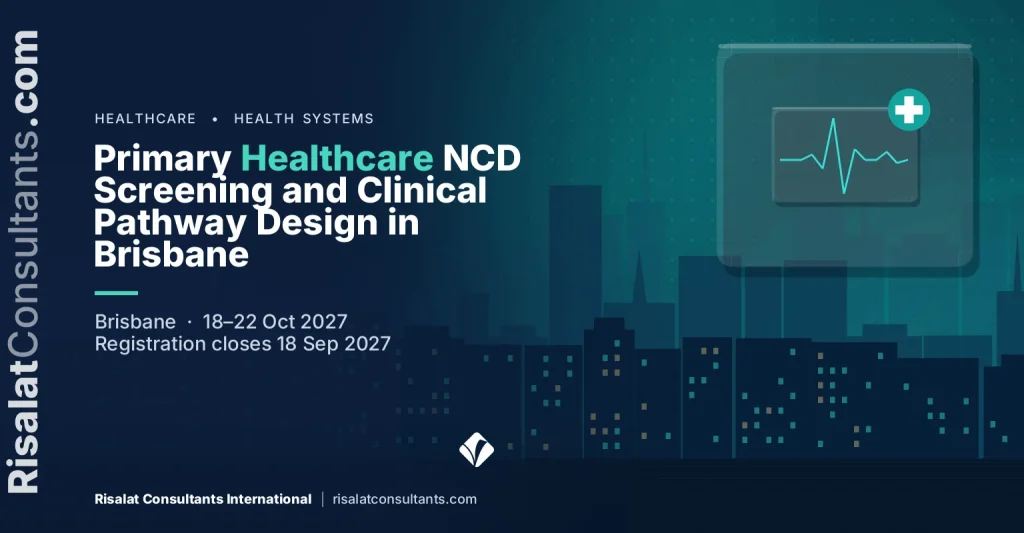
- 18–22 Oct 2027 (5 days)
- Where
- Brisbane, Australia
- Fee per participant
- £2,750 (GBP)
- Payment
- By invoice and bank transfer
- Registration closes
- 18 Sep 2027
- Certificate
- Certificate of completion
- In-house option
- Run it for your team, on your dates
On this page 13 sections
Programme Overview
Non-communicable diseases present an urgent challenge to health systems across the Pacific, placing immense pressure on hospital services and public budgets. Effective early detection and management demand resilient frontline operations within primary care facilities. This five-day executive programme in Brisbane equips clinical leaders and health managers with the competencies required to establish robust, evidence-based screening programmes. Participants explore clinical governance structures, resource allocation models, and service integration frameworks essential for delivering high-quality, continuous preventative care in community settings.
The curriculum focuses on practical protocol design for early detection and clinical management of cardiovascular disease, hypertension, and diabetes. Delegates examine international best practices, including the World Health Organization Package of Essential Noncommunicable Disease Interventions (WHO PEN), adapting these standards to resource-constrained environments. Through guided clinical pathway mapping, sessions address the entire patient journey from rural community outreach to district health centre triage and tertiary hospital referral, ensuring safe continuity of care and reduced complication rates.
Participants also master operational tools for clinical quality improvement, facility-level data governance, and frontline performance tracking. By examining auditing mechanisms and patient retention strategies, delegates learn how to convert national clinical guidelines into daily service delivery standards. The course provides structured opportunities to construct tailored monitoring toolkits, peer-review local clinical pathways, and formulate actionable implementation strategies that reinforce primary healthcare networks, enhance frontline detection rates, and optimise the long-term clinical management of chronic conditions.
The programme addresses an urgent need to reorient health services towards proactive, community-based management of chronic conditions, directly supporting the clinical service expansion objectives of the Samoa Health System Strengthening Programme and its Additional Financing. Pacific island health systems face escalating burdens of avoidable complications from undetected diabetes and cardiovascular conditions, requiring rapid modernisation of primary care infrastructure, clear referral systems, and standardised screening protocols aligned with multilateral development bank health investments.
Delivered by Risalat Consultants International in Brisbane, Australia, it combines expert-led sessions, real cases and group work, so that participants can apply what they learn in their own institution.
The Programme Strengthens Institutional Capability
- Analysing the burden of chronic conditions: frontline constraints and clinical governance in small island health systems
- The WHO Package of Essential Noncommunicable Disease Interventions (WHO PEN): protocols, core diagnostics, and medicine packages
- Clinical standardisation: translating national NCD policy into facility-level operational screening routines
- Total cardiovascular disease risk approach: utilising risk prediction charts in decentralized settings without laboratory infrastructure
- Diagnostic integrity: validating point-of-care testing equipment and blood pressure measurement technique reliability
- Hypertension screening and diagnostic confirmation protocols: addressing white-coat effects and establishing repeat visit schedules
- Glycaemic assessment standards: fasting blood glucose, oral glucose tolerance testing, and HbA1c utility in primary clinics
- Screening for end-organ damage and complications: primary care protocols for proteinuria, diabetic foot, and visual impairment
- Service planning and management
- Quality improvement and standards
- Human resources and workforce planning
- Financing and budgeting for services
It is designed for health service managers overseeing district and primary healthcare networks, primary care physicians leading rural health clinics and outpatients departments, public health clinical directors responsible for NCD control strategies and others who want practical, current skills in health, education and social services.
- Inputs
- Activities
- Outputs
- Outcomes
- Impact
The Growing Importance of Primary Healthcare NCD Screening and Clinical Pathway Design in Brisbane
Health, education and social services reach people directly, and their quality depends on planning, management and the use of evidence. Governments and partners expect better results from limited budgets.
Leaders and managers in these sectors face rising demand, staff shortages and new technologies. Strong management skills help institutions plan services, use resources well and show results.
Organisations increasingly require professionals capable of:
- Plan and manage services to meet demand
- Improve quality against standards
- Manage staff and resources effectively
- Use data to guide decisions
- Work with communities and partners
Strong health, education and social services systems help organisations:
- Deliver better services to more people
- Use budgets and staff efficiently
- Meet quality standards
- Show results to government and partners
This Primary Healthcare NCD Screening and Clinical Pathway Design in Brisbane programme brings these elements together in a practical format, so that participants understand not only what good practice looks like but also how to introduce it in their own setting, with the people and resources they have.
Who Should Attend This Primary Healthcare NCD Screening and Clinical Pathway Design in Brisbane Training?
This programme is designed for:
- Health service managers overseeing district and primary healthcare networks
- Primary care physicians leading rural health clinics and outpatients departments
- Public health clinical directors responsible for NCD control strategies
- Chief nursing officers and community health nursing supervisors
- Clinical governance and medical quality assurance coordinators
- Health planning officers managing donor-funded health system investments
- Project implementation unit technical specialists supporting healthcare reforms
- Health information officers and monitoring specialists in primary healthcare
- District medical officers coordinating frontline chronic disease clinics
- Service managers and administrators
- Directors and senior officials
- Planning and policy officers
The programme suits experienced professionals as well as those moving into new responsibilities. Groups that mix institutions and countries are encouraged, because participants learn a great deal from each other’s experience.
Tick what your team needs to be able to do.
Primary Healthcare NCD Screening and Clinical Pathway Design in Brisbane Training Objectives
Upon successful completion of this Primary Healthcare NCD Screening and Clinical Pathway Design in Brisbane Training, participants will be able to:
- Adapt the WHO PEN framework to establish standardised primary care screening protocols for hypertension and type 2 diabetes
- Design integrated clinical pathways that define explicit referral, contraindication, and escalation criteria between primary and secondary care
- Establish baseline clinical audit frameworks to monitor treatment adherence, prescribing practices, and diagnostic accuracy at facility level
- Formulate operational risk-stratification models for cardiovascular disease risk assessment in decentralized clinical environments
- Construct patient tracking and appointment recall mechanisms to minimise default rates among registered chronic disease patients
- Develop facility-level monitoring toolkits to evaluate diagnostic availability, supply continuity, and screening coverage rates
- Produce an actionable clinical pathway implementation plan detailing workforce competency needs and local supervision routines
- Explain the main challenges facing their sector
- Plan services that match demand and resources
- Apply quality improvement methods
Each objective is practised during the programme through exercises, cases or group work, so that participants leave able to do it, not only to describe it.
Programme Contents and Structure
- Analysing the burden of chronic conditions: frontline constraints and clinical governance in small island health systems
- The WHO Package of Essential Noncommunicable Disease Interventions (WHO PEN): protocols, core diagnostics, and medicine packages
- Clinical standardisation: translating national NCD policy into facility-level operational screening routines
- Total cardiovascular disease risk approach: utilising risk prediction charts in decentralized settings without laboratory infrastructure
- Diagnostic integrity: validating point-of-care testing equipment and blood pressure measurement technique reliability
- Hypertension screening and diagnostic confirmation protocols: addressing white-coat effects and establishing repeat visit schedules
- Glycaemic assessment standards: fasting blood glucose, oral glucose tolerance testing, and HbA1c utility in primary clinics
- Screening for end-organ damage and complications: primary care protocols for proteinuria, diabetic foot, and visual impairment
- Task-shifting and clinical delegation: standardising screening roles for community health nurses and primary care staff
- Practical exercise: designing facility-level screening algorithms and emergency blood pressure escalation procedures
- Principles of clinical pathway engineering: mapping the patient journey from community triage to maintenance
- Establishing objective referral triggers: defining red flags for specialist consultation, renal impairment, and severe retinopathy
- Counter-referral mechanisms and shared care protocols: transitioning stabilised tertiary patients back to district health centres
- Overcoming logistical barriers: standardising referral communication, transport integration, and documentation continuity
- Workshop: drafting a seamless primary-to-district clinical pathway for uncontrolled diabetes and hypertensive crisis
- Methodologies for clinical auditing: designing record-sampling techniques and measuring adherence to treatment targets
- Patient retention systems: developing clinic registries, community-based tracing protocols, and default follow-up mechanisms
- Prescription audits and medication reconciliation: ensuring essential medicine adherence and reducing polypharmacy errors
- Facility-level supply chain monitoring: safeguarding stock continuity for essential anti-hypertensive and hypoglycaemic medicines
- Simulation: executing a mock clinical audit of chronic disease patient files to identify quality gaps
- Constructing the facility NCD monitoring toolkit: defining key indicators for screening coverage, control rates, and drop-outs
- Data governance at the frontline: integrating clinical screening logs with national District Health Information Software platforms
- Supervisory visit toolkits: standardising mentoring checklists and performance feedback for remote clinical teams
- Financing clinical pathway execution: linking pathway compliance to donor-financed disbursement-linked indicators
- Action plan presentations: peer review of participant-designed clinical pathways and facility implementation roadmaps
Full day-by-day contents
The programme runs over 5 days. Each day combines expert input, practical work and a closing workshop or case study:
- First Day: Day 1: Foundations of Primary Care NCD Detection and the WHO PEN Framework
- Second Day: Day 2: Screening Protocols and Diagnostic Standardisation for Hypertension and Diabetes
- Third Day: Day 3: Clinical Pathway Architecture and Primary-to-Secondary Care Referral Systems
- Fourth Day: Day 4: Quality Assurance, Clinical Auditing, and Patient Retention Strategies
- Fifth Day: Day 5: Toolkit Development, Performance Monitoring, and Programme Action Planning
Full day-by-day contents
First Day | Day 1: Foundations of Primary Care NCD Detection and the WHO PEN Framework
- Analysing the burden of chronic conditions: frontline constraints and clinical governance in small island health systems
- The WHO Package of Essential Noncommunicable Disease Interventions (WHO PEN): protocols, core diagnostics, and medicine packages
- Clinical standardisation: translating national NCD policy into facility-level operational screening routines
- Total cardiovascular disease risk approach: utilising risk prediction charts in decentralized settings without laboratory infrastructure
- Diagnostic integrity: validating point-of-care testing equipment and blood pressure measurement technique reliability
Workshop: Day 1: Foundations of Primary Care NCD Detection and the WHO PEN Framework: Applying It to Your Institution
Working in small groups, participants apply the day's methods to examples from their own institutions and agree practical next steps.
Second Day | Day 2: Screening Protocols and Diagnostic Standardisation for Hypertension and Diabetes
- Hypertension screening and diagnostic confirmation protocols: addressing white-coat effects and establishing repeat visit schedules
- Glycaemic assessment standards: fasting blood glucose, oral glucose tolerance testing, and HbA1c utility in primary clinics
- Screening for end-organ damage and complications: primary care protocols for proteinuria, diabetic foot, and visual impairment
- Task-shifting and clinical delegation: standardising screening roles for community health nurses and primary care staff
- Practical exercise: designing facility-level screening algorithms and emergency blood pressure escalation procedures
Workshop: Day 2: Screening Protocols and Diagnostic Standardisation for Hypertension and Diabetes: Applying It to Your Institution
Working in small groups, participants apply the day's methods to examples from their own institutions and agree practical next steps.
Third Day | Day 3: Clinical Pathway Architecture and Primary-to-Secondary Care Referral Systems
- Principles of clinical pathway engineering: mapping the patient journey from community triage to maintenance
- Establishing objective referral triggers: defining red flags for specialist consultation, renal impairment, and severe retinopathy
- Counter-referral mechanisms and shared care protocols: transitioning stabilised tertiary patients back to district health centres
- Overcoming logistical barriers: standardising referral communication, transport integration, and documentation continuity
- Workshop: drafting a seamless primary-to-district clinical pathway for uncontrolled diabetes and hypertensive crisis
Case Study: Day 3: Clinical Pathway Architecture and Primary-to-Secondary Care Referral Systems in Practice
Participants analyse a realistic case, compare the choices made with good practice and draw lessons they can use in their own setting.
Fourth Day | Day 4: Quality Assurance, Clinical Auditing, and Patient Retention Strategies
- Methodologies for clinical auditing: designing record-sampling techniques and measuring adherence to treatment targets
- Patient retention systems: developing clinic registries, community-based tracing protocols, and default follow-up mechanisms
- Prescription audits and medication reconciliation: ensuring essential medicine adherence and reducing polypharmacy errors
- Facility-level supply chain monitoring: safeguarding stock continuity for essential anti-hypertensive and hypoglycaemic medicines
- Simulation: executing a mock clinical audit of chronic disease patient files to identify quality gaps
Workshop: Day 4: Quality Assurance, Clinical Auditing, and Patient Retention Strategies: Applying It to Your Institution
Working in small groups, participants apply the day's methods to examples from their own institutions and agree practical next steps.
Fifth Day | Day 5: Toolkit Development, Performance Monitoring, and Programme Action Planning
- Constructing the facility NCD monitoring toolkit: defining key indicators for screening coverage, control rates, and drop-outs
- Data governance at the frontline: integrating clinical screening logs with national District Health Information Software platforms
- Supervisory visit toolkits: standardising mentoring checklists and performance feedback for remote clinical teams
- Financing clinical pathway execution: linking pathway compliance to donor-financed disbursement-linked indicators
- Action plan presentations: peer review of participant-designed clinical pathways and facility implementation roadmaps
Capstone Exercise: Primary Healthcare NCD Screening and Clinical Pathway Design in Brisbane Action Plan for Your Institution
Participants bring the week together in an action plan for their own institution, with priorities, owners and first steps, and present it for feedback from peers and facilitators.
Primary Healthcare NCD Screening and Clinical Pathway Design in Brisbane Training Methodology
The programme utilises adult learning methodologies adapted for senior medical and public health practitioners. Training delivery combines interactive technical lectures, comparative case reviews from island health systems, and practical pathway-mapping workshops. Participants engage in peer-led clinical audit simulations, examine data-entry workflows, and work in syndicates to build bespoke monitoring instruments. Daily outputs directly inform each delegate's final institutional action plan, ensuring immediate operational utility upon return to their home institutions.
The programme combines:
- Expert-led sessions on current practice
- Regional and international case studies
- Group work and practical exercises
- Simulations and role plays where relevant
- Discussion of participants' own challenges
- Peer learning across institutions and countries
- Practical tools and templates to take back to work
- Daily reflection and action planning
Before the programme, a short pre-assessment helps the facilitators understand each participant’s role and priorities, so that examples and exercises can be adjusted to the group. Each day ends with a short reflection in which participants note what they will apply at work.
- Transaction
- Record
- Control
- Evidence
- Opinion
Expected Outcomes
Upon completion of this Primary Healthcare NCD Screening and Clinical Pathway Design in Brisbane Training, participants will be able to:
- Proficiency in implementing WHO PEN-aligned screening protocols for hypertension and diabetes across primary care facilities
- Completed clinical care pathway blueprints connecting community health workers, district clinics, and specialist referral hospitals
- Operational competency in establishing facility-level clinical audits to evaluate diagnostic accuracy and treatment standardisation
- A functional patient tracking toolkit to monitor cohort retention, reduce treatment defaults, and maintain long-term clinical care
- Capability to align primary care screening operations with national health indicators and donor-financed programme objectives
- An institutional rollout plan outlining staff training requirements, equipment standards, and supervisory monitoring schedules
- Plan services to meet demand
- Improve quality against standards
Participants leave with a personal action plan and practical tools they can use in their institution from the first week back. Institutions that send several participants can use the programme to agree shared methods and templates across teams, which makes improvements easier to sustain.
£2,750 per participant · invoice and bank transfer · groups of 5 or more receive a discount
Five or more from one organisation: ask for the group rate on the invoice request.
Ten or more: an in-house version for your institution may cost less per person. Ask for an in-house quote.
Registration closes in 314 days (18 Sep 2027)
Institutional Application of Primary Healthcare NCD Screening and Clinical Pathway Design in Brisbane Training
This programme supports organisations in strengthening:
- Service planning
- Quality management
- Workforce management
- Data use
- Partnerships
Participants return with practical tools to improve:
- Service plans
- Quality reviews
- Workforce plans
- Performance reports
- Supply planning
The programme is built so that learning moves from the classroom into the institution. Participants work on their own processes and documents where possible, and leave with an action plan that their managers can review and support.
Regional Relevance & Application
Europe
European institutions apply health, education and social services within detailed regulatory frameworks and reform agendas. Participants from Europe can compare their practice with colleagues from other regions and test how established methods work under different conditions.
Africa
Across Africa, ministries, agencies and project teams working in health, education and social services increasingly operate alongside donor-financed programmes that expect clear systems and evidence. The programme helps participants adapt good practice to the institutions and resources they work with.
Middle East
In the Middle East, national development strategies and diversification plans place growing demands on health, education and social services. Participants explore how to build the capability these plans need inside public bodies and companies.
Asia
Institutions across Asia combine rapid growth with ambitious modernisation programmes. Participants from Asia can share their experience of scaling systems quickly and learn from approaches used elsewhere.
Pacific
Small island and Pacific states face particular constraints of size, distance and capacity. The programme highlights practical, proportionate approaches to health, education and social services that suit smaller institutions.
Holding the programme in Brisbane, Australia brings participants together away from their daily pressures, so they can compare how health, education and social services is handled in different settings. The same programme can also be delivered in-house for one institution, in its own country or online, with cases taken from its current work.
Host Country Profile – Australia
Training programmes in Brisbane are suited to topics such as public administration, environmental management, infrastructure planning, and public health policy. The city regularly welcomes professionals, project teams, and government officials from nearby Pacific Island nations, Southeast Asia, and New Zealand.
Studying away from their own country gives participants time to focus, a fresh view of their own institution and the chance to build a network with colleagues from other countries.
Primary Healthcare NCD Screening and Clinical Pathway Design in Brisbane Training Deliverables
Participants receive support before, during and after the programme, so that preparation, learning and follow-up form one continuous experience.
Before the Programme
- Participant Pre-Assessment
- Primary Healthcare NCD Screening and Clinical Pathway Design in Brisbane Readiness Assessment
- Primary Healthcare NCD Screening and Clinical Pathway Design in Brisbane Resource Pack
- Preparatory Reading Materials
- Complimentary Visa Support & Advisory
During the Programme
- Airport Pickup & Welcome Assistance
- Accommodation with Breakfast
- Welcome Networking Dinner
- Risalat Training Kit (Bag, Bottle, Mug, T-Shirt, Cap, Passport Cover, Pens, Notebook, Magnet & Keychain)
- Comprehensive Primary Healthcare NCD Screening and Clinical Pathway Design in Brisbane Training Manual
- Service Planning Template
- Quality Improvement Plan Template
- Workforce Planning Template
- Performance Dashboard Template
- Practical Workshops & Simulations
- Group Discussions & Peer Learning
- Daily Lunch and Refreshments
- Full Access to Training Venue Facilities
- Mini Pad / Tablet with Digital Learning Materials
- Field Visit (where applicable)
- Entertaining City Tour
After the Programme
- Certificate of Completion
- Risalat Programme Participation Recognition Award
- Post-Training Reference Materials
- Service Review Checklist
- Improvement Tracking Sheet
- Post-Training Support & Follow-Up Guidance
- Programme Report
Institutions can also request a tailored in-house version of this programme, delivered at their premises or online. Request a proposal.
Common Challenges in Primary Healthcare NCD Screening and Clinical Pathway Design in Brisbane, And How This Training Helps
How can institutions plan and manage services to meet demand?
The programme addresses this directly on the first day (Day 1: Foundations of Primary Care NCD Detection and the WHO PEN Framework), where participants practise the methods involved and adapt them to their own institution, then build it into their action plan.
How can institutions improve quality against standards?
The programme addresses this directly on the second day (Day 2: Screening Protocols and Diagnostic Standardisation for Hypertension and Diabetes), where participants practise the methods involved and adapt them to their own institution, then build it into their action plan.
How can institutions manage staff and resources effectively?
The programme addresses this directly on the third day (Day 3: Clinical Pathway Architecture and Primary-to-Secondary Care Referral Systems), where participants practise the methods involved and adapt them to their own institution, then build it into their action plan.
How can institutions use data to guide decisions?
The programme addresses this directly on the fourth day (Day 4: Quality Assurance, Clinical Auditing, and Patient Retention Strategies), where participants practise the methods involved and adapt them to their own institution, then build it into their action plan.
How can institutions work with communities and partners?
The programme addresses this directly on the fifth day (Day 5: Toolkit Development, Performance Monitoring, and Programme Action Planning), where participants practise the methods involved and adapt them to their own institution, then build it into their action plan.
Frequently Asked Questions
When and where does the Primary Healthcare NCD Screening and Clinical Pathway Design in Brisbane programme take place?
It runs from 18 Oct 2027 to 22 Oct 2027, in Brisbane, Australia. The registration deadline is shown at the top of this page.
Who should attend?
The programme is designed for health service managers overseeing district and primary healthcare networks, primary care physicians leading rural health clinics and outpatients departments, public health clinical directors responsible for NCD control strategies, chief nursing officers and community health nursing supervisors, and others who want practical skills in health, education and social services.
Will I receive a certificate?
Yes. Participants who complete the programme receive a Certificate of Completion from Risalat Consultants International.
Can this programme be delivered for our institution only?
Yes. We can deliver a tailored in-house version at your premises, in another city or online, built around your own cases. Use the proposal request on this page.
Do I need prior experience in health, education and social services?
No specialist background is required beyond experience in a related role. A short pre-assessment helps the facilitators adapt the sessions to the group.
Training courses in BrisbaneHealthcare training courses
Why Brisbane for this programme
Brisbane is the administrative capital of Queensland, housing major state government departments and research bodies such as the University of Queensland. Visiting officials can study urban planning and flood resilience along the Brisbane River, as well as public transport networks. Brisbane Airport provides extensive direct flight connections across the Asia-Pacific region.
The Primary Healthcare NCD Screening and Clinical Pathway Design in Brisbane programme in October 2027 brings together officials and professionals from across the Oceania and the Pacific region and beyond. Sessions combine short inputs, case studies and group work on participants' own files, and the city's institutions can be added as a study visit on request.
Getting there: Brisbane Airport (BNE).
Check whether you need a visa with the free Visa Checker, and ask for an invitation letter once you are registered.
Other programmes in Brisbane
- Island Water Security, Rainwater Harvesting and Wellfield Protection in Brisbane
- Hospital Emergency Preparedness and Resilient Health Infrastructure in Brisbane
- Coastal Road Engineering and Slope Stabilisation Techniques in Brisbane
- Civil Works Procurement under World Bank Regulations in Small Island States in Brisbane
- Bridge Asset Monitoring, Culvert Hydrology and Scour Protection in Brisbane
More training courses in Australia · All programmes in Pacific · Full training calendar
Plan this programme in a roadmap: why it matters, why to approve it, the dates to plan and the career it builds.