Datos clave
- Fechas
- 18–22 ene 2027 (5 días)
- Dónde
- Leonardo Hotel Budapest, Budapest, Hungría
- Tarifa por participante
- 3.210 £ (GBP)
- Pago
- Mediante factura y transferencia bancaria
- Cierre de inscripciones
- 29 nov 2026
- Formato
- 5-day short course: a practical capacity-building programme for government, NGO and project teams in Budapest
- Certificado
- Certificado de finalización
- Opción interna
- Impártalo para su equipo, en sus fechas
En esta página 17 secciones
Descripción del programa
Salaries, contributions and benefits are the largest recurring cost for most ministries, agencies and companies. Every month, payroll converts HR decisions into payments, tax and social security liabilities and accounting entries. A small error in a calculation rule, an unauthorised change to a bank account or an employee who left months ago but is still paid can repeat for years before anyone notices.
Payroll has therefore become a priority in public financial management reform. World Bank-financed civil service projects increasingly tie funding to payroll integrity. In Somaliland, the Civil Service Strengthening Project (P155123) used payroll audits that identify control weaknesses and ghost workers as a disbursement-linked result, and set a target for reconciling payroll with personnel records at least every six months. The Philippines Civil Service Modernization Project (P180649, US$67.34 million) is building an integrated, web-based HR and payroll system, while Somalia’s Enhancing Public Resource Management Project has assessed how its HRMIS payroll modules interface with finance systems.
Employers in Europe face a different but equally demanding agenda. The EU Pay Transparency Directive (EU) 2023/970 had to be transposed by Member States by June 2026. It brings rights to pay information, gender pay gap reporting for larger employers and joint pay assessments where unexplained gaps persist, all of which depend on clean, well-structured payroll data.
Payroll Preparation, Analysis and Management Training in Budapest is a five-day programme covering the full payroll cycle: the link between HR and accounting, calculation and approval controls, benefits and loans, recording and reconciliation, payroll audit, budgeting and Excel-based analysis. Participants practise on realistic payroll datasets and leave with checklists and templates they can apply immediately.
Hungary is a practical setting for this subject. Its flat-rate income tax, employer social contribution tax and monthly electronic filing to the national tax authority make it a clear example of how payroll, tax administration and digital reporting work together.
The Programme Strengthens Institutional Capability
- Defining the roles of HR, payroll, finance and internal audit
- Documenting hiring, changes and exits so that payroll reflects approved decisions
- Managing payroll for permanent staff, contract professionals, temporary and outsourced workers
- Establecer la base de cálculo correcta para salarios, asignaciones y deducciones
- Applying pre-payroll controls and validation checks
- Running maker-checker approvals and segregation of duties
- Calculating benefits, leave, loans and end-of-service entitlements
- Recording payroll expenses and liabilities correctly
- Reconciling payroll with bank payments, tax and social security liabilities
- Conciliación de la nómina con los registros de personal de recursos humanos
- Detecting ghost workers, duplicate payments and unauthorised changes
- Planning and conducting payroll audits
- Preparación de presupuestos de nómina mensuales y anuales
- Forecasting the cost of salary increases and new posts
- Analysing payroll data with Excel pivot tables and formulas
- Producing management reports and payroll dashboards
- Preparing pay structure data for pay transparency requirements
- Protecting personal payroll data and system access
- Planning payroll system upgrades and HRMIS integration
The programme keeps the practical strengths of the earlier course, especially Excel analysis and the link between HR and accounting, and adds current material on payroll controls, digital reporting and pay transparency.
The Growing Importance of Payroll Preparation, Analysis and Management
Wage bill control is a recurring issue in public finance reviews and financier projects. In The Gambia, the government has validated an HRMIS strategy financed by the World Bank, with full payroll automation intended to help it monitor and control the wage bill. In Cambodia, the Ministry of Civil Service is following a World Bank-supported roadmap to modernise a legacy system that holds personnel and payroll data for over 280,000 civil servants. These systems work only when the people operating them understand calculation rules, controls and reconciliation.
In the private sector and in EU institutions, the pressure comes from regulation and digitalisation. Tax and social security reporting is increasingly electronic and frequent, auditors expect documented controls, and pay transparency rules require employers to explain pay differences using objective criteria. Payroll teams are moving from processing to analysis.
Las organizaciones necesitan cada vez más profesionales capaces de:
- Interpreting employment contracts, collective agreements and pay policies
- Building accurate calculation rules for pay, allowances and deductions
- Diseño de controles previos y posteriores a la nómina
- Reconciling payroll to HR records, bank files and statutory liabilities
- Investigating anomalies such as duplicate bank accounts or inactive employees
- Supporting internal and external auditors with complete documentation
- Preparación de libros de nómina precisos y acumulaciones
- Producing payroll budgets and multi-year cost projections
- Analysing pay data by grade, gender, unit and funding source
- Using Excel for exception reports, pivots and dashboards
- Preparing data for gender pay gap reporting
- Managing the data protection risks of payroll information
Strong payroll systems help organisations:
- Pay the right people the right amount at the right time
- Prevent losses from ghost workers and unauthorised changes
- Cumplir con los plazos fiscales, de seguridad social y de presentación de informes
- Produce reliable wage bill figures for budgets and forecasts
- Pass internal and external audits with fewer findings
- Explain pay decisions transparently to staff and regulators
- Build trust between HR, finance and employees
- Support evidence-based decisions on staffing and pay
El programa trata la nómina como un sistema de control y una fuente de información de gestión, no solo como una tarea de procesamiento mensual.
¿Quiénes deben asistir a esta capacitación en gestión de nóminas?
Este programa está dirigido a:
- Payroll accountants, officers, supervisors and managers
- HR managers, officers and business partners
- Finance managers and chief accountants
- Budget officers responsible for personnel costs
- Auditores internos y responsables de auditoría
- Personal del Tesoro y de la contabilidad general que gestiona la nómina gubernamental
- Personal de comisiones de la función pública y de ministerios de la función pública
- Personal de finanzas y administración en unidades de implementación de proyectos
- HRMIS and ERP payroll module administrators
- Responsables de cumplimiento y riesgos
- Staff of state-owned enterprises and regulators
- Senior and mid-level managers who approve payroll
- Finance staff in NGOs and international organisations
Joint attendance by an HR officer and a finance or payroll officer from the same institution is especially effective, since many payroll problems arise at the hand-off between the two.
Marque lo que su equipo necesita ser capaz de hacer.
Payroll Management Training Objectives
Upon successful completion of this Payroll Management Training, participants will be able to:
- Explain how HR, payroll and accounting contribute to each other
- Map the payroll process from hiring to payment and reporting
- Determine the correct calculation basis for different contract types
- Apply pre-payroll checks and approval controls
- Calculate benefits, leave, employee loans and end-of-service entitlements
- Record payroll expenses, liabilities and benefit costs correctly
- Reconcile payroll with bank, tax and social security records
- Plan and carry out a risk-based payroll audit
- Prepare monthly and annual payroll budgets
- Analizar datos de nómina y elaborar informes utilizando Excel
- Prepare payroll data for pay transparency reporting
- Report results clearly to management and auditors
Each objective is practised on sample data during the week.
Contenido y estructura del programa
- Defining HR and accounting functions and their interfaces
- Payroll as the link between HR decisions and financial records
- Hiring documentation and the employee master file
- Contract types: permanent, contract professionals, temporary and outsourced
- Changes, transfers, suspensions and exits
- Mapping the end-to-end payroll process
- Roles, responsibilities and segregation of duties
- Right control measures before starting the payroll run
- Determinar la base correcta para el cálculo de nómina
- Gross to net: pay, allowances, overtime and deductions
- Income tax and social contribution logic in a flat-rate system
- Common payroll mistakes and how to prevent them
- Variance checks against the previous month
- Maker-checker approvals and authorisation limits
- Beneficios de los empleados y reglas de elegibilidad
- Leave entitlements and their payroll effect
- Gestión del acceso a préstamos y anticipos para empleados
- Reporting on loan balances and recoveries
- Calculating end-of-service benefits where they apply
- Reporting on benefit plans
- Registro de los gastos y pasivos de nómina
- Conciliación de cuentas por cobrar y por pagar con empleados
- Reconciling tax and social security liabilities
- Reconciling payroll payments with bank transactions
- Payroll to personnel record reconciliation
- Introduction to internal and external audit
- Planificación de una auditoría de nóminas basada en riesgos
- Data analytics tests: duplicates, inactive staff, unusual changes
- Presupuestación de los gastos del departamento de nóminas
- Preparing the annual budget for payroll and contributions
- Elaboración de presupuestos para préstamos a empleados y otros beneficios
- Determining individual and employer contribution costs
- Cálculo de costos de aumentos salariales, nuevos puestos y vacantes
- Reporting results to the accounting department and management
- Reporting to tax, social security and other regulatory agencies
Contenido completo día a día
El programa sigue el ciclo de nómina desde el registro del empleado hasta el informe de gestión, con un ejercicio práctico cada día.
- Day 1: HR, accounting and the payroll process
- Day 2: payroll calculation and control
- Day 3: benefits, loans and recording
- Day 4: reconciliation, audit and Excel analysis
- Day 5: budgeting, reporting and pay transparency
Contenido completo día a día
First Day | HR, Accounting and the Payroll Process
- Defining HR and accounting functions and their interfaces
- Payroll as the link between HR decisions and financial records
- Hiring documentation and the employee master file
- Contract types: permanent, contract professionals, temporary and outsourced
- Changes, transfers, suspensions and exits
- Mapping the end-to-end payroll process
- Roles, responsibilities and segregation of duties
- Payroll risks: errors, fraud and ghost workers
- Lessons from financier-supported payroll reforms
- Protección de datos para registros de nómina
Workshop: Mapping the Payroll Process
Participants map the payroll process of their own institution from recruitment approval to bank payment, marking each hand-off between HR, payroll and finance. Groups then identify the points where errors or unauthorised changes could enter, compare their maps with a reference process and agree three control improvements to test later in the week.
Second Day | Payroll Preparation, Calculation and Controls
- Right control measures before starting the payroll run
- Determinar la base correcta para el cálculo de nómina
- Gross to net: pay, allowances, overtime and deductions
- Income tax and social contribution logic in a flat-rate system
- Common payroll mistakes and how to prevent them
- Variance checks against the previous month
- Maker-checker approvals and authorisation limits
- Preparing payroll schedules and bank files
- Changes to bank details: verification controls
- Payroll calendars and statutory deadlines
Workshop: Building a Pre-Payroll Checklist
Using a sample payroll file with seeded errors, participants run variance checks, review new joiners and leavers, and test bank detail changes. They then build a pre-payroll checklist with owners, evidence and sign-off points, and compare how many errors their checklist would have caught before payment.
Third Day | Benefits, Loans and Payroll Recording
- Beneficios de los empleados y reglas de elegibilidad
- Leave entitlements and their payroll effect
- Gestión del acceso a préstamos y anticipos para empleados
- Reporting on loan balances and recoveries
- Calculating end-of-service benefits where they apply
- Reporting on benefit plans
- Registro de los gastos y pasivos de nómina
- Asignación de costos de beneficios a proyectos, activos o inventario
- Recording employer contributions and related liabilities
- Accruals and month-end payroll journals
Estudio de caso: Del registro de nómina al libro mayor
Participants receive a monthly payroll register for a project unit funded by several sources. They prepare the journal entries for salaries, deductions, employer contributions and loan recoveries, allocate costs to funding sources and identify entries that would be challenged by an auditor or a financier’s financial management specialist.
Fourth Day | Reconciliation, Payroll Audit and Analysis
- Conciliación de cuentas por cobrar y por pagar con empleados
- Reconciling tax and social security liabilities
- Reconciling payroll payments with bank transactions
- Payroll to personnel record reconciliation
- Introduction to internal and external audit
- Planificación de una auditoría de nóminas basada en riesgos
- Data analytics tests: duplicates, inactive staff, unusual changes
- Ghost worker detection and headcount verification
- Excel tools: lookups, pivot tables and conditional checks
- Reporting audit findings and agreeing corrective actions
Workshop: Excel Payroll Audit
Working with a dataset of several hundred employee records, participants use Excel to match payroll with HR records, find duplicate bank accounts, flag staff paid after exit and test allowance rules. They document each finding with evidence and write a short audit memo recommending corrective action and control changes.
Fifth Day | Payroll Budgeting, Reporting and Pay Transparency
- Presupuestación de los gastos del departamento de nóminas
- Preparing the annual budget for payroll and contributions
- Elaboración de presupuestos para préstamos a empleados y otros beneficios
- Determining individual and employer contribution costs
- Cálculo de costos de aumentos salariales, nuevos puestos y vacantes
- Reporting results to the accounting department and management
- Reporting to tax, social security and other regulatory agencies
- EU Pay Transparency Directive: what payroll data employers need
- Building a payroll dashboard for management
- Payroll system improvement and HRMIS integration
Capstone Exercise: Payroll Budget and Management Report
Each team prepares an annual payroll budget for a mid-sized organisation, including contributions, planned increases and new posts, and costs two policy options. Teams then build a one-page dashboard with headcount, cost by unit, variance and a basic gender pay comparison, and present their findings and control recommendations to a panel acting as senior management.
Payroll Management Training Methodology
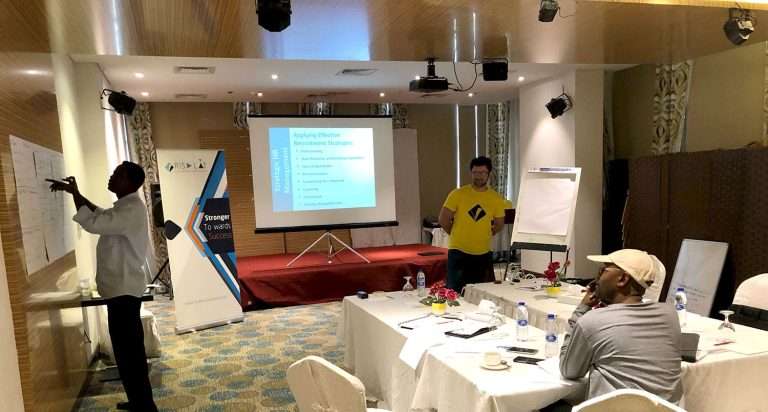
The approach is practical. Facilitators introduce each topic briefly, then participants work on payroll datasets, checklists and journals that mirror real situations.
El programa combina:
- Short expert inputs on payroll processes and controls
- Excel exercises on realistic payroll datasets
- Case studies from financier-supported payroll reforms
- Process mapping of participants’ own payroll cycles
- Error-detection exercises with seeded mistakes
- Journal entry and reconciliation practice
- Simulaciones de auditoría y redacción de memorandos
- Budget modelling and scenario costing
- Group discussion and peer learning
- A study tour with technical visits
- Daily reflection on application at the workplace
Before attending, institutions can use the free Governance Audit to review control weaknesses around payroll approvals and segregation of duties.
Visitas técnicas y programa en terreno
As in earlier editions, the programme includes a study tour in Budapest. Visits are planned with organisations whose payroll, shared service or finance operations illustrate the topics covered, such as a shared service centre, a payroll or HR technology provider, or a public body managing large payrolls. Visits are confirmed with host organisations closer to the programme dates and depend on their availability.
Each visit is prepared with a short briefing and a list of questions on controls, reconciliation and reporting, and is followed by a debrief linking what participants saw to their own action plans.
Resultados esperados
Upon completion of this Payroll Management Training, participants will be able to:
- Run a documented payroll process with clear controls
- Detect and correct common payroll errors before payment
- Reconcile payroll with HR, bank and statutory records
- Prepare accurate payroll journals and accruals
- Plan and execute a payroll audit using data analytics
- Prepare payroll budgets and cost projections
- Produce payroll reports and dashboards in Excel
- Identify the payroll data needed for pay transparency reporting
- Recommend improvements to payroll systems and procedures
Estos resultados reducen los errores de pago y los hallazgos de auditoría y proporcionan a la dirección mejor información sobre los costes de personal.
3.210 £ por participante · factura y transferencia bancaria · descuento para grupos de 5 o más personas
Cinco o más personas de una misma organización: solicite la tarifa de grupo al pedir la factura.
Ten or more: an in-house version for your institution may cost less per person. Ask for an in-house quote.
Registration closes in 7 days (29 Nov 2026)
Institutional Application of Payroll Management Training
Este programa ayuda a las organizaciones a fortalecer:
- Payroll policies and procedure manuals
- Employee master data management
- Approval workflows and segregation of duties
- Pre-payroll and post-payroll control checks
- Monthly reconciliations
- Internal audit coverage of payroll
- Wage bill budgeting and forecasting
- Benefit and loan administration
- Statutory reporting and compliance calendars
- Payroll analytics and management reporting
- Pay transparency readiness
- HRMIS and ERP payroll configuration
Los participantes regresan con herramientas prácticas para mejorar:
- Una plantilla de mapa de procesos de nómina
- Una lista de verificación de control previo a la nómina
- A payroll reconciliation template
- A payroll audit programme and test list
- Excel exception report workbook
- A payroll budget model
- A payroll dashboard template
- A pay transparency data checklist
Institutions planning an HRMIS or payroll system upgrade can also use the free Digital Readiness Assessment to check data and process readiness.
Pertinencia y aplicación regionales
Europa
Los empleadores de la UE deben alinear los datos de nómina con la Directiva de Transparencia Salarial, que los Estados miembros debían transponer antes de junio de 2026. Los equipos de nómina necesitan estructuras salariales basadas en criterios objetivos y datos que puedan mostrar las brechas salariales de género por categoría de trabajador.
África
Payroll integrity is central to civil service reform in Africa. Somaliland’s World Bank-supported project linked payroll audits and personnel records to disbursement, Somalia has assessed HRMIS payroll modules under its public resource management project, and The Gambia is automating payroll to monitor its wage bill.
Oriente Medio
Employers in the Gulf and the wider Middle East often manage end-of-service gratuities, housing and transport allowances and a large expatriate workforce. The benefit calculation, accrual and reconciliation sessions apply directly to these arrangements.
Asia
Asian governments are integrating HR and payroll. The Philippines is building a government-wide HRMIS and payroll system, and Cambodia is modernising the system that holds personnel and payroll records for more than 280,000 civil servants.
Sea cual sea el sistema, se aplican los mismos controles: un archivo maestro preciso, cambios aprobados, conciliación y revisión independiente.
1. In Somaliland's World Bank-supported civil service project, what were payroll audits expected to identify as a disbursement-linked result?
The project's implementation status report describes a disbursement-linked indicator on payroll audits that identify control weaknesses and ghost workers.
2. ¿Con qué frecuencia el mismo proyecto esperaba que la nómina se conciliara con los registros de personal?
The project's results framework refers to payroll-to-personnel reconciliation at least every six months.
3. What does the Philippines Civil Service Modernization Project (US$67.34 million) build to improve HR and payroll management?
The World Bank's March 2025 announcement describes an integrated, government-wide, web-based HRMIS and payroll system.
- Recopilar
- Depurar
- Almacenar
- Analizar
- Decidir
Perfil del país anfitrión: Hungría
Budapest is Hungary’s capital and largest city, with an international airport and good rail and road links across Central Europe. It is a long-established business services location, and many international companies run finance, HR and payroll operations from the city, which makes it a practical venue for this programme.
Hungría es un referente útil para las nóminas porque su sistema es relativamente fácil de explicar pero totalmente digital. Los ingresos de los empleados se gravan con una sola tasa fija, los empleadores pagan un impuesto de contribución social sobre los salarios y los empleadores informan los datos de nómina a la autoridad nacional tributaria y de aduanas (NAV) a través de declaraciones electrónicas regulares. Como Estado miembro de la UE, Hungría también se está preparando para las normas de transparencia salarial, de modo que los participantes puedan ver cómo los equipos de nómina en una sola jurisdicción conectan los requisitos de impuestos, seguridad social y equidad salarial. Las tasas actuales se confirman en los materiales del curso a partir de fuentes oficiales.
Hungary is part of the Schengen area. Participants who need a short-stay Schengen visa should apply early through the Hungarian mission responsible for their country of residence. Risalat provides invitation letters and visa guidance after registration, and the city centre is compact and well served by public transport.
Payroll Management Training Deliverables
Cada participante recibe un paquete completo antes, durante y después del programa.
Antes del programa
- Evaluación previa del participante
- Payroll Control Readiness Assessment
- Payroll Management Resource Pack
- Materiales de lectura preparatoria
- Apoyo y asesoramiento gratuitos para el visado
Durante el programa
- Recogida en el aeropuerto y asistencia de bienvenida
- Accommodation with breakfast: 6 nights, check-in Sunday 17 January 2027, check-out Saturday 23 January 2027 (one night before and one night after the programme)
- Cena de bienvenida y networking
- Kit de formación de Risalat (bolsa, botella, taza, camiseta, gorra, funda de pasaporte, bolígrafos, cuaderno, imán y llavero)
- Comprehensive Payroll Management Training Manual
- Pre-Payroll Control Checklist
- Payroll Reconciliation Template
- Libro de Excel de informes de excepciones de nómina
- Payroll Audit Programme
- Payroll Budget Model
- Talleres prácticos y simulaciones
- Debates en grupo y aprendizaje entre pares
- Almuerzo y refrigerios diarios
- Acceso completo a las instalaciones de la sede de formación
- Mini Pad / tableta con materiales didácticos digitales
- Visita de campo (cuando proceda)
- Recorrido turístico por la ciudad
Después del programa
- Certificado de finalización
- Reconocimiento a la participación en programas de Risalat
- Materiales de consulta posteriores a la formación
- Payroll Dashboard Template
- Pay Transparency Data Checklist
- Apoyo posterior a la formación y orientación de seguimiento
- Informe del programa
Ministerios, agencias, unidades de proyectos y empresas pueden solicitar una versión interna a medida adaptada a su propio sistema de nómina, legislación y hallazgos de auditoría. Solicite una propuesta y nuestro equipo responderá con un diseño y cotización.
Common Challenges in Payroll Management, And How This Training Helps
How can we stop paying staff who have left or never existed?
Los trabajadores fantasma suelen reflejar vínculos débiles entre los registros de recursos humanos y la nómina. El cuarto día cubre la conciliación de nómina a personal, la verificación de recuentos de personal y las pruebas en Excel para el personal pagado después de la baja, basándose en la práctica de auditoría de nóminas en reformas respaldadas por financiadores.
How can payroll errors be caught before payment rather than after?
Most errors can be found by simple checks. The Second Day builds a pre-payroll checklist with variance analysis, joiner and leaver review and bank detail verification.
How can HR and finance stop working in silos?
Many problems occur at the hand-off between the two functions. The First Day process mapping workshop makes each hand-off visible and assigns clear responsibilities.
How can payroll be recorded correctly across several funding sources?
Project units often allocate staff costs to several budgets. The Third Day case study practises journal entries and cost allocation that will satisfy auditors and financiers.
How can we prepare a realistic payroll budget?
Los presupuestos a menudo ignoran los aumentos, las vacantes y los cambios de cotización. El proyecto final del quinto día construye un modelo de presupuesto de nómina con escenarios para nuevos puestos y aumentos salariales.
How can payroll data support pay transparency requirements?
Las normas de transparencia salarial exigen datos estructurados y fiables. El quinto día explica qué datos implica la Directiva de la UE y cómo preparar una comparación básica de la brecha salarial de género.
How can Excel make payroll analysis faster and more reliable?
Manual review of large payrolls misses patterns. The Fourth Day introduces lookups, pivot tables and exception reports that participants can reuse every month.
Preguntas frecuentes
Who should attend this payroll management training?
Payroll, HR, finance, budget and internal audit staff from ministries, agencies, project units, state-owned enterprises, NGOs and companies who prepare, approve, record or audit payroll.
Do participants work with Excel?
Sí. Los participantes utilizan Excel durante toda la semana para controles de variaciones, conciliación, pruebas de auditoría de nómina, modelos presupuestarios y un panel de control de nómina. Traiga una computadora portátil con Excel instalado.
Does the programme cover the EU Pay Transparency Directive?
Yes. The fifth day explains what payroll data employers need to meet the Directive's information and reporting requirements and how to prepare a basic gender pay comparison.
Is there a study tour?
Yes. The programme includes technical visits in Budapest to organisations with relevant payroll or finance operations. Visits are confirmed with host organisations closer to the dates.
¿Puede impartirse este programa de forma interna?
Yes. Risalat can tailor the programme to your payroll system, national legislation and audit findings and deliver it at your premises.
Who Will Deliver This Programme
Each date is delivered by a team assigned from Risalat's expert network for this subject. For this programme we assign:
How we choose them: Experience in the region of the participants or comparable settings; Command of the financier rules that apply (World Bank, ADB, AfDB, EU, UN) where relevant; Delivery in English; other languages on request for in-house groups; No conflict of interest with participants' institutions.
Training courses in BudapestHR, Payroll & Administration training courses
Por qué Budapest para este programa
Budapest offers access to key regional institutions, including the Hungarian Parliament, the National Bank of Hungary, and several European Union agencies. Visiting delegations can examine national infrastructure projects, public administration systems, and urban transport networks along the Danube. The city is centrally located in Europe, with frequent international flights and rail connections making it straightforward to reach.
The Payroll Preparation, Analysis and Management Training in Budapest programme in January 2027 brings together officials and professionals from across Europe, Africa, the Middle East and Asia. Sessions combine short inputs, case studies and group work on participants' own files, and the city's institutions can be added as a study visit on request.
Getting there: Budapest Ferenc Liszt International (BUD).
Compruebe si necesita visado con el Verificador de visados gratuito y solicite una carta de invitación una vez inscrito.
El mismo tema en otras ciudades
- Mini Degree in Public Financial Management in London (London)
- Fraud Detection, Investigation and Prevention in Nairobi (Nairobi)
- AI for Human Resources, Payroll and Workforce Planning Training in Amsterdam (Amsterdam)
- AI for Public Financial Management and Audit Training in Kuala Lumpur (Kuala Lumpur)
- Auditoría interna basada en riesgos en el sector público en Estambul (Estambul)
- Education Sector Staff Roster Auditing and Teacher Allocation Systems in Porto (Porto)
Otros programas en Budapest
For teams and institutions
Bring your team
Teams that learn together apply more at work. Tell us how many people and how you would like to take part: we reply with a group quote within two working days.
Watch: this programme in short



Otras fechas y ciudades para este tema: cursos de capacitación en recursos humanos, necesidades de capacitación y desarrollo de capacidades (25 próximas fechas).
Más cursos de formación en Hungría · Todos los programas en Europa · Calendario de formación completo
Planificar este programa en una hoja de ruta: por qué es importante, por qué aprobarlo, las fechas a planificar y la carrera que construye.