Points clés
- Dates
- 18–22 janv. 2027 (5 jours)
- Lieu
- Leonardo Hotel Budapest, Budapest, Hongrie
- Frais par participant
- 3 210 £ (GBP)
- Paiement
- Sur facture et par virement bancaire
- Clôture des inscriptions
- 29 nov. 2026
- Format
- 5-day short course: a practical capacity-building programme for government, NGO and project teams in Budapest
- Certificat
- Certificat de participation
- Option intra
- Organisez-le pour votre équipe, à vos dates
Sur cette page 17 sections
Présentation du programme
Salaries, contributions and benefits are the largest recurring cost for most ministries, agencies and companies. Every month, payroll converts HR decisions into payments, tax and social security liabilities and accounting entries. A small error in a calculation rule, an unauthorised change to a bank account or an employee who left months ago but is still paid can repeat for years before anyone notices.
Payroll has therefore become a priority in public financial management reform. World Bank-financed civil service projects increasingly tie funding to payroll integrity. In Somaliland, the Civil Service Strengthening Project (P155123) used payroll audits that identify control weaknesses and ghost workers as a disbursement-linked result, and set a target for reconciling payroll with personnel records at least every six months. The Philippines Civil Service Modernization Project (P180649, US$67.34 million) is building an integrated, web-based HR and payroll system, while Somalia’s Enhancing Public Resource Management Project has assessed how its HRMIS payroll modules interface with finance systems.
Employers in Europe face a different but equally demanding agenda. The EU Pay Transparency Directive (EU) 2023/970 had to be transposed by Member States by June 2026. It brings rights to pay information, gender pay gap reporting for larger employers and joint pay assessments where unexplained gaps persist, all of which depend on clean, well-structured payroll data.
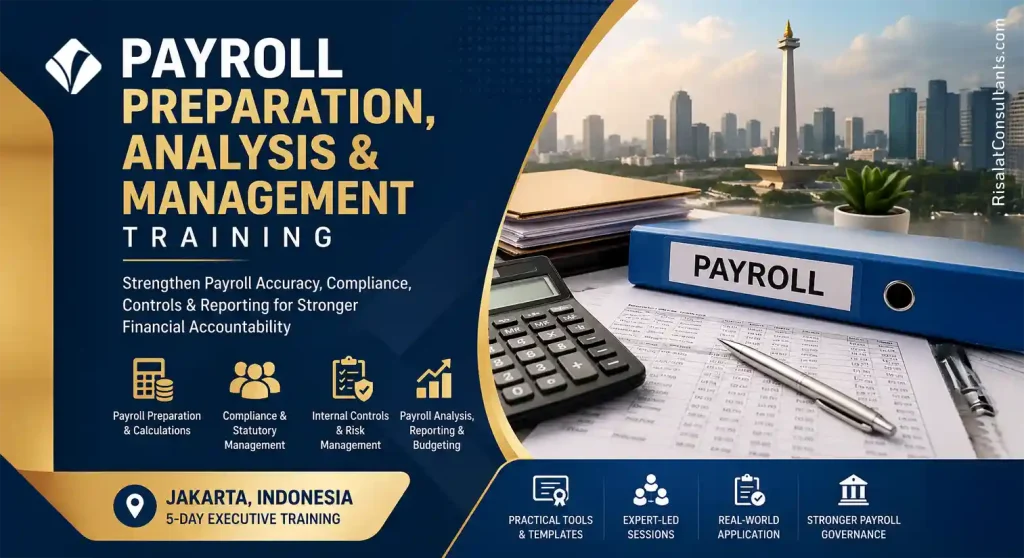
Payroll Preparation, Analysis and Management Training in Budapest is a five-day programme covering the full payroll cycle: the link between HR and accounting, calculation and approval controls, benefits and loans, recording and reconciliation, payroll audit, budgeting and Excel-based analysis. Participants practise on realistic payroll datasets and leave with checklists and templates they can apply immediately.
Hungary is a practical setting for this subject. Its flat-rate income tax, employer social contribution tax and monthly electronic filing to the national tax authority make it a clear example of how payroll, tax administration and digital reporting work together.
The Programme Strengthens Institutional Capability
- Defining the roles of HR, payroll, finance and internal audit
- Documenting hiring, changes and exits so that payroll reflects approved decisions
- Managing payroll for permanent staff, contract professionals, temporary and outsourced workers
- Setting the correct calculation basis for pay, allowances and deductions
- Applying pre-payroll controls and validation checks
- Running maker-checker approvals and segregation of duties
- Calculating benefits, leave, loans and end-of-service entitlements
- Recording payroll expenses and liabilities correctly
- Reconciling payroll with bank payments, tax and social security liabilities
- Reconciling payroll with HR personnel records
- Détection des employés fictifs, des paiements en double et des modifications non autorisées.
- Planification et réalisation d'audits de paie
- Preparing monthly and annual payroll budgets
- Forecasting the cost of salary increases and new posts
- Analysing payroll data with Excel pivot tables and formulas
- Producing management reports and payroll dashboards
- Preparing pay structure data for pay transparency requirements
- Protection des données personnelles de paie et de l'accès au système
- Planification des mises à niveau du système de paie et intégration du SIGRH
The programme keeps the practical strengths of the earlier course, especially Excel analysis and the link between HR and accounting, and adds current material on payroll controls, digital reporting and pay transparency.
L'importance croissante de la préparation, de l'analyse et de la gestion de la paie
Wage bill control is a recurring issue in public finance reviews and financier projects. In The Gambia, the government has validated an HRMIS strategy financed by the World Bank, with full payroll automation intended to help it monitor and control the wage bill. In Cambodia, the Ministry of Civil Service is following a World Bank-supported roadmap to modernise a legacy system that holds personnel and payroll data for over 280,000 civil servants. These systems work only when the people operating them understand calculation rules, controls and reconciliation.
In the private sector and in EU institutions, the pressure comes from regulation and digitalisation. Tax and social security reporting is increasingly electronic and frequent, auditors expect documented controls, and pay transparency rules require employers to explain pay differences using objective criteria. Payroll teams are moving from processing to analysis.
Les organisations ont de plus en plus besoin de professionnels capables de :
- Interpreting employment contracts, collective agreements and pay policies
- Building accurate calculation rules for pay, allowances and deductions
- Designing pre-payroll and post-payroll control checks
- Reconciling payroll to HR records, bank files and statutory liabilities
- Investigating anomalies such as duplicate bank accounts or inactive employees
- Supporting internal and external auditors with complete documentation
- Preparing accurate payroll journals and accruals
- Producing payroll budgets and multi-year cost projections
- Analysing pay data by grade, gender, unit and funding source
- Using Excel for exception reports, pivots and dashboards
- Preparing data for gender pay gap reporting
- Managing the data protection risks of payroll information
Strong payroll systems help organisations:
- Pay the right people the right amount at the right time
- Prevent losses from ghost workers and unauthorised changes
- Meet tax, social security and reporting deadlines
- Produce reliable wage bill figures for budgets and forecasts
- Pass internal and external audits with fewer findings
- Explain pay decisions transparently to staff and regulators
- Build trust between HR, finance and employees
- Support evidence-based decisions on staffing and pay
Le programme aborde la paie comme un système de contrôle et une source d'information de gestion, et non pas seulement comme une tâche de traitement mensuelle.
À qui s'adresse cette formation sur la gestion de la paie ?
Ce programme s'adresse à :
- Payroll accountants, officers, supervisors and managers
- HR managers, officers and business partners
- Finance managers and chief accountants
- Budget officers responsible for personnel costs
- Auditeurs internes et responsables d'audit
- Treasury and accountant general staff managing government payroll
- Personnel des commissions de la fonction publique et des ministères de la fonction publique
- Finance and administration staff in project implementation units
- HRMIS and ERP payroll module administrators
- Responsables de la conformité et des risques
- Staff of state-owned enterprises and regulators
- Senior and mid-level managers who approve payroll
- Finance staff in NGOs and international organisations
Joint attendance by an HR officer and a finance or payroll officer from the same institution is especially effective, since many payroll problems arise at the hand-off between the two.
Cochez ce que votre équipe doit être capable de faire.
Objectifs de la formation à la gestion de la paie
Upon successful completion of this Payroll Management Training, participants will be able to:
- Explain how HR, payroll and accounting contribute to each other
- Map the payroll process from hiring to payment and reporting
- Determine the correct calculation basis for different contract types
- Apply pre-payroll checks and approval controls
- Calculate benefits, leave, employee loans and end-of-service entitlements
- Record payroll expenses, liabilities and benefit costs correctly
- Reconcile payroll with bank, tax and social security records
- Plan and carry out a risk-based payroll audit
- Prepare monthly and annual payroll budgets
- Analyse payroll data and produce reports using Excel
- Prepare payroll data for pay transparency reporting
- Report results clearly to management and auditors
Each objective is practised on sample data during the week.
Contenu et structure du programme
- Defining HR and accounting functions and their interfaces
- Payroll as the link between HR decisions and financial records
- Hiring documentation and the employee master file
- Contract types: permanent, contract professionals, temporary and outsourced
- Modifications, transferts, suspensions et sorties
- Mapping the end-to-end payroll process
- Roles, responsibilities and segregation of duties
- Right control measures before starting the payroll run
- Determining the correct payroll calculation basis
- Gross to net: pay, allowances, overtime and deductions
- Income tax and social contribution logic in a flat-rate system
- Common payroll mistakes and how to prevent them
- Variance checks against the previous month
- Maker-checker approvals and authorisation limits
- Employee benefits and eligibility rules
- Leave entitlements and their payroll effect
- Managing access to employee loans and advances
- Reporting on loan balances and recoveries
- Calculating end-of-service benefits where they apply
- Reporting on benefit plans
- Comptabilisation des charges et des dettes liées à la paie
- Rapprochement des créances et des dettes envers le personnel
- Reconciling tax and social security liabilities
- Rapprochement des paiements de salaires avec les transactions bancaires
- Payroll to personnel record reconciliation
- Introduction to internal and external audit
- Planning a risk-based payroll audit
- Data analytics tests: duplicates, inactive staff, unusual changes
- Budgétisation des dépenses du service de la paie
- Preparing the annual budget for payroll and contributions
- Budgeting for employee loans and other benefits
- Determining individual and employer contribution costs
- Costing salary increases, new posts and vacancies
- Reporting results to the accounting department and management
- Reporting to tax, social security and other regulatory agencies
Contenu détaillé jour par jour
The programme follows the payroll cycle from the employee record to the management report, with a practical exercise each day.
- Jour 1 : RH, comptabilité et processus de paie
- Day 2: payroll calculation and control
- Day 3: benefits, loans and recording
- Day 4: reconciliation, audit and Excel analysis
- Day 5: budgeting, reporting and pay transparency
Contenu détaillé jour par jour
First Day | HR, Accounting and the Payroll Process
- Defining HR and accounting functions and their interfaces
- Payroll as the link between HR decisions and financial records
- Hiring documentation and the employee master file
- Contract types: permanent, contract professionals, temporary and outsourced
- Modifications, transferts, suspensions et sorties
- Mapping the end-to-end payroll process
- Roles, responsibilities and segregation of duties
- Payroll risks: errors, fraud and ghost workers
- Leçons tirées des réformes des charges de personnel soutenues par les bailleurs de fonds
- Data protection for payroll records
Workshop: Mapping the Payroll Process
Participants map the payroll process of their own institution from recruitment approval to bank payment, marking each hand-off between HR, payroll and finance. Groups then identify the points where errors or unauthorised changes could enter, compare their maps with a reference process and agree three control improvements to test later in the week.
Second Day | Payroll Preparation, Calculation and Controls
- Right control measures before starting the payroll run
- Determining the correct payroll calculation basis
- Gross to net: pay, allowances, overtime and deductions
- Income tax and social contribution logic in a flat-rate system
- Common payroll mistakes and how to prevent them
- Variance checks against the previous month
- Maker-checker approvals and authorisation limits
- Preparing payroll schedules and bank files
- Changes to bank details: verification controls
- Payroll calendars and statutory deadlines
Workshop: Building a Pre-Payroll Checklist
Using a sample payroll file with seeded errors, participants run variance checks, review new joiners and leavers, and test bank detail changes. They then build a pre-payroll checklist with owners, evidence and sign-off points, and compare how many errors their checklist would have caught before payment.
Third Day | Benefits, Loans and Payroll Recording
- Employee benefits and eligibility rules
- Leave entitlements and their payroll effect
- Managing access to employee loans and advances
- Reporting on loan balances and recoveries
- Calculating end-of-service benefits where they apply
- Reporting on benefit plans
- Comptabilisation des charges et des dettes liées à la paie
- Allocating benefit costs to projects, assets or inventory
- Recording employer contributions and related liabilities
- Régularisations et journaux de paie de fin de mois
Case Study: From Payroll Register to General Ledger
Participants receive a monthly payroll register for a project unit funded by several sources. They prepare the journal entries for salaries, deductions, employer contributions and loan recoveries, allocate costs to funding sources and identify entries that would be challenged by an auditor or a financier’s financial management specialist.
Fourth Day | Reconciliation, Payroll Audit and Analysis
- Rapprochement des créances et des dettes envers le personnel
- Reconciling tax and social security liabilities
- Rapprochement des paiements de salaires avec les transactions bancaires
- Payroll to personnel record reconciliation
- Introduction to internal and external audit
- Planning a risk-based payroll audit
- Data analytics tests: duplicates, inactive staff, unusual changes
- Détection des employés fictifs et vérification des effectifs
- Excel tools: lookups, pivot tables and conditional checks
- Rapport sur les conclusions de l'audit et accord sur les actions correctives
Workshop: Excel Payroll Audit
Working with a dataset of several hundred employee records, participants use Excel to match payroll with HR records, find duplicate bank accounts, flag staff paid after exit and test allowance rules. They document each finding with evidence and write a short audit memo recommending corrective action and control changes.
Fifth Day | Payroll Budgeting, Reporting and Pay Transparency
- Budgétisation des dépenses du service de la paie
- Preparing the annual budget for payroll and contributions
- Budgeting for employee loans and other benefits
- Determining individual and employer contribution costs
- Costing salary increases, new posts and vacancies
- Reporting results to the accounting department and management
- Reporting to tax, social security and other regulatory agencies
- EU Pay Transparency Directive: what payroll data employers need
- Building a payroll dashboard for management
- Amélioration du système de paie et intégration du HRMIS
Capstone Exercise: Payroll Budget and Management Report
Each team prepares an annual payroll budget for a mid-sized organisation, including contributions, planned increases and new posts, and costs two policy options. Teams then build a one-page dashboard with headcount, cost by unit, variance and a basic gender pay comparison, and present their findings and control recommendations to a panel acting as senior management.
Méthodologie de formation à la gestion de la paie
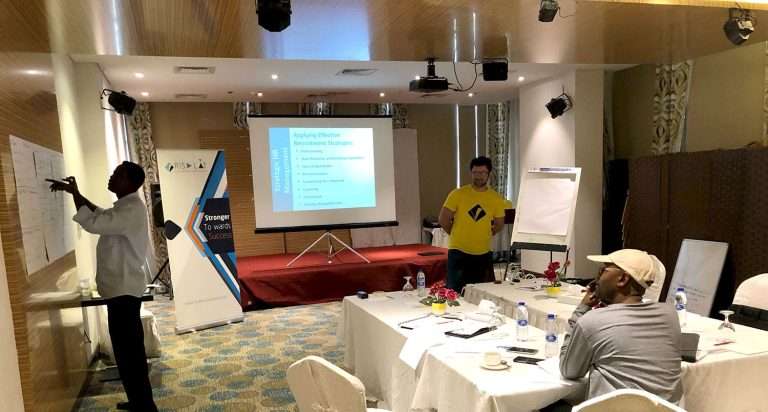
The approach is practical. Facilitators introduce each topic briefly, then participants work on payroll datasets, checklists and journals that mirror real situations.
Le programme associe :
- Short expert inputs on payroll processes and controls
- Excel exercises on realistic payroll datasets
- Case studies from financier-supported payroll reforms
- Process mapping of participants’ own payroll cycles
- Error-detection exercises with seeded mistakes
- Journal entry and reconciliation practice
- Simulations d'audit et rédaction de notes
- Budget modelling and scenario costing
- Group discussion and peer learning
- A study tour with technical visits
- Daily reflection on application at the workplace
Before attending, institutions can use the free Governance Audit to review control weaknesses around payroll approvals and segregation of duties.
Visites techniques et programme sur site
As in earlier editions, the programme includes a study tour in Budapest. Visits are planned with organisations whose payroll, shared service or finance operations illustrate the topics covered, such as a shared service centre, a payroll or HR technology provider, or a public body managing large payrolls. Visits are confirmed with host organisations closer to the programme dates and depend on their availability.
Each visit is prepared with a short briefing and a list of questions on controls, reconciliation and reporting, and is followed by a debrief linking what participants saw to their own action plans.
Résultats attendus
Upon completion of this Payroll Management Training, participants will be able to:
- Run a documented payroll process with clear controls
- Détecter et corriger les erreurs de paie courantes avant le paiement
- Reconcile payroll with HR, bank and statutory records
- Préparer des journaux de paie et des charges à payer précis
- Plan and execute a payroll audit using data analytics
- Prepare payroll budgets and cost projections
- Produire des rapports de paie et des tableaux de bord dans Excel
- Identify the payroll data needed for pay transparency reporting
- Recommend improvements to payroll systems and procedures
These outcomes reduce payment errors and audit findings and give management better information on personnel costs.
3 210 £ par participant · facture et virement bancaire · remise pour les groupes de 5 personnes ou plus
Cinq personnes ou plus d'une même organisation : demandez le tarif de groupe lors de votre demande de facture.
Ten or more: an in-house version for your institution may cost less per person. Ask for an in-house quote.
Registration closes in 7 days (29 Nov 2026)
Institutional Application of Payroll Management Training
Ce programme aide les organisations à renforcer :
- Payroll policies and procedure manuals
- Gestion des données maîtres des employés
- Approval workflows and segregation of duties
- Pre-payroll and post-payroll control checks
- Monthly reconciliations
- Internal audit coverage of payroll
- Wage bill budgeting and forecasting
- Benefit and loan administration
- Statutory reporting and compliance calendars
- Payroll analytics and management reporting
- Pay transparency readiness
- HRMIS and ERP payroll configuration
Les participants repartent avec des outils pratiques pour améliorer :
- Un modèle de carte de processus de paie
- A pre-payroll control checklist
- A payroll reconciliation template
- A payroll audit programme and test list
- Excel exception report workbook
- A payroll budget model
- A payroll dashboard template
- A pay transparency data checklist
Institutions planning an HRMIS or payroll system upgrade can also use the free Digital Readiness Assessment to check data and process readiness.
Pertinence régionale & mise en application
Europe
EU employers must align payroll data with the Pay Transparency Directive, which Member States had to transpose by June 2026. Payroll teams need pay structures based on objective criteria and data that can show gender pay gaps by category of worker.
Afrique
Payroll integrity is central to civil service reform in Africa. Somaliland’s World Bank-supported project linked payroll audits and personnel records to disbursement, Somalia has assessed HRMIS payroll modules under its public resource management project, and The Gambia is automating payroll to monitor its wage bill.
Moyen-Orient
Employers in the Gulf and the wider Middle East often manage end-of-service gratuities, housing and transport allowances and a large expatriate workforce. The benefit calculation, accrual and reconciliation sessions apply directly to these arrangements.
Asie
Asian governments are integrating HR and payroll. The Philippines is building a government-wide HRMIS and payroll system, and Cambodia is modernising the system that holds personnel and payroll records for more than 280,000 civil servants.
Whatever the system, the same controls apply: an accurate master file, approved changes, reconciliation and independent review.
1. In Somaliland's World Bank-supported civil service project, what were payroll audits expected to identify as a disbursement-linked result?
The project's implementation status report describes a disbursement-linked indicator on payroll audits that identify control weaknesses and ghost workers.
2. How often did the same project expect payroll to be reconciled with personnel records?
The project's results framework refers to payroll-to-personnel reconciliation at least every six months.
3. Que construit le projet de modernisation de la fonction publique des Philippines (67,34 millions de dollars américains) pour améliorer la gestion des ressources humaines et de la paie ?
The World Bank's March 2025 announcement describes an integrated, government-wide, web-based HRMIS and payroll system.
- Collecter
- Nettoyer
- Stocker
- Analyser
- Décider
Host Country Profile – Hungary
Budapest is Hungary’s capital and largest city, with an international airport and good rail and road links across Central Europe. It is a long-established business services location, and many international companies run finance, HR and payroll operations from the city, which makes it a practical venue for this programme.
Hungary is a useful benchmark for payroll because its system is relatively simple to explain yet fully digital. Employee income is taxed at a single flat rate, employers pay a social contribution tax on wages, and employers report payroll data to the national tax and customs authority (NAV) through regular electronic returns. As an EU Member State, Hungary is also preparing for the pay transparency rules, so participants can see how payroll teams in a single jurisdiction connect tax, social security and pay equity requirements. Current rates are confirmed in the course materials from official sources.
Hungary is part of the Schengen area. Participants who need a short-stay Schengen visa should apply early through the Hungarian mission responsible for their country of residence. Risalat provides invitation letters and visa guidance after registration, and the city centre is compact and well served by public transport.
Payroll Management Training Deliverables
Chaque participant reçoit un ensemble complet de ressources avant, pendant et après le programme.
Avant le programme
- Pré-évaluation des participants
- Payroll Control Readiness Assessment
- Payroll Management Resource Pack
- Lectures préparatoires
- Aide et conseils gratuits pour le visa
Pendant le programme
- Accueil à l'aéroport & assistance à l'arrivée
- Accommodation with breakfast: 6 nights, check-in Sunday 17 January 2027, check-out Saturday 23 January 2027 (one night before and one night after the programme)
- Dîner de bienvenue et de réseautage
- Kit de formation Risalat (sac, gourde, mug, t-shirt, casquette, protège-passeport, stylos, carnet, magnet & porte-clés)
- Manuel de formation complet sur la gestion de la paie
- Pre-Payroll Control Checklist
- Payroll Reconciliation Template
- Excel Payroll Exception Report Workbook
- Payroll Audit Programme
- Payroll Budget Model
- Ateliers pratiques & simulations
- Discussions de groupe & apprentissage entre pairs
- Déjeuner et pauses-café quotidiens
- Accès complet aux installations du lieu de formation
- Mini tablette avec supports pédagogiques numériques
- Visite de terrain (le cas échéant)
- Visite récréative de la ville
Après le programme
- Certificat de participation
- Distinction Risalat de participation au programme
- Documents de référence après la formation
- Payroll Dashboard Template
- Pay Transparency Data Checklist
- Accompagnement après la formation & conseils de suivi
- Rapport du programme
Les ministères, agences, unités de projet et entreprises peuvent demander une version interne sur mesure adaptée à leur propre système de paie, à leur législation et aux résultats de leurs audits. Demander une proposition et notre équipe vous répondra avec une conception et un devis.
Common Challenges in Payroll Management, And How This Training Helps
Comment pouvons-nous cesser de rémunérer le personnel qui a quitté l'organisation ou qui n'a jamais existé ?
Ghost workers usually reflect weak links between HR records and payroll. The Fourth Day covers payroll-to-personnel reconciliation, headcount verification and Excel tests for staff paid after exit, drawing on payroll audit practice in financier-supported reforms.
How can payroll errors be caught before payment rather than after?
Most errors can be found by simple checks. The Second Day builds a pre-payroll checklist with variance analysis, joiner and leaver review and bank detail verification.
How can HR and finance stop working in silos?
Many problems occur at the hand-off between the two functions. The First Day process mapping workshop makes each hand-off visible and assigns clear responsibilities.
How can payroll be recorded correctly across several funding sources?
Project units often allocate staff costs to several budgets. The Third Day case study practises journal entries and cost allocation that will satisfy auditors and financiers.
How can we prepare a realistic payroll budget?
Budgets often ignore increases, vacancies and contribution changes. The Fifth Day capstone builds a payroll budget model with scenarios for new posts and pay increases.
Comment les données de paie peuvent-elles répondre aux exigences de transparence salariale ?
Pay transparency rules require structured, reliable data. The Fifth Day explains what data the EU Directive implies and how to prepare a basic gender pay comparison.
How can Excel make payroll analysis faster and more reliable?
Manual review of large payrolls misses patterns. The Fourth Day introduces lookups, pivot tables and exception reports that participants can reuse every month.
Questions fréquentes
Qui devrait participer à cette formation en gestion de la paie ?
Payroll, HR, finance, budget and internal audit staff from ministries, agencies, project units, state-owned enterprises, NGOs and companies who prepare, approve, record or audit payroll.
Do participants work with Excel?
Yes. Participants use Excel throughout the week for variance checks, reconciliation, payroll audit tests, budget models and a payroll dashboard. Bring a laptop with Excel installed.
Le programme couvre-t-il la directive européenne sur la transparence des rémunérations ?
Yes. The fifth day explains what payroll data employers need to meet the Directive's information and reporting requirements and how to prepare a basic gender pay comparison.
Is there a study tour?
Yes. The programme includes technical visits in Budapest to organisations with relevant payroll or finance operations. Visits are confirmed with host organisations closer to the dates.
Ce programme peut-il être dispensé en intra ?
Yes. Risalat can tailor the programme to your payroll system, national legislation and audit findings and deliver it at your premises.
Who Will Deliver This Programme
Each date is delivered by a team assigned from Risalat's expert network for this subject. For this programme we assign:
How we choose them: Experience in the region of the participants or comparable settings; Command of the financier rules that apply (World Bank, ADB, AfDB, EU, UN) where relevant; Delivery in English; other languages on request for in-house groups; No conflict of interest with participants' institutions.
Training courses in BudapestHR, Payroll & Administration training courses
Pourquoi Budapest pour ce programme
Budapest offre un accès à des institutions régionales clés, notamment le Parlement hongrois, la Banque nationale de Hongrie et plusieurs agences de l'Union européenne. Les délégations en visite peuvent examiner les projets d'infrastructure nationale, les systèmes d'administration publique et les réseaux de transport urbain le long du Danube. La ville bénéficie d'un emplacement central en Europe, avec des vols internationaux fréquents et des liaisons ferroviaires facilitant l'accès.
The Payroll Preparation, Analysis and Management Training in Budapest programme in January 2027 brings together officials and professionals from across Europe, Africa, the Middle East and Asia. Sessions combine short inputs, case studies and group work on participants' own files, and the city's institutions can be added as a study visit on request.
Getting there: Budapest Ferenc Liszt International (BUD).
Vérifiez si vous avez besoin d'un visa avec le vérificateur de visa gratuit, et demandez une lettre d'invitation une fois inscrit.
Le même thème dans d'autres villes
- Mini Degree in Public Financial Management in London (London)
- Fraud Detection, Investigation and Prevention in Nairobi (Nairobi)
- AI for Human Resources, Payroll and Workforce Planning Training in Amsterdam (Amsterdam)
- AI for Public Financial Management and Audit Training in Kuala Lumpur (Kuala Lumpur)
- Risk-Based Internal Audit in the Public Sector in Istanbul (Istanbul)
- Education Sector Staff Roster Auditing and Teacher Allocation Systems in Porto (Porto)
Autres programmes à Budapest
Pour les équipes et les institutions
Bring your team
Teams that learn together apply more at work. Tell us how many people and how you would like to take part: we reply with a group quote within two working days.
Watch: this programme in short



Other dates and cities for this subject: HR, Training Needs and Capacity Development training courses (25 upcoming dates).
Plus de formations en Hongrie · Tous les programmes en Europe · Calendrier complet des formations
Plan this programme in a roadmap: why it matters, why to approve it, the dates to plan and the career it builds.