Points clés
- Dates
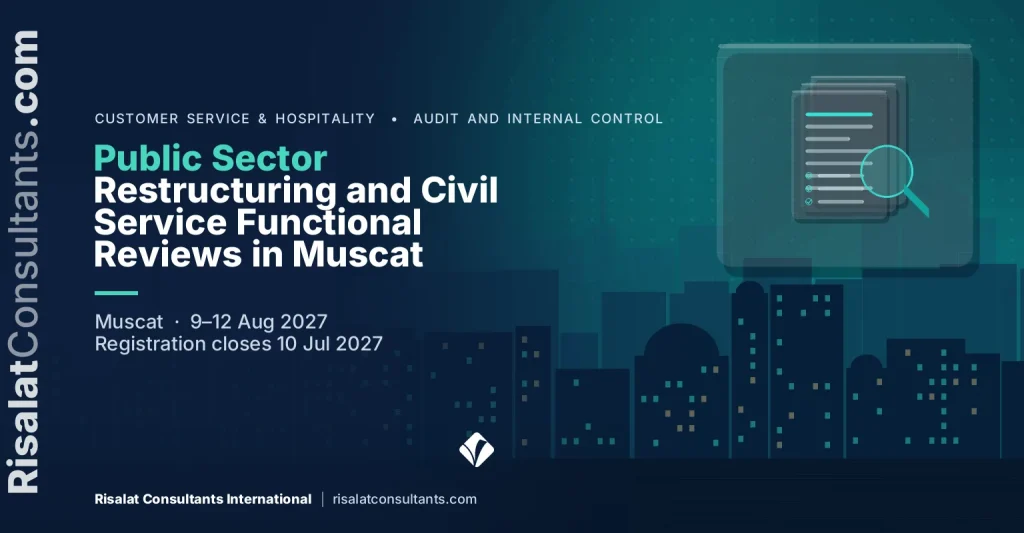
- 9–12 Aug 2027 (4 days)
- Lieu
- Muscat, Oman
- Frais par participant
- 2 650 £ (GBP)
- Paiement
- Sur facture et par virement bancaire
- Clôture des inscriptions
- 10 Jul 2027
- Certificat
- Certificat de participation
- Option intra
- Organisez-le pour votre équipe, à vos dates
Sur cette page 14 sections
Présentation du programme
Public sector institutions face increasing pressure to enhance operational efficiency, eliminate bureaucratic overlap, and align organisational structures with national strategic priorities. This four-day executive programme in Muscat equips public sector leaders with rigorous methodologies to conduct functional reviews and structural reorganisations. Participants examine macro-level machinery of government arrangements down to micro-level departmental workflows, ensuring administrative bodies deliver mandates cost-effectively.
Free self-check: the governance self-audit gives a quick check of governance, controls and accountability, in about 10 minutes.
The curriculum addresses the practical complexities of civil service modernisation, focusing on mandate mapping, functional diagnostic tools, and evidence-based workforce sizing. Officials explore internationally recognised public sector management frameworks to identify redundant functions, resolve overlapping ministerial portfolios, and design modern organisational charts. The training bridges high-level policy intent with actionable administrative adjustments needed across core civil service bodies.
Through applied casework and diagnostic exercises, delegates analyse restructuring processes that respect statutory frameworks and human resource constraints. Emphasis is placed on managing the transition, establishing competency-based job profiling, and deploying workforce rationalisation strategies responsibly. Delivered in Muscat, this workshop provides a neutral, focused environment for governance practitioners to master technical tools that modernise central agencies and improve service delivery.
Public administrations across the Middle East and North Africa are advancing structural modernisations to reinforce fiscal sustainability and improve the quality of public services. This programme directly supports the administrative reform and institutional modernisation pillars associated with the MASAR Operation, addressing the critical need for leaner ministerial portfolios, rationalised civil service staffing, and transparent mandate distribution across public sector agencies.
Delivered by Risalat Consultants International in Muscat, Oman, it combines expert-led sessions, real cases and group work, so that participants can apply what they learn in their own institution.
The Programme Strengthens Institutional Capability
- Principles of machinery of government design and public administration architecture
- Horizontal versus vertical functional reviews: scope, parameters, and entry points
- Mandate analysis: examining primary legislation, decrees, and institutional charters
- Diagnostic frameworks for identifying administrative overlap and institutional fragmentation
- Case study analysis of ministerial portfolio consolidation and structural reform
- Applying functional mapping matrices to core and non-core public functions
- Business process review: diagnosing procedural delays and operational bottlenecks
- Decentralisation and deconcentration models: structuring field versus central units
- Évaluation des risques de fraude et registres des risques de fraude
- Conception et test des contrôles internes
- Le modèle des trois lignes et le rôle du contrôle
- Planification de l'audit, preuves et documentation
It is designed for civil Service Commission directors and policy analysts, administrative reform task force leads and technical coordinators, ministry institutional development and organisational design directors and others who want practical, current skills in fraud, audit and internal control.
The Growing Importance of Public Sector Restructuring and Civil Service Functional Reviews in Muscat
Les organismes publics et les projets financés par les bailleurs doivent démontrer que les fonds sont utilisés aux fins prévues. Les auditeurs, les organes de contrôle et les bailleurs regardent de plus en plus au-delà des états financiers, vers les contrôles, les registres et les comportements qui les sous-tendent.
Les faiblesses en matière de fraude et de contrôle proviennent rarement d'une défaillance unique. Elles se développent là où les rôles sont flous, les registres incomplets et les signaux d'alerte non suivis. Les équipes qui comprennent comment la fraude se produit, et comment les contrôles l'empêchent, protègent à la fois leur institution et les personnes qu'elle sert.
Les organisations ont de plus en plus besoin de professionnels capables de :
- Identifier et coter les risques de fraude et de contrôle dans leurs propres processus
- Concevoir des contrôles proportionnés et testables
- Recueillir et documenter des preuves d'audit fiables
- Repérer tôt les signaux d'alerte et les signaler correctement
- Transformer les constats en actions concrètes et convenues
Des systèmes solides de lutte contre la fraude, d'audit et de contrôle interne aident les organisations à :
- Réduire les pertes et les dépenses inéligibles
- Réussir les audits externes avec moins de constats
- Renforcer la confiance des bailleurs et des citoyens
- Traiter les allégations de manière équitable et documentée
This Public Sector Restructuring and Civil Service Functional Reviews in Muscat programme brings these elements together in a practical format, so that participants understand not only what good practice looks like but also how to introduce it in their own setting, with the people and resources they have.
Who Should Attend This Public Sector Restructuring and Civil Service Functional Reviews in Muscat Training?
Ce programme s'adresse à :
- Civil Service Commission directors and policy analysts
- Administrative reform task force leads and technical coordinators
- Ministry institutional development and organisational design directors
- Public sector human resource planning and modernisation managers
- Heads of restructuring units within central government agencies
- Transformation and performance management unit directors
- Officials coordinating public sector modernisation from Jordan
- Advisors and technical teams working on donor-funded governance operations
- Planning directors responsible for ministerial machinery of government alignment
- Auditeurs internes et responsables d'audit
- Responsables financiers et comptables
- Responsables de la conformité et des risques
Le programme convient aussi bien aux professionnels expérimentés qu’à ceux qui prennent de nouvelles responsabilités. Les groupes réunissant plusieurs institutions et pays sont encouragés, car les participants apprennent beaucoup de l’expérience des autres.
Cochez ce que votre équipe doit être capable de faire.
Public Sector Restructuring and Civil Service Functional Reviews in Muscat Training Objectives
Upon successful completion of this Public Sector Restructuring and Civil Service Functional Reviews in Muscat Training, participants will be able to:
- Apply institutional diagnostic tools to identify operational bottlenecks and mandate duplication across central ministries
- Conduct comprehensive horizontal and vertical functional reviews using established machinery of government frameworks
- Map ministerial mandates to eliminate overlapping responsibilities and improve administrative accountability
- Formulate evidence-based workforce rationalisation and redeployment plans aligned with civil service legal provisions
- Design competency-based job profiles and modern organisational structures reflecting revised institutional priorities
- Construct phased restructuring implementation plans that mitigate operational disruption and address employee transition
- Establish monitoring and evaluation frameworks to verify post-restructuring efficiency gains and service delivery improvements
- Expliquer comment et pourquoi la fraude se produit, à l'aide de modèles reconnus de risque de fraude
- Réaliser une évaluation des risques de fraude et de contrôle sur un processus réel
- Rattacher les contrôles aux risques selon le modèle des trois lignes
Chaque objectif est mis en pratique pendant le programme à travers des exercices, des études de cas ou des travaux de groupe, afin que les participants repartent capables de le faire, et pas seulement de le décrire.
Contenu et structure du programme
- Principles of machinery of government design and public administration architecture
- Horizontal versus vertical functional reviews: scope, parameters, and entry points
- Mandate analysis: examining primary legislation, decrees, and institutional charters
- Diagnostic frameworks for identifying administrative overlap and institutional fragmentation
- Case study analysis of ministerial portfolio consolidation and structural reform
- Applying functional mapping matrices to core and non-core public functions
- Business process review: diagnosing procedural delays and operational bottlenecks
- Decentralisation and deconcentration models: structuring field versus central units
- Establishing structural criteria for agency creation, merger, or abolition
- Practical workshop: conducting a mandate overlap assessment on a target sector
- Workload analysis methodologies and staffing norm estimation in the civil service
- Workforce rationalisation approaches: redeployment, natural attrition, and targeted exits
- Transitioning from traditional post descriptions to competency-based job profiles
- Grading structures, salary scale implications, and wage bill containment
- Simulation exercise: calculating optimal staffing complements for revised departmental mandates
- Legal and statutory considerations in civil service restructuring and rightsizing
- Change management architectures and communication strategies for civil servants
- Designing the transition management office: risk registers and operational milestones
- Performance indicators for evaluating post-review organisational productivity
- Action planning: drafting a comprehensive functional review roadmap for home institutions
Contenu détaillé jour par jour
Le programme se déroule sur 4 jours. Chaque journée associe apports d'experts, travaux pratiques et un atelier ou une étude de cas de clôture :
- First Day: Machinery of Government and Functional Review Methodologies
- Second Day: Institutional Diagnostic Tools and Workflow Streamlining
- Third Day: Workforce Rationalisation, Workload Sizing, and Job Profiling
- Fourth Day: Restructuring Implementation, Transition Governance, and Impact Monitoring
Contenu détaillé jour par jour
First Day | Machinery of Government and Functional Review Methodologies
- Principles of machinery of government design and public administration architecture
- Horizontal versus vertical functional reviews: scope, parameters, and entry points
- Mandate analysis: examining primary legislation, decrees, and institutional charters
- Diagnostic frameworks for identifying administrative overlap and institutional fragmentation
- Case study analysis of ministerial portfolio consolidation and structural reform
Workshop: Machinery of Government and Functional Review Methodologies: Applying It to Your Institution
En petits groupes, les participants appliquent les méthodes du jour à des exemples tirés de leurs institutions et conviennent d'étapes concrètes pour la suite.
Second Day | Institutional Diagnostic Tools and Workflow Streamlining
- Applying functional mapping matrices to core and non-core public functions
- Business process review: diagnosing procedural delays and operational bottlenecks
- Decentralisation and deconcentration models: structuring field versus central units
- Establishing structural criteria for agency creation, merger, or abolition
- Practical workshop: conducting a mandate overlap assessment on a target sector
Workshop: Institutional Diagnostic Tools and Workflow Streamlining: Applying It to Your Institution
En petits groupes, les participants appliquent les méthodes du jour à des exemples tirés de leurs institutions et conviennent d'étapes concrètes pour la suite.
Third Day | Workforce Rationalisation, Workload Sizing, and Job Profiling
- Workload analysis methodologies and staffing norm estimation in the civil service
- Workforce rationalisation approaches: redeployment, natural attrition, and targeted exits
- Transitioning from traditional post descriptions to competency-based job profiles
- Grading structures, salary scale implications, and wage bill containment
- Simulation exercise: calculating optimal staffing complements for revised departmental mandates
Case Study: Workforce Rationalisation, Workload Sizing, and Job Profiling in Practice
Les participants analysent un cas réaliste, comparent les choix effectués aux bonnes pratiques et en tirent des enseignements applicables à leur propre contexte.
Fourth Day | Restructuring Implementation, Transition Governance, and Impact Monitoring
- Legal and statutory considerations in civil service restructuring and rightsizing
- Change management architectures and communication strategies for civil servants
- Designing the transition management office: risk registers and operational milestones
- Performance indicators for evaluating post-review organisational productivity
- Action planning: drafting a comprehensive functional review roadmap for home institutions
Capstone Exercise: Public Sector Restructuring and Civil Service Functional Reviews in Muscat Action Plan for Your Institution
Les participants synthétisent la semaine dans un plan d'action pour leur institution, avec des priorités, des responsables et des premières étapes, puis le présentent à leurs pairs et aux animateurs pour recueillir leurs retours.
- Opération
- Enregistrement
- Contrôle
- Données probantes
- Opinion
Public Sector Restructuring and Civil Service Functional Reviews in Muscat Training Methodology
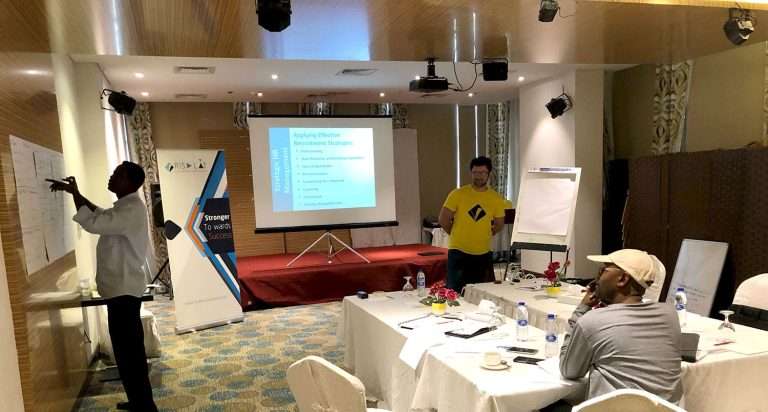
The programme utilises adult learning methodologies grounded in comparative civil service practice, combining technical lectures with applied exercises. Participants work with real institutional diagnostics, functional review templates, and organisational mapping exercises to solve structural challenges. Peer-to-peer exchanges and simulated ministerial review clinics allow delegates to stress-test restructuring proposals against operational, fiscal, and legal constraints.
Le programme associe :
- Sessions animées par des experts sur les pratiques actuelles
- Études de cas régionales et internationales
- Travaux de groupe et exercices pratiques
- Simulations et jeux de rôle le cas échéant
- Discussion des défis rencontrés par les participants dans l'exercice de leurs fonctions
- Apprentissage entre pairs, d'institutions et de pays différents
- Des outils et modèles pratiques à réutiliser au travail
- Réflexion quotidienne et plan d'action
Avant le programme, une courte pré-évaluation aide les animateurs à comprendre le rôle et les priorités de chaque participant, afin d’adapter les exemples et les exercices au groupe. Chaque journée se termine par une brève réflexion au cours de laquelle les participants notent ce qu’ils appliqueront dans leur travail.
Résultats attendus
Upon completion of this Public Sector Restructuring and Civil Service Functional Reviews in Muscat Training, participants will be able to:
- Demonstrated ability to select and deploy functional review diagnostics suited to specific public sector entities
- Clear capability to identify and resolve statutory overlap across ministerial portfolios
- Proficiency in developing standardised, competency-aligned job profiles and departmental structures
- Technical skill to model civil service workload requirements and propose balanced rationalisation strategies
- Capacity to lead structural reform initiatives in alignment with broader modernisation and development programmes
- Production of a tailored, actionable functional review roadmap ready for implementation in central agencies
- Évaluer les risques de fraude et de contrôle dans leurs propres processus
- Concevoir et tester des contrôles proportionnés
Les participants repartent avec un plan d'action personnel et des outils pratiques utilisables dans leur institution dès la première semaine de retour. Les institutions qui envoient plusieurs participants peuvent s'appuyer sur le programme pour convenir de méthodes et de modèles communs entre équipes, ce qui facilite la pérennité des améliorations.
2 650 £ par participant · facture et virement bancaire · réduction pour les groupes de 5 personnes ou plus
Cinq personnes ou plus d'une même organisation : demandez le tarif de groupe lors de votre demande de facture.
Ten or more: an in-house version for your institution may cost less per person. Ask for an in-house quote.
Registration closes in 235 days (10 Jul 2027)
Institutional Application of Public Sector Restructuring and Civil Service Functional Reviews in Muscat Training
Ce programme aide les organisations à renforcer :
- Gestion des risques de fraude et de corruption
- Cadres de contrôle interne
- Dispositifs d'audit et de contrôle
- Suivi des constats d'audit
- Intégrité et canaux de signalement
Les participants repartent avec des outils pratiques pour améliorer :
- Registres des risques et cartographies des contrôles
- Planification et tests d'audit
- Preuves et documentation
- Rapports à la direction et aux conseils d'administration
- Prévention des dépenses inéligibles
Le programme est conçu pour que l'apprentissage passe de la salle de formation à l'institution. Les participants travaillent, dans la mesure du possible, sur leurs propres processus et documents, et repartent avec un plan d'action que leurs responsables peuvent examiner et soutenir.
Pertinence régionale & mise en application
Europe
Les institutions européennes traitent la fraude, l'audit et le contrôle interne dans des cadres réglementaires détaillés et des programmes de réforme. Les participants européens peuvent comparer leurs pratiques avec celles de collègues d'autres régions et vérifier comment des méthodes éprouvées fonctionnent dans d'autres conditions.
Afrique
Partout en Afrique, les ministères, organismes et équipes de projet qui interviennent dans la lutte contre la fraude, l'audit et le contrôle interne travaillent de plus en plus aux côtés de programmes financés par les bailleurs, qui attendent des systèmes et des données probantes clairs. Le programme aide les participants à adapter les bonnes pratiques aux institutions et aux ressources dont ils disposent.
Moyen-Orient
Au Moyen-Orient, les stratégies nationales de développement et les plans de diversification imposent des exigences croissantes en matière de fraude, d'audit et de contrôle interne. Les participants examinent comment développer, au sein des organismes publics et des entreprises, les capacités dont ces plans ont besoin.
Asie
Les institutions asiatiques conjuguent croissance rapide et programmes de modernisation ambitieux. Les participants venus d'Asie peuvent partager leur expérience du déploiement rapide de systèmes à grande échelle et découvrir les approches adoptées ailleurs.
Pacifique
Les petits États insulaires et du Pacifique font face à des contraintes particulières de taille, de distance et de capacités. Le programme met en avant des approches pratiques et proportionnées en matière de fraude, d'audit et de contrôle interne, adaptées aux petites institutions.
Holding the programme in Muscat, Oman brings participants together away from their daily pressures, so they can compare how fraud, audit and internal control is handled in different settings. The same programme can also be delivered in-house for one institution, in its own country or online, with cases taken from its current work.
Host Country Profile – Oman
Muscat provides a professional setting for training courses and study tours focused on public sector governance, diplomatic practice, economic diversification, and infrastructure development.
Se former hors de son pays permet aux participants de se concentrer, de porter un regard neuf sur leur propre institution et de constituer un réseau avec des collègues d'autres pays.
Public Sector Restructuring and Civil Service Functional Reviews in Muscat Training Deliverables
Les participants sont accompagnés avant, pendant et après le programme, afin que la préparation, l'apprentissage et le suivi forment une expérience continue.
Avant le programme
- Pré-évaluation des participants
- Public Sector Restructuring and Civil Service Functional Reviews in Muscat Readiness Assessment
- Public Sector Restructuring and Civil Service Functional Reviews in Muscat Resource Pack
- Lectures préparatoires
- Aide et conseils gratuits pour le visa
Pendant le programme
- Accueil à l'aéroport & assistance à l'arrivée
- Accommodation with breakfast: 5 nights, check-in Sunday 8 August 2027, check-out Friday 13 August 2027 (one night before and one night after the programme)
- Dîner de bienvenue et de réseautage
- Kit de formation Risalat (sac, gourde, mug, t-shirt, casquette, protège-passeport, stylos, carnet, magnet & porte-clés)
- Comprehensive Public Sector Restructuring and Civil Service Functional Reviews in Muscat Training Manual
- Modèle de registre des risques de fraude
- Matrice de cartographie des contrôles
- Liste de contrôle des preuves d'audit
- Outil de suivi des constats et des actions
- Ateliers pratiques & simulations
- Discussions de groupe & apprentissage entre pairs
- Déjeuner et pauses-café quotidiens
- Accès complet aux installations du lieu de formation
- Mini tablette avec supports pédagogiques numériques
- Visite de terrain (le cas échéant)
- Visite récréative de la ville
Après le programme
- Certificat de participation
- Distinction Risalat de participation au programme
- Documents de référence après la formation
- Guide d'autoévaluation des risques de fraude
- Liste de contrôle des tests de contrôles
- Accompagnement après la formation & conseils de suivi
- Rapport du programme
Institutions can also request a tailored in-house version of this programme, delivered at their premises or online. Request a proposal.
Common Challenges in Public Sector Restructuring and Civil Service Functional Reviews in Muscat, And How This Training Helps
Comment les institutions peuvent-elles identifier et évaluer les risques de fraude et de contrôle dans leurs propres processus ?
The programme addresses this directly on the first day (Machinery of Government and Functional Review Methodologies), where participants practise the methods involved and adapt them to their own institution, then build it into their action plan.
Comment les institutions peuvent-elles concevoir des contrôles proportionnés et vérifiables ?
The programme addresses this directly on the second day (Institutional Diagnostic Tools and Workflow Streamlining), where participants practise the methods involved and adapt them to their own institution, then build it into their action plan.
Comment les institutions peuvent-elles recueillir et documenter des preuves d'audit fiables ?
The programme addresses this directly on the third day (Workforce Rationalisation, Workload Sizing, and Job Profiling), where participants practise the methods involved and adapt them to their own institution, then build it into their action plan.
Comment les institutions peuvent-elles repérer tôt les signaux d'alerte et les faire remonter correctement ?
The programme addresses this directly on the fourth day (Restructuring Implementation, Transition Governance, and Impact Monitoring), where participants practise the methods involved and adapt them to their own institution, then build it into their action plan.
Comment les institutions peuvent-elles transformer les constats en actions concrètes et concertées ?
The programme addresses this directly on the first day (Machinery of Government and Functional Review Methodologies), where participants practise the methods involved and adapt them to their own institution, then build it into their action plan.
Questions fréquentes
When and where does the Public Sector Restructuring and Civil Service Functional Reviews in Muscat programme take place?
It runs from 9 Aug 2027 to 12 Aug 2027, in Muscat, Oman. The registration deadline is shown at the top of this page.
Qui devrait participer ?
The programme is designed for civil Service Commission directors and policy analysts, administrative reform task force leads and technical coordinators, ministry institutional development and organisational design directors, public sector human resource planning and modernisation managers, and others who want practical skills in fraud, audit and internal control.
Recevrai-je un certificat ?
Oui. Les participants qui terminent le programme reçoivent un certificat de participation délivré par Risalat Consultants International.
Ce programme peut-il être dispensé pour notre seule institution ?
Oui. Nous pouvons proposer une version intra sur mesure dans vos locaux, dans une autre ville ou en ligne, construite autour de vos propres cas. Utilisez la demande de proposition sur cette page.
Faut-il une expérience préalable en fraude, audit et contrôle interne ?
Aucune formation spécialisée n'est requise au-delà d'une expérience dans une fonction similaire. Une courte pré-évaluation aide les animateurs à adapter les sessions au groupe.
Who Will Deliver This Programme
Each date is delivered by a team assigned from Risalat's expert network for this subject. For this programme we assign:
How we choose them: Experience in the region of the participants or comparable settings; Command of the financier rules that apply (World Bank, ADB, AfDB, EU, UN) where relevant; Delivery in English; other languages on request for in-house groups; No conflict of interest with participants' institutions.
Names and short CVs of the assigned experts are shared with registered participants and sponsoring organisations before the programme, on request. Are you an expert in this subject? Join our expert network.
Training courses in MuscatHR, Payroll & Administration training courses
Why Muscat for this programme
Muscat is the political and administrative centre of Oman, hosting key government ministries, the Central Bank of Oman, and major infrastructure initiatives. Visiting delegates can observe public administration and port logistics at nearby operational hubs. The city is straightforward to reach through direct international flights connecting Europe, Asia, and the wider Gulf region.
The Public Sector Restructuring and Civil Service Functional Reviews in Muscat programme in August 2027 brings together officials and professionals from across the Middle East region and beyond. Sessions combine short inputs, case studies and group work on participants' own files, and the city's institutions can be added as a study visit on request.
Getting there: Muscat International Airport (MCT).
Vérifiez si vous avez besoin d'un visa avec le vérificateur de visa gratuit, et demandez une lettre d'invitation une fois inscrit.
Le même thème dans d'autres villes
- Performance Management in Government in Tbilisi (Tbilisi)
- Public Service Delivery and Citizen Charters in Bangkok (Bangkok)
- Public Administration Reform and Civil Service Management in Kuala Lumpur (Kuala Lumpur)
- Public Sector Administrative Transition and Civil Service Modernisation in Muscat (Muscat)
- Mega Hydro Project Financing and Syndicate Debt Management in Vienna (Vienna)
- Bus Rapid Transit Implementation and Urban Mobility Coordination in Marrakech (Marrakech)
Other programmes in Muscat
- Marine Fisheries Licensing, Vessel Tracking and Coastal Enforcement in Muscat
- Sub-Surface Dam Engineering and Sand Dam Aquifer Recharge in Muscat
- Agricultural Pest Management and Veterinary Vaccine Cold Storage in Muscat
- Emergency Road Corridor Spot Improvement and Slope Protection in Muscat
- Sustainable Coastal Fisheries Licensing, Monitoring and Surveillance in Muscat
For teams and institutions
Bring your team
Teams that learn together apply more at work. Tell us how many people and how you would like to take part: we reply with a group quote within two working days.
Other dates and cities for this subject: Leadership and Change in the Public Sector training courses (44 upcoming dates).
More training courses in Oman · Tous les programmes au Moyen-Orient · Calendrier complet des formations
Plan this programme in a roadmap: why it matters, why to approve it, the dates to plan and the career it builds.