要点总结
- Map cultural assets and rights. Peru offers an important illustration through Cusco, Machu Picchu, craft traditions and living heritage.
- 围绕承载能力设计旅游业。最有价值的遗产并不总是纪念碑。
- Keep economic value within communities. The practical challenge is to protect the cultural resource while making local livelihoods more resilient.
- Finance conservation and local enterprise. Peru offers an important illustration through Cusco, Machu Picchu, craft traditions and living heritage.
- Measure social and environmental outcomes. The most valuable heritage assets are not always monuments.
In short: Practical analysis of heritage-led local development: evidence, implementation risks and actions for organisations, public agencies and donor-funded.
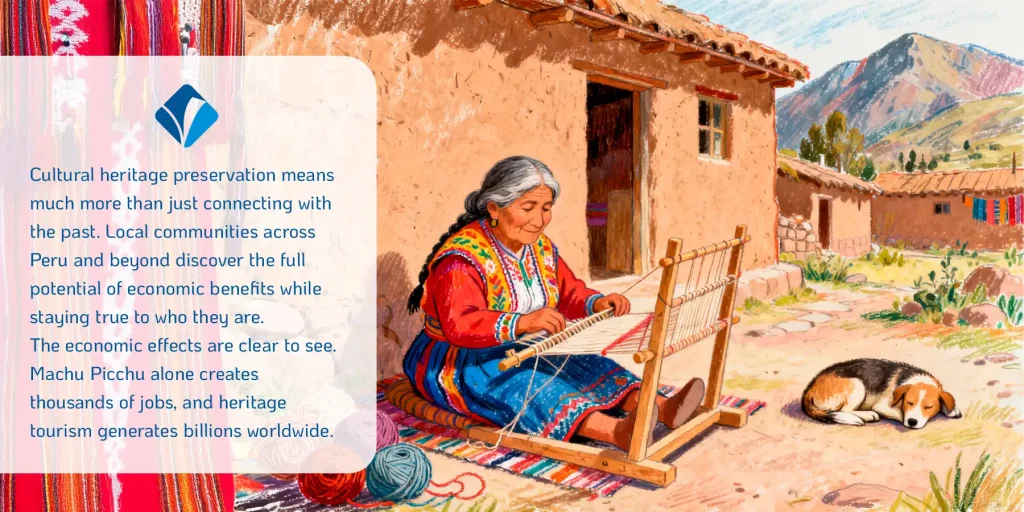
In short: Peru offers an important illustration through Cusco, Machu Picchu, craft traditions and living heritage. A visitor economy can create work for guides, conservators, accommodation providers and artisans, but visitor numbers alone do not show whether benefits reach residents. The most valuable heritage assets are not always monuments. The central question is how institutions can convert this opportunity into measurable, responsible outcomes.
The practical challenge is to protect the cultural resource while making local livelihoods more resilient. Without rules on access, waste, land use and revenue allocation, promotion can undermine the very heritage that attracts visitors. This guide examines the decisions, evidence and implementation safeguards that matter for heritage-led local development.
绘制文化资产和权利地图
What decision must be made?
Peru offers an important illustration through Cusco, Machu Picchu, craft traditions and living heritage. A visitor economy can create work for guides, conservators, accommodation providers and artisans, but visitor numbers alone do not show whether benefits reach residents. This is a useful starting point, but it should be interpreted alongside the organisation’s mandate, local conditions and the quality of the available evidence. A national policy statement, project approval or market forecast does not by itself establish that a particular intervention is affordable, approved or effective. Decision-makers should identify the specific outcome they want and the people who will be affected before choosing a technical solution.
证据、问责与实际执行
考虑一个准备制定六个月改进计划的假设性执行机构。其管理者可以选择一项服务或流程,建立基准,指定一名责任官员并定义结果指标。然后,他们可以在有限的范围内试点一项变更,记录成本和员工时间,征求受影响群体的反馈,并将结果与基准进行比较。这种方法不能保证成功,但它使决策可追溯,并允许在更大规模推广之前更改无效活动。
The governance test is whether a person outside the delivery team can understand what was promised, what happened and what remains uncertain. Useful documentation includes an approved responsibility matrix, data definitions, a risk register, an accessible complaints channel and a schedule for reviewing performance. It is equally important to distinguish what a source confirms from a reasonable implementation recommendation. This protects credibility and helps senior officials decide when more evidence is needed.
围绕承载能力设计旅游业
Practical questions for design tourism around carrying capacity
The most valuable heritage assets are not always monuments. Food knowledge, oral histories, skills, ceremonies and community spaces can underpin enterprises when custodians retain control over representation and use. This is a useful starting point, but it should be interpreted alongside the organisation’s mandate, local conditions and the quality of the available evidence. A national policy statement, project approval or market forecast does not by itself establish that a particular intervention is affordable, approved or effective. Decision-makers should identify the specific outcome they want and the people who will be affected before choosing a technical solution.
Implementation example and safeguards
考虑一个准备制定六个月改进计划的假设性执行机构。其管理者可以选择一项服务或流程,建立基准,指定一名责任官员并定义结果指标。然后,他们可以在有限的范围内试点一项变更,记录成本和员工时间,征求受影响群体的反馈,并将结果与基准进行比较。这种方法不能保证成功,但它使决策可追溯,并允许在更大规模推广之前更改无效活动。
治理检验的标准是交付团队之外的人员是否能够理解承诺的内容、发生的事情以及仍然不确定的内容。有用的文档包括批准的责任矩阵、数据定义、风险登记册、无障碍投诉渠道以及审查绩效的时间表。区分信源确认的内容与合理的实施建议同样重要。这可以保护公信力,并帮助高层官员决定何时需要更多证据。
Keep economic value within communities
Practical questions for keep economic value within communities
The practical challenge is to protect the cultural resource while making local livelihoods more resilient. Without rules on access, waste, land use and revenue allocation, promotion can undermine the very heritage that attracts visitors. This is a useful starting point, but it should be interpreted alongside the organisation’s mandate, local conditions and the quality of the available evidence. A national policy statement, project approval or market forecast does not by itself establish that a particular intervention is affordable, approved or effective. Decision-makers should identify the specific outcome they want and the people who will be affected before choosing a technical solution.
For heritage-led local development, the first operational task is to distinguish an observed problem from an assumed solution. Teams can examine administrative records, interview frontline staff and service users, review procurement and contract obligations, and map the decisions currently delayed by missing information. Peru offers an important illustration through Cusco, Machu Picchu, craft traditions and living heritage. A visitor economy can create work for guides, conservators, accommodation providers and artisans, but visitor numbers alone do not show whether benefits reach residents. Where a claim depends on a current project, regulation or budget, it should be checked against the original institution’s published document rather than repeated from a promotional summary.
Implementation example and safeguards
考虑一个准备制定六个月改进计划的假设性执行机构。其管理者可以选择一项服务或流程,建立基准,指定一名责任官员并定义结果指标。然后,他们可以在有限的范围内试点一项变更,记录成本和员工时间,征求受影响群体的反馈,并将结果与基准进行比较。这种方法不能保证成功,但它使决策可追溯,并允许在更大规模推广之前更改无效活动。
治理检验的标准是交付团队之外的人员是否能够理解承诺的内容、发生的事情以及仍然不确定的内容。有用的文档包括批准的责任矩阵、数据定义、风险登记册、无障碍投诉渠道以及审查绩效的时间表。区分信源确认的内容与合理的实施建议同样重要。这可以保护公信力,并帮助高层官员决定何时需要更多证据。
- Define the decision and intended beneficiary before selecting a tool or contractor.
- Record the baseline, data owner, source and date of each indicator.
- 检查法律、保障、无障碍和财务要求。
- Pilot changes and collect user feedback before scaling.
- Publish the limitations of the evidence as well as the positive results.
资助自然保护与地方企业
Practical questions for finance conservation and local enterprise
Peru offers an important illustration through Cusco, Machu Picchu, craft traditions and living heritage. A visitor economy can create work for guides, conservators, accommodation providers and artisans, but visitor numbers alone do not show whether benefits reach residents. This is a useful starting point, but it should be interpreted alongside the organisation’s mandate, local conditions and the quality of the available evidence. A national policy statement, project approval or market forecast does not by itself establish that a particular intervention is affordable, approved or effective. Decision-makers should identify the specific outcome they want and the people who will be affected before choosing a technical solution.
For heritage-led local development, the first operational task is to distinguish an observed problem from an assumed solution. Teams can examine administrative records, interview frontline staff and service users, review procurement and contract obligations, and map the decisions currently delayed by missing information. The most valuable heritage assets are not always monuments. Food knowledge, oral histories, skills, ceremonies and community spaces can underpin enterprises when custodians retain control over representation and use. Where a claim depends on a current project, regulation or budget, it should be checked against the original institution’s published document rather than repeated from a promotional summary.
Implementation example and safeguards
考虑一个准备制定六个月改进计划的假设性执行机构。其管理者可以选择一项服务或流程,建立基准,指定一名责任官员并定义结果指标。然后,他们可以在有限的范围内试点一项变更,记录成本和员工时间,征求受影响群体的反馈,并将结果与基准进行比较。这种方法不能保证成功,但它使决策可追溯,并允许在更大规模推广之前更改无效活动。
治理检验的标准是交付团队之外的人员是否能够理解承诺的内容、发生的事情以及仍然不确定的内容。有用的文档包括批准的责任矩阵、数据定义、风险登记册、无障碍投诉渠道以及审查绩效的时间表。区分信源确认的内容与合理的实施建议同样重要。这可以保护公信力,并帮助高层官员决定何时需要更多证据。
Measure social and environmental outcomes
Practical questions for measure social and environmental outcomes
The most valuable heritage assets are not always monuments. Food knowledge, oral histories, skills, ceremonies and community spaces can underpin enterprises when custodians retain control over representation and use. This is a useful starting point, but it should be interpreted alongside the organisation’s mandate, local conditions and the quality of the available evidence. A national policy statement, project approval or market forecast does not by itself establish that a particular intervention is affordable, approved or effective. Decision-makers should identify the specific outcome they want and the people who will be affected before choosing a technical solution.
For heritage-led local development, the first operational task is to distinguish an observed problem from an assumed solution. Teams can examine administrative records, interview frontline staff and service users, review procurement and contract obligations, and map the decisions currently delayed by missing information. The practical challenge is to protect the cultural resource while making local livelihoods more resilient. Without rules on access, waste, land use and revenue allocation, promotion can undermine the very heritage that attracts visitors. Where a claim depends on a current project, regulation or budget, it should be checked against the original institution’s published document rather than repeated from a promotional summary.
Implementation example and safeguards
考虑一个准备制定六个月改进计划的假设性执行机构。其管理者可以选择一项服务或流程,建立基准,指定一名责任官员并定义结果指标。然后,他们可以在有限的范围内试点一项变更,记录成本和员工时间,征求受影响群体的反馈,并将结果与基准进行比较。这种方法不能保证成功,但它使决策可追溯,并允许在更大规模推广之前更改无效活动。
治理检验的标准是交付团队之外的人员是否能够理解承诺的内容、发生的事情以及仍然不确定的内容。有用的文档包括批准的责任矩阵、数据定义、风险登记册、无障碍投诉渠道以及审查绩效的时间表。区分信源确认的内容与合理的实施建议同样重要。这可以保护公信力,并帮助高层官员决定何时需要更多证据。
在公共机构和捐助方资助项目中的应用
From project design to accountable implementation
Ministries, local authorities and project implementation units can apply these principles to heritage-led local development by separating policy objectives, financed activities and measurable service outcomes. A project financed by a development bank is not an automatic funding source for any outside provider. The implementing agency must check its approved work plan, procurement plan, eligibility rules and contracting method before committing funds. Staff development should be justified through documented gaps, not simply a generic request for training.
A practical terms of reference should explain the institutional problem, expected deliverables, required competencies, review arrangements and evidence of completion. For heritage-led local development, this may mean a baseline assessment, an operating procedure, a data quality protocol, a pilot exercise or an independently reviewed implementation plan. Training is most useful when participants have authority to apply what they learn, supervisors agree on follow-up actions and the organisation tracks results after the activity ends.
A realistic 90-day institutional action plan
During days 1 to 30, assemble a small cross-functional team, validate the evidence, interview service users and agree on two or three measurable priorities. During days 31 to 60, test revised procedures, clarify accountabilities, address critical data gaps and document early lessons. During days 61 to 90, review costs and outcomes, consult affected groups, adjust the approach and decide whether wider implementation is justified. Record unresolved risks and the approvals required for the next phase.
The most credible result is not a polished presentation but a documented improvement that the institution can sustain. Teams should report both benefits and trade-offs, including staff workload, inclusion, recurring costs and unintended consequences. For further institutional support, Risalat provides an <a href="https://risalatconsultants.com/diagnostics/institutional-capacity-assessment/">institutional capacity assessment</a> and information on <a href="https://risalatconsultants.com/program-categories/">professional development areas</a>. Any subsequent programme or advisory engagement should be tailored to verified organisational needs.
常见问题
What is the main challenge in heritage-led local development?
The challenge is to connect stated ambitions with reliable evidence, institutional responsibilities and measurable outcomes rather than relying on announcements or technology alone.
How should organisations begin work on heritage-led local development?
从基线开始,确定受影响群体,澄清法律和财务背景,指定负责任的业主并试行有限的改进。
Which indicators should managers track?
Choose a small set of service, cost, quality, inclusion and outcome indicators relevant to the actual decision. Document definitions and data limitations.
Can donor-funded projects finance related training?
Possibly, but only where the approved project documents, procurement rules and available budget permit the activity. A project announcement is not evidence of a training allocation.
How can implementation risks be reduced?
Use phased testing, stakeholder consultation, documented controls, independent review where appropriate and regular adjustments based on evidence.
观看



- UNESCO World Heritage Centre UNESCO
- 联合国开发计划署(UNDP) 联合国开发计划署
Know people who should read this? Become an Ambassador or write with Risalat.
自2011年以来始终是项目成功的合作伙伴,为政府部委、公共机构和项目团队提供诊断评估、咨询支持与应用型学习。