要点总结
- 背景与实际意义。旅游业如果得到负责任的发展,具备促进经济增长、文化保护和环境保护的能力。
- Importance for Global Communities. For global communities, the stakes in sustainable tourism development are high.
- Social Equity. The principle of social equity in sustainable tourism ensures that the benefits of tourism are shared widely and fairly among all community members.
- Balancing Development and Conservation. The intersection of environmental preservation and economic growth forms a significant challenge in sustainable tourism.
- Application for public agencies and donor-funded projects. Tourist behaviors can have direct negative impacts on local environments and communities, such as trampling of corals and dunes, increased pollution, and habitat destruction.
In short: Explore charting a sustainable course with practical examples, implementation risks and clear steps for institutions, public agencies and project teams.
In short: Charting a Sustainable Course requires practical choices about resources, evidence and implementation. This guide explains the main opportunities and constraints, and how organisations can turn the underlying ideas into measurable decisions.
背景与现实意义
背景与现实意义
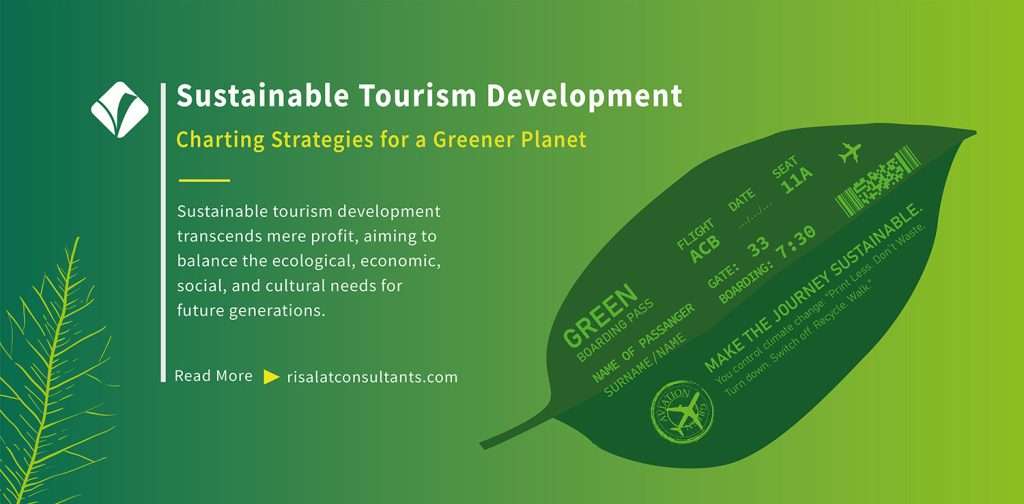
Tourism, when developed responsibly, possesses the capacity to foster economic growth, cultural preservation, and environmental conservation. This sector has been identified as a crucial driver for global sustainability. Positioning green tourism at its core not only echoes the global urgency to meet the Sustainable Development Goals (SDGs) by 2030 but also ensures the long-term viability of both natural and cultural heritage. As such, sustainable tourism development transcends mere profit, aiming to balance the ecological, economic, social, and cultural needs for future generations.
In light of the importance of sustainable tourism development, ecotourism emerges as a pivotal component, underscoring a multisectoral approach that encompasses sustainable tourism planning, community involvement, and tourism governance. This article elucidates the role of sustainable tourism technology, the construction of sustainable tourism infrastructure, and the necessity for a comprehensive understanding of the importance of sustainable tourism development.
Understanding the concept of Sustainable Tourism Development
Sustainable tourism development is a comprehensive approach that considers long-term impacts of tourism on economic, social, and environmental aspects. It requires a delicate balance to ensure that tourism can be conducted indefinitely without depleting the resources it relies upon. This form of tourism not only seeks to minimize its negative impacts but also maximizes the benefits for natural environments and local communities. It involves a triple bottom line approach where environmental sustainability, social and cultural respect, and economic benefits are all integrated. Sustainable tourism thus aims to:
Reduce the environmental footprint by conserving biodiversity, minimizing waste, and managing energy use efficiently.
Uphold and celebrate the socio-cultural authenticity of host communities by preserving their cultural heritage and traditional values.
公平广泛地分配经济效益,提升东道国社区福祉并助力减贫。
For charting a sustainable course, a useful implementation plan should explicitly consider learning outcomes, institutional roles and the time available for implementation. A responsible decision starts by identifying who experiences the problem, who has authority to respond, and what information would change the proposed action. These questions help separate an attractive concept from a feasible intervention.
例如,考虑推出一项新举措的机构,可以先记录现有流程,征求流程使用者的意见,选择一个可控的试点并记录其基线。试点应有明确的负责人、实施时间表、投诉渠道和切合实际的运营预算。评判进展应以实际观察到的结果为依据,而非已举办的会议、研讨会或已发布的公告数量。
Importance for Global Communities
Importance for Global Communities
For global communities, the stakes in sustainable tourism development are high. It represents a strategy to enhance the quality of life for residents while offering enriching experiences to visitors that foster greater understanding and appreciation of diverse cultures and environments. The principles of sustainable tourism encourage:
Resource Efficiency: Utilizing natural, cultural, and human resources in a manner that does not compromise the ability of future generations to meet their own needs.
社区福祉:确保旅游业对接待社区的生活质量产生积极影响,并让其参与决策过程。
Cultural Richness: Protecting and promoting the richness of host communities' cultures, thereby ensuring that tourism does not become a destructive force that dilutes or damages cultural identities.
Implementing sustainable tourism practices involves the active participation of all stakeholders, including tourists, businesses, and government entities, to achieve a consensus on sustainable practices. This collaborative approach ensures that tourism development is aligned with the broader goals of environmental conservation, social equity, and economic viability, creating a sustainable legacy for future generations.
环境完整性
可持续旅游业坚定致力于最大限度地减少其环境足迹,同时提升目的地的自然资源。这一承诺对于确保旅游业发展维持基本的生态过程并帮助保护自然遗产和生物多样性至关重要。对环境完整性的关注包括:
Resource Conservation: Making optimal use of environmental resources crucial for tourism development, while ensuring these practices support ecological balance and biodiversity conservation.
Waste Reduction and Eco-friendly Practices: Encouraging the reduction of waste and the use of sustainable practices across tourism operations to mitigate adverse environmental impacts.
Protection of Natural Habitats: Preserving natural habitats and ensuring that tourism does not disrupt wildlife or lead to habitat loss.
For charting a sustainable course, a useful implementation plan should explicitly consider costs, procurement options, stakeholder incentives and the risks of premature scaling. A responsible decision starts by identifying who experiences the problem, who has authority to respond, and what information would change the proposed action. These questions help separate an attractive concept from a feasible intervention.
例如,考虑推出一项新举措的机构,可以先记录现有流程,征求流程使用者的意见,选择一个可控的试点并记录其基线。试点应有明确的负责人、实施时间表、投诉渠道和切合实际的运营预算。评判进展应以实际观察到的结果为依据,而非已举办的会议、研讨会或已发布的公告数量。
Social Equity
Social Equity
可持续旅游中的社会公平原则确保旅游业的收益在所有社区成员之间广泛且公平地分配。它强调:
Community Involvement and Empowerment: Engaging local communities in tourism planning and decision-making processes, ensuring they have a voice in how tourism is developed and managed in their area.
文化保护:尊重和支持东道社区的真实性和文化遗产,从而促进跨文化理解和宽容。
公平受益:公平分配旅游业的经济效益,提供稳定的就业机会,并加强服务获取,以改善当地居民的生活质量。
经济可行性
可持续旅游还侧重于确保旅游运营在经济上可行,并为目的地的经济繁荣做出积极贡献。这包括:
Long-term Economic Benefits: Ensuring that tourism practices support viable, long-term economic operations that can continue to provide benefits to local communities and stakeholders.
Job Creation and Fair Income Distribution: Creating meaningful employment opportunities that offer fair income and conditions, contributing to poverty alleviation and economic stability.
当地经济投资:鼓励将旅游业收入再投资于当地经济,以支持进一步的发展和可持续发展倡议。
By adhering to these principles, sustainable tourism aims to create a balanced approach that respects the environment, supports social equity, and fosters economic viability, ensuring that tourism development is beneficial not only for today's travelers and host communities but also for future generations.
For charting a sustainable course, a useful implementation plan should explicitly consider quality assurance, privacy or environmental safeguards where relevant, and transparent reporting. A responsible decision starts by identifying who experiences the problem, who has authority to respond, and what information would change the proposed action. These questions help separate an attractive concept from a feasible intervention.
例如,考虑推出一项新举措的机构,可以先记录现有流程,征求流程使用者的意见,选择一个可控的试点并记录其基线。试点应有明确的负责人、实施时间表、投诉渠道和切合实际的运营预算。评判进展应以实际观察到的结果为依据,而非已举办的会议、研讨会或已发布的公告数量。
平衡发展与保护
平衡发展与保护
The intersection of environmental preservation and economic growth forms a significant challenge in sustainable tourism. Protected Areas (PAs) play a crucial role in biodiversity conservation while also serving as a cornerstone for economic development through tourism. However, achieving an equilibrium between these two objectives remains a complex issue, particularly in developing economies where the success of conservation efforts is often directly linked to tourism revenue. The challenge lies in maintaining this balance without compromising the long-term sustainability of natural resources.
Ensuring Community Involvement
The involvement of local communities is fundamental to the sustainable development of the tourism sector. Tourism development often centers around the way of life, environment, culture, and traditions of local communities, making their active participation essential. While tourism can bring economic benefits, these are not always equitably distributed, leading to disparities within the community. Effective community involvement ensures that economic gains are shared more equitably and enhances the long-term prospects of tourism. Moreover, community-led projects and small-scale businesses can significantly improve the quality of life for locals but maintaining a balance between commercial success and preserving the community's character poses a challenge.
For charting a sustainable course, a useful implementation plan should explicitly consider the difference between a pilot that works once and a process that an institution can sustain. A responsible decision starts by identifying who experiences the problem, who has authority to respond, and what information would change the proposed action. These questions help separate an attractive concept from a feasible intervention.
例如,考虑推出一项新举措的机构,可以先记录现有流程,征求流程使用者的意见,选择一个可控的试点并记录其基线。试点应有明确的负责人、实施时间表、投诉渠道和切合实际的运营预算。评判进展应以实际观察到的结果为依据,而非已举办的会议、研讨会或已发布的公告数量。
在公共机构和捐助方资助项目中的应用
Managing Tourist Behavior
Tourist behaviors can have direct negative impacts on local environments and communities, such as trampling of corals and dunes, increased pollution, and habitat destruction. Changing these behaviors requires a nuanced understanding of the drivers behind them and designing targeted interventions. Sustainable tourist behavior involves not only educating tourists about the importance of conservation but also actively engaging them in sustainable practices. Efforts to change tourist behavior should focus on simple messaging, utilizing local champions, and embedding best practices into community norms over time to minimize environmental impacts and optimize benefits for local communities.
Community-Driven Initiatives
Community involvement in sustainable tourism has proven to be a cornerstone for success across various regions. In Yogyakarta, Indonesia, local communities are integral to the management of tourism activities, from providing services to engaging in environmental conservation efforts. This not only fosters a sustainable tourism environment but also enhances the socio-economic standards of the local populace b
For charting a sustainable course, a useful implementation plan should explicitly consider the needs of implementing agencies, suppliers, community representatives and development partners. A responsible decision starts by identifying who experiences the problem, who has authority to respond, and what information would change the proposed action. These questions help separate an attractive concept from a feasible intervention.
例如,考虑推出一项新举措的机构,可以先记录现有流程,征求流程使用者的意见,选择一个可控的试点并记录其基线。试点应有明确的负责人、实施时间表、投诉渠道和切合实际的运营预算。评判进展应以实际观察到的结果为依据,而非已举办的会议、研讨会或已发布的公告数量。
For a ministry or project implementation unit, the practical sequence is to agree the public purpose, map responsibilities across agencies, identify procurement and safeguard requirements, and record the evidence needed for approval. Where a donor finances the work, the project team should use the applicable financing agreement, procurement framework and environmental and social commitments rather than assuming that one generic procedure applies to every project.
设想一个实施期有限、由捐助方资助的假设性项目。项目经理可以委托开展基线评估,邀请当地利益相关方参与制定服务标准,先在少数地点试行拟议干预措施,并在扩大实施前评估其绩效。对支出和成果开展独立审查,可以揭示项目是否惠及预期受益人,以及外部资金结束后实施机构能否继续维持。
实施清单
- 明确所需决策和预期受益人。
- 确认法律、财务和运营方面的约束条件。
- 设定基线和可衡量的指标。
- 指定负责人并建立利益相关方反馈机制。
- 先试点、评估和修订,再扩大规模。
常见问题
主要的实际益处是什么?
它帮助决策者将该主题与明确的需求、切合实际的资源和可观察的成果联系起来。
机构应首先评估什么?
从基线、利益相关方需求、实施职责和适用的法律要求入手。
哪些实施风险值得关注?
关注可负担性、机构能力、包容性、数据质量和持续维护。
如何衡量进展?
使用少量与基线挂钩的指标、用户反馈和定期独立审查。
这如何适用于捐助方资助的项目?
落实项目融资协议以及相关的采购、保障、监测和报告义务。
观看



- UN Tourism UN Tourism
- 开放合同伙伴关系(Open Contracting Partnership) 开放合同伙伴关系(Open Contracting Partnership)
Know people who should read this? Become an Ambassador or write with Risalat.
自2011年以来始终是项目成功的合作伙伴,为政府部委、公共机构和项目团队提供诊断评估、咨询支持与应用型学习。