Points essentiels
- Background and practical significance. Tourism, when developed responsibly, possesses the capacity to foster economic growth, cultural preservation, and environmental conservation.
- Importance pour les communautés mondiales. Pour les communautés mondiales, les enjeux du développement du tourisme durable sont considérables.
- Social Equity. The principle of social equity in sustainable tourism ensures that the benefits of tourism are shared widely and fairly among all community members.
- Balancing Development and Conservation. The intersection of environmental preservation and economic growth forms a significant challenge in sustainable tourism.
- Application for public agencies and donor-funded projects. Tourist behaviors can have direct negative impacts on local environments and communities, such as trampling of corals and dunes, increased pollution, and habitat destruction.
In short: Explore charting a sustainable course with practical examples, implementation risks and clear steps for institutions, public agencies and project teams.
In short: Charting a Sustainable Course requires practical choices about resources, evidence and implementation. This guide explains the main opportunities and constraints, and how organisations can turn the underlying ideas into measurable decisions.
Contexte et portée pratique
Contexte et portée pratique
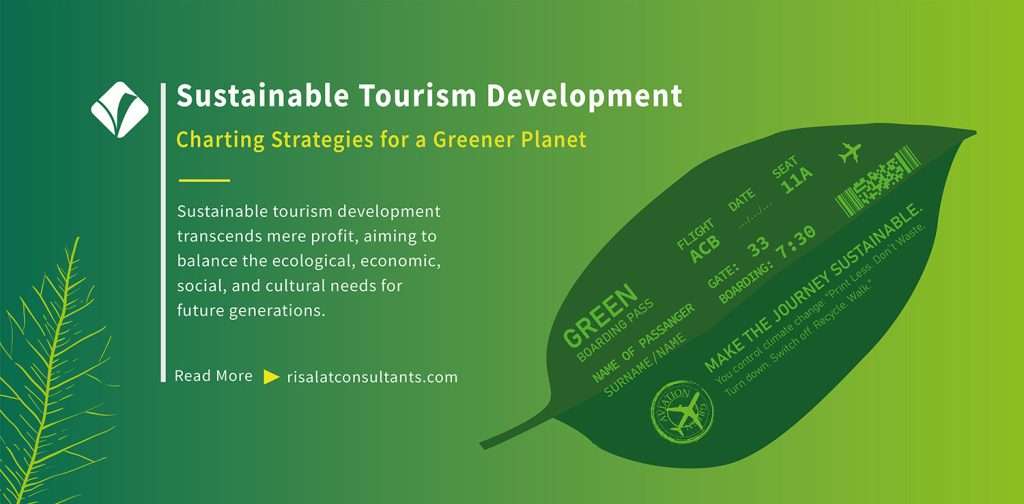
Tourism, when developed responsibly, possesses the capacity to foster economic growth, cultural preservation, and environmental conservation. This sector has been identified as a crucial driver for global sustainability. Positioning green tourism at its core not only echoes the global urgency to meet the Sustainable Development Goals (SDGs) by 2030 but also ensures the long-term viability of both natural and cultural heritage. As such, sustainable tourism development transcends mere profit, aiming to balance the ecological, economic, social, and cultural needs for future generations.
In light of the importance of sustainable tourism development, ecotourism emerges as a pivotal component, underscoring a multisectoral approach that encompasses sustainable tourism planning, community involvement, and tourism governance. This article elucidates the role of sustainable tourism technology, the construction of sustainable tourism infrastructure, and the necessity for a comprehensive understanding of the importance of sustainable tourism development.
Comprendre le concept de développement touristique durable
Sustainable tourism development is a comprehensive approach that considers long-term impacts of tourism on economic, social, and environmental aspects. It requires a delicate balance to ensure that tourism can be conducted indefinitely without depleting the resources it relies upon. This form of tourism not only seeks to minimize its negative impacts but also maximizes the benefits for natural environments and local communities. It involves a triple bottom line approach where environmental sustainability, social and cultural respect, and economic benefits are all integrated. Sustainable tourism thus aims to:
Reduce the environmental footprint by conserving biodiversity, minimizing waste, and managing energy use efficiently.
Uphold and celebrate the socio-cultural authenticity of host communities by preserving their cultural heritage and traditional values.
Distribute economic benefits fairly and widely, enhancing the well-being of host communities and contributing to poverty alleviation.
For charting a sustainable course, a useful implementation plan should explicitly consider learning outcomes, institutional roles and the time available for implementation. A responsible decision starts by identifying who experiences the problem, who has authority to respond, and what information would change the proposed action. These questions help separate an attractive concept from a feasible intervention.
Par exemple, une organisation qui envisage une nouvelle initiative peut documenter le processus existant, consulter les personnes qui l'utilisent, choisir un projet pilote maîtrisable et en établir la situation de référence. Le pilote doit avoir un responsable désigné, un calendrier de mise en œuvre, une voie de réclamation et un budget de fonctionnement réaliste. Les progrès doivent être jugés au regard des résultats observés plutôt que du nombre de réunions, d'ateliers ou d'annonces réalisés.
Importance for Global Communities
Importance for Global Communities
For global communities, the stakes in sustainable tourism development are high. It represents a strategy to enhance the quality of life for residents while offering enriching experiences to visitors that foster greater understanding and appreciation of diverse cultures and environments. The principles of sustainable tourism encourage:
Resource Efficiency: Utilizing natural, cultural, and human resources in a manner that does not compromise the ability of future generations to meet their own needs.
Bien-être communautaire : Veiller à ce que le tourisme contribue positivement à la qualité de vie des communautés d'accueil et les implique dans les processus de prise de décision.
Cultural Richness: Protecting and promoting the richness of host communities' cultures, thereby ensuring that tourism does not become a destructive force that dilutes or damages cultural identities.
Implementing sustainable tourism practices involves the active participation of all stakeholders, including tourists, businesses, and government entities, to achieve a consensus on sustainable practices. This collaborative approach ensures that tourism development is aligned with the broader goals of environmental conservation, social equity, and economic viability, creating a sustainable legacy for future generations.
Environmental Integrity
Sustainable tourism is deeply committed to minimizing its environmental footprint while enhancing the destination's natural resources. This commitment is paramount to ensuring that tourism development maintains essential ecological processes and helps to conserve natural heritage and biodiversity. The focus on environmental integrity involves:
Resource Conservation: Making optimal use of environmental resources crucial for tourism development, while ensuring these practices support ecological balance and biodiversity conservation.
Waste Reduction and Eco-friendly Practices: Encouraging the reduction of waste and the use of sustainable practices across tourism operations to mitigate adverse environmental impacts.
Protection of Natural Habitats: Preserving natural habitats and ensuring that tourism does not disrupt wildlife or lead to habitat loss.
For charting a sustainable course, a useful implementation plan should explicitly consider costs, procurement options, stakeholder incentives and the risks of premature scaling. A responsible decision starts by identifying who experiences the problem, who has authority to respond, and what information would change the proposed action. These questions help separate an attractive concept from a feasible intervention.
Par exemple, une organisation qui envisage une nouvelle initiative peut documenter le processus existant, consulter les personnes qui l'utilisent, choisir un projet pilote maîtrisable et en établir la situation de référence. Le pilote doit avoir un responsable désigné, un calendrier de mise en œuvre, une voie de réclamation et un budget de fonctionnement réaliste. Les progrès doivent être jugés au regard des résultats observés plutôt que du nombre de réunions, d'ateliers ou d'annonces réalisés.
Social Equity
Social Equity
Le principe d'équité sociale dans le tourisme durable garantit que les avantages du tourisme sont partagés largement et équitablement entre tous les membres de la communauté. Il met l'accent sur :
Community Involvement and Empowerment: Engaging local communities in tourism planning and decision-making processes, ensuring they have a voice in how tourism is developed and managed in their area.
Cultural Preservation: Respecting and supporting the authenticity and cultural heritage of host communities, thus contributing to inter-cultural understanding and tolerance.
Equitable Benefits: Distributing the economic benefits of tourism fairly, providing stable employment opportunities, and enhancing service access to improve the quality of life for local residents.
Viabilité économique
Sustainable tourism also focuses on ensuring that tourism operations are economically viable and contribute positively to the economic prosperity of destinations. This involves:
Avantages économiques à long terme : Garantir que les pratiques touristiques soutiennent des opérations économiques viables et à long terme qui peuvent continuer à procurer des avantages aux communautés locales et aux parties prenantes.
Job Creation and Fair Income Distribution: Creating meaningful employment opportunities that offer fair income and conditions, contributing to poverty alleviation and economic stability.
Investment in Local Economies: Encouraging the reinvestment of tourism revenues back into the local economy to support further development and sustainability initiatives.
By adhering to these principles, sustainable tourism aims to create a balanced approach that respects the environment, supports social equity, and fosters economic viability, ensuring that tourism development is beneficial not only for today's travelers and host communities but also for future generations.
For charting a sustainable course, a useful implementation plan should explicitly consider quality assurance, privacy or environmental safeguards where relevant, and transparent reporting. A responsible decision starts by identifying who experiences the problem, who has authority to respond, and what information would change the proposed action. These questions help separate an attractive concept from a feasible intervention.
Par exemple, une organisation qui envisage une nouvelle initiative peut documenter le processus existant, consulter les personnes qui l'utilisent, choisir un projet pilote maîtrisable et en établir la situation de référence. Le pilote doit avoir un responsable désigné, un calendrier de mise en œuvre, une voie de réclamation et un budget de fonctionnement réaliste. Les progrès doivent être jugés au regard des résultats observés plutôt que du nombre de réunions, d'ateliers ou d'annonces réalisés.
Équilibrer développement et conservation
Équilibrer développement et conservation
The intersection of environmental preservation and economic growth forms a significant challenge in sustainable tourism. Protected Areas (PAs) play a crucial role in biodiversity conservation while also serving as a cornerstone for economic development through tourism. However, achieving an equilibrium between these two objectives remains a complex issue, particularly in developing economies where the success of conservation efforts is often directly linked to tourism revenue. The challenge lies in maintaining this balance without compromising the long-term sustainability of natural resources.
Ensuring Community Involvement
The involvement of local communities is fundamental to the sustainable development of the tourism sector. Tourism development often centers around the way of life, environment, culture, and traditions of local communities, making their active participation essential. While tourism can bring economic benefits, these are not always equitably distributed, leading to disparities within the community. Effective community involvement ensures that economic gains are shared more equitably and enhances the long-term prospects of tourism. Moreover, community-led projects and small-scale businesses can significantly improve the quality of life for locals but maintaining a balance between commercial success and preserving the community's character poses a challenge.
For charting a sustainable course, a useful implementation plan should explicitly consider the difference between a pilot that works once and a process that an institution can sustain. A responsible decision starts by identifying who experiences the problem, who has authority to respond, and what information would change the proposed action. These questions help separate an attractive concept from a feasible intervention.
Par exemple, une organisation qui envisage une nouvelle initiative peut documenter le processus existant, consulter les personnes qui l'utilisent, choisir un projet pilote maîtrisable et en établir la situation de référence. Le pilote doit avoir un responsable désigné, un calendrier de mise en œuvre, une voie de réclamation et un budget de fonctionnement réaliste. Les progrès doivent être jugés au regard des résultats observés plutôt que du nombre de réunions, d'ateliers ou d'annonces réalisés.
Application aux organismes publics et aux projets financés par les bailleurs
Managing Tourist Behavior
Tourist behaviors can have direct negative impacts on local environments and communities, such as trampling of corals and dunes, increased pollution, and habitat destruction. Changing these behaviors requires a nuanced understanding of the drivers behind them and designing targeted interventions. Sustainable tourist behavior involves not only educating tourists about the importance of conservation but also actively engaging them in sustainable practices. Efforts to change tourist behavior should focus on simple messaging, utilizing local champions, and embedding best practices into community norms over time to minimize environmental impacts and optimize benefits for local communities.
Community-Driven Initiatives
L'implication communautaire dans le tourisme durable s'est avérée être la pierre angulaire du succès dans diverses régions. À Yogyakarta, en Indonésie, les communautés locales font partie intégrante de la gestion des activités touristiques, de la fourniture de services à l'engagement dans des efforts de conservation de l'environnement. Cela favorise non seulement un environnement touristique durable, mais améliore également les normes socio-économiques de la population locale.
For charting a sustainable course, a useful implementation plan should explicitly consider the needs of implementing agencies, suppliers, community representatives and development partners. A responsible decision starts by identifying who experiences the problem, who has authority to respond, and what information would change the proposed action. These questions help separate an attractive concept from a feasible intervention.
Par exemple, une organisation qui envisage une nouvelle initiative peut documenter le processus existant, consulter les personnes qui l'utilisent, choisir un projet pilote maîtrisable et en établir la situation de référence. Le pilote doit avoir un responsable désigné, un calendrier de mise en œuvre, une voie de réclamation et un budget de fonctionnement réaliste. Les progrès doivent être jugés au regard des résultats observés plutôt que du nombre de réunions, d'ateliers ou d'annonces réalisés.
For a ministry or project implementation unit, the practical sequence is to agree the public purpose, map responsibilities across agencies, identify procurement and safeguard requirements, and record the evidence needed for approval. Where a donor finances the work, the project team should use the applicable financing agreement, procurement framework and environmental and social commitments rather than assuming that one generic procedure applies to every project.
Prenons l'exemple fictif d'un programme financé par un bailleur, avec une période de mise en œuvre limitée. Le chef de projet pourrait commander une évaluation de référence, associer les parties prenantes locales à la définition des normes de service, tester l'intervention proposée sur un petit nombre de sites et évaluer les résultats avant toute extension. Un examen indépendant des dépenses et des résultats permet de vérifier si le programme atteint les bénéficiaires visés et si l'agence d'exécution pourra le maintenir une fois le financement extérieur terminé.
Liste de contrôle de mise en œuvre
- Définir la décision et les bénéficiaires visés.
- Confirmer les contraintes juridiques, financières et opérationnelles.
- Établir une situation de référence et des indicateurs mesurables.
- Désigner des responsables et recueillir l'avis des parties prenantes.
- Piloter, évaluer et ajuster avant de passer à l'échelle.
Questions fréquentes
Quel est le principal avantage pratique ?
Elle aide les décideurs à relier le sujet à des besoins définis, à des ressources réalistes et à des résultats observables.
Que doit évaluer une organisation en premier ?
Commencer par une situation de référence, les besoins des parties prenantes, les responsabilités de mise en œuvre et les exigences juridiques applicables.
Quels risques de mise en œuvre méritent l'attention ?
Être attentif à l'accessibilité financière, à la capacité institutionnelle, à l'inclusion, à la qualité des données et à la maintenance continue.
Comment mesurer les progrès ?
Utiliser un petit nombre d'indicateurs liés à la situation de référence, les retours des usagers et un examen indépendant périodique.
Comment cela s'applique-t-il aux projets financés par les bailleurs ?
Appliquer l'accord de financement du projet et les obligations pertinentes en matière de passation des marchés, de sauvegardes, de suivi et de reporting.
Regarder



- UN Tourism UN Tourism
- Open Contracting Partnership Open Contracting Partnership
Know people who should read this? Become an Ambassador or write with Risalat.
Partenaires de la réussite des projets depuis 2011 : diagnostics, conseil et apprentissage appliqué pour les ministères, les organismes publics et les équipes de projet.
Besoin d'aide pour passer à la pratique ?
Commencez par un diagnostic gratuit de 10 minutes ou échangez avec nos experts.