关键信息
- 日期
- 26–30 Apr 2027 (5 days)
- 地点
- TBD, Copenhagen, Denmark
- 每位学员费用
- £4,650(英镑)
- 付款
- 通过发票和银行转账付款
- 报名截止
- 29 Jan 2027
- 适用对象
- Project implementation unit (PIU) staff; Environmental and social safeguards specialists; Government and public sector officials
- 证书
- 结业证书
- 内训选项
- 按您的日期,为您的团队专场举办
培训项目概述
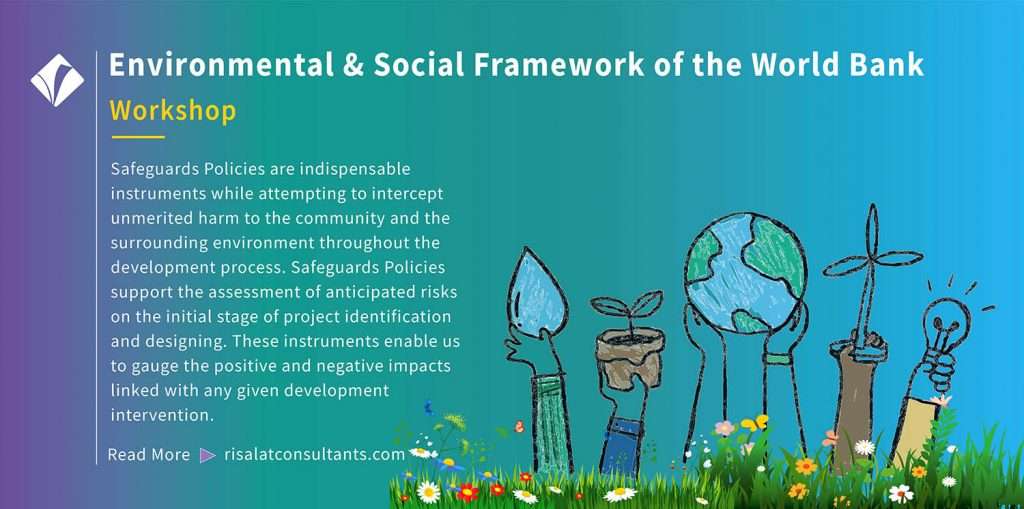
World Bank Environmental and Social Framework (ESF) Training focuses on strengthening the capacity of governments, project implementation units, development partners, and donor-funded project teams to effectively understand, apply, and manage environmental and social risk requirements across World Bank-financed projects.
As development financing increasingly emphasizes sustainability, accountability, and stakeholder protection, organizations implementing infrastructure, public sector, energy, transport, and social development projects must comply with strong environmental and social safeguards. Many institutions face challenges in understanding ESF requirements, managing environmental and social risks, stakeholder engagement, labor standards, land acquisition, community health and safety, and grievance redress systems.
This programme addresses these challenges by equipping participants with practical tools, internationally aligned frameworks, and strategic approaches to implementing the World Bank Environmental and Social Framework (ESF), including approaches applied in practical safeguards implementation frameworks covering risk assessment, compliance monitoring, stakeholder consultation, environmental and social commitment planning, and institutional safeguards management.
Participants will gain hands-on experience in environmental and social risk screening, ESF implementation planning, compliance systems, project monitoring, reporting obligations, and institutional coordination. The programme emphasizes real-world application, enabling participants to strengthen safeguards systems, improve project compliance, and support successful project delivery.
Additionally, strong environmental and social safeguards systems are essential for protecting communities, improving development outcomes, reducing implementation risks, and ensuring compliance with World Bank project financing requirements.
目标学员
This programme is designed for professionals involved in project implementation, safeguards management, compliance, and donor-funded development programmes, including:
- 项目实施单位(PIU)工作人员
- 环境与社会保障专家
- 政府及公共部门官员
- Infrastructure and public works project teams
- 采购与合同管理专业人员
- 发展合作伙伴及捐助方资助项目工作人员
- 监测与评估专业人员
- Compliance officers and risk management teams
- NGOs and social development practitioners
- Consultants working on World Bank-financed projects
勾选您的团队需要具备的能力。
Objectives of World Bank Environmental and Social Framework (ESF) Training
完成培训后,学员将能够:
- Understand the structure and requirements of the World Bank ESF
- Apply Environmental and Social Standards (ESSs) effectively
- Conduct environmental and social risk screening and assessment
- Strengthen stakeholder engagement and consultation systems
- Improve labor management and community health safeguards
- Manage land acquisition, resettlement, and social inclusion requirements
- Strengthen grievance redress mechanisms and accountability systems
- Improve institutional compliance monitoring and reporting
- Align project delivery with donor safeguards requirements
- Develop practical ESF implementation and compliance action plans
World Bank Environmental and Social Framework (ESF) Training Structure & Content
- Introduction to the World Bank Environmental and Social Framework
- Understanding the Environmental and Social Standards (ESSs)
- Institutional responsibilities and borrower obligations
- 环境与社会风险分类
- Principles of proportionality, mitigation, and compliance
- Environmental impact assessment and mitigation planning
- Biodiversity protection and pollution prevention
- Resource efficiency and sustainable project implementation
- Community health and safety requirements
- Climate risk considerations within ESF implementation
- Stakeholder engagement and consultation planning
- Labor management procedures and working conditions
- Land acquisition and involuntary resettlement
- Vulnerable groups and social inclusion strategies
- Community grievance redress mechanisms
- Environmental and social commitment plans (ESCPs)
- Monitoring, supervision, and compliance reporting
- Contractor management and safeguards responsibilities
- Incident reporting and corrective action systems
- Internal controls and institutional accountability mechanisms
- Building institutional safeguards management systems
- Integrating ESF into project governance and procurement
- Strengthening cross-sector coordination and accountability
- Linking safeguards compliance with project performance outcomes
- Developing sustainable environmental and social compliance systems
完整的每日课程内容
First Day | Foundations of the Environmental and Social Framework
- Introduction to the World Bank Environmental and Social Framework
- Understanding the Environmental and Social Standards (ESSs)
- Institutional responsibilities and borrower obligations
- 环境与社会风险分类
- Principles of proportionality, mitigation, and compliance
Exercise: ESF risk identification and screening
Second Day | Environmental Risk Management and Assessment
- Environmental impact assessment and mitigation planning
- Biodiversity protection and pollution prevention
- Resource efficiency and sustainable project implementation
- Community health and safety requirements
- Climate risk considerations within ESF implementation
These systems are closely aligned with sustainable infrastructure and environmental governance frameworks used in major development projects.
Workshop: Environmental safeguards planning
Third Day | Social Risk Management and Stakeholder Engagement
- Stakeholder engagement and consultation planning
- Labor management procedures and working conditions
- Land acquisition and involuntary resettlement
- Vulnerable groups and social inclusion strategies
- Community grievance redress mechanisms
Strong social safeguards systems are further strengthened through effective community development planning and stakeholder coordination approaches, as demonstrated in real-world safeguards workshop experience across donor-funded development projects.
Case Study: Managing stakeholder risks in project implementation
Fourth Day | Institutional Compliance and Monitoring Systems
- Environmental and social commitment plans (ESCPs)
- Monitoring, supervision, and compliance reporting
- Contractor management and safeguards responsibilities
- Incident reporting and corrective action systems
- Internal controls and institutional accountability mechanisms
Modern safeguards systems also require stronger governance, documentation, and compliance oversight to ensure successful project delivery, supported by lessons from practical workshops on environmental and social safeguards across development projects.
Simulation: Compliance monitoring and corrective action response
第五天 | 机构强化与战略整合
- Building institutional safeguards management systems
- Integrating ESF into project governance and procurement
- Strengthening cross-sector coordination and accountability
- Linking safeguards compliance with project performance outcomes
- Developing sustainable environmental and social compliance systems
Capstone Exercise: Institutional ESF implementation strategy
Effective ESF implementation integrates safeguards management, compliance systems, stakeholder engagement, and institutional accountability within project delivery systems.
培训项目方法
This World Bank Environmental and Social Framework (ESF) Training uses an applied, practice-oriented methodology combining expert-led sessions, real-world case studies, simulations, and interactive workshops.
Participants will engage in hands-on exercises focused on environmental risk screening, social safeguards planning, compliance monitoring, stakeholder engagement, and institutional safeguards implementation to ensure direct application within their organizations.
主要学习方法包括:
- Case studies from real World Bank-financed projects
- Practical safeguards planning exercises
- Compliance simulations and risk assessments
- Stakeholder consultation workshops
- Tools, templates, and ESF compliance frameworks
- 同伴学习与机构行动规划环节
Participants leave with practical tools and strategies to strengthen safeguards systems and improve ESF compliance across development projects. Participants can also explore practical implementation examples through this safeguards training video, showcasing real-world safeguards application and institutional learning outcomes.
Expected Outcomes of World Bank Environmental and Social Framework (ESF) Training
Participants will strengthen their ability to manage environmental and social risks and ensure compliance with World Bank safeguards requirements.
他们将能够:
- Improve ESF implementation and compliance systems
- Strengthen safeguards planning and institutional coordination
- Reduce project risks and implementation delays
- Improve stakeholder engagement and grievance management
- Strengthen environmental and social monitoring systems
- Enhance institutional transparency and accountability
- Support successful delivery of donor-funded development projects
每位学员£4,650 · 通过发票和银行转账付款 · 5人及以上团体报名可享优惠
同一机构五人及以上:请在申请发票时索取团体价。
Ten or more: an in-house version for your institution may cost less per person. Ask for an in-house quote.
Registration closes in 88 days (29 Jan 2027)
机构应用
This programme supports organizations in strengthening safeguards systems, improving ESF compliance, and reducing implementation risks across donor-funded and public sector development projects.
Participants will return with practical tools to improve project controls, strengthen safeguards accountability, and support effective environmental and social risk management.
Strong environmental and social compliance systems are essential for safeguarding communities, ensuring regulatory compliance, and delivering sustainable development outcomes.
这些方法通过与国际最佳实践接轨的综合治理、采购、监测和机构绩效体系得到进一步强化。
Regional Relevance & Application of ESF Training
Environmental and social safeguards challenges continue to affect infrastructure investments, public sector programmes, and donor-funded development projects across rapidly developing regions where institutional systems and compliance mechanisms are evolving.
This World Bank Environmental and Social Framework (ESF) Training is highly relevant for professionals working in:
- Africa, where infrastructure expansion and donor-funded projects require strong safeguards compliance and stakeholder protection
- South Asia, where large-scale transport, energy, and public works programmes demand stronger environmental and social risk management
- Southeast Asia, where rapid urbanization and development financing require improved safeguards governance and project accountability
- Middle East, where major infrastructure and development investments require stronger compliance systems and social safeguards implementation
Across these regions, institutions face increasing pressure to improve safeguards compliance, strengthen accountability, and ensure alignment with international development financing standards.
This programme equips participants with practical tools and globally aligned methodologies to improve safeguards implementation, manage environmental and social risks effectively, and strengthen institutional performance across complex project environments.
Host Country Profile – Copenhagen
As one of Europe’s leading cities in sustainable urban development, climate resilience, and inclusive governance, Copenhagen offers valuable exposure to modern approaches in environmental safeguards, stakeholder engagement, social inclusion, and responsible project implementation, supported by real environmental and social safeguards workshop experiences in Copenhagen. Its strong institutional reputation makes it a highly respected destination for executive and government-focused professional training.
Denmark’s emphasis on sustainability, transparency, environmental protection, and social accountability aligns closely with global efforts to strengthen safeguards compliance and responsible development financing across public sector and donor-funded projects, supported by institutions such as State of Green and the Danish Ministry of Environment, which play key roles in advancing sustainable development, environmental governance, and responsible infrastructure planning.
Hosting this programme in Copenhagen allows participants to gain practical insights into international best practices in environmental and social safeguards management while benefiting from a professional, high-level, and sustainability-driven learning environment.
课程成果
学员将获得全面、高品质的体验,助力有效学习、实际应用以及对机构的长期影响。
培训开始前
- Participant Pre-Assessment aligned with ESF and safeguards competencies
- Customized preparatory materials on World Bank safeguards systems
- 免费签证支持与咨询
- 机场接机与欢迎协助
- 培训项目全程住宿(含每日早餐)
- 与学员及Risalat团队共进欢迎交流晚宴
培训期间
- Risalat高管培训礼包,包括:背包、水瓶、咖啡杯、T恤、帽子、护照套、笔、笔记本、冰箱贴及钥匙扣
- 预装培训资料的迷你平板电脑(学员可留存)
- 全面的课程手册与培训资料
- ESF Implementation Toolkit including templates, compliance checklists, stakeholder engagement plans, and safeguards monitoring frameworks
- Sample reporting tools, safeguards dashboards, and compliance tracking templates
- 实践练习、模拟演练与小组研讨
- 培训期间每日提供午餐与茶歇
- 全面使用培训场地设施与学习资源
- 可使用在线学习资料及课后资源
- Field visit (where applicable) to observe safeguards implementation systems
- 城市休闲观光与文化体验
培训结束后
- 结业证书
- Risalat培训项目参与表彰奖
- 培训后支持与跟进指导
- Access to additional tools, templates, and updated safeguards resources
- 培训项目报告与学习总结
Participants will leave equipped with practical tools, strategic frameworks, and applied knowledge to strengthen ESF compliance, improve safeguards systems, reduce project risks, and deliver stronger institutional development outcomes.
如需团体参训、定制化交付或机构合作,请联系Risalat Consultants International预留席位并获取量身定制的培训方案。名额有限,确保学习体验专注而高效。
为何选择在哥本哈根举办本培训项目
选择丹麦哥本哈根举办本培训项目,是因为预期学员前往便利,且当地拥有适合开展实践性、互动式培训的场地。
The World Bank Environmental and Social Framework (ESF) Training programme in April 2027 brings together officials and professionals. Sessions combine short inputs, case studies and group work on participants' own files, and the city's institutions can be added as a study visit on request.
使用免费的签证查询工具确认您是否需要签证,完成报名后即可申请邀请函。
其他城市的同主题培训
- 伊斯坦布尔洪灾重建环境与社会风险管理培训(伊斯坦布尔)
- 具有韧性的公共基础设施修复与土建工程质量管理(楠迪)
- 数字社会保障培训:人工智能赋能的社会保障与综合个案管理(里斯本)
- 道路建设与养护基础培训(河内)
- 气候融资获取与提案编制培训(日内瓦)
- 可持续项目开发的财务管理(悉尼)