关键信息
- 日期
- 2027年2月8–12日(5天)
- 地点
- NH Valencia Center, Valencia, Spain
- 每位学员费用
- £3,950(英镑)
- 付款
- 通过发票和银行转账付款
- 报名截止
- 2026年12月20日
- 形式
- 5-day short course: a practical capacity-building programme for government, NGO and project teams in Valencia
- 证书
- 结业证书
- 内训选项
- 按您的日期,为您的团队专场举办
本页内容15个部分
培训项目概述
Every programme, project and public policy promises change. Knowing whether that change is happening, for whom and at what cost is harder. Many organisations collect data mainly to report upward, while decisions on budgets, priorities and course corrections are made with little evidence. Strategic performance monitoring and evaluation (M&E) closes that gap by linking objectives, indicators, data and decisions in one system.
The reference points have moved. The OECD Development Assistance Committee adopted revised evaluation criteria in December 2019, adding coherence to relevance, effectiveness, efficiency, impact and sustainability. The UN Evaluation Group’s Norms and Standards, updated in 2016, set expectations on independence, utility, credibility and ethics. Financiers such as the World Bank expect a clear results framework with baselines, targets and a monitoring plan for every operation.
Spain offers a timely benchmark. Law 27/2022 institutionalised public policy evaluation in the central administration, and in February 2026 a royal decree approved the statute of the new State Agency for Public Policy Evaluation. The Independent Authority for Fiscal Responsibility (AIReF) is running a multi-year spending review cycle for 2022-2026, and regional authorities such as the Generalitat Valenciana manage EU cohesion programmes under a performance framework with common indicators and published targets.
This five-day programme in Valencia gives managers and M&E professionals a complete, practical toolkit: from theory of change and results frameworks to indicators, data systems, evaluation design, cost-effectiveness and reporting that informs decisions. Real reforms and financed programmes are used as case material throughout.
Risalat Consultants International (RCI) works alongside ministries, agencies, project implementation units and NGOs to build M&E systems that are proportionate, credible and used.
The Programme Strengthens Institutional Capability
- Theory of change and results chain design
- Results frameworks and logical frameworks
- Indicator selection, definitions and reference sheets
- Baselines, milestones and targets
- Data collection planning and quality assurance
- 调查和监测的抽样
- Dashboards and performance reporting
- Evaluation design using the OECD DAC criteria
- Evaluability assessment and evaluation questions
- 成本效益与性价比分析
- Impact evaluation options and their limits
- M&E budgeting and staffing
- Stakeholder participation and accountability
- Evaluation ethics and independence
- Management response and follow-up of recommendations
- 将绩效信息与预算挂钩
Participants work on their own programme or project throughout the week and leave with a draft M&E plan.
The Growing Importance of Strategic Performance Monitoring and Evaluation
Public budgets are under pressure and scrutiny is rising. In Spain, AIReF’s spending review cycle has covered areas such as financial instruments for productive sectors, the minimum income scheme, temporary disability benefits and official development assistance, and in April 2026 the government added employment policies and parts of the 2014-2020 ERDF multi-regional programme. Each review asks the same question managers face: is this spending achieving its objectives efficiently?
EU cohesion policy shows the same shift. For 2021-2027 the Commission sets common output and result indicators, publishes programme targets on its Cohesion Open Data platform and updated its performance guidance in February 2025. The mid-term review regulations adopted in September 2025 allow programmes to redirect funds to new priorities such as housing, water resilience, energy transition and defence, which means indicators, targets and evaluation plans must be revised mid-course.
各机构日益需要具备以下能力的专业人员:
- Building a theory of change that people actually use
- Designing results frameworks with measurable indicators
- Setting realistic baselines, milestones and targets
- Planning data collection, verification and storage
- Producing dashboards that support decisions
- 委托和管理评估
- Applying the OECD DAC criteria in evaluation questions
- Choosing between impact evaluation designs
- Assessing cost-effectiveness and value for money
- Budgeting and staffing an M&E function
- Revising indicators when programmes are reprogrammed
- Writing findings that lead to management action
Strong M&E systems help organisations:
- Detect problems early and correct course
- 将预算分配给行之有效的项目
- Demonstrate results to financiers and citizens
- Meet reporting obligations without duplicating effort
- 从成功与失败中学习
- Improve the quality of new programme design
- Strengthen accountability and trust
- 为审计和支出审查做准备
Good M&E is proportionate. The aim is not more data but better decisions, made at the right time by the people responsible.
Who Should Attend This Strategic Performance M&E Training?
本培训项目适合:
- M&E managers, officers and specialists
- 项目与规划管理人员
- Project implementation unit coordinators
- Planning and strategy directors
- 各部委的绩效与成果官员
- Budget and finance officers working on performance budgeting
- Policy analysts and evaluation unit staff
- EU funds managing authority and intermediate body staff
- Donor and development agency programme staff
- NGO programme and MEAL staff
- 内部审计师和检查员
- Researchers and independent evaluators
- Executive managers who use performance data
Mixed teams of managers, M&E staff and finance officers gain most, because they can agree on one results framework and one reporting cycle.
勾选您的团队需要具备的能力。
Strategic Performance M&E Training Objectives
Upon successful completion of this Strategic Performance M&E Training, participants will be able to:
- Build a theory of change and results chain for a programme or policy
- Design a results framework with clear indicators, baselines and targets
- 编写确保衡量一致性的指标参考表
- Plan data collection, sampling and data quality checks
- 为管理者设计一个简单的绩效仪表板
- Frame evaluation questions using the revised OECD DAC criteria
- Apply the UNEG Norms and Standards to evaluation management
- Compare impact evaluation options under budget, time and data limits
- Assess cost-effectiveness and value for money
- 编制监测评估预算和人员配备计划
- 报告调查结果并追踪管理层回应
Each objective is practised on participants’ own programmes, so tools are tested before they are taken home.
Source: Valencia Plaza, presentation of the ERDF 2021-2027 programme by the Generalitat (March 2023)
1. Which criterion was added when the OECD DAC revised its evaluation criteria in 2019?
The revised criteria adopted by the DAC in December 2019 added coherence to the five existing criteria (OECD, Better Criteria for Better Evaluation).
2. 哪个西班牙机构负责执行2022-2026年支出审查周期?
Spain's Ministry of Finance states that AIReF carries out the 2022-2026 spending review, with Phase III authorised in April 2026.
3. How many general norms do the UNEG Norms and Standards for Evaluation (2016) set out?
The 2016 UNEG document sets ten general norms, such as utility, credibility and independence, plus four institutional norms.
培训项目内容与结构
- Principles of results-based management
- Monitoring, evaluation, review and audit compared
- The project and policy cycle and where M&E fits
- Theory of change: pathways, assumptions and risks
- 结果链:投入、活动、产出、成果、影响
- Logical framework and its limits
- Linking strategic plans to programme results
- From theory of change to results framework
- Selecting indicators: relevance, clarity and cost
- Output, outcome and impact indicators
- Indicator reference sheets and definitions
- Baselines, milestones and targets
- Disaggregation by sex, age, location and disability
- Common indicators in EU cohesion programmes
- Planning data collection: who, what, when and how
- 定量与定性方法
- Administrative data and its quality
- Sampling basics for surveys and monitoring
- 数据质量评估与核查
- 数据收集中的数据保护与道德规范
- Data storage, management and roles
- The revised OECD DAC criteria, including coherence
- UNEG评估规范与标准
- Evaluability assessment and evaluation questions
- 形成性、总结性和实时评估
- Impact evaluation designs and their limits
- Cost-effectiveness and cost-benefit analysis
- Spending reviews: the AIReF approach
- 撰写有人阅读的评估与监测报告
- Presenting data to different audiences
- 管理层回应与跟踪建议
- 将绩效信息与预算挂钩
- Learning reviews and adaptive management
- M&E budgets, staffing and capacity plans
- Participatory and accountability approaches
完整的每日课程内容
The week moves from strategy and design to data, evaluation and use.
- Day 1: results-based management and theory of change
- Day 2: results frameworks and indicators
- Day 3: data systems, sampling and dashboards
- Day 4: evaluation design, criteria and value for money
- Day 5: reporting, use and the M&E plan
完整的每日课程内容
First Day | Results-Based Management and Theory of Change
- Principles of results-based management
- Monitoring, evaluation, review and audit compared
- The project and policy cycle and where M&E fits
- Theory of change: pathways, assumptions and risks
- 结果链:投入、活动、产出、成果、影响
- Logical framework and its limits
- Linking strategic plans to programme results
- Stakeholder mapping for M&E
- Spain’s Law 27/2022 and the new State Evaluation Agency
Workshop: Building a Theory of Change
Participants draft a theory of change for their own programme or policy, showing the pathway from activities to long-term results and the assumptions that must hold. Peers test each pathway for gaps and risks, and the facilitator links the results to the eight-step results framework approach described in World Bank Independent Evaluation Group guidance.
Second Day | Results Frameworks, Indicators and Targets
- From theory of change to results framework
- Selecting indicators: relevance, clarity and cost
- Output, outcome and impact indicators
- Indicator reference sheets and definitions
- Baselines, milestones and targets
- Disaggregation by sex, age, location and disability
- Common indicators in EU cohesion programmes
- Revising indicators after reprogramming
- 避免不良激励和投机博弈
案例研究:瓦伦西亚自治区欧洲区域发展基金项目中的指标
Using the public programme for the Comunitat Valenciana ERDF 2021-2027, with more than EUR 1.19 billion across digital transition, energy efficiency and social inclusion, teams examine how priorities connect to indicators and targets. They then consider what would need to change if funds were moved to new priorities under the 2025 mid-term review.
Third Day | Data Systems, Sampling and Dashboards
- Planning data collection: who, what, when and how
- 定量与定性方法
- Administrative data and its quality
- Sampling basics for surveys and monitoring
- 数据质量评估与核查
- 数据收集中的数据保护与道德规范
- Data storage, management and roles
- Designing dashboards for decision-makers
- Using open data and published targets
Workshop: Designing a Performance Dashboard
Teams build a one-page dashboard for a senior management meeting using a set of programme indicators. They choose what to show, set traffic-light thresholds, add short narrative explanations and test whether a director could make a decision from the page in five minutes. Each team also lists the data quality checks behind every figure.
Fourth Day | Evaluation Design, Criteria and Value for Money
- The revised OECD DAC criteria, including coherence
- UNEG评估规范与标准
- Evaluability assessment and evaluation questions
- 形成性、总结性和实时评估
- Impact evaluation designs and their limits
- Cost-effectiveness and cost-benefit analysis
- Spending reviews: the AIReF approach
- Commissioning and managing external evaluators
- Ethics, independence and minimising bias
Case Study: Spending Review and Evaluation in Spain
Drawing on Spain’s 2022-2026 spending review cycle run by AIReF and the evaluation duties set by Law 27/2022, teams design evaluation questions for a public spending area of their choice. They map each question to the DAC criteria, select a feasible method and estimate what the evaluation would cost and how long it would take.
Fifth Day | Reporting, Learning and the M&E Plan
- 撰写有人阅读的评估与监测报告
- Presenting data to different audiences
- 管理层回应与跟踪建议
- 将绩效信息与预算挂钩
- Learning reviews and adaptive management
- M&E budgets, staffing and capacity plans
- Participatory and accountability approaches
- Recovery and reconstruction monitoring: lessons from Valencia
- Capstone presentations and action planning
Capstone Exercise: A Complete M&E Plan
Each participant or team presents an M&E plan for their own programme: theory of change, results framework, three indicator reference sheets, a data collection plan, a dashboard mock-up, an evaluation plan and an M&E budget. Peers and the facilitator review each plan against the UNEG Norms and the DAC criteria, and participants leave with a revised version.
Strategic Performance M&E Training Methodology
The programme is applied and evidence-based. Short inputs are followed by exercises on participants’ own programmes, using real reforms and financed programmes as reference cases.
本培训项目融合了:
- 简短的专家讲解
- Work on participants’ own programmes
- 西班牙与欧盟改革案例研究
- Group exercises on theory of change and indicators
- Spreadsheet exercises on targets and cost-effectiveness
- Dashboard design practice
- Peer review of results frameworks
- Evaluation design simulations
- Templates and checklists for immediate use
- Daily feedback and reflection
- 为学员所在机构制定行动计划
Before the programme, participants can complete RCI’s free M&E and MEAL Assessment to benchmark their current system. The results help facilitators adapt examples to the group.
- 投入
- 活动
- 产出
- 成果
- 影响
预期成果
Upon completion of this Strategic Performance M&E Training, participants will be able to:
- Lead the design of a theory of change and results framework
- Define indicators that can be measured consistently
- Plan data collection and quality assurance
- Present performance information in a clear dashboard
- Commission and manage evaluations to recognised standards
- Assess value for money using simple cost-effectiveness tools
- Budget and staff an M&E function realistically
- Turn findings into management action
- 实施监测评估改进计划
这些成果有助于机构更好地利用公共和捐赠资金,并满怀信心地报告结果。
每位学员£3,950 · 发票与银行转账 · 5人及以上团体可享折扣
同一机构五人及以上:请在申请发票时索取团体价。
Ten or more: an in-house version for your institution may cost less per person. Ask for an in-house quote.
注册截止时间为 28天后(2026年12月20日)
Institutional Application of Strategic Performance M&E Training
本培训项目帮助机构加强:
- Results-based planning and budgeting
- Theories of change for strategies and programmes
- Results frameworks and indicator systems
- Data quality and management
- Performance dashboards and reporting cycles
- Evaluation policies and plans
- Evaluation commissioning and quality assurance
- Management response systems
- Value-for-money assessment
- M&E staffing, budgets and roles
- Stakeholder participation and accountability
学员将带着实用工具回到工作岗位,以提升:
- Theory of change template
- Results framework matrix
- Indicator reference sheet
- Data collection and sampling plan
- Data quality checklist
- Dashboard template
- Evaluation terms of reference outline
- M&E budget template
- Management response tracker
For a wider view of delivery risks, organisations can combine the programme with RCI’s Project Health Check, which reviews schedule, budget, procurement and results performance together.
区域相关性与应用
欧洲
EU member states manage 2021-2027 cohesion programmes under a performance framework with common indicators, and the 2025 mid-term review requires many programmes to revise priorities and targets. Spain’s new evaluation agency and AIReF spending reviews give European participants a practical comparison.
非洲
Ministries and project implementation units in Africa manage World Bank, AfDB and other financed operations that require results frameworks, regular progress reports and independent evaluations. The sessions on indicators, data quality and M&E budgeting address common reporting gaps.
中东
Governments in the Middle East are linking national visions and strategies to performance targets and dashboards. The programme helps teams connect strategic goals to measurable programme results.
亚洲
Asian governments and development partners increasingly use results-based financing and performance budgeting, which depend on reliable indicators and verification. The data quality and value-for-money sessions apply directly.
拉丁美洲
Latin American countries have long experience with national evaluation systems and performance budgeting. Participants can compare these with Spain’s newer evaluation agency and the EU approach.
跨区域适用相同的原则:清晰的逻辑、少而精的良好指标、可靠的数据以及人们会实际使用的评估。
东道国概况:西班牙
西班牙是一个议会制君主国,也是欧元区的创始成员国,由17个自治区和2个自治市组成。瓦伦西亚是其第三大城市,将历史中心与现代会议设施、便利的交通以及地中海气候融为一体,是一个舒适的学习场所。
Spain is a useful benchmark for strategic M&E. Law 27/2022 institutionalised policy evaluation in the central administration, and the statute of the State Agency for Public Policy Evaluation, in force since February 2026, gives it duties on methodology, ex ante evaluation, strategic evaluation plans and training. AIReF’s spending reviews link evaluation to budget decisions. In the Comunitat Valenciana, the Generalitat manages an ERDF programme of more than EUR 1.19 billion for 2021-2027 with a published evaluation plan, and the region is recovering from the October 2024 floods with support that includes EUR 846 million from the EU Solidarity Fund approved in June 2026, which raises practical questions about tracking reconstruction results.
瓦伦西亚机场和高铁将该市与马德里、巴塞罗那及许多欧洲城市连接起来。西班牙执行申根签证规则:许多国籍的旅客可以免签短期访问,而其他人则需要提前从西班牙领事馆获得申根签证。RCI为已注册的参与者提供邀请函和签证咨询。
战略绩效监测与评估(M&E)培训成果
Every deliverable supports the participant’s own M&E plan, so that the work started in Valencia continues after the programme.
培训开始前
- 学员课前评估
- M&E Readiness Assessment
- M&E Resource Pack
- 课前阅读资料
- 免费签证支持与咨询
培训期间
- 机场接机与欢迎协助
- Accommodation with breakfast: 6 nights, check-in Sunday 7 February 2027, check-out Saturday 13 February 2027 (one night before and one night after the programme)
- 欢迎交流晚宴
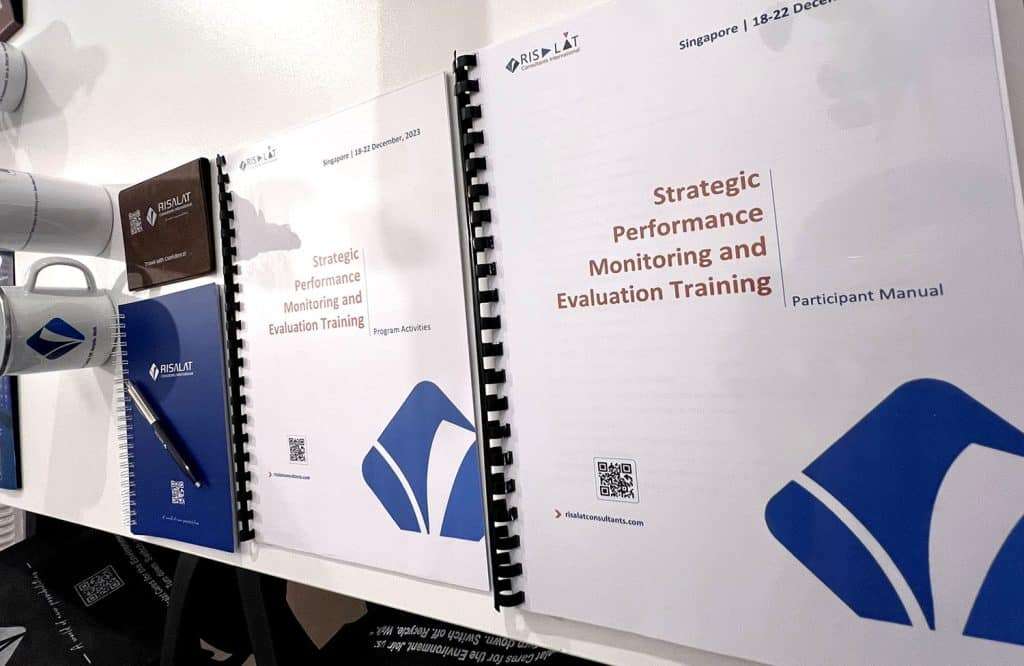
- Risalat培训礼包(背包、水瓶、马克杯、T恤、帽子、护照套、笔、笔记本、冰箱贴及钥匙扣)
- Comprehensive M&E Training Manual
- 变革理论模板
- Results Framework Matrix
- 指标参考表模板
- 数据质量检查清单
- 绩效仪表板模板
- Evaluation Terms of Reference Outline
- M&E Budget Template
- 实践研讨与模拟演练
- 小组讨论与同伴学习
- 每日午餐与茶歇
- 全面使用培训场地设施
- 装有数字学习资料的迷你平板电脑
- 实地考察(如适用)
- 城市休闲观光
培训结束后
- 结业证书
- Risalat培训项目参与表彰奖
- 培训后参考资料
- Draft M&E Plan for the Participant’s Programme
- 管理回应跟踪器
- Summary of OECD DAC Criteria and UNEG Norms
- 培训后支持与跟进指导
- 培训项目报告
各部委、机构、项目执行单位和非政府组织可以申请定制提案,以获得针对其项目、供资方要求和报告系统进行调整的该项目内部培训版本。
Common Challenges in Strategic Performance Monitoring and Evaluation, And How This Training Helps
How can we stop M&E from becoming a reporting exercise only?
第一天通过基于结果的管理和变革理论将监测与评估与决策联系起来,第五天则建立管理响应,以使调查结果转化为行动。
How do we choose indicators that are meaningful and measurable?
The Second Day covers indicator selection, reference sheets, baselines and targets, using the EU common indicator approach and participants’ own programmes.
How can we trust the data we report?
Data quality assessment, verification and data management roles are covered on the Third Day, with a checklist participants can apply immediately.
How do we present performance information that managers actually use?
The Third Day dashboard workshop tests whether a director can make a decision from one page in five minutes.
How can we evaluate with a limited budget and limited data?
The Fourth Day compares evaluation designs against budget, time and data limits, and shows how evaluability assessment avoids costly evaluations that cannot answer their questions.
How do we show value for money?
Cost-effectiveness and cost-benefit tools are practised on the Fourth Day, with Spain’s spending reviews as a reference for linking evaluation to budget decisions.
How should indicators change when a programme is reprogrammed?
关于欧盟凝聚力政策和2025年中期审查的第二天案例研究展示了如何在不丢失结果逻辑的情况下修改目标。
How do we resource the M&E function?
The Fifth Day covers M&E budgets, staffing and capacity plans, and the capstone includes a costed plan for each participant’s programme.
常见问题
Who should attend this M&E training?
M&E managers and officers, project and programme managers, PIU coordinators, planning and budget officers, EU funds staff, NGO MEAL staff and evaluators.
本培训项目采用哪些框架?
The revised OECD DAC evaluation criteria adopted in 2019, the UNEG Norms and Standards for Evaluation (2016), World Bank results framework guidance and the EU cohesion policy performance framework.
为什么该项目在瓦伦西亚举行?
Spain has institutionalised policy evaluation through Law 27/2022 and a new State Evaluation Agency, AIReF runs spending reviews, and the Comunitat Valenciana manages a large ERDF programme, so participants see these systems at work.
Will we work on our own programmes?
Yes. Participants apply each tool to their own programme or project and leave with a draft M&E plan, including a results framework, dashboard and evaluation plan.
本培训项目能否以内训形式举办?
Yes. Institutions can request a tailored version adapted to their programmes, financier requirements and reporting systems.
Who Will Deliver This Programme
Each date is delivered by a team assigned from Risalat's expert network for this subject. For this programme we assign:
How we choose them: Experience in the region of the participants or comparable settings; Command of the financier rules that apply (World Bank, ADB, AfDB, EU, UN) where relevant; Delivery in English; other languages on request for in-house groups; No conflict of interest with participants' institutions.
Training courses in ValenciaM&E & Performance Management training courses
Why Valencia for this programme
Valencia, Spain, was chosen for this programme because it is easy to reach for the participants we expect and has suitable venues for practical, interactive training.
The Strategic Performance Monitoring & Evaluation Training in Valencia programme in February 2027 brings together officials and professionals. Sessions combine short inputs, case studies and group work on participants' own files, and the city's institutions can be added as a study visit on request.
使用免费的签证查询工具确认您是否需要签证,完成报名后即可申请邀请函。
其他城市的同主题培训
- Mini Degree in Environmental and Social Safeguards in Istanbul (Istanbul)
- Digital Government and Citizen e-Services Training for North African Officials in Sliema (Sliema)
- Mini Degree in Leadership and Public Policy in London (London)
- Digital Government and Citizen e-Services Training for North African Officials in St Julian’s (St Julian's)
- Mini Degree in Digital Government and AI in Tallinn (Tallinn)
- Mini Degree in Donor-Funded Project Management in Dubai (Dubai)
For teams and institutions
Bring your team
Teams that learn together apply more at work. Tell us how many people and how you would like to take part: we reply with a group quote within two working days.
Watch: this programme in short



该主题的其他日期和城市:监测与评估培训课程(59 个即将到来的日期)。
在路线图中规划此项目:为什么重要、为什么要批准它、要计划的日期以及它所构建的职业生涯。