Key facts
- Dates
- 19–28 Apr 2027 (10 days)
- Where
- London, United Kingdom
- Fee per participant
- £4,950 (GBP)
- Payment
- By invoice and bank transfer
- Registration closes
- 10 Mar 2027
- Format
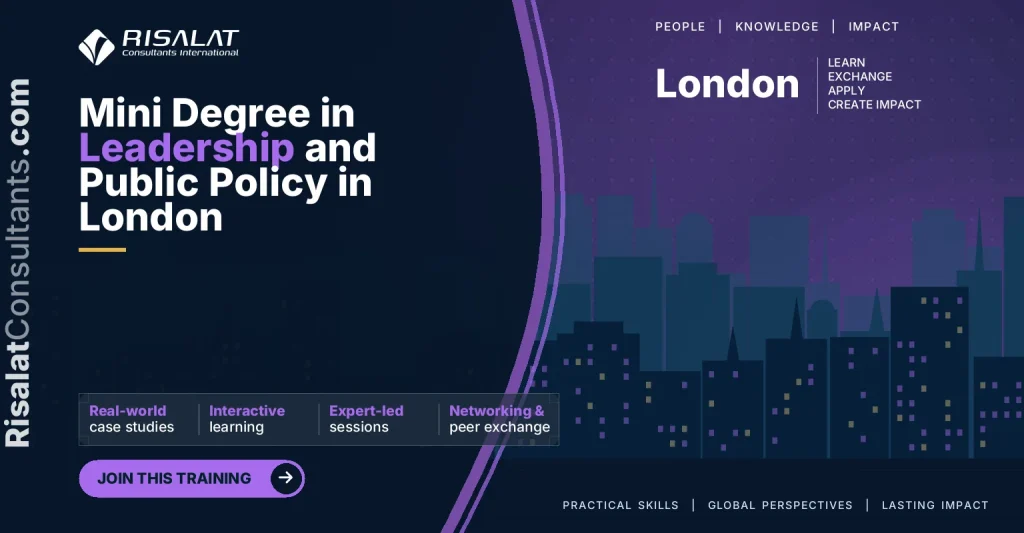
- 10-day intensive programme (mini degree): a practical capacity-building programme for government, NGO and project teams in London
- Certificate
- Certificate of completion
- In-house option
- Run it for your team, on your dates
On this page 16 sections
About this mini degree: a ten-day intensive programme that combines two related short courses into one complete track, with more practice and a capstone exercise. Participants receive a Risalat certificate of completion; a mini degree is a professional programme, not an academic degree.
Programme Overview
The Mini Degree in Leadership and Public Policy in London provides a rigorous, practical curriculum designed for officials and project teams operating in complex governance environments. Held over ten consecutive days, this executive development programme combines advanced policy analysis with strategic leadership techniques. Participants unpack the structural realities of public administration, exploring how policy design interacts with institutional culture, fiscal constraints, and stakeholder pressures in public services and international development initiatives.
This intensive course integrates two interconnected short courses into a cohesive, practice-led journey. Rather than isolating technical policy formulation from people management, the curriculum examines strategic leadership, institutional change management, structured negotiation, and high-performance team leadership. Through applied case work and continuous peer review, participants assess how decisions move from political intent into administrative action, ensuring public programmes remain viable, accountable, and responsive to the citizens they serve.
Delivered in London, the course offers a neutral platform for mid-career and senior professionals to examine international best practice and reform models. The programme concludes with a comprehensive capstone exercise, where multidisciplinary teams synthesise their learning to resolve a live policy challenge. Upon successful completion, participants receive an official Risalat certificate of completion, verifying their professional mastery across the complete public policy and leadership cycle.
Public sector institutions and donor-financed operations face rising demand for end-to-end policy execution amid tighter fiscal envelopes and heightened scrutiny from international development partners. Sector ministries, project implementation units, and regulatory bodies frequently struggle with fragmented capacity, where policy specialists lack change leadership skills and operational managers lack policy design tools. Rather than dispatching personnel to disparate seminars, public bodies require integrated professional development that links policy appraisal directly to institutional delivery, cross-sector negotiation, and programme governance under prevailing international standards.
Delivered by Risalat Consultants International in London, United Kingdom, it combines expert-led sessions, real cases and group work, so that participants can apply what they learn in their own institution.
The Programme Strengthens Institutional Capability
- Welcome, programme framework, and individual diagnostic assessment of leadership challenges
- The public policy cycle: Agenda setting, policy formulation, decision-making, and implementation
- Strategic public leadership: Distinguishing technical management from adaptive leadership in government
- Institutional context: Navigating political mandates, administrative processes, and public value creation
- Group case study: Deconstructing a systemic policy failure in a national ministry
- Appraising evidence: Quantitative, qualitative, and administrative data in policy formulation
- Problem definition and root cause analysis using logic frameworks and problem trees
- Regulatory Impact Assessment (RIA): Principles, methodologies, and international good practice
- Strategic thinking and direction setting
- Leading and developing teams
- Decision making and problem solving
- Communication and influence
It is designed for directors, deputy directors, and senior civil servants in national ministries and provincial departments, project directors and managers within donor-funded project implementation units (PIUs), policy analysts, legal advisers, and strategic planners in government ministries and municipal agencies and others who want practical, current skills in leadership, management and communication.
The Growing Importance of Mini Degree in Leadership and Public Policy in London
Institutions change faster than ever: new policies, technologies and expectations from citizens and partners. Leaders and managers who can set direction, build teams and manage change make the difference between plans and results.
Strong leadership is a set of practical skills: deciding, communicating, negotiating, developing people and leading change. These skills can be learnt and improved with practice and feedback.
Organisations increasingly require professionals capable of:
- Set clear direction and priorities
- Lead and motivate teams through change
- Communicate and negotiate effectively
- Manage performance fairly
- Make sound decisions under pressure
Strong leadership, management and communication systems help organisations:
- Turn strategies into results
- Build motivated, capable teams
- Manage change with less resistance
- Improve relations with partners and stakeholders
This Mini Degree in Leadership and Public Policy in London programme brings these elements together in a practical format, so that participants understand not only what good practice looks like but also how to introduce it in their own setting, with the people and resources they have.
Who Should Attend This Mini Degree in Leadership and Public Policy in London Training?
This programme is designed for:
- Directors, deputy directors, and senior civil servants in national ministries and provincial departments
- Project directors and managers within donor-funded project implementation units (PIUs)
- Policy analysts, legal advisers, and strategic planners in government ministries and municipal agencies
- Senior officials from independent regulatory bodies, commissions, and state-owned enterprises
- Programme managers and technical specialists working on multilateral development bank portfolios
- Monitoring, evaluation, and policy implementation officers in the public sector
- Professionals transitioning from technical specialist roles into public leadership positions
- Advisers and public affairs managers responsible for cross-government policy coordination
- Team leaders managing donor-funded governance, capacity-building, and social sector reforms
- Directors and senior managers
- Heads of department and unit
- Middle managers and team leaders
The programme suits experienced professionals as well as those moving into new responsibilities. Groups that mix institutions and countries are encouraged, because participants learn a great deal from each other’s experience.
Tick what your team needs to be able to do.
Mini Degree in Leadership and Public Policy in London Training Objectives
Upon successful completion of this Mini Degree in Leadership and Public Policy in London Training, participants will be able to:
- Analyse public policy challenges using established policy cycle models, regulatory impact assessment tools, and evidence appraisal frameworks
- Formulate robust, bankable policy options aligned with national development objectives and international development partner guidelines
- Apply strategic leadership techniques to align institutional structures, civil service cultures, and multi-agency stakeholder coalitions
- Design institutional change management strategies using structured diagnostic models to overcome implementation resistance in public bodies
- Conduct multilateral and multi-stakeholder public sector negotiations using principled negotiation frameworks to secure cross-sectoral consensus
- Direct cross-functional delivery teams and Project Implementation Units using modern public governance and accountability standards
- Produce an integrated policy execution and leadership action plan through a comprehensive capstone simulation
- Explain current approaches to leadership in public and private institutions
- Set direction and priorities for their team
- Lead, motivate and develop people
Each objective is practised during the programme through exercises, cases or group work, so that participants leave able to do it, not only to describe it.
Programme Contents and Structure
- Welcome, programme framework, and individual diagnostic assessment of leadership challenges
- The public policy cycle: Agenda setting, policy formulation, decision-making, and implementation
- Strategic public leadership: Distinguishing technical management from adaptive leadership in government
- Institutional context: Navigating political mandates, administrative processes, and public value creation
- Group case study: Deconstructing a systemic policy failure in a national ministry
- Appraising evidence: Quantitative, qualitative, and administrative data in policy formulation
- Problem definition and root cause analysis using logic frameworks and problem trees
- Regulatory Impact Assessment (RIA): Principles, methodologies, and international good practice
- Cost-benefit analysis, cost-effectiveness analysis, and multi-criteria decision analysis in government
- Practical exercise: Drafting an initial policy brief and evidence appraisal memo
- Typologies of policy instruments: Regulation, market-based incentives, information, and direct provision
- Linking policy design to public expenditure: Medium-Term Expenditure Frameworks (MTEF) and national budgets
- Public-private partnerships and public procurement governance in major policy interventions
- Anticipating implementation deficits: Forward-mapping and backward-mapping delivery models
- Simulation: Aligning policy mandates with ministerial budget envelopes and donor financing
- Change dynamics in the public sector: Applying Kotter and Lewin models to bureaucratic institutions
- Diagnosing organisational culture, administrative inertia, and political economy constraints
- Strategic communication and public messaging: Building internal and external reform coalitions
- Managing resistance: Behavioural insights and incentives for sustainable civil service reform
- Case clinic: Developing a change architecture for an administrative restructuring initiative
- Building, motivating, and sustaining multidisciplinary teams in Project Implementation Units
- Public sector integrity, anti-corruption safeguards, and administrative law principles
- Accountability mechanisms: Parliamentary scrutiny, supreme audit institutions, and citizen engagement
- Talent management and succession planning in public sector agencies
- Team exercise: Resolving complex ethical dilemmas under statutory and donor compliance pressures
- Briefing: Institutional frameworks, statutory bodies, and municipal governance in London
- Field visit: Observing urban policy coordination and multi-agency public service hubs
- Interactive session with experienced public governance practitioners on delivery realities
- Structured walk-through of public sector asset management and community-level services
- Plenary debrief: Comparing UK administrative approaches with international operating environments
- Principles of crisis leadership and emergency decision-making in public institutions
- Public risk appraisal: Risk registers, scenario planning, and business continuity in government
- Collaborative problem-solving: Navigating unexpected fiscal shocks and operational crises
- Reputational management, media handling, and crisis communications during public scrutiny
- Applied simulation: Managing an inter-agency crisis under severe time and information constraints
- Principled negotiation: Applying the Harvard framework to inter-ministerial policy disputes
- Stakeholder mapping and power-interest matrices for complex reform initiatives
- Cross-boundary collaboration: Negotiating between central ministries, sub-national bodies, and donors
- Public consultations: Managing civil society, private sector, and media expectations
- Negotiation simulation: Multi-party dispute over resource allocation and policy trade-offs
- Theory of Change and Results-Based Management (RBM) frameworks in public programmes
- Developing meaningful key performance indicators for policy outcomes versus operational outputs
- Evaluation methodologies: Mid-term reviews, impact assessments, and independent evaluations
- Data governance, reporting standards, and accountability to international development partners
- Capstone prep: Reviewing team action plans and peer challenge panels
- Capstone challenge launch: Finalising multi-sector policy and leadership reform strategies
- Team presentations: Pitching comprehensive policy, implementation, and change action plans
- Panel critique and peer evaluation: Assessing viability, governance, and institutional design
- Personal development commitments: Translating programme learning into institutional action
- Awarding of Risalat certificates of completion and formal programme close
Full day-by-day contents
The programme runs over 10 days. Each day combines expert input, practical work and a closing workshop or case study:
- First Day: Day 1: Foundations of Strategic Leadership and the Public Policy Cycle
- Second Day: Day 2: Evidence-Based Policy Formulation and Regulatory Impact Assessment
- Third Day: Day 3: Policy Instruments, Financing Models, and Implementation Planning
- Fourth Day: Day 4: Leading Institutional Change and Organisational Transformation
- Fifth Day: Day 5: High-Performance Teams, Governance, and Ethical Decision-Making
- Sixth Day: Day 6: Study Visit and Field Immersion: Governance and Public Delivery in London
- Seventh Day: Day 7: Applied Workshop: Crisis Leadership, Resilience, and Risk Management
- Eighth Day: Day 8: Public Sector Negotiation, Consensus Building, and Stakeholder Management
- Ninth Day: Day 9: Monitoring, Evaluation, and Adaptive Management for Policy Impact
- Tenth Day: Day 10: Capstone Exercise, Strategic Presentations, and Action Planning
Full day-by-day contents
First Day | Day 1: Foundations of Strategic Leadership and the Public Policy Cycle
- Welcome, programme framework, and individual diagnostic assessment of leadership challenges
- The public policy cycle: Agenda setting, policy formulation, decision-making, and implementation
- Strategic public leadership: Distinguishing technical management from adaptive leadership in government
- Institutional context: Navigating political mandates, administrative processes, and public value creation
- Group case study: Deconstructing a systemic policy failure in a national ministry
Workshop: Day 1: Foundations of Strategic Leadership and the Public Policy Cycle: Applying It to Your Institution
Working in small groups, participants apply the day's methods to examples from their own institutions and agree practical next steps.
Second Day | Day 2: Evidence-Based Policy Formulation and Regulatory Impact Assessment
- Appraising evidence: Quantitative, qualitative, and administrative data in policy formulation
- Problem definition and root cause analysis using logic frameworks and problem trees
- Regulatory Impact Assessment (RIA): Principles, methodologies, and international good practice
- Cost-benefit analysis, cost-effectiveness analysis, and multi-criteria decision analysis in government
- Practical exercise: Drafting an initial policy brief and evidence appraisal memo
Workshop: Day 2: Evidence-Based Policy Formulation and Regulatory Impact Assessment: Applying It to Your Institution
Working in small groups, participants apply the day's methods to examples from their own institutions and agree practical next steps.
Third Day | Day 3: Policy Instruments, Financing Models, and Implementation Planning
- Typologies of policy instruments: Regulation, market-based incentives, information, and direct provision
- Linking policy design to public expenditure: Medium-Term Expenditure Frameworks (MTEF) and national budgets
- Public-private partnerships and public procurement governance in major policy interventions
- Anticipating implementation deficits: Forward-mapping and backward-mapping delivery models
- Simulation: Aligning policy mandates with ministerial budget envelopes and donor financing
Case Study: Day 3: Policy Instruments, Financing Models, and Implementation Planning in Practice
Participants analyse a realistic case, compare the choices made with good practice and draw lessons they can use in their own setting.
Fourth Day | Day 4: Leading Institutional Change and Organisational Transformation
- Change dynamics in the public sector: Applying Kotter and Lewin models to bureaucratic institutions
- Diagnosing organisational culture, administrative inertia, and political economy constraints
- Strategic communication and public messaging: Building internal and external reform coalitions
- Managing resistance: Behavioural insights and incentives for sustainable civil service reform
- Case clinic: Developing a change architecture for an administrative restructuring initiative
Workshop: Day 4: Leading Institutional Change and Organisational Transformation: Applying It to Your Institution
Working in small groups, participants apply the day's methods to examples from their own institutions and agree practical next steps.
Fifth Day | Day 5: High-Performance Teams, Governance, and Ethical Decision-Making
- Building, motivating, and sustaining multidisciplinary teams in Project Implementation Units
- Public sector integrity, anti-corruption safeguards, and administrative law principles
- Accountability mechanisms: Parliamentary scrutiny, supreme audit institutions, and citizen engagement
- Talent management and succession planning in public sector agencies
- Team exercise: Resolving complex ethical dilemmas under statutory and donor compliance pressures
Workshop: Day 5: High-Performance Teams, Governance, and Ethical Decision-Making: Applying It to Your Institution
Working in small groups, participants apply the day's methods to examples from their own institutions and agree practical next steps.
Sixth Day | Day 6: Study Visit and Field Immersion: Governance and Public Delivery in London
- Briefing: Institutional frameworks, statutory bodies, and municipal governance in London
- Field visit: Observing urban policy coordination and multi-agency public service hubs
- Interactive session with experienced public governance practitioners on delivery realities
- Structured walk-through of public sector asset management and community-level services
- Plenary debrief: Comparing UK administrative approaches with international operating environments
Case Study: Day 6: Study Visit and Field Immersion: Governance and Public Delivery in London in Practice
Participants analyse a realistic case, compare the choices made with good practice and draw lessons they can use in their own setting.
Seventh Day | Day 7: Applied Workshop: Crisis Leadership, Resilience, and Risk Management
- Principles of crisis leadership and emergency decision-making in public institutions
- Public risk appraisal: Risk registers, scenario planning, and business continuity in government
- Collaborative problem-solving: Navigating unexpected fiscal shocks and operational crises
- Reputational management, media handling, and crisis communications during public scrutiny
- Applied simulation: Managing an inter-agency crisis under severe time and information constraints
Workshop: Day 7: Applied Workshop: Crisis Leadership, Resilience, and Risk Management: Applying It to Your Institution
Working in small groups, participants apply the day's methods to examples from their own institutions and agree practical next steps.
Eighth Day | Day 8: Public Sector Negotiation, Consensus Building, and Stakeholder Management
- Principled negotiation: Applying the Harvard framework to inter-ministerial policy disputes
- Stakeholder mapping and power-interest matrices for complex reform initiatives
- Cross-boundary collaboration: Negotiating between central ministries, sub-national bodies, and donors
- Public consultations: Managing civil society, private sector, and media expectations
- Negotiation simulation: Multi-party dispute over resource allocation and policy trade-offs
Workshop: Day 8: Public Sector Negotiation, Consensus Building, and Stakeholder Management: Applying It to Your Institution
Working in small groups, participants apply the day's methods to examples from their own institutions and agree practical next steps.
Ninth Day | Day 9: Monitoring, Evaluation, and Adaptive Management for Policy Impact
- Theory of Change and Results-Based Management (RBM) frameworks in public programmes
- Developing meaningful key performance indicators for policy outcomes versus operational outputs
- Evaluation methodologies: Mid-term reviews, impact assessments, and independent evaluations
- Data governance, reporting standards, and accountability to international development partners
- Capstone prep: Reviewing team action plans and peer challenge panels
Case Study: Day 9: Monitoring, Evaluation, and Adaptive Management for Policy Impact in Practice
Participants analyse a realistic case, compare the choices made with good practice and draw lessons they can use in their own setting.
Tenth Day | Day 10: Capstone Exercise, Strategic Presentations, and Action Planning
- Capstone challenge launch: Finalising multi-sector policy and leadership reform strategies
- Team presentations: Pitching comprehensive policy, implementation, and change action plans
- Panel critique and peer evaluation: Assessing viability, governance, and institutional design
- Personal development commitments: Translating programme learning into institutional action
- Awarding of Risalat certificates of completion and formal programme close
Capstone Exercise: Mini Degree in Leadership and Public Policy in London Action Plan for Your Institution
Participants bring the week together in an action plan for their own institution, with priorities, owners and first steps, and present it for feedback from peers and facilitators.
Mini Degree in Leadership and Public Policy in London Training Methodology
The programme uses an adult-learning approach focused on practical application in public bodies. Delivery blends interactive lectures, real-world case studies, guided simulations, structured group diagnostics, and peer evaluation. Day 6 incorporates an observational study visit in London to benchmark municipal and institutional coordination practices, while Day 7 provides a lighter, hands-on workshop focused on operational resilience. The course culminates on Day 10 with an intensive capstone exercise where interdisciplinary teams formulate, stress-test, and present a complete policy execution and leadership plan to an expert review panel.
The programme combines:
- Expert-led sessions on current practice
- Regional and international case studies
- Group work and practical exercises
- Simulations and role plays where relevant
- Discussion of participants' own challenges
- Peer learning across institutions and countries
- Practical tools and templates to take back to work
- Daily reflection and action planning
Before the programme, a short pre-assessment helps the facilitators understand each participant’s role and priorities, so that examples and exercises can be adjusted to the group. Each day ends with a short reflection in which participants note what they will apply at work.
Expected Outcomes
Upon completion of this Mini Degree in Leadership and Public Policy in London Training, participants will be able to:
- Mastery of the complete public policy cycle from problem diagnosis and regulatory analysis to delivery
- Enhanced strategic leadership competence to guide civil service personnel through structural reforms
- Ability to design robust institutional change programmes that address bureaucratic friction and inertia
- Advanced negotiation capabilities to align competing ministerial, civil society, and donor agendas
- Expertise in establishing results-based monitoring, evaluation, and public accountability systems
- A fully developed institutional action plan tailored to address an operational policy challenge at home
- Set clear direction and priorities
- Lead and develop teams
Participants leave with a personal action plan and practical tools they can use in their institution from the first week back. Institutions that send several participants can use the programme to agree shared methods and templates across teams, which makes improvements easier to sustain.
£4,950 per participant · invoice and bank transfer · groups of 5 or more receive a discount
Five or more from one organisation: ask for the group rate on the invoice request.
Ten or more: an in-house version for your institution may cost less per person. Ask for an in-house quote.
Registration closes in 108 days (10 Mar 2027)
Institutional Application of Mini Degree in Leadership and Public Policy in London Training
This programme supports organisations in strengthening:
- Leadership and management
- Team development
- Change management
- Communication
- Performance management
Participants return with practical tools to improve:
- Team plans
- Coaching
- Change plans
- Stakeholder communication
- Performance reviews
The programme is built so that learning moves from the classroom into the institution. Participants work on their own processes and documents where possible, and leave with an action plan that their managers can review and support.
Regional Relevance & Application
Europe
European institutions apply leadership, management and communication within detailed regulatory frameworks and reform agendas. Participants from Europe can compare their practice with colleagues from other regions and test how established methods work under different conditions.
Africa
Across Africa, ministries, agencies and project teams working in leadership, management and communication increasingly operate alongside donor-financed programmes that expect clear systems and evidence. The programme helps participants adapt good practice to the institutions and resources they work with.
Middle East
In the Middle East, national development strategies and diversification plans place growing demands on leadership, management and communication. Participants explore how to build the capability these plans need inside public bodies and companies.
Asia
Institutions across Asia combine rapid growth with ambitious modernisation programmes. Participants from Asia can share their experience of scaling systems quickly and learn from approaches used elsewhere.
Pacific
Small island and Pacific states face particular constraints of size, distance and capacity. The programme highlights practical, proportionate approaches to leadership, management and communication that suit smaller institutions.
Holding the programme in London, United Kingdom brings participants together away from their daily pressures, so they can compare how leadership, management and communication is handled in different settings. The same programme can also be delivered in-house for one institution, in its own country or online, with cases taken from its current work.
Host Country Profile – United Kingdom
Programmes, Workshops, Exposures, Training Courses in London, UK by Risalat Consultants International
Studying away from their own country gives participants time to focus, a fresh view of their own institution and the chance to build a network with colleagues from other countries.
Mini Degree in Leadership and Public Policy in London Training Deliverables
Participants receive support before, during and after the programme, so that preparation, learning and follow-up form one continuous experience.
Before the Programme
- Participant Pre-Assessment
- Mini Degree in Leadership and Public Policy in London Readiness Assessment
- Mini Degree in Leadership and Public Policy in London Resource Pack
- Preparatory Reading Materials
- Complimentary Visa Support & Advisory
During the Programme
- Airport Pickup & Welcome Assistance
- Accommodation with breakfast: 11 nights, check-in Sunday 18 April 2027, check-out Thursday 29 April 2027 (one night before and one night after the programme)
- Welcome Networking Dinner
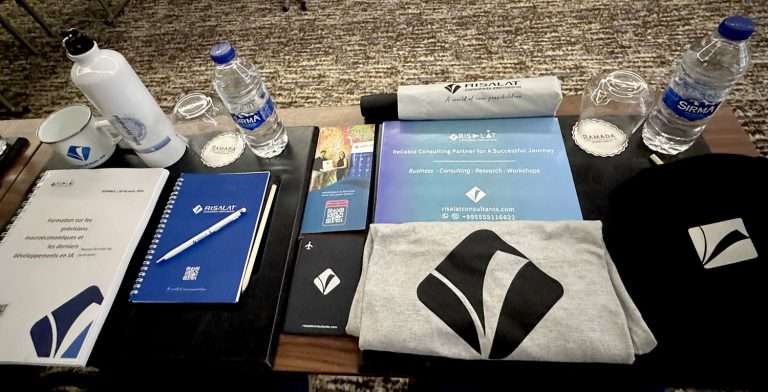
- Risalat Training Kit (Bag, Bottle, Mug, T-Shirt, Cap, Passport Cover, Pens, Notebook, Magnet & Keychain)
- Comprehensive Mini Degree in Leadership and Public Policy in London Training Manual
- Leadership Self-Assessment
- Team Development Plan Template
- Change Plan Template
- Negotiation Preparation Sheet
- Practical Workshops & Simulations
- Group Discussions & Peer Learning
- Daily Lunch and Refreshments
- Full Access to Training Venue Facilities
- Mini Pad / Tablet with Digital Learning Materials
- Field Visit (where applicable)
- Entertaining City Tour
After the Programme
- Certificate of Completion
- Risalat Programme Participation Recognition Award
- Post-Training Reference Materials
- Personal Development Plan Template
- Coaching Conversation Guide
- Post-Training Support & Follow-Up Guidance
- Programme Report
Institutions can also request a tailored in-house version of this programme, delivered at their premises or online. Request a proposal.
Common Challenges in Mini Degree in Leadership and Public Policy in London, And How This Training Helps
How can institutions set clear direction and priorities?
The programme addresses this directly on the first day (Day 1: Foundations of Strategic Leadership and the Public Policy Cycle), where participants practise the methods involved and adapt them to their own institution, then build it into their action plan.
How can institutions lead and motivate teams through change?
The programme addresses this directly on the second day (Day 2: Evidence-Based Policy Formulation and Regulatory Impact Assessment), where participants practise the methods involved and adapt them to their own institution, then build it into their action plan.
How can institutions communicate and negotiate effectively?
The programme addresses this directly on the third day (Day 3: Policy Instruments, Financing Models, and Implementation Planning), where participants practise the methods involved and adapt them to their own institution, then build it into their action plan.
How can institutions manage performance fairly?
The programme addresses this directly on the fourth day (Day 4: Leading Institutional Change and Organisational Transformation), where participants practise the methods involved and adapt them to their own institution, then build it into their action plan.
How can institutions make sound decisions under pressure?
The programme addresses this directly on the fifth day (Day 5: High-Performance Teams, Governance, and Ethical Decision-Making), where participants practise the methods involved and adapt them to their own institution, then build it into their action plan.
Frequently Asked Questions
When and where does the Mini Degree in Leadership and Public Policy in London programme take place?
It runs from 19 Apr 2027 to 28 Apr 2027, in London, United Kingdom. The registration deadline is shown at the top of this page.
Who should attend?
The programme is designed for directors, deputy directors, and senior civil servants in national ministries and provincial departments, project directors and managers within donor-funded project implementation units (PIUs), policy analysts, legal advisers, and strategic planners in government ministries and municipal agencies, senior officials from independent regulatory bodies, commissions, and state-owned enterprises, and others who want practical skills in leadership, management and communication.
Will I receive a certificate?
Yes. Participants who complete the programme receive a Certificate of Completion from Risalat Consultants International.
Can this programme be delivered for our institution only?
Yes. We can deliver a tailored in-house version at your premises, in another city or online, built around your own cases. Use the proposal request on this page.
Do I need prior experience in leadership, management and communication?
No specialist background is required beyond experience in a related role. A short pre-assessment helps the facilitators adapt the sessions to the group.
Who Will Deliver This Programme
Each date is delivered by a team assigned from Risalat's expert network for this subject. For this programme we assign:
How we choose them: Experience in the region of the participants or comparable settings; Command of the financier rules that apply (World Bank, ADB, AfDB, EU, UN) where relevant; Delivery in English; other languages on request for in-house groups; No conflict of interest with participants' institutions.
Training courses in LondonManagement & Leadership training courses
Why London for this programme
London brings participants close to UK public bodies, regulators and international organisations for study visits.
The Mini Degree in Leadership and Public Policy in London programme in April 2027 brings together officials and professionals from across Europe, Africa, the Middle East and Asia. Sessions combine short inputs, case studies and group work on participants' own files, and the city's institutions can be added as a study visit on request.
Getting there: Heathrow (LHR) and Gatwick (LGW).
Check whether you need a visa with the free Visa Checker, and ask for an invitation letter once you are registered.
The same topic in other cities
- Mini Degree in Monitoring, Evaluation and Learning in Bangkok (Bangkok)
- Evaluating Training Impact (Kirkpatrick and Beyond) in Kigali (Kigali)
- STEM Faculty Development and Academic Research Governance in Singapore (Singapore)
- Workforce Performance Management and Coaching Training in Frankfurt (Frankfurt)
- Executive Training on Effective Public Sector Governance (Windhoek)
Other programmes in London
- Mini Degree in Public Financial Management in London
- AI Strategy and Governance for Ministries Training in London
- Critical ICT Infrastructure Cybersecurity and Data Protection in London
- Climate-Responsive Medium-Term Fiscal Frameworks in London
- Grid Integration of Intermittent Renewables and Variable RE Grid Codes in London
Related: Leadership and people development · free Coaching Skills Self-Assessment · all programmes
Teams often travel here from Nigeria, Ghana, Sierra Leone, Liberia. Funding, visa letters and group rates are explained on each country page.
For teams and institutions
Bring your team
Teams that learn together apply more at work. Tell us how many people and how you would like to take part: we reply with a group quote within two working days.
Watch: this programme in short


Other dates and cities for this subject: Leadership and Change in the Public Sector training courses (45 upcoming dates).
More training courses in the United Kingdom · All programmes in Europe · Full training calendar
Plan this programme in a roadmap: why it matters, why to approve it, the dates to plan and the career it builds.