关键信息
- 日期
- 2027年3月15–19日(5天)
- 地点
- 待定,新加坡
- 每位学员费用
- £3,850(英镑)
- 付款
- 通过发票和银行转账付款
- 报名截止
- 2027年1月24日
- 形式
- 5-day short course: a practical capacity-building programme for government, NGO and project teams in Singapore
- 证书
- 结业证书
- 内训选项
- 按您的日期,为您的团队专场举办
本页内容16个部分
培训项目概述
Supply chain sustainability has moved from voluntary reporting to legal obligation. Buyers selling into the European Union now face the Carbon Border Adjustment Mechanism, which entered its definitive period on 1 January 2026, and the EU Deforestation Regulation, which applies to large and medium operators from 30 December 2026. Investors and regulators in Asia are asking for climate data that reaches deep into supplier networks.
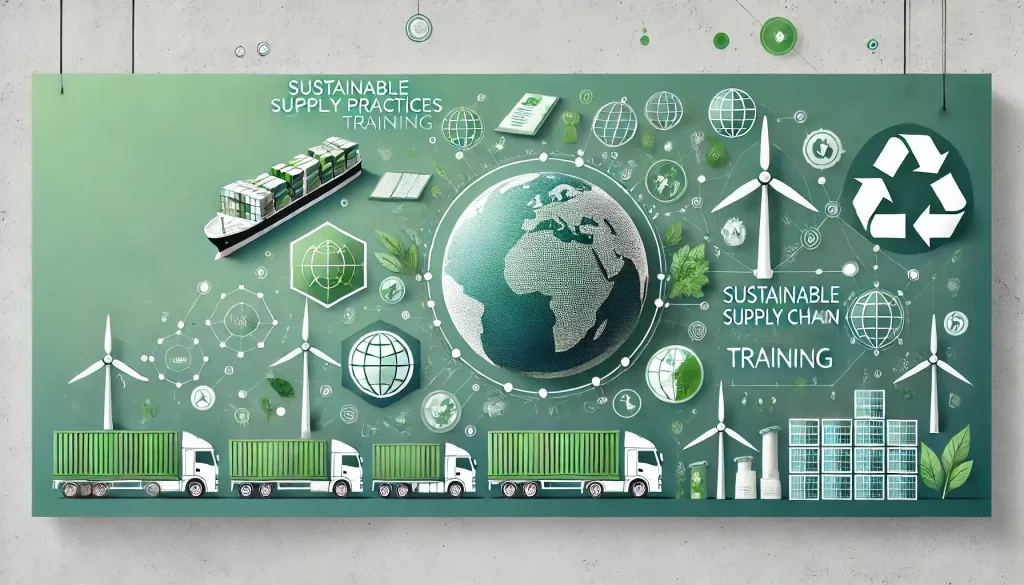
This five-day Sustainable Supply Chain Practices Training in Singapore helps procurement, logistics and sustainability teams turn these requirements into working systems: supplier risk screening, due diligence, emissions data collection, contract clauses and performance reporting.
The programme covers both corporate and public procurement. Ministries, state enterprises and project implementation units financed by the World Bank or the Asian Development Bank face their own sustainability requirements: the World Bank publishes sustainable procurement guidance for Investment Project Financing, and ADB approved technical assistance in December 2025 to mainstream sustainable procurement in its operations.
Singapore is a practical place to study these questions. Its port handled a record 44.66 million TEUs in 2025, its carbon tax rose to S$45 per tonne in 2026, and its listed companies began ISSB-based climate reporting from financial year 2025.
Every day ends with a workshop or case study that produces a usable output, from a supplier risk heat map to a Scope 3 data plan; the final day assembles them into a roadmap.
The Programme Strengthens Institutional Capability
- Sustainable procurement policy aligned with ISO 20400
- Supplier codes of conduct and tiered compliance requirements
- Risk-based human rights and environmental due diligence
- Mapping regulatory exposure to EU CSDDD, EUDR, CBAM and forced labour rules
- Deforestation-free sourcing and geolocation traceability
- Embedded emissions data for CBAM-covered goods
- Scope 3 greenhouse gas inventories using the GHG Protocol
- Climate disclosure under IFRS S1 and IFRS S2
- Life cycle and total cost of ownership evaluation
- Sustainability criteria in tender evaluation and rated criteria
- Green logistics, freight emissions and packaging reduction
- Circular economy, reverse logistics and waste reduction
- Supplier audits, corrective action plans and grievance channels
- Sustainability clauses in contracts and supplier development
- Supply chain sustainability KPIs and dashboards
- Board and management reporting on supply chain risk
- Sustainable procurement in donor-financed projects
- Change management for procurement and logistics teams
The aim is a supply chain function that can show, with evidence, how it identifies and reduces environmental and social risk while still delivering cost, quality and continuity.
The Growing Importance of Sustainable Supply Chain Practices
The rules have become more specific and, after the EU’s 2025–2026 simplification drive, more predictable. The Omnibus amending directive, published in February 2026, narrowed the Corporate Sustainability Due Diligence Directive to companies with at least 5,000 employees and €1.5 billion turnover and moved application to July 2029, but kept the core duty to identify and address adverse impacts on a risk-based basis. Large buyers will therefore keep asking suppliers in Asia, Africa and the Middle East for information.
Other instruments are already live or close. CBAM importers must now buy and surrender certificates for the embedded emissions of cement, iron and steel, aluminium, fertilisers, electricity and hydrogen. The EUDR timetable was confirmed by the Commission’s May 2026 simplification review. The EU Forced Labour Regulation will apply from 14 December 2027 to all products placed on or exported from the EU market.
In Asia, disclosure is the main driver. Singapore’s ACRA and SGX RegCo require Scope 1 and 2 reporting from all listed issuers from FY2025, and Scope 3 from FY2026 for Straits Times Index constituents. Development banks are moving in the same direction: the World Bank’s procurement reforms of March 2025 set a 50% minimum quality weighting for most international competitive procurement, which gives room for sustainability criteria.
各机构日益需要具备以下能力的专业人员:
- Reading new regulations and identifying which products, suppliers and markets are affected
- Designing a sustainable procurement policy and linking it to category strategies
- Screening suppliers for human rights, environmental and governance risk
- Running proportionate due diligence and documenting the decisions taken
- Collecting geolocation and traceability data for deforestation-risk commodities
- Requesting and checking embedded emissions data from producers
- Building a Scope 3 inventory and prioritising the largest categories
- Writing sustainability requirements into specifications and evaluation criteria
- Assessing whole-life cost rather than purchase price alone
- Reducing freight and warehousing emissions without harming service levels
- Managing supplier corrective action plans and responsible exit
- Preparing reliable data for ISSB-based and other sustainability reports
- Explaining supply chain risk to boards, regulators and financiers
Strong sustainable supply chain systems help organisations:
- Keep access to markets with due diligence and border rules
- Avoid shipment delays, penalties and contract losses
- Lower carbon cost exposure under carbon taxes and CBAM
- Meet lender, investor and customer information requests
- Reduce disruption from supplier failures and controversies
- Find savings through energy, packaging and waste reduction
- 提高已发布可持续发展数据的可信度
- Win tenders that score sustainability and quality
- Build longer, more resilient supplier relationships
The common thread is evidence. Regulators and customers no longer accept policy statements alone; they ask for data, traceability and records of action taken.
Who Should Attend This Sustainable Supply Chain Training?
本培训项目适合:
- Procurement and sourcing managers
- 供应链与物流经理
- Category managers and buyers
- Sustainability, ESG and CSR officers
- 供应商质量和审计经理
- Compliance, risk and internal audit staff
- Trade and customs compliance officers
- 运营与生产经理
- Finance staff preparing climate and sustainability disclosures
- Public procurement officials in ministries and agencies
- Procurement specialists in World Bank, ADB and other donor-financed PIUs
- 环境与社会保障专家
- 国有企业和公用事业单位管理人员
- Exporters supplying EU buyers of agricultural, forest or industrial goods
Mixed teams from procurement, sustainability and finance gain most, because the exercises require all three perspectives to agree on data, priorities and responsibilities.
勾选您的团队需要具备的能力。
Sustainable Supply Chain Training Objectives
Upon successful completion of this Sustainable Supply Chain Training, participants will be able to:
- Explain the principles of sustainable supply chain management and the guidance in ISO 20400
- Map their organisation’s exposure to CSDDD, EUDR, CBAM and the EU Forced Labour Regulation
- Design a supplier code of conduct with minimum and improvement-level requirements
- Apply a risk-based due diligence process to suppliers and business partners
- Build a Scope 3 inventory plan using the 15 GHG Protocol categories
- 为IFRS S1和IFRS S2披露准备供应链输入数据
- Integrate sustainability criteria into specifications, evaluation and contracts
- Identify green logistics and circular economy measures with measurable savings
- Set sustainability KPIs and a supplier performance dashboard
- Manage audits, corrective actions and grievance mechanisms
- Develop a phased implementation roadmap for their organisation
Objectives are set at the level of practical application: each one is linked to a workshop where participants produce a tool or draft they can adapt at work.
Source: National Climate Change Secretariat, Singapore (2030 shown at lower end of the S$50–80 target range)
1. 欧盟森林砍伐条例从何时起适用于大中型运营商?
Regulation (EU) 2025/2650 set 30 December 2026 for large and medium operators, and the Commission's May 2026 review kept that timeline.
2. Under the 2026 Omnibus amendments, which companies fall within the CSDDD?
Directive (EU) 2026/470 raised the thresholds to 5,000 employees and €1.5 billion net turnover, with application from July 2029.
3. Which Singapore listed companies must report Scope 3 emissions from FY2026?
ACRA and SGX RegCo's revised timeline makes Scope 3 mandatory from FY2026 for STI constituents and voluntary for other listed issuers until further notice.
培训项目内容与结构
- Sustainability in supply chains: people, planet and long-term value
- ISO 20400 sustainable procurement guidance and its link to ISO 26000
- EU CSDDD after the 2026 Omnibus: scope, timing and risk-based duties
- EU Deforestation Regulation: commodities, dates and operator duties
- 碳边境调节机制(CBAM)确定期:授权、证书与隐含排放
- EU Forced Labour Regulation and import controls
- Singapore and Asian disclosure rules: ACRA and SGX climate reporting
- Risk-based due diligence: scoping, prioritising and proportionality
- Country, sector and commodity risk indicators
- Supplier codes of conduct and tiered requirement models
- Self-assessment questionnaires and their limits
- Announced and unannounced audits, verification and certification schemes
- Geolocation data and deforestation-free evidence
- Forced labour indicators and responsible recruitment
- GHG Protocol Scope 1, 2 and 3: boundaries and the 15 categories
- Prioritising Scope 3 categories by size and influence
- Supplier-specific versus average and spend-based data
- IFRS S2要求与2025年修订
- Carbon pricing: Singapore’s carbon tax and CBAM cost exposure
- Freight emissions: mode choice, load factors and route planning
- 仓储能源效率与现场可再生能源
- Linear to circular models: reuse, repair, remanufacture and recycling
- Life cycle assessment and design for sustainability
- Packaging reduction and reverse logistics
- Total cost of ownership and life cycle costing in evaluation
- Sustainability criteria and rated criteria in tenders
- Contract clauses, incentives and remedies
- Supply chain sustainability KPIs and target setting
- Review of the week’s tools and outputs
- 当前供应链实践的成熟度评估
- Setting priorities: quick wins and structural changes
- Resourcing, roles and cross-functional governance
- Digital tools for traceability and supplier data
- Budgeting and financing sustainability improvements
- Managing supplier capacity, especially smaller suppliers
完整的每日课程内容
The programme runs over five days, moving from rules and strategy to data, operations and an implementation plan.
- 第1天:监管格局与可持续采购战略
- Day 2: supplier due diligence, codes of conduct and traceability
- Day 3: carbon, Scope 3 emissions and green logistics
- Day 4: circular supply chains, KPIs and sustainability reporting
- 第5天:实施路线图和顶峰练习
完整的每日课程内容
First Day | Rules, Standards and Procurement Strategy
- Sustainability in supply chains: people, planet and long-term value
- ISO 20400 sustainable procurement guidance and its link to ISO 26000
- EU CSDDD after the 2026 Omnibus: scope, timing and risk-based duties
- EU Deforestation Regulation: commodities, dates and operator duties
- 碳边境调节机制(CBAM)确定期:授权、证书与隐含排放
- EU Forced Labour Regulation and import controls
- Singapore and Asian disclosure rules: ACRA and SGX climate reporting
- 世界银行和亚洲开发银行资助项目中的可持续采购
- Building a sustainable procurement policy and governance model
Workshop: Regulatory Exposure Map
团队选取包含钢材组件、棕榈基配料、木质包装和电子产品的样本产品组合,绘制哪些规则适用于哪些市场及自何时起生效。他们按面临收入风险和就绪度对风险进行排序,然后起草一份单页治理说明,明确每项要求的负责人。该地图成为一周其余时间工作的起点。
Second Day | Supplier Due Diligence and Traceability
- Risk-based due diligence: scoping, prioritising and proportionality
- Country, sector and commodity risk indicators
- Supplier codes of conduct and tiered requirement models
- Self-assessment questionnaires and their limits
- Announced and unannounced audits, verification and certification schemes
- Geolocation data and deforestation-free evidence
- Forced labour indicators and responsible recruitment
- Corrective action plans, supplier development and responsible exit
- Grievance mechanisms and stakeholder engagement
Case Study: Supplier Codes in Practice
Participants compare two published corporate approaches: IKEA’s IWAY supplier code, which is mandatory for suppliers and uses a staircase from minimum to excellent requirements with announced and unannounced audits, and Unilever’s Partner to Win programme, which links supplier collaboration to climate, nature, plastics and livelihoods targets. Teams then design a tiered code suited to their own supplier base.
Third Day | Carbon, Scope 3 and Green Logistics
- GHG Protocol Scope 1, 2 and 3: boundaries and the 15 categories
- Prioritising Scope 3 categories by size and influence
- Supplier-specific versus average and spend-based data
- IFRS S2要求与2025年修订
- Carbon pricing: Singapore’s carbon tax and CBAM cost exposure
- Freight emissions: mode choice, load factors and route planning
- 仓储能源效率与现场可再生能源
- Low-carbon fuels and green shipping corridors
- Supplier engagement programmes for emissions reduction
Workshop: Scope 3 Data Plan
Using a dataset for a mid-sized distributor, teams estimate emissions from purchased goods, transport and waste with spend-based factors, then identify the ten suppliers where primary data would most improve accuracy. They draft a supplier data request, a timetable aligned with reporting deadlines and a short note on assumptions that an auditor could follow.
Fourth Day | Circular Supply Chains and Performance Reporting
- Linear to circular models: reuse, repair, remanufacture and recycling
- Life cycle assessment and design for sustainability
- Packaging reduction and reverse logistics
- Total cost of ownership and life cycle costing in evaluation
- Sustainability criteria and rated criteria in tenders
- Contract clauses, incentives and remedies
- Supply chain sustainability KPIs and target setting
- Reporting with GRI, CDP and ISSB-based frameworks
- Communicating results to boards, investors and customers
Workshop: Tender and KPI Design
Teams prepare an evaluation framework for a packaging or fleet contract that combines price, quality and sustainability, including life cycle cost, recycled content and emissions criteria. They draft the matching contract clauses and five KPIs with baselines and targets, then test the framework against three sample bids to check that it rewards the outcomes intended.
Fifth Day | Implementation Roadmap and Action Planning
- 复习本周的工具和成果
- 当前供应链实践的成熟度评估
- Setting priorities: quick wins and structural changes
- Resourcing, roles and cross-functional governance
- Digital tools for traceability and supplier data
- Budgeting and financing sustainability improvements
- Managing supplier capacity, especially smaller suppliers
- Monitoring progress and reporting to leadership
- Peer review of implementation plans
Capstone Exercise: 12-Month Supply Chain Roadmap
Each participant or team builds a 12-month roadmap for their organisation using the exposure map, supplier code, Scope 3 plan and KPI set produced during the week. Plans set out milestones, owners, data needs and budget. Teams present to a panel that challenges feasibility and sequencing, and refine the plan into a short briefing for senior management.
可持续供应链培训方法论
The programme is practical and outcome-based. Short inputs on rules and methods are followed by structured exercises on realistic data, so participants practise the decisions they will face at work.
本培训项目融合了:
- Facilitator briefings on current regulations and standards
- Case studies drawn from published company and public sector practice
- 样本组合的监管测绘练习
- Supplier risk screening with country and commodity indicators
- Spreadsheet-based Scope 3 estimation
- Tender evaluation and contract drafting simulations
- Role plays of supplier engagement and audit follow-up
- Group discussions and peer learning across sectors
- Templates and checklists participants can adapt
- A pre-programme diagnostic and individual feedback
- Daily reflection and action-point capture
- 向评审小组展示的结业路线图
在到达之前,学员可以使用免费的 采购成熟度诊断 对其职能进行基准测试,结果将用于在培训周期间定制示例。
- 投入
- 活动
- 产出
- 成果
- 影响
预期成果
Upon completion of this Sustainable Supply Chain Training, participants will be able to:
- Identify which sustainability rules affect their products and suppliers, and from when
- Lead a risk-based supplier due diligence process
- Apply a tiered supplier code with clear minimum requirements
- 准备一份可信的范围3数据收集计划
- 将可持续性与全生命周期成本纳入标书评审
- Propose green logistics and circular measures with estimated savings
- Track supplier sustainability performance with a KPI dashboard
- Contribute reliable supply chain data to ISSB-based reports
- Present a phased roadmap to senior management
Participants return with a set of drafted tools and a roadmap, not just notes, which shortens the time from training to implementation.
每位学员£3,850 · 发票与银行转账 · 5人及以上团体可享折扣
同一机构五人及以上:请在申请发票时索取团体价。
Ten or more: an in-house version for your institution may cost less per person. Ask for an in-house quote.
注册截止于 62天后 (2027年1月24日)
Institutional Application of Sustainable Supply Chain Training
本培训项目帮助机构加强:
- Sustainable procurement policies and procedures
- Supplier onboarding and risk screening
- Due diligence records and governance
- 高风险大宗商品的可追溯性
- Carbon and Scope 3 data management
- Sustainability criteria in tenders and contracts
- Supplier audit and corrective action processes
- Logistics efficiency and emissions reduction
- Circular economy and waste programmes
- Sustainability KPIs and management reporting
- Readiness for external assurance
- 遵守出资方的采购和保障要求
学员将带着实用工具回到工作岗位,以提升:
- Regulatory exposure mapping
- Supplier risk heat maps
- Supplier codes of conduct
- Due diligence checklists
- Scope 3 data request templates
- Evaluation criteria and contract clauses
- KPI仪表板
- Implementation roadmaps
Organisations planning wider change can pair the training with an institutional capacity assessment to set priorities across procurement, finance and sustainability teams.
区域相关性与应用
欧洲
EU companies remain the main source of supplier requests. Even with the narrower CSDDD scope agreed in 2026, large buyers, CBAM importers and EUDR operators must collect data from their supply chains, and the Forced Labour Regulation from December 2027 adds another check on imported goods.
亚洲
Asian exporters supply many of the products covered by EU rules, and Asian regulators are adding their own disclosure duties. Singapore’s phased ISSB-based reporting is one example; ADB technical assistance approved in 2025 and 2026 supports sustainable procurement and merit-point evaluation among borrowing countries.
非洲
可可、咖啡、橡胶和木材生产商面临来自欧洲买家的EUDR可追溯性期望。执行世界银行资助项目的公共机构也在招标中应用世行可持续采购指南及其环境和社会要求。
中东
随着CBAM证书开始缴费,出口到欧洲的铝、钢和化肥生产商现在需要内置排放数据。国有企业的采购团队也在大型合同中增加了本地成分和可持续性标准。
拉丁美洲
Exporters of soy, beef, coffee and wood products must provide geolocation and legality evidence for EU markets, while buyers in the region are adopting supplier codes and emissions reporting to meet investor expectations.
The exercises allow participants to work on their own region and products, so the outputs reflect the rules and suppliers they actually deal with.
东道国概况:新加坡
Singapore is a compact, well-connected city-state with a strong concentration of regional headquarters, logistics providers and trade finance institutions. Its English-language business environment and efficient public services make it a convenient place for a week of focused learning.
It is also a useful benchmark for sustainable supply chains. The port handled 44.66 million TEUs in 2025 and supplied 1.95 million tonnes of alternative marine fuels, up from 1.35 million tonnes in 2024. The carbon tax is S$45 per tonne for 2026–2027, with a target range of S$50–80 by 2030, and the Singapore Green Plan 2030 targets a 30% cut in landfill waste per capita per day by 2030. Listed companies are phasing in ISSB-based climate reporting, which shows participants how disclosure rules reach suppliers.
Singapore’s Changi Airport has direct flights from most regional capitals. Many nationalities can enter without a visa for short business visits, while others need a visa in advance; participants should check the current requirements of the Immigration and Checkpoints Authority. Risalat provides visa support letters and advice on request.
可持续供应链培训交付成果
Participants receive a full package of support before, during and after the programme so they can focus on learning and apply it quickly.
培训开始前
- 学员课前评估
- 可持续供应链就绪评估
- Sustainable Supply Chain Resource Pack
- 课前阅读资料
- 免费签证支持与咨询
培训期间
- 机场接机与欢迎协助
- Accommodation with breakfast: 6 nights, check-in Sunday 14 March 2027, check-out Saturday 20 March 2027 (one night before and one night after the programme)
- 欢迎交流晚宴
- Risalat培训礼包(背包、水瓶、马克杯、T恤、帽子、护照套、笔、笔记本、冰箱贴及钥匙扣)
- Comprehensive Sustainable Supply Chain Training Manual
- Regulatory Exposure Mapping Template
- Supplier Risk Screening Tool
- Model Supplier Code of Conduct
- Scope 3 Data Request Template
- Sustainable Tender Evaluation Matrix
- 供应链KPI仪表板
- 实践研讨与模拟演练
- 小组讨论与同伴学习
- 每日午餐与茶歇
- 全面使用培训场地设施
- 装有数字学习资料的迷你平板电脑
- 实地考察(如适用)
- 城市休闲观光
培训结束后
- 结业证书
- Risalat培训项目参与表彰奖
- 培训后参考资料
- 12-Month Implementation Roadmap Template
- Regulatory Update Briefing Notes
- 培训后支持与跟进指导
- 培训项目报告
Institutions that want this programme for their own teams, adapted to their sector, suppliers and reporting duties, can request a tailored in-house proposal.
Common Challenges in Sustainable Supply Chain Practices, And How This Training Helps
How do we know which new rules apply to us?
Many teams hear about CSDDD, EUDR and CBAM but cannot say which products or customers are affected. The Day 1 exposure mapping workshop links each rule to products, markets and dates, and assigns an owner.
How can we run due diligence without auditing every supplier?
The amended CSDDD confirms a risk-based approach rather than full mapping of every supplier. Day 2 shows how to scope and prioritise using country, sector and commodity risk, and how to record the reasoning.
How do we get emissions data from suppliers who have never measured it?
Day 3 covers spend-based estimates as a starting point, then a targeted data request to the suppliers that matter most, with templates that smaller suppliers can complete.
How can sustainability be scored in tenders without breaking procurement rules?
Day 4 shows how to define measurable criteria, life cycle cost and rated criteria, and how to write contract clauses that match what was evaluated.
How do we stop sustainability KPIs becoming a reporting exercise only?
Day 4 links KPIs to decisions such as supplier selection, corrective action and contract renewal, so the data is used and not just published.
我们如何支持小型供应商而不是抛弃他们?
Day 2 and Day 5 cover supplier development, phased requirements and responsible exit, drawing on tiered code models where minimum requirements come first.
我们如何为气候数据的外部鉴证做好准备?
Day 3 and Day 4 cover documentation of assumptions, data trails and controls that assurance providers expect, in line with ISSB-based reporting timelines.
常见问题
如果我的组织不在欧盟总部,这个项目是否相关?
Yes. EU rules such as CBAM and the EU Deforestation Regulation reach suppliers and exporters worldwide, and Asian disclosure rules such as Singapore's climate reporting regime create similar data requests.
Does the training cover public procurement?
Yes. It includes sustainable procurement in World Bank and ADB-financed projects, sustainability criteria in tender evaluation and contract clauses suitable for public buyers.
Do participants need technical knowledge of carbon accounting?
No. Day 3 starts from the GHG Protocol basics and builds to a Scope 3 data plan using spreadsheet exercises.
学员能将哪些收获带回工作中?
Drafted tools including a regulatory exposure map, supplier code, Scope 3 data request, tender evaluation matrix, KPI set and a 12-month roadmap.
本培训项目能否以内训形式举办?
Yes. Risalat can adapt the content to an organisation's sector, suppliers and reporting duties and deliver it at a location of its choice.
Who Will Deliver This Programme
Each date is delivered by a team assigned from Risalat's expert network for this subject. For this programme we assign:
How we choose them: Experience in the region of the participants or comparable settings; Command of the financier rules that apply (World Bank, ADB, AfDB, EU, UN) where relevant; Delivery in English; other languages on request for in-house groups; No conflict of interest with participants' institutions.
新加坡培训课程Procurement, Supply Chain & Logistics training courses
为何选择在新加坡举办本培训项目
新加坡以高效的公共服务、电子政务和城市规划而闻名,非常适合开展考察访问。
The Sustainable Supply Chain Practices Training in Singapore programme in March 2027 brings together officials and professionals from across the Asia region and beyond. Sessions combine short inputs, case studies and group work on participants' own files, and the city's institutions can be added as a study visit on request.
交通:樟宜机场(SIN)。
使用免费的签证查询工具确认您是否需要签证,完成报名后即可申请邀请函。
其他城市的同主题培训
- Mini Degree in Donor-Funded Project Management in Dubai (Dubai)
- Carbon Accounting and Net-Zero Planning for Institutions in Kuala Lumpur (Kuala Lumpur)
- Sustainable Tourism Development and Destination Management Training in Rovinj (Rovinj)
- Mini Degree in Procurement and Contract Management in Dubai (Dubai)
- Sustainable Tourism Development and Destination Management Training in Zadar (Zadar)
- Sustainable Tourism Development and Destination Management Training in Dubrovnik (Dubrovnik)
新加坡的其他培训项目
Teams often travel here from Timor-Leste, Sri Lanka, Bangladesh, Bhutan, Myanmar, Cambodia, Lao PDR, Vietnam. Funding, visa letters and group rates are explained on each country page.
For teams and institutions
Bring your team
Teams that learn together apply more at work. Tell us how many people and how you would like to take part: we reply with a group quote within two working days.
Watch: this programme in short

在路线图中规划此项目:为什么重要、为什么要批准它、要计划的日期以及它所构建的职业生涯。