Points essentiels
- Understanding the waste journey. The starting point is to distinguish a credible mechanism from a guaranteed outcome.
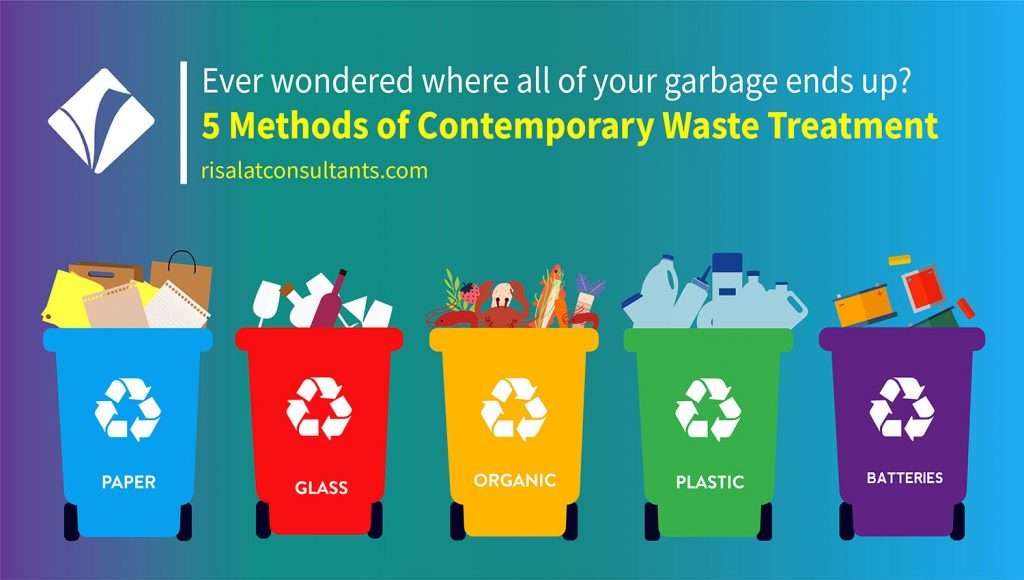
- Recycling and biological treatment. Paper, metals, glass and some plastics can be reprocessed when streams are sufficiently clean and markets exist.
- Thermal and advanced treatment. Controlled combustion can reduce waste volume and recover heat or electricity, but requires reliable emissions control, suitable feedstock and management of bottom and fly ash.
- Landfills and environmental controls. Modern facilities use liners, leachate collection, drainage, cover and environmental monitoring.
- Municipal and donor-funded waste projects. A city should not buy an expensive treatment plant before confirming feedstock, collection reliability, land availability and operating budget.
In short: Where Does Our Waste Go? Five Treatment Methods Explained requires decisions based on evidence, operational constraints and measurable outcomes. The useful starting point is to identify the real problem, compare feasible responses and test whether a proposed solution improves results for the people affected.
This guide updates Risalat’s earlier discussion of waste treatment methods. It preserves the underlying concepts that remain useful while treating historical forecasts, unverified percentages and vendor claims cautiously. Examples are illustrative unless a specific official source is named. The emphasis is on practical choices for managers, regulators, implementing agencies and development partners.
Understanding the waste journey
The starting point is to distinguish a credible mechanism from a guaranteed outcome. Waste treatment methods involves interacting technical, financial and institutional factors. A solution may work in one setting and fail in another because capacity, incentives, infrastructure or user needs differ. The sections below therefore pair each concept with a decision that can be checked in practice.
Collection, sorting and material flows
Household rubbish does not follow a single route. Materials may be collected separately, recovered by informal workers, processed at sorting facilities or sent directly to disposal. Local data often omit uncollected waste.
Measure generation, collection coverage, composition and destinations before purchasing new equipment.
For implementation, distinguish what is under the team’s control from what requires action by a regulator, funder, supplier or service user. In the case of collection, sorting and material flows, a credible proposal should describe its operating assumptions, the evidence used to select the approach and the consequences if those assumptions prove wrong. It should also explain which people may benefit, which people could face additional costs and how concerns will be addressed.
A practical review can start with three questions: What problem will be measurably smaller? What baseline information exists today? Who will verify the result after implementation? Teams should document answers before approving a major commitment. This helps prevent attractive technology, a fashionable policy or an ambitious target from displacing the original public-service objective.
Prevention before disposal
Avoiding unnecessary packaging and food waste generally preserves more value than managing it after disposal. Reuse and repair can also reduce demand for raw materials.
Map the largest avoidable streams and test procurement changes before investing in treatment capacity.
For implementation, distinguish what is under the team’s control from what requires action by a regulator, funder, supplier or service user. In the case of prevention before disposal, a credible proposal should describe its operating assumptions, the evidence used to select the approach and the consequences if those assumptions prove wrong. It should also explain which people may benefit, which people could face additional costs and how concerns will be addressed.
A practical review can start with three questions: What problem will be measurably smaller? What baseline information exists today? Who will verify the result after implementation? Teams should document answers before approving a major commitment. This helps prevent attractive technology, a fashionable policy or an ambitious target from displacing the original public-service objective.
Recycling and biological treatment
Material recycling
Paper, metals, glass and some plastics can be reprocessed when streams are sufficiently clean and markets exist. Collection does not guarantee recycling: contamination and low commodity prices can divert material to disposal.
Verify actual recovery rates, end buyers and working conditions in sorting facilities.
For implementation, distinguish what is under the team’s control from what requires action by a regulator, funder, supplier or service user. In the case of material recycling, a credible proposal should describe its operating assumptions, the evidence used to select the approach and the consequences if those assumptions prove wrong. It should also explain which people may benefit, which people could face additional costs and how concerns will be addressed.
A practical review can start with three questions: What problem will be measurably smaller? What baseline information exists today? Who will verify the result after implementation? Teams should document answers before approving a major commitment. This helps prevent attractive technology, a fashionable policy or an ambitious target from displacing the original public-service objective.
Composting and anaerobic digestion
Food scraps and green waste can be composted under controlled aerobic conditions. Anaerobic digestion processes organic material without oxygen and produces biogas plus digestate requiring appropriate management.
Check feedstock quality, odour controls, digestate standards and reliable energy offtake.
For implementation, distinguish what is under the team’s control from what requires action by a regulator, funder, supplier or service user. In the case of composting and anaerobic digestion, a credible proposal should describe its operating assumptions, the evidence used to select the approach and the consequences if those assumptions prove wrong. It should also explain which people may benefit, which people could face additional costs and how concerns will be addressed.
A practical review can start with three questions: What problem will be measurably smaller? What baseline information exists today? Who will verify the result after implementation? Teams should document answers before approving a major commitment. This helps prevent attractive technology, a fashionable policy or an ambitious target from displacing the original public-service objective.
Thermal and advanced treatment
Incineration with energy recovery
Controlled combustion can reduce waste volume and recover heat or electricity, but requires reliable emissions control, suitable feedstock and management of bottom and fly ash.
Compare whole-life costs, emissions compliance and alternatives for recyclable materials.
For implementation, distinguish what is under the team’s control from what requires action by a regulator, funder, supplier or service user. In the case of incineration with energy recovery, a credible proposal should describe its operating assumptions, the evidence used to select the approach and the consequences if those assumptions prove wrong. It should also explain which people may benefit, which people could face additional costs and how concerns will be addressed.
A practical review can start with three questions: What problem will be measurably smaller? What baseline information exists today? Who will verify the result after implementation? Teams should document answers before approving a major commitment. This helps prevent attractive technology, a fashionable policy or an ambitious target from displacing the original public-service objective.
Gasification and plasma systems
Gasification and plasma technologies are promoted for selected waste streams, yet technical complexity and operating costs can limit commercial viability. Claimed performance from a demonstration may not transfer to mixed municipal waste.
Request independent operating records, mass balances and proof of safe residue disposal.
For implementation, distinguish what is under the team’s control from what requires action by a regulator, funder, supplier or service user. In the case of gasification and plasma systems, a credible proposal should describe its operating assumptions, the evidence used to select the approach and the consequences if those assumptions prove wrong. It should also explain which people may benefit, which people could face additional costs and how concerns will be addressed.
A practical review can start with three questions: What problem will be measurably smaller? What baseline information exists today? Who will verify the result after implementation? Teams should document answers before approving a major commitment. This helps prevent attractive technology, a fashionable policy or an ambitious target from displacing the original public-service objective.
Illustrative management exercise: assemble a small cross-functional team, provide the relevant budget, operating data and stakeholder concerns, and ask members to compare two realistic options. Require them to show assumptions, implementation sequence, risks and evidence of success. A useful decision note is short enough for senior managers to act on but detailed enough for independent review.
Landfills and environmental controls
Engineered sanitary landfills
Modern facilities use liners, leachate collection, drainage, cover and environmental monitoring. Landfill gas capture can reduce methane emissions, although capture is incomplete.
Specify groundwater monitoring, closure funding and long-term care responsibilities.
For implementation, distinguish what is under the team’s control from what requires action by a regulator, funder, supplier or service user. In the case of engineered sanitary landfills, a credible proposal should describe its operating assumptions, the evidence used to select the approach and the consequences if those assumptions prove wrong. It should also explain which people may benefit, which people could face additional costs and how concerns will be addressed.
A practical review can start with three questions: What problem will be measurably smaller? What baseline information exists today? Who will verify the result after implementation? Teams should document answers before approving a major commitment. This helps prevent attractive technology, a fashionable policy or an ambitious target from displacing the original public-service objective.
Public health and informal workers
Open dumping and uncontrolled burning create exposure risks. Waste pickers often provide valuable recovery services while facing unsafe conditions and uncertain incomes.
Include worker safety, social inclusion and grievance arrangements in any service reform.
For implementation, distinguish what is under the team’s control from what requires action by a regulator, funder, supplier or service user. In the case of public health and informal workers, a credible proposal should describe its operating assumptions, the evidence used to select the approach and the consequences if those assumptions prove wrong. It should also explain which people may benefit, which people could face additional costs and how concerns will be addressed.
A practical review can start with three questions: What problem will be measurably smaller? What baseline information exists today? Who will verify the result after implementation? Teams should document answers before approving a major commitment. This helps prevent attractive technology, a fashionable policy or an ambitious target from displacing the original public-service objective.
A short implementation checklist should cover the baseline, legal authority, responsible owner, funding source, data quality, accessibility, supplier obligations, safeguards, monitoring frequency and corrective-action trigger. These are not interchangeable. A good technical specification cannot substitute for public accountability, and a signed contract does not establish that the intended benefit has been delivered.
Municipal and donor-funded waste projects
Choosing infrastructure based on evidence
A city should not buy an expensive treatment plant before confirming feedstock, collection reliability, land availability and operating budget. A phased system may deliver better results.
Prepare a waste characterisation study, options appraisal and transparent life-cycle cost comparison.
For implementation, distinguish what is under the team’s control from what requires action by a regulator, funder, supplier or service user. In the case of choosing infrastructure based on evidence, a credible proposal should describe its operating assumptions, the evidence used to select the approach and the consequences if those assumptions prove wrong. It should also explain which people may benefit, which people could face additional costs and how concerns will be addressed.
A practical review can start with three questions: What problem will be measurably smaller? What baseline information exists today? Who will verify the result after implementation? Teams should document answers before approving a major commitment. This helps prevent attractive technology, a fashionable policy or an ambitious target from displacing the original public-service objective.
Contracts and measurable outcomes
Municipalities can contract for collection reliability, diversion, safe disposal and emissions monitoring rather than tonnes delivered to a plant alone.
Audit weighbridge records, recycling destinations, service complaints and environmental performance independently.
For implementation, distinguish what is under the team’s control from what requires action by a regulator, funder, supplier or service user. In the case of contracts and measurable outcomes, a credible proposal should describe its operating assumptions, the evidence used to select the approach and the consequences if those assumptions prove wrong. It should also explain which people may benefit, which people could face additional costs and how concerns will be addressed.
A practical review can start with three questions: What problem will be measurably smaller? What baseline information exists today? Who will verify the result after implementation? Teams should document answers before approving a major commitment. This helps prevent attractive technology, a fashionable policy or an ambitious target from displacing the original public-service objective.
For ministries, public agencies and donor-funded projects, the key distinction is between completing activities and achieving institutional change. Project implementation units should connect procurement, financial management, environmental and social safeguards, monitoring and evaluation, and post-project operating arrangements. This reduces the risk that a completed asset, training event or software deployment becomes unusable when external funding ends.
One practical sequence is to complete a baseline assessment, consult the intended users, compare options, define responsibilities, pilot where appropriate and commission an independent review of results. Management should record unresolved risks and the reasons for its decisions. If outcomes are weak, the appropriate response is to adapt the intervention rather than report only the number of activities completed.
Institutions can start with Risalat’s institutional capacity assessment, review the project health diagnostic and request a tailored advisory or training proposal where additional support is justified.
Questions fréquentes
What is the first step in waste treatment methods?
Define the operational problem and establish a reliable baseline before choosing a method or purchasing a solution.
How should institutions compare approaches?
Compare feasibility, total cost, risks, inclusion, required skills and evidence of outcomes using the same decision criteria.
What evidence shows that an intervention works?
Use baseline and follow-up measures, verified implementation records and feedback from affected people; distinguish outputs from outcomes.
What is the main implementation risk?
The main risk is often a mismatch between the proposed solution and local capacity, incentives, financing or user needs.
How can donor-funded projects apply these lessons?
Integrate procurement, safeguards, finance and monitoring into one accountable delivery plan with a sustainable operating model.
Vous connaissez des personnes qui devraient lire ceci ? Devenez ambassadeur Risalat ou rédigez un article avec Risalat sous votre propre nom.
Partenaires de la réussite des projets depuis 2011 : diagnostics, conseil et apprentissage appliqué pour les ministères, les organismes publics et les équipes de projet.
Besoin d'aide pour passer à la pratique ?
Commencez par un diagnostic gratuit de 10 minutes ou échangez avec nos experts.