Key facts
- Dates
- 1–5 Feb 2027 (5 days)
- Where
- Ramada by Wyndham Manila Central, Hong Kong
- Fee per participant
- £3,880 (GBP)
- Payment
- By invoice and bank transfer
- Registration closes
- 23 Dec 2026
- Certificate
- Certificate of completion
- In-house option
- Run it for your team, on your dates
On this page 13 sections
Programme Overview
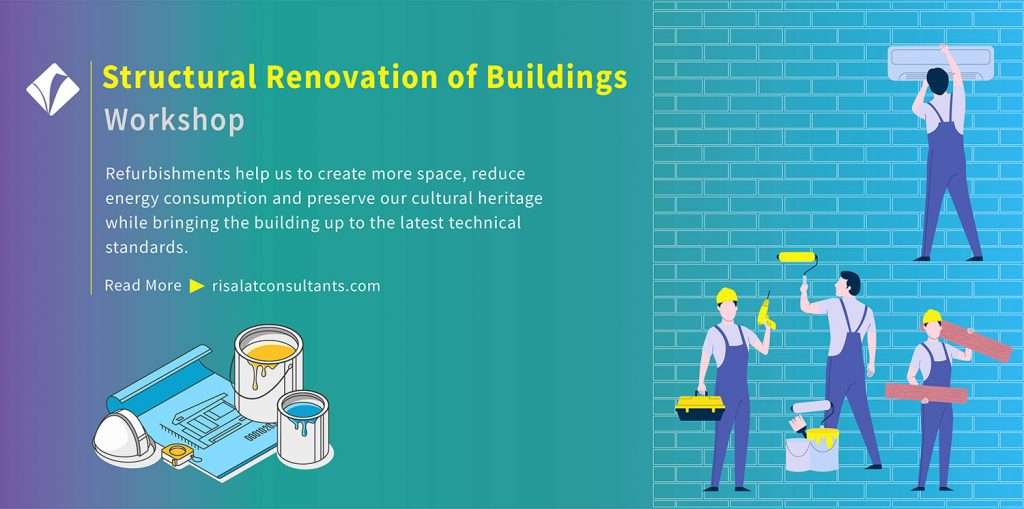
Renovation and refurbishment of existing buildings have become growingly popular. In the face of limited space and resources, especially in urban areas, structural renovations are a great way for increasing the value of present structures. Adaptations and extensions of buildings, as well as attic conversions, are a good alternative to new constructions. Refurbishments help us create more space, reduce energy consumption, and preserve our cultural heritage while bringing the building up to the latest technical standards. Structural renovations are more than just a simple cosmetic refresh helping professionals identify and address ongoing issues that might not be directly evident. Workshop on Structural Renovation of Buildings in Manila, Philippines will cover the modern methods of repair and renovation both theoretically and practically. It will review the reasons behind the structure deterioration and the decision-making process while intending to renovate them. Throughout the course of this programme, its delegates will review specific renovation techniques relevant for a variety of structures from steel, concrete, and masonry to wood and pre-engineered buildings. The approach to the delivery of each session is individual, aiming to maximize participants’ problem-solving skills and broadening of professional horizon.
This programme is targeted at: Host Country Profile Manila as a cultural heart of Philippines presents a large number of historical and heritage buildings that have undergone structural renovations or are expected to get one. Overall the country’s construction market has been valued at nearly 55$ billion as of 2021 with a projected growth of 7% with key sectors being residential, institutional, energy and utilities, infrastructure, industrial, and commercial construction and renovation.
Delivered by Risalat Consultants International in Hong Kong, it combines expert-led sessions, real cases and group work, so that participants can apply what they learn in their own institution.
The Programme Strengthens Institutional Capability
- Importance of Building renovation
- Inspection & Evaluation of Buildings
- Methods & Ways of Inspection
- Visual Inspection Criteria
- Challenges in Structural Renovation
- New Techniques for Inspecting the buildings
- Assessing Building Risks
- Likelihood of Building Failure & its consequences
- Climate and environmental risk assessment
- Adaptation and mitigation planning
- Sector strategies for energy, water and land
- Project design for climate and environmental goals
It is designed for determine the appropriate timing for building renovation and upgrading, investigate the existing conditions of the deteriorated buildings, point out the suitable methods for strengthening different types of structures and others who want practical, current skills in climate, environment and natural resources.
The Growing Importance of Workshop on Structural Renovation of Buildings in Manila
Climate change, environmental pressure and resource management now shape national plans, budgets and investment decisions. Financiers increasingly expect climate and environmental considerations to be built into projects from the start.
Institutions that can plan for climate risks, manage natural resources well and prepare sound proposals are better placed to protect services and to access the funding available for this work.
Organisations increasingly require professionals capable of:
- Assess climate and environmental risks to their services and assets
- Design projects that meet climate and environmental goals
- Prepare proposals that financiers can approve
- Measure and report results credibly
- Work with communities and partners across sectors
Strong climate, environment and natural resources systems help organisations:
- Protect services and infrastructure from climate risks
- Access climate and environmental finance
- Meet national and international commitments
- Use natural resources sustainably
This Workshop on Structural Renovation of Buildings in Manila programme brings these elements together in a practical format, so that participants understand not only what good practice looks like but also how to introduce it in their own setting, with the people and resources they have.
Who Should Attend This Workshop on Structural Renovation of Buildings in Manila Training?
This programme is designed for:
- Determine the appropriate timing for building renovation and upgrading
- Investigate the existing conditions of the deteriorated buildings
- Point out the suitable methods for strengthening different types of structures
- Suggest the ways to improve the load carrying capacity of the beams, slabs, columns, etc
- Examine the properties of reinforcing steel and old concrete
- Point out the weak points of the structure and ways how to improve them
- Climate change and environment officers
- Energy, water and agriculture sector staff
- Planning and policy officers
- Project and programme managers
- Disaster risk management staff
- Local government officials
The programme suits experienced professionals as well as those moving into new responsibilities. Groups that mix institutions and countries are encouraged, because participants learn a great deal from each other’s experience.
Tick what your team needs to be able to do.
Workshop on Structural Renovation of Buildings in Manila Training Objectives
Upon successful completion of this Workshop on Structural Renovation of Buildings in Manila Training, participants will be able to:
- Explain the main climate and environmental challenges for their sector
- Assess climate and environmental risks to services and assets
- Plan adaptation and mitigation measures
- Design projects with clear climate and environmental results
- Understand the main sources of climate and environmental finance
- Prepare the core parts of a funding proposal
- Set up measurement, reporting and verification
- Involve communities and partners effectively
- Prepare an action plan for their institution
Each objective is practised during the programme through exercises, cases or group work, so that participants leave able to do it, not only to describe it.
Programme Contents and Structure
- Importance of Building renovation
- Inspection & Evaluation of Buildings
- Methods & Ways of Inspection
- Visual Inspection Criteria
- Challenges in Structural Renovation
- New Techniques for Inspecting the buildings
- Assessing Building Risks
- Likelihood of Building Failure & its consequences
- Pointing out the reasons for deterioration
- Corrosion Phenomena
- Types of cracks in Structures
- Construction & design Errors
- Risk-Based Inspection & Risk Matrix
- Renovating steel-framed buildings
- Strengthening concrete buildings
- Repairing deteriorated concrete
- Renovating wood buildings
- Renovating masonry buildings
- Wind and seismic retrofit
- Renovating building facade
- Renovating metal building systems
- Measurement, reporting and verification basics
- Monitoring results and learning
- Communicating results
- Partnerships for implementation
- Personal action plan for your institution
Full day-by-day contents
The programme runs over 5 days. Each day combines expert input, practical work and a closing workshop or case study:
- First Day: Importance of Building renovation, Inspection & Evaluation of Buildings
- Second Day: New Techniques for Inspecting the buildings, Assessing Building Risks
- Third Day: Types of cracks in Structures, Construction & design Errors
- Fourth Day: Renovating wood buildings, Renovating masonry buildings
- Fifth Day: Measurement, reporting and action planning
Full day-by-day contents
First Day | Importance of Building renovation, Inspection & Evaluation of Buildings
- Importance of Building renovation
- Inspection & Evaluation of Buildings
- Methods & Ways of Inspection
- Visual Inspection Criteria
- Challenges in Structural Renovation
Workshop: Importance of Building renovation, Inspection & Evaluation of Buildings: Applying It to Your Institution
Working in small groups, participants apply the day's methods to examples from their own institutions and agree practical next steps.
Second Day | New Techniques for Inspecting the buildings, Assessing Building Risks
- New Techniques for Inspecting the buildings
- Assessing Building Risks
- Likelihood of Building Failure & its consequences
- Pointing out the reasons for deterioration
- Corrosion Phenomena
Workshop: New Techniques for Inspecting the buildings, Assessing Building Risks: Applying It to Your Institution
Working in small groups, participants apply the day's methods to examples from their own institutions and agree practical next steps.
Third Day | Types of cracks in Structures, Construction & design Errors
- Types of cracks in Structures
- Construction & design Errors
- Risk-Based Inspection & Risk Matrix
- Renovating steel-framed buildings
- Strengthening concrete buildings
- Repairing deteriorated concrete
Case Study: Types of cracks in Structures, Construction & design Errors in Practice
Participants analyse a realistic case, compare the choices made with good practice and draw lessons they can use in their own setting.
Fourth Day | Renovating wood buildings, Renovating masonry buildings
- Renovating wood buildings
- Renovating masonry buildings
- Wind and seismic retrofit
- Renovating building facade
- Renovating metal building systems
Workshop: Renovating wood buildings, Renovating masonry buildings: Applying It to Your Institution
Working in small groups, participants apply the day's methods to examples from their own institutions and agree practical next steps.
Fifth Day | Measurement, reporting and action planning
- Measurement, reporting and verification basics
- Monitoring results and learning
- Communicating results
- Partnerships for implementation
- Personal action plan for your institution
Capstone Exercise: Workshop on Structural Renovation of Buildings in Manila Action Plan for Your Institution
Participants bring the week together in an action plan for their own institution, with priorities, owners and first steps, and present it for feedback from peers and facilitators.
Workshop on Structural Renovation of Buildings in Manila Training Methodology
Workshop on Structural Renovation of Buildings in Manila will employ a wide variety of contemporary adult learning techniques including panel discussions, individual assignments, case studies, video demonstrations, etc. in order to ensure maximum comprehension and retention of the information. Active participation of each attendee will be strongly encouraged by the consultant. On the last day of the programme, the field visit will be arranged, allowing the delegates to observe the practical appliance of theoretical knowledge covered throughout in-class sessions.
The programme combines:
- Expert-led sessions on current practice
- Regional and international case studies
- Group work and practical exercises
- Simulations and role plays where relevant
- Discussion of participants' own challenges
- Peer learning across institutions and countries
- Practical tools and templates to take back to work
- Daily reflection and action planning
Before the programme, a short pre-assessment helps the facilitators understand each participant’s role and priorities, so that examples and exercises can be adjusted to the group. Each day ends with a short reflection in which participants note what they will apply at work.
Expected Outcomes
Upon completion of this Workshop on Structural Renovation of Buildings in Manila Training, participants will be able to:
- Assess climate and environmental risks
- Plan adaptation and mitigation measures
- Design projects with clear results
- Prepare stronger funding proposals
- Measure and report results credibly
- Work effectively with communities and partners
Participants leave with a personal action plan and practical tools they can use in their institution from the first week back. Institutions that send several participants can use the programme to agree shared methods and templates across teams, which makes improvements easier to sustain.
£3,880 per participant · invoice and bank transfer · groups of 5 or more receive a discount
Five or more from one organisation: ask for the group rate on the invoice request.
Ten or more: an in-house version for your institution may cost less per person. Ask for an in-house quote.
Registration closes in 45 days (23 Dec 2026)
Institutional Application of Workshop on Structural Renovation of Buildings in Manila Training
This programme supports organisations in strengthening:
- Climate and environmental planning
- Project design
- Access to finance
- Results measurement
- Stakeholder involvement
Participants return with practical tools to improve:
- Risk assessments
- Concept notes
- Results frameworks
- Monitoring systems
- Partnership arrangements
The programme is built so that learning moves from the classroom into the institution. Participants work on their own processes and documents where possible, and leave with an action plan that their managers can review and support.
Regional Relevance & Application
Europe
European institutions apply climate, environment and natural resources within detailed regulatory frameworks and reform agendas. Participants from Europe can compare their practice with colleagues from other regions and test how established methods work under different conditions.
Africa
Across Africa, ministries, agencies and project teams working in climate, environment and natural resources increasingly operate alongside donor-financed programmes that expect clear systems and evidence. The programme helps participants adapt good practice to the institutions and resources they work with.
Middle East
In the Middle East, national development strategies and diversification plans place growing demands on climate, environment and natural resources. Participants explore how to build the capability these plans need inside public bodies and companies.
Asia
Institutions across Asia combine rapid growth with ambitious modernisation programmes. Participants from Asia can share their experience of scaling systems quickly and learn from approaches used elsewhere.
Pacific
Small island and Pacific states face particular constraints of size, distance and capacity. The programme highlights practical, proportionate approaches to climate, environment and natural resources that suit smaller institutions.
Holding the programme in Hong Kong brings participants together away from their daily pressures, so they can compare how climate, environment and natural resources is handled in different settings. The same programme can also be delivered in-house for one institution, in its own country or online, with cases taken from its current work.
- Inputs
- Activities
- Outputs
- Outcomes
- Impact
Host Country Profile – Hong Kong
Hong Kong offers participants a well-connected venue for international learning, with the facilities needed for an intensive programme and opportunities to see practice in a different institutional setting.
Studying away from their own country gives participants time to focus, a fresh view of their own institution and the chance to build a network with colleagues from other countries.
The programme takes place at Ramada by Wyndham Manila Central.
Workshop on Structural Renovation of Buildings in Manila Training Deliverables
Participants receive support before, during and after the programme, so that preparation, learning and follow-up form one continuous experience.
Before the Programme
- Participant Pre-Assessment
- Workshop on Structural Renovation of Buildings in Manila Readiness Assessment
- Workshop on Structural Renovation of Buildings in Manila Resource Pack
- Preparatory Reading Materials
- Complimentary Visa Support & Advisory
During the Programme
- Airport Pickup & Welcome Assistance
- Accommodation with Breakfast
- Welcome Networking Dinner
- Risalat Training Kit (Bag, Bottle, Mug, T-Shirt, Cap, Passport Cover, Pens, Notebook, Magnet & Keychain)
- Comprehensive Workshop on Structural Renovation of Buildings in Manila Training Manual
- Climate Risk Screening Checklist
- Options Appraisal Template
- Concept Note Template
- Results Measurement Template
- Practical Workshops & Simulations
- Group Discussions & Peer Learning
- Daily Lunch and Refreshments
- Full Access to Training Venue Facilities
- Mini Pad / Tablet with Digital Learning Materials
- Field Visit (where applicable)
- Entertaining City Tour
After the Programme
- Certificate of Completion
- Risalat Programme Participation Recognition Award
- Post-Training Reference Materials
- Funding Readiness Checklist
- Monitoring and Reporting Template
- Post-Training Support & Follow-Up Guidance
- Programme Report
Institutions can also request a tailored in-house version of this programme, delivered at their premises or online. Request a proposal.
Common Challenges in Workshop on Structural Renovation of Buildings in Manila, And How This Training Helps
How can institutions assess climate and environmental risks to their services and assets?
The programme addresses this directly on the first day (Importance of Building renovation, Inspection & Evaluation of Buildings), where participants practise the methods involved and adapt them to their own institution, then build it into their action plan.
How can institutions design projects that meet climate and environmental goals?
The programme addresses this directly on the second day (New Techniques for Inspecting the buildings, Assessing Building Risks), where participants practise the methods involved and adapt them to their own institution, then build it into their action plan.
How can institutions prepare proposals that financiers can approve?
The programme addresses this directly on the third day (Types of cracks in Structures, Construction & design Errors), where participants practise the methods involved and adapt them to their own institution, then build it into their action plan.
How can institutions measure and report results credibly?
The programme addresses this directly on the fourth day (Renovating wood buildings, Renovating masonry buildings), where participants practise the methods involved and adapt them to their own institution, then build it into their action plan.
How can institutions work with communities and partners across sectors?
The programme addresses this directly on the fifth day (Measurement, reporting and action planning), where participants practise the methods involved and adapt them to their own institution, then build it into their action plan.
Frequently Asked Questions
When and where does the Workshop on Structural Renovation of Buildings in Manila programme take place?
It runs from 1 Feb 2027 to 5 Feb 2027, in Hong Kong (Ramada by Wyndham Manila Central). The registration deadline is shown at the top of this page.
Who should attend?
The programme is designed for determine the appropriate timing for building renovation and upgrading, investigate the existing conditions of the deteriorated buildings, point out the suitable methods for strengthening different types of structures, suggest the ways to improve the load carrying capacity of the beams, slabs, columns, etc, and others who want practical skills in climate, environment and natural resources.
Will I receive a certificate?
Yes. Participants who complete the programme receive a Certificate of Completion from Risalat Consultants International.
Can this programme be delivered for our institution only?
Yes. We can deliver a tailored in-house version at your premises, in another city or online, built around your own cases. Use the proposal request on this page.
Do I need prior experience in climate, environment and natural resources?
No specialist background is required beyond experience in a related role. A short pre-assessment helps the facilitators adapt the sessions to the group.
Training courses in ManilaConstruction & Engineering training courses
More training courses in Hong Kong · All programmes in Asia · Full training calendar