关键信息
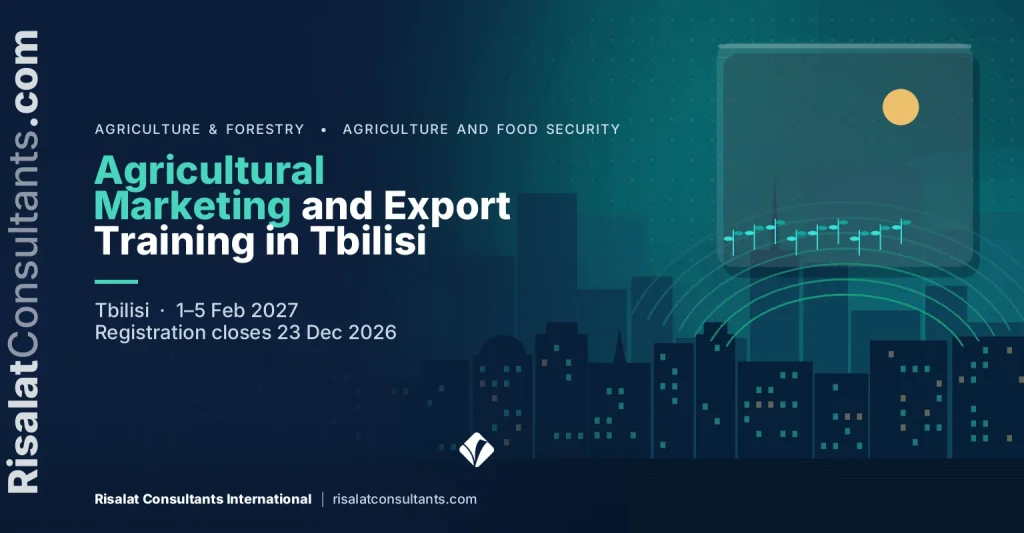
- 日期
- 2027年2月1–5日(5天)
- 地点
- 待定,格鲁吉亚第比利斯
- 每位学员费用
- £2,760(英镑)
- 付款
- 通过发票和银行转账付款
- 报名截止
- 2026年12月23日
- 形式
- 5-day short course: a practical capacity-building programme for government, NGO and project teams in Tbilisi
- 证书
- 结业证书
- 内训选项
- 按您的日期,为您的团队专场举办
本页内容16个部分
培训项目概述
Producing a good crop is only half the task; selling it at a fair price, to the right buyer, in a form that buyer wants is the other half. This five-day programme in Tbilisi covers the practical side of agricultural marketing: market research, segmentation, pricing, channels, branding, export requirements and the marketing plan that brings them together.
Georgia offers a working example of a small agricultural economy repositioning itself through markets. Agriculture’s share of GDP fell from 7.6% in 2022 to a preliminary 5.9% in 2025 according to Geostat, even though output kept growing, because services and trade grew faster. For producers and agencies, the response has been to compete on value rather than volume: origin products, processing, quality and new export markets.
Wine is the clearest case. The National Wine Agency reports that Georgia exported 82.3 million litres of wine worth about USD 245 million to 70 countries in January to November 2025, while the average export price rose to USD 2.98 per litre. In strategic markets such as the United States, Japan and the United Kingdom, average prices were well above USD 5 per litre, showing how positioning and branding change returns.
公共和捐赠者支持一直遵循这一市场焦点。政府的《2021至2027年农业和农村发展战略》以竞争力、可持续资源利用和食品安全为目标;欧盟的ENPARD计划自2013年以来一直支持农村发展;诸如优惠农业信贷项目等国家计划则帮助生产者和加工者进行投资。这些为本周的课程提供了案例素材。
Risalat works with ministries, agencies, cooperatives and agribusinesses to turn market evidence into marketing decisions. Participants leave with a tested marketing plan for a product they work with, plus templates for research, pricing and promotion.
The Programme Strengthens Institutional Capability
- Agricultural market research and demand analysis
- Customer segmentation and target market selection
- 价值主张与产品定位
- Pricing strategy and margin management
- Distribution channels and wholesale, retail and export routes
- Branding, packaging and origin labelling
- Geographical indications and quality schemes
- Export market entry and buyer requirements
- Food safety and standards as marketing assets
- 农产品的数字营销与电子商务
- Cooperative and group marketing
- Promotional campaign planning and budgeting
- Trade fair and buyer meeting preparation
- Market information systems and price monitoring
- Farm and enterprise marketing plans
- Monitoring sales and marketing performance
The programme suits both public bodies that support producers and enterprises that sell directly, and it is taught from the basics up so mixed teams can follow.
The Growing Importance of Agricultural Marketing
Market access now decides the success of many agricultural investments. Georgia’s Association Agreement with the European Union, including a Deep and Comprehensive Free Trade Area, opened a large market but also brought EU-aligned food safety and quality rules. The head of the National Food Agency has stated that up to 150 EU-aligned legal acts were approximated between 2015 and 2020, and producers still need help to meet buyer and regulatory expectations.
Georgian origin names are protected in the EU through the geographical indications provisions of the Association Agreement, and an EU twinning project with Sakpatenti, the national intellectual property centre, worked on GI control from farm to retail. For marketers, a protected name is only valuable when quality is controlled and the story reaches buyers.
Finance is also tied to markets. The Ministry of Environmental Protection and Agriculture reports that the Preferential Agrocredit project supported over 50,000 beneficiaries with loans of up to GEL 8.2 billion between 2013 and 2025. Investments in processing and storage need marketing plans that secure buyers and prices.
各机构日益需要具备以下能力的专业人员:
- Researching demand, competitors and buyer preferences
- Segmenting customers and choosing target markets
- Setting prices that cover costs and match the market
- Selecting and managing distribution channels
- Building brands and packaging for origin products
- 使用地理标志和质量标签
- Preparing for export buyer audits and certification
- Planning promotions, trade fairs and buyer meetings
- Running digital and social media marketing
- Organising group marketing through cooperatives
- 编写营销计划并进行成本核算
- Tracking sales, margins and market share
Strong agricultural marketing systems help organisations:
- Earn better prices for the same output
- Reduce dependence on one buyer or market
- Turn quality and origin into sales advantage
- Enter export markets with fewer rejections
- 根据需求安排生产
- Make investments in processing and storage pay back
- Strengthen cooperatives’ bargaining position
- Show results to lenders and support programmes
The common lesson across these programmes is that support works best when producers and agencies understand the buyer. This training gives participants a structured way to do that.
Who Should Attend This Agricultural Marketing Training?
本培训项目适合:
- Marketing and sales managers of agribusinesses and food processors
- General managers and business development managers in agri-enterprises
- Cooperative and producer organisation leaders
- Wineries, orchard, nut and horticulture producers
- Export managers and trade promotion officers
- Officials of ministries of agriculture and economy
- Staff of rural and agricultural development agencies
- Food safety and quality assurance officers
- PIU staff of agriculture and rural development projects
- Value chain and market systems advisers
- Agricultural credit officers assessing market risk
- 农技推广与商业咨询人员
- 非政府组织和发展伙伴项目官员
- Graduates and new staff entering agri-marketing roles
No prior marketing qualification is needed. Organisations can use our free training needs assessment to match nominees to the sessions that fit them best.
勾选您的团队需要具备的能力。
Agricultural Marketing Training Objectives
Upon successful completion of this Agricultural Marketing Training, participants will be able to:
- Explain the role of marketing in agricultural enterprises and value chains
- 为农产品开展实用的市场研究
- Segment customers and select target markets
- Develop a value proposition and positioning for a product
- Set pricing objectives and choose pricing methods
- 设计国内和出口市场的的分销渠道
- Use branding, packaging and origin labels effectively
- Apply food safety and quality requirements as part of the offer
- Plan promotional campaigns and buyer engagement
- Write, cost and monitor a farm or enterprise marketing plan
- Coordinate group marketing through cooperatives and associations
每个目标均通过真实的格鲁吉亚及区域案例进行练习,然后应用于每个参与团队选择的产品中。
培训项目内容与结构
- The role and concepts of agricultural marketing
- Actors and functions in agri-food marketing systems
- Supply, demand and price behaviour for farm products
- Georgia’s agri-food sector in numbers
- Sources of market information and price data
- Designing simple buyer and consumer surveys
- Competitor and substitute analysis
- Customer values, attitudes and buying behaviour
- Market segmentation methods for agri-products
- Selecting target markets and estimating their size
- Building a value proposition
- Positioning and image
- Product range, grading and value addition
- Market penetration and market development options
- Pricing objectives and cost-based pricing
- 基于市场和基于价值的定价
- Price risk and seasonal price patterns
- 批发、零售、餐饮服务和直销渠道
- Contracts with supermarkets and exporters
- Market coverage and channel selection
- Physical handling, storage and cold chain
- Logos, packaging, labelling and brand identity
- Origin stories and geographical indications
- 广告、人员推销与销售促进
- 数字与社交媒体营销
- Trade fairs and buyer meetings
- Food safety and quality systems as selling points
- EU market rules under the DCFTA
- 农场或企业营销计划的结构
- Linking marketing objectives to strategies
- Market retention and balancing strategies
- 通过合作社进行集团营销
- Lessons from EU-supported rural development in Georgia
- Budgeting and resourcing the plan
- Sales and marketing performance indicators
完整的每日课程内容
这五天从理解市场到设计产品、接触买家,最后撰写完整的营销计划。
- Day 1: Agricultural marketing systems and market research
- Day 2: Segmentation, positioning and product strategy
- Day 3: Pricing, channels and physical distribution
- 第 4 天:品牌、推广、质量与出口准入
- Day 5: The marketing plan and its management
完整的每日课程内容
First Day | Agricultural Marketing Systems and Market Research
- The role and concepts of agricultural marketing
- Actors and functions in agri-food marketing systems
- Supply, demand and price behaviour for farm products
- Georgia’s agri-food sector in numbers
- Sources of market information and price data
- Designing simple buyer and consumer surveys
- Competitor and substitute analysis
- Reviewing the business’s current market situation
- Setting the week’s team product
Workshop: Market Scan for a Georgian Product
Teams choose a product such as wine, hazelnuts, fruit or dairy and build a quick market scan using published statistics and buyer information. They identify current buyers, competitors and price ranges, and agree three questions their market research must answer before the business invests further.
Second Day | Segmentation, Positioning and Product Strategy
- Customer values, attitudes and buying behaviour
- Market segmentation methods for agri-products
- Selecting target markets and estimating their size
- Building a value proposition
- Positioning and image
- Product range, grading and value addition
- Market penetration and market development options
- Geographical indications as a positioning tool
- Setting marketing objectives
Case Study: Positioning Georgian Wine in Strategic Markets
利用国家葡萄酒局按市场划分的平均出口价格数据,参与者比较格鲁吉亚葡萄酒在美国、日本、德国、中国和波兰的定位。小组解释价格差异,然后为其自身产品草拟定位陈述和目标细分市场。
Third Day | Pricing, Channels and Physical Distribution
- Pricing objectives and cost-based pricing
- 基于市场和基于价值的定价
- Price risk and seasonal price patterns
- 批发、零售、餐饮服务和直销渠道
- Contracts with supermarkets and exporters
- Market coverage and channel selection
- Physical handling, storage and cold chain
- Logistics costs and delivery reliability
- Using credit programmes to finance market investments
Workshop: Channel and Price Model
Teams compare two routes to market for their product, for example a supermarket contract and an export distributor. They calculate the margin taken at each stage, the price needed to cover costs, and the volume and quality the channel demands, then recommend one route with reasons.
Fourth Day | Branding, Promotion, Quality and Export Access
- Logos, packaging, labelling and brand identity
- Origin stories and geographical indications
- 广告、人员推销与销售促进
- 数字与社交媒体营销
- Trade fairs and buyer meetings
- Food safety and quality systems as selling points
- EU market rules under the DCFTA
- Export documentation and buyer audits
- Creating customer awareness on a limited budget
Workshop: Promotional Campaign Plan
Each team designs a twelve-month promotional campaign for its product, covering brand message, channels, trade events and digital activity. Teams set a budget, a calendar and measures of success, and check that every claim on the label and in promotion can be supported by their quality controls.
Fifth Day | The Marketing Plan and Its Management
- 农场或企业营销计划的结构
- Linking marketing objectives to strategies
- Market retention and balancing strategies
- 通过合作社进行集团营销
- Lessons from EU-supported rural development in Georgia
- Budgeting and resourcing the plan
- Sales and marketing performance indicators
- Managing and reviewing the plan
- Team presentations and peer review
Capstone Exercise: Complete Marketing Plan
Teams bring together their research, positioning, price and channel model and promotional campaign into a complete marketing plan. They present it to a panel playing buyers and lenders, respond to questions on assumptions and risks, and finalise the plan with responsibilities and review dates.
Agricultural Marketing Training Methodology
The programme is interactive and built on adult learning principles. Short inputs lead into case analysis, calculation exercises and team work on a product each group knows well.
本培训项目融合了:
- Facilitator-led sessions on marketing concepts and tools
- Case studies from Georgia’s wine, horticulture and dairy sectors
- Analysis of real export and price data
- Market research and survey design exercises
- 细分与定位工作坊
- Price and margin calculations in spreadsheets
- Channel comparison simulations
- Branding and packaging critique sessions
- Promotional campaign design
- Team project carried through all five days
- 同行评审与专家小组演讲
- Templates ready for use at work
课程会根据参训群体进行调整,面向贸易导向的群体时侧重出口,而面向与小农合作的群体时则侧重合作营销。
预期成果
Upon completion of this Agricultural Marketing Training, participants will be able to:
- Run practical market research before investing
- Choose target markets with clear reasons
- Position products to earn better prices
- Set prices using costs, competition and value
- Select channels that match volume and quality
- Build brands and use origin labels effectively
- Plan and budget promotional campaigns
- Prepare for export buyer and regulatory requirements
- Manage and review a written marketing plan
Together, these outcomes help producers and agencies move from selling whatever is harvested to producing what buyers will pay for.
每位学员£2,760 · 通过发票和银行转账付款 · 5人及以上团体报名可享优惠
同一机构五人及以上:请在申请发票时索取团体价。
Ten or more: an in-house version for your institution may cost less per person. Ask for an in-house quote.
注册截止时间为 30天后(2026年12月23日)
Institutional Application of Agricultural Marketing Training
本培训项目帮助机构加强:
- Market intelligence and price monitoring
- Export promotion and buyer linkage services
- 合作与集体营销支持
- Branding and origin product programmes
- Quality and food safety communication
- Assessment of market risk in grants and loans
- Marketing advice in extension services
- Trade fair and promotion planning
- Value chain programme design
- 销售与市场结果监测
学员将带着实用工具回到工作岗位,以提升:
- Market scan and survey templates
- 市场细分与定位练习表
- Price and margin calculators
- Channel comparison model
- Promotional campaign planner
- Marketing plan template
- 销售和营销指标表
- Export readiness checklist
Agencies reviewing how well their teams are organised to support producers can pair this training with our institutional capacity assessment.
区域相关性与应用
欧洲
The EU’s Deep and Comprehensive Free Trade Areas with Eastern Partnership countries link market access to food safety and quality rules. Georgia’s experience with approximation, geographical indications and EU-funded rural development is directly useful for agencies and exporters in neighbouring partner countries.
亚洲
Central Asian and Caucasus producers are diversifying export markets and adding value through processing. Georgia’s positioning of wine in Japan, South Korea and China shows how origin products can reach distant Asian buyers, a lesson relevant to exporters of fruit, nuts and specialty foods.
中东
Importing countries in the region demand reliable volumes, clear labelling and halal or other certification. Exporters and trade agencies from the region gain from understanding how supplying countries organise channels, quality and promotion.
非洲
Many African agriculture programmes now focus on market linkages, cooperatives and branding of origin products. The research, pricing and group marketing tools used in the week apply directly to value chain projects financed by multilateral partners.
Mixed regional teams compare markets and constraints, which helps every participant test their own assumptions against other experiences.
来源:格鲁吉亚国家统计局,据《今日格鲁吉亚》报道(2025年初步数据)
1. What was the average export price of Georgian wine in 2025?
The National Wine Agency reported an average export price of USD 2.98 per litre in 2025, up from USD 2.91 in 2024.
2. Which of these is one of the three priorities of Georgia's 2024–2027 agriculture action plan?
The government approved an action plan of 88 activities with competitiveness, sustainable resources and food safety, veterinary and plant protection as its priorities.
3. Roughly how many beneficiaries has Georgia's Preferential Agrocredit project supported since 2013?
The Ministry of Environmental Protection and Agriculture reported over 50,000 beneficiaries and loans of up to GEL 8.2 billion between 2013 and 2025.
东道国概况:格鲁吉亚
Georgia sits between the Black Sea and the Caucasus mountains, with a farming tradition built around vineyards, orchards, nuts, dairy and livestock. Tbilisi, the capital, hosts the ministry, its agencies, development partners and many agribusiness head offices, making it a convenient base for a programme on marketing farm products.
The country is a useful benchmark because it combines an EU trade agreement, protected origin names, a national agriculture strategy with a 2024–2027 action plan of 88 activities, and long-running support through ENPARD, the World Bank’s Georgia Resilient Agriculture, Irrigation and Land Project and IFAD’s dairy modernisation work. Participants can see how policy, finance and marketing interact in a small, open economy.
第比利斯有直飞欧洲、中东、土耳其和中亚的航班。许多国籍的旅客可以免签入境格鲁吉亚,其他人可以网上申请,但规则因护照而异,因此参与者应尽早查阅最新要求。Risalat提供签证指导和接机服务,任何实地考察均与主办机构确认。
Agricultural Marketing Training Deliverables
Risalat provides a full package so participants can concentrate on learning and applying it.
培训开始前
- 学员课前评估
- Agricultural Marketing Readiness Assessment
- Agricultural Marketing Resource Pack
- 课前阅读资料
- 免费签证支持与咨询
培训期间
- 机场接机与欢迎协助
- Accommodation with breakfast: 6 nights, check-in Sunday 31 January 2027, check-out Saturday 6 February 2027 (one night before and one night after the programme)
- 欢迎交流晚宴
- Risalat培训礼包(背包、水瓶、马克杯、T恤、帽子、护照套、笔、笔记本、冰箱贴及钥匙扣)
- Comprehensive Agricultural Marketing Training Manual
- Market Scan and Survey Template
- 市场细分与定位练习表
- Price and Margin Calculator
- Channel Comparison Model
- Promotional Campaign Planner
- Export Readiness Checklist
- 实践研讨与模拟演练
- 小组讨论与同伴学习
- 每日午餐与茶歇
- 全面使用培训场地设施
- 装有数字学习资料的迷你平板电脑
- 实地考察(如适用)
- 城市休闲观光
培训结束后
- 结业证书
- Risalat培训项目参与表彰奖
- 培训后参考资料
- Team Marketing Plan
- Sales and Marketing Indicator Sheet
- 培训后支持与跟进指导
- 培训项目报告
各部委、机构、合作社和公司还可以申请量身定制的提案,以获取围绕其自身产品和市场量身打造的内部培训版本。
农业营销中的常见挑战以及本培训如何提供帮助
How can producers find out what buyers really want?
Many investments are made before demand is checked. The First Day market research sessions show low-cost ways to collect buyer, price and competitor information before committing money.
How can small producers escape low prices for undifferentiated products?
作为大宗商品销售的利润空间很小。第二天的定位环节和葡萄酒案例研究展示了分级、增值和原产地如何支持更好的价格。
How can prices be set when costs and markets keep changing?
Pricing by habit often loses money. The Third Day pricing sessions combine cost, competition and value methods and build a simple calculator participants can update.
How can a business choose between local and export channels?
Each channel has different volume, quality and payment terms. The Third Day channel model compares routes side by side so the choice is based on margins and risk.
原产地名称和质量标志如何真正增加价值?
A protected name helps only if quality is controlled and buyers know the story. The Fourth Day covers geographical indications, labelling and the quality controls behind marketing claims.
How can exporters meet EU and other buyer requirements?
Rejections and failed audits damage reputation. The Fourth Day sessions on food safety, DCFTA rules and export documentation help teams prepare before approaching buyers.
How can marketing plans be kept alive after they are written?
Plans are often filed and forgotten. The Fifth Day covers budgeting, indicators and review routines that make the plan a working management tool.
常见问题
Who should attend the Agricultural Marketing Training in Tbilisi?
Marketing, sales and general managers of agribusinesses, cooperative leaders, exporters, and officials and project staff who support producers in reaching markets.
Is previous marketing experience required?
不会。该项目从基础开始,逐步延伸到出口营销和完整的营销计划,因此混合团队可以参加。
使用了哪些格鲁吉亚的例子?
Sessions use National Wine Agency export and price data, Georgia's geographical indications experience under the EU Association Agreement, and rural development support such as ENPARD.
Will participants produce something they can use at work?
Yes. Each team leaves with a market scan, price and channel model, promotional campaign and complete marketing plan for a product of its choice.
本培训项目能否以内训形式举办?
可以。机构可以申请专注于其自身产品、市场和员工的定制版本。
Who Will Deliver This Programme
Each date is delivered by a team assigned from Risalat's expert network for this subject. For this programme we assign:
How we choose them: Experience in the region of the participants or comparable settings; Command of the financier rules that apply (World Bank, ADB, AfDB, EU, UN) where relevant; Delivery in English; other languages on request for in-house groups; No conflict of interest with participants' institutions.
Training courses in TbilisiAgriculture & Forestry training courses
为何选择在第比利斯举办本培训项目
第比利斯以公共服务大厅和反腐败改革而闻名,并对许多国家提供便利的签证政策。
The Agricultural Marketing and Export Training in Tbilisi programme in February 2027 brings together officials and professionals from across the Caucasus region and beyond. Sessions combine short inputs, case studies and group work on participants' own files, and the city's institutions can be added as a study visit on request.
交通:第比利斯国际机场(TBS)。
使用免费的签证查询工具确认您是否需要签证,完成报名后即可申请邀请函。
其他城市的同主题培训
- Pastoral Rangeland Management and Livestock Value Chain Resilience in Nairobi (Nairobi)
- 卡萨布兰卡的农业食品创新与气候智慧型畜牧业系统(卡萨布兰卡)
- Agro-Logistics Hub Infrastructure and Regional Value Chain Linkages in Tbilisi (Tbilisi)
- Agribusiness Incubator Design and Smallholder Market Linkages in Nadi (Nadi)
- Post-Harvest Handling, Cold Chain Logistics & Export Standards in Kuala Lumpur (Kuala Lumpur)
- 加德满都营销管理培训(加德满都)
第比利斯的其他培训项目
- Performance Management in Government in Tbilisi
- Mountain Highway Slope Protection and Mudflow Barrier Engineering in Tbilisi
- Hydro Plant Electro-Mechanical Refurbishment and Turbine Rehab in Tbilisi
- Modern Irrigation Scheme Modernisation and Water Conveyance Systems in Tbilisi
- Secondary Road Rehabilitation and Climate-Proof Pavement Design in Tbilisi
相关:企业与中小企业发展培训项目 · 免费培训需求评估 · 全部培训项目
Teams often travel here from Azerbaijan, Georgia, Armenia, Ukraine, Moldova, Albania, Serbia, North Macedonia. Funding, visa letters and group rates are explained on each country page.
For teams and institutions
Bring your team
Teams that learn together apply more at work. Tell us how many people and how you would like to take part: we reply with a group quote within two working days.
该主题的其他日期和城市:农业、价值链与粮食安全培训课程(96个即将到来的日期)。
格鲁吉亚更多培训课程 · 亚洲所有培训项目 · 完整培训日历
在路线图中规划此项目:为什么重要、为什么要批准它、要计划的日期以及它所构建的职业生涯。