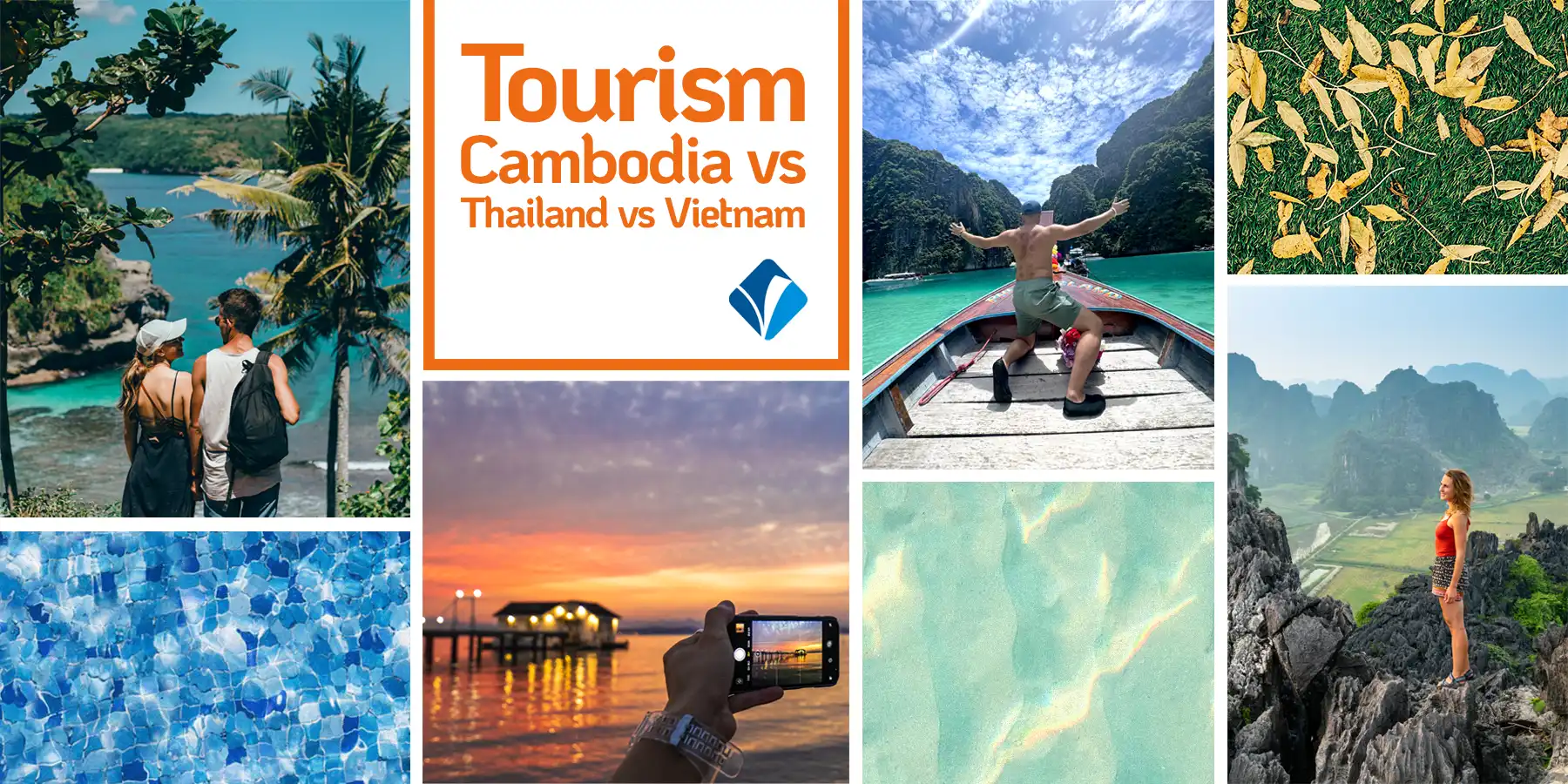
Cambodia’s tourism competitiveness in Southeast Asia presents an intriguing paradox. Cambodia and Thailand share cultural, political, and economic ties, yet they clashed in deadly border skirmishes between 2008 and 2011. The conflict escalated when artillery fire and airstrikes killed 38 people and forced more than 300,000 residents to flee their homes along the border in July 2025. These conflicts paint a picture of a region where historical tensions and modern tourism aspirations collide.
Cambodia and Vietnam’s relationship tells another complex story. Their war from 1978 to 1989 claimed over 200,000 Cambodian civilian lives. Both countries now compete for tourist dollars, moving past their troubled history. Their tourism industries grow faster each year. Thailand’s traditional dominance faces real challenges from both neighbors, creating an intense three-way competition for Southeast Asian tourism leadership.
This piece will get into how these three nations utilize their distinct historical identities and break down their post-pandemic recovery strategies. We’ll learn about how regional organizations like ASEAN work to keep tourism from becoming another flashpoint in this ever-changing region.
Tourism Roots and Historical Identity
The unique tourism identity of each Southeast Asian nation stems from its historical roots. Their different approaches to tourism show how deep-rooted historical stories continue to shape their market position today.
Cambodia’s tourism of heritage: Angkor Wat and post-Khmer Rouge revival
Angkor Wat stands as the crown jewel of Cambodia’s tourism appeal. This Southeast Asia’s most important archeological site covers over 400 km². The magnificent complex has seen remarkable growth in visitors – from just 7,650 in 1993 to more than two million foreign tourists by 2013, reaching 2.6 million in 2018. UNESCO named it a World Heritage site in 1992, though threats from the Cambodia-Vietnam conflict put it on the endangered list initially.
Cambodia’s cultural heritage bounced back strongly after the devastating Khmer Rouge regime. The country restored over 320 pagodas between 1979 and 2022. The 1990s saw peak restoration activity with 12 pagodas rebuilt yearly. This revival went beyond buildings – a 2020 survey showed 85% of people saw the Apsara dance as key to their national identity.
Thailand’s royal legacy and early tourism boom
The Thai monarchy, dating back to the 13th-century Sukhothai Kingdom, remains at the core of Thailand’s tourism identity. Thailand’s edge in tourism comes in part from its unique status – it never faced colonization, which helped preserve its cultural heritage. The country’s tourism roots go back to the Rattanakosin Period (1782 to present). King Rama I moved the capital to what we now know as Bangkok and built iconic landmarks like the Grand Palace.
Royal traditions and developments still drive Thailand’s tourism appeal. Big events like the Coronation Ceremonies, Royal Ploughing Ceremony, and the rare Royal Barges Procession catch worldwide attention.
Vietnam’s war history and cultural renaissance
Vietnam turned its war history into a powerful tourism story. History buffs flock to war tourism sites across the country. The War Remnants Museum in Ho Chi Minh City, Reunification Palace, Cu Chi Tunnels, and the Demilitarized Zone (DMZ) offer powerful insights into what Vietnamese people call the “American War”.
Vietnam’s cultural revival adds to its tourism appeal. The country now has 32 UNESCO-recognized world heritage items – 5 cultural heritage sites and 24 intangible cultural elements. This rich heritage helped Vietnam win “Top Asia Destination for Heritage, Culture and Cuisine” at the World Travel Awards from 2018-2020 and again in 2023.
Each nation takes a unique path to heritage tourism. Cambodia’s tourism rebuilds after conflict, Thailand showcases its royal heritage, and Vietnam blends war memories with cultural revival. These distinct stories shape how they compete to attract tourists in Southeast Asia.
Post-Pandemic Recovery Strategies
Southeast Asian nations had to create innovative recovery strategies when the pandemic hit. These strategies ended up altering their tourism landscape by speeding up digital transformation and building new competitive edges.
Cambodia tourism 2022–2023: Rebuilding after COVID-19
Cambodia’s tourism bounce-back showed remarkable resilience after COVID-19’s devastating effects. International arrivals soared from approximately 200,000 in 2021 to 2.3 million in 2022. The numbers more than doubled to 5.4 million in 2023. This recovery got its boost from diverse source markets including Thailand, Vietnam, China, USA, and France.
The government created a clear “Roadmap for Recovery” with three phases – crisis management (2020-2021), recovery (2022-2023), and preparation for the future (2024-2025). The Asian Development Bank reports that this careful planning has set Cambodia’s tourism sector to grow at 7.3% in 2023 and 6.8% in 2024. These numbers substantially contribute to the country’s expected economic growth of 5.5% in 2023.
Thailand’s sandbox model and digital nomad push
Thailand led the way with creative reopening strategies through its “Sandbox” model, which started in Phuket on July 1, 2021. This game-changing approach let fully vaccinated travelers enter without quarantine. The program started with a 14-day stay requirement that later dropped to 7 days. Soon, it expanded beyond Phuket to include spots in Krabi, Surat Thani, and Phang-Nga provinces.
Thailand went beyond traditional tourism by launching the Destination Thailand Visa (DTV) for digital nomads. This visa allows stays up to 180 days per visit with multiple entries over five years. This smart change recognizes new work patterns and helped Thailand welcome 17.5 million foreign tourists in the first half of 2025, jumping 35% from the previous year. Thailand’s bold “Workation Paradise” initiative wants to attract 39 million international visitors and generate over 3 trillion Baht in tourism revenue.
Vietnam’s phased reopening and domestic tourism boost
Vietnam rolled out a careful three-phase reopening plan. It started in November 2021 with pilot projects in five major destinations including Phu Quoc. The country threw open its doors to international tourists on March 15, 2022. This led to an impressive recovery from 3.7 million visitors in 2022 to 12.6 million in 2023 and 17.6 million in 2024.
Vietnam achieved Southeast Asia’s strongest recovery, reaching 98% of pre-pandemic levels. There’s another reason why Vietnam succeeded – its domestic market became the “salvation of the industry” during border closures. Domestic trips hit an impressive 101.3 million in 2022, beating pre-pandemic records.
Soft Power and Global Perception
Soft power has become a vital battleground where Cambodia, Thailand, and Vietnam compete through cultural influence and global perception to dominate tourism.
Cambodia tourism board campaigns and international image
Cambodia’s tourism Board (CTB) built strategic collaborations to raise the country’s global visibility. CTB signed a Memorandum of Understanding with Visa in 2025 to showcase Cambodia’s rich cultural heritage and natural landscapes to Visa’s global customer base. This partnership wants to modernize Cambodia’s international promotion while using data about traveler behaviors to create targeted campaigns. CTB’s CEO Kim Minea said this collaboration represents “an important step in modernizing how Cambodia could be promoted to the world”.
The board also partnered with Nanjing Tuniu International Travel Service to attract more Chinese tourists. This partnership supports the “Cambodia-China Tourism Year 2025” campaign and aligns with Cambodia’s vision: “To make Cambodia a globally cherished destination, offering authentic experiences rooted in a genuine Cambodian spirit”.
Thailand’s global branding through festivals and wellness
Thailand raised its global brand through a complete “5F” soft power strategy that Prime Minister Prayut Chan-o-cha endorsed in 2022. The strategy promotes Thailand’s cultural resources through:
- Food: Thai cuisine with Michelin recognition
- Film: Collaborations with global producers
- Fashion: Thai fabrics and jewelry
- Fighting: Muay Thai martial arts
- Festivals: Songkran and international events
Thailand’s wellness sector grew remarkably. Wellness tourism increased by 119.5% yearly while the overall wellness market expanded from KHR 126655.74 billion in 2022 to KHR 162327.77 billion in 2023. These achievements made Thailand the world’s 15th largest wellness tourism destination. The country also won the Top Global Spa & Wellness Destination award at the Hospitality Horizon Spa & Wellness Awards 2025.
Vietnam’s rising appeal through food, culture, and safety
Vietnam turned its culinary heritage into a powerful tourism asset. The World Food Travel Association found that 81% of international travelers want to explore local cuisine and spend 25-35% of their travel budgets on food and beverages. Vietnam capitalized on this trend and Travel + Leisure named it the Best Culinary Destination of the Bucket List Places in Asia for 2023.
Vietnam got recognition for its safety and stability. The country has 5 UNESCO World Cultural Heritage Sites and 15 Intangible Cultural Heritage sites. This creates strong appeal for luxury travelers who seek authentic experiences.
Vietnam’s tourism marketing improved through digital strategies and partnerships. The government introduced better visa policies with visa exemptions for 13 European countries in 2025. More nonstop international flights helped Vietnam achieve the strongest tourism recovery in Southeast Asia, reaching 98% of pre-pandemic levels.
Geopolitics and Tourism Influence
The tourism landscape in Southeast Asia is changing as major powers use tourism development to extend their foreign policy goals.
China’s investment in Cambodia’s tourism infrastructure
China dominates Cambodia’s economic scene with half of all direct investment and most foreign aid. Chinese influence runs deep into Cambodia’s tourism infrastructure through its Belt and Road Initiative (BRI). The new Techo International Airport shows this partnership perfectly. Built with Chinese money, it will replace Phnom Penh’s current airport and can handle 13 million passengers – nearly triple the old facility’s 5 million capacity.
The Dara Sakor project reveals China’s bigger plans. Chinese firm UDG got a 99-year lease in 2008 for 45,000 hectares – about one-fifth of Cambodia’s coastline – with minimal payments. The company plans to build homes for 1.3 million people and welcome 7 million tourists yearly by 2030.
US-Vietnam ties and their effect on tourism growth
US-Vietnam relations have grown into a “Comprehensive Strategic Partnership” that sets the stage for tourism growth. American tourist numbers in Vietnam hit 780,000 in 2024, which is four times higher than 2022 and beats pre-pandemic levels. These visitors spend well, putting down $150-$163 per trip, and many happily pay $38-$95 daily for premium experiences.
Vietnam wants to attract 1.5-2 million American visitors yearly by 2030. They’re looking at short-term visa exemptions for US citizens to help reach this goal. Direct flights between both countries by Vietnamese airlines have helped boost demand, with 16-20% yearly growth.
Thailand’s balancing act between East and West
Thailand’s tourism sector skillfully manages complex geopolitical relationships and benefits when regional tensions affect other destinations. As Hong Kong and Taiwan face challenges, Thailand attracts their lost visitors, especially Chinese tourists who spend more than average.
This smart positioning helps Thailand’s economy grow – every 10% rise in foreign tourists adds 0.8-1.7 percentage points to its GDP. The country stands between major powers and attracts visitors from everywhere while staying politically neutral. This careful balance pays off well in Southeast Asia’s competitive tourism market.
ASEAN’s Role in Regional Tourism Integration
ASEAN plays a crucial role in bringing together regional tourism interests while balancing the needs of its member states. Southeast Asia’s tourism market hasn’t reached its full potential under ASEAN’s leadership yet.
Visa-free travel and ASEAN tourism corridors
The ASEAN Framework Agreement on Visa Exemption lets citizens from member countries travel without visas for up to 14 days. Cambodia’s visa rules aren’t as welcoming as its neighbors, and most international visitors need to get their visas before arrival.
Joint marketing campaigns and missed opportunities
ASEAN wants to market itself as one destination through campaigns like “Feel the Warmth” and “Southeast Asia: the warmest place on Earth.” The ASEAN Tourism Strategic Plan 2016-2025 focuses on connecting Cambodia’s heritage sites with Thailand’s beaches and Vietnam’s cultural spots. Research shows these campaigns don’t work well because not all countries participate equally.
Can ASEAN prevent tourism from becoming a geopolitical battleground?
ASEAN’s tourism integration faces several roadblocks due to political tensions. The organization was created as an economic community but doesn’t deal very well with keeping tourism separate from political issues. Cambodia’s tourism plans sometimes go against ASEAN’s shared approach, which shows how countries still put their interests first. Chinese investment now shapes Cambodia’s tourism infrastructure more than ever. ASEAN needs to keep its tourism policies united to stop the industry from becoming another playground for competing global powers.
Comparison Table
| Aspect | Cambodia | Thailand | Vietnam |
| 2023 International Visitors | 5.4 million | 17.5 million (first half 2025) | 12.6 million |
| Key Heritage Sites | Angkor Wat (400 km²) UNESCO site | Grand Palace, Royal ceremonial sites | 5 UNESCO Cultural Heritage sites, 24 intangible cultural heritage elements |
| Post-Pandemic Recovery Strategy | Three-phase “Roadmap for Recovery” (2020-2025) | “Sandbox” model, Digital Nomad visa program | Three-phase reopening with focus on domestic tourism |
| Growth Forecast (2023-2024) | 7.3% (2023), 6.8% (2024) | Targeting 39 million visitors | 98% of pre-pandemic levels achieved |
| Major Tourism Partnerships | Visa partnership, Nanjing Tuniu International Travel Service | “5F” soft power strategy (Food, Film, Fashion, Fighting, Festivals) | Travel + Leisure recognition with 13 European countries visa exemption |
| Infrastructure Development | Techo International Airport (13 million capacity), Dara Sakor project | Workation Paradise initiative | More international flights, Better cultural site preservation |
| Main Market Focus | Thailand, Vietnam, China, USA, France | Digital nomads, Wellness tourism | Culinary tourism, Cultural heritage, American market |
| Unique Selling Point | Ancient temple complexes, Cultural revival | Wellness tourism, Royal heritage | War history tourism, Food excellence |