Points clés
- Dates
- 1–5 févr. 2027 (5 jours)
- Lieu
- À confirmer, Vilnius, Lituanie
- Frais par participant
- 3 650 £ (GBP)
- Paiement
- Sur facture et par virement bancaire
- Clôture des inscriptions
- 23 déc. 2026
- Format
- 5-day short course: a practical capacity-building programme for government, NGO and project teams in Vilnius
- Certificat
- Certificat de participation
- Option intra
- Organisez-le pour votre équipe, à vos dates
Sur cette page 16 sections
Présentation du programme
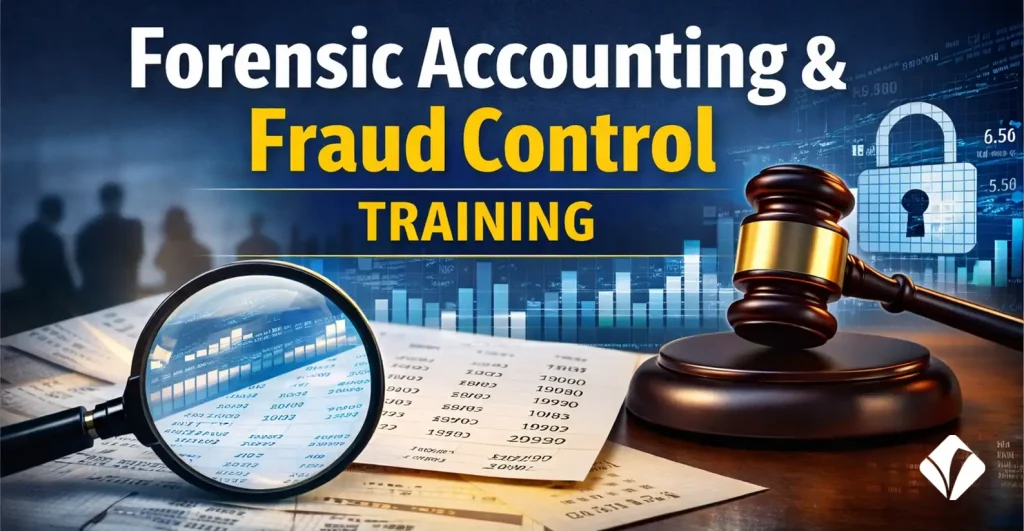
The Forensic Accounting and Fraud Control Training in Vilnius is an applied five-day professional development programme for officials, managers and specialists responsible for decisions, assurance and implementation. It connects technical methods with practical work products that participants can adapt to their own institutions.
Free self-check: the governance self-audit gives a quick check of governance, controls and accountability, in about 10 minutes.
The programme is hosted in Vilnius, Lithuania. It is designed for public institutions, donor-financed project teams, regulators and organisations that need documented decisions and reliable operational controls. The venue is a learning location, not a claim that a local institution is providing a confirmed technical visit.
Les participants travaillent sur des dossiers de cas réalistes mais fictifs couvrant les registres des risques de fraude, les paiements en double et les journaux de preuves. Les exercices distinguent les exigences liées à un bailleur de fonds ou à une juridiction particulière des bonnes pratiques générales. Aucun financement de projet ni arrangement de nomination n'est implicite.
The curriculum develops a continuous workflow from initial assessment and planning to evidence gathering, quality assurance, management reporting and institutional follow-up. It also encourages participants to identify gaps in existing policies before applying any international reference framework.
The Programme Strengthens Institutional Capability
- Fraud risk registers
- Transaction testing
- Journal-entry analytics
- Duplicate payments
- Conflict-of-interest checks
- Case triage
- Evidence logs
- Chain of custody
- Plans d'entretien
- Investigation reports
- Contrôles internes
- Whistleblowing
- Red-flag escalation
- Procurement anomalies
- Recovery pathways
- Audit trails
Each participant builds a portfolio of draft tools and a short implementation plan, with responsibilities, verification points and a timetable for management review.
The Growing Importance of Forensic accounting and fraud control
Institutions are expected to demonstrate not only that activities have been completed, but that decisions are consistent, traceable and proportionate to risk. In forensic accounting and fraud control, weak definitions, fragmented records and unclear accountability can make otherwise sound work difficult to defend or improve.
The reference materials listed below offer official frameworks relevant to parts of this curriculum. They do not establish that any named institution has committed funds to this course. Participants should check the rules governing their own country, employer and financed project before adopting the examples.
Les organisations ont de plus en plus besoin de professionnels capables de :
- Assess fraud risk registers using documented criteria
- Assess transaction testing using documented criteria
- Assess journal-entry analytics using documented criteria
- Assess duplicate payments using documented criteria
- Évaluer les contrôles des conflits d'intérêts à l'aide de critères documentés
- Assess case triage using documented criteria
- Assess evidence logs using documented criteria
- Assess chain of custody using documented criteria
- Assess interview plans using documented criteria
- Assess investigation reports using documented criteria
- Assess internal controls using documented criteria
- Assess whistleblowing using documented criteria
Strong forensic accounting and fraud control systems help organisations:
- Improve the consistency of interview plans
- Improve the consistency of investigation reports
- Improve the consistency of internal controls
- Improve the consistency of whistleblowing
- Improve the consistency of red-flag escalation
- Improve the consistency of procurement anomalies
- Améliorer la cohérence des parcours de rétablissement
- Improve the consistency of audit trails
A workable system needs clear ownership, tested records and decisions that can be reviewed independently. The sessions translate these requirements into small, repeatable routines rather than a one-off report.
Who Should Attend This Forensic Accounting and Fraud Control Training?
Ce programme s'adresse à :
- Ministry department directors
- Government policy analysts
- Project implementation unit managers
- Project management unit coordinators
- Technical assistance team leaders
- Auditeurs internes
- Compliance officers
- Procurement specialists
- Finance managers
- Monitoring and evaluation officers
- Data and reporting analysts
- Programme quality assurance staff
- Institutional development specialists
- Public sector trainers
- Development partner focal points
- Consultants soutenant les organismes publics
Participants should bring a description of one institutional process they wish to improve, without sharing confidential personal or commercial information.
Cochez ce que votre équipe doit être capable de faire.
Forensic Accounting and Fraud Control Training Objectives
Upon successful completion of this Forensic Accounting and Fraud Control Training, participants will be able to:
- Expliquer l'objectif institutionnel et les limites de la comptabilité forensique et du contrôle des fraudes
- Assess existing procedures against relevant documented requirements
- Identify critical stakeholders and decision rights
- Prioritise operational risks and quality weaknesses
- Select appropriate methods and tools for the task
- Document assumptions and supporting evidence
- Design practical controls and review checkpoints
- Utiliser des jeux de données d'échantillon ou des dossiers de cas de manière responsable
- Communicate findings to decision-makers
- Préparer un plan d'action et de ressources proportionné
- Monitor follow-up and adjust implementation
The emphasis is on demonstrable workplace outputs, with peer feedback and facilitator review of the methods selected.
Contenu et structure du programme
- Distinguer l'erreur, l'irrégularité et la suspicion de fraude
- Map asset misuse, corruption and reporting schemes
- Évaluer l'exposition à la fraude inhérente et résiduelle
- Define responsibilities and investigation thresholds
- Identify independence and confidentiality risks
- Review accounting records and audit trails
- Develop an initial allegation triage matrix
- Analyse journal-entry and payment anomalies
- Identify duplicate invoices and split purchases
- Test vendor-master changes and bank details
- Comparer les bons de commande, les reçus et les paiements
- Screen conflicts of interest with due process
- Use ratio and trend analysis cautiously
- Document red flags without presuming guilt
- Prepare a controlled transaction dataset
- Run spreadsheet filters and exception tests
- Apply Benford analysis only where appropriate
- Preserve original files and access records
- Record evidence provenance and chain of custody
- Prioritise leads using materiality and risk
- Cross-check exceptions against source documents
- Set investigation scope and terms of reference
- Build an allegation and evidence matrix
- Planifier des entretiens sans techniques coercitives
- Coordinate with legal and human resources teams
- Protect whistleblowers and sensitive information
- Differentiate findings from unproven allegations
- Write clear factual investigation reports
- Map controls to priority fraud scenarios
- Strengthen segregation of duties and approvals
- Design exception monitoring and ownership
- Improve procurement and payment controls
- Establish safe reporting and response channels
- Measure control effectiveness and remediation
- Draft a management action plan with owners
Contenu détaillé jour par jour
The five-day sequence builds from diagnosis to an institutional improvement proposal. Each day includes guided technical work and a documented practical exercise.
- Premier jour : risques de fraude et fondements de la comptabilité juricomptable
- Deuxième jour : signaux d'alerte et test des états financiers
- Third Day: Transaction analytics and evidence handling
- Fourth Day: Investigation planning and reporting
- Fifth Day: Prevention controls and case closure
Contenu détaillé jour par jour
First Day | Fraud risks and forensic accounting foundations
- Distinguer l'erreur, l'irrégularité et la suspicion de fraude
- Map asset misuse, corruption and reporting schemes
- Évaluer l'exposition à la fraude inhérente et résiduelle
- Define responsibilities and investigation thresholds
- Identify independence and confidentiality risks
- Review accounting records and audit trails
- Develop an initial allegation triage matrix
- Document escalation and referral decisions
Workshop: Fraud risks and forensic accounting foundations application
Working in small teams, participants apply the day’s methods to a fictional institutional scenario. They produce a short decision-ready artefact, record key assumptions, identify unresolved evidence gaps and receive structured feedback. The output is retained for the final institutional action plan.
Second Day | Red flags and financial statement testing
- Analyse journal-entry and payment anomalies
- Identify duplicate invoices and split purchases
- Test vendor-master changes and bank details
- Comparer les bons de commande, les reçus et les paiements
- Screen conflicts of interest with due process
- Use ratio and trend analysis cautiously
- Document red flags without presuming guilt
- Create a risk-based testing programme
Atelier : Signes d'alerte et application des tests sur les états financiers
Working in small teams, participants apply the day’s methods to a fictional institutional scenario. They produce a short decision-ready artefact, record key assumptions, identify unresolved evidence gaps and receive structured feedback. The output is retained for the final institutional action plan.
Third Day | Transaction analytics and evidence handling
- Prepare a controlled transaction dataset
- Run spreadsheet filters and exception tests
- Apply Benford analysis only where appropriate
- Preserve original files and access records
- Record evidence provenance and chain of custody
- Prioritise leads using materiality and risk
- Cross-check exceptions against source documents
- Prepare a defensible analytical working paper
Case Study: Transaction analytics and evidence handling application
Working in small teams, participants apply the day’s methods to a fictional institutional scenario. They produce a short decision-ready artefact, record key assumptions, identify unresolved evidence gaps and receive structured feedback. The output is retained for the final institutional action plan.
Quatrième jour | Planification des enquêtes et établissement des rapports
- Set investigation scope and terms of reference
- Build an allegation and evidence matrix
- Planifier des entretiens sans techniques coercitives
- Coordinate with legal and human resources teams
- Protect whistleblowers and sensitive information
- Differentiate findings from unproven allegations
- Write clear factual investigation reports
- Review referral, remediation and closure options
Workshop: Investigation planning and reporting application
Working in small teams, participants apply the day’s methods to a fictional institutional scenario. They produce a short decision-ready artefact, record key assumptions, identify unresolved evidence gaps and receive structured feedback. The output is retained for the final institutional action plan.
Fifth Day | Prevention controls and case closure
- Map controls to priority fraud scenarios
- Strengthen segregation of duties and approvals
- Design exception monitoring and ownership
- Improve procurement and payment controls
- Establish safe reporting and response channels
- Measure control effectiveness and remediation
- Draft a management action plan with owners
- Present a fraud control improvement roadmap
Exercice de synthèse : contrôles de prévention et application de la clôture des cas
Working in small teams, participants apply the day’s methods to a fictional institutional scenario. They produce a short decision-ready artefact, record key assumptions, identify unresolved evidence gaps and receive structured feedback. The output is retained for the final institutional action plan.
Méthodologie de la formation à la juricomptabilité et au contrôle de la fraude
Facilitators use short briefings, individual exercises and group-based problem solving. Case data are illustrative, with assumptions made explicit; the exercises do not represent an audit or certification of any real organisation.
Le programme associe :
- Expert-led technical briefings
- Examens facilités des politiques et des processus
- Dossiers de cas anonymisés ou fictifs
- Spreadsheet and template exercises
- Small-group scenario analysis
- Role-based decision simulations
- Peer comparison of institutional practices
- Guided risk and control mapping
- Structured facilitator feedback
- Réflexions quotidiennes sur l'apprentissage
- Action planning and presentation practice
- Reference checks against original standards
Participants can adapt worksheets to their own institution after reviewing local legal requirements, confidentiality rules and management approvals.
Résultats attendus
Upon completion of this Forensic Accounting and Fraud Control Training, participants will be able to:
- Present a baseline of current institutional practice
- Produire un registre des risques et des problèmes
- Draft a quality assurance checklist
- Explain key requirements to colleagues
- Prepare a credible management briefing
- Établir un plan de gestion des preuves et des dossiers
- Identify priorities for staff development
- Set measurable implementation milestones
- Evaluate whether controls are operating as intended
- Présenter une proposition d'amélioration institutionnelle
These are intended learning outcomes, not guaranteed changes in an employer’s systems or compliance status.
3 650 £ par participant · facture et virement bancaire · remise pour les groupes de 5 personnes ou plus
Cinq personnes ou plus d'une même organisation : demandez le tarif de groupe lors de votre demande de facture.
Ten or more: an in-house version for your institution may cost less per person. Ask for an in-house quote.
Registration closes in 30 days (23 Dec 2026)
Institutional Application of Forensic Accounting and Fraud Control Training
Ce programme aide les organisations à renforcer :
- Appropriation des registres des risques de fraude
- Ownership of transaction testing
- Ownership of journal-entry analytics
- Détection des paiements en double
- Ownership of conflict-of-interest checks
- Ownership of case triage
- Ownership of evidence logs
- Ownership of chain of custody
- Ownership of interview plans
- Ownership of investigation reports
- Appropriation des contrôles internes
- Ownership of whistleblowing
Les participants repartent avec des outils pratiques pour améliorer :
- Documentation and review of interview plans
- Documentation and review of investigation reports
- Documentation and review of internal controls
- Documentation and review of whistleblowing
- Documentation and review of red-flag escalation
- Documentation and review of procurement anomalies
- Documentation and review of recovery pathways
- Documentation and review of audit trails
Institutions can use the draft outputs as a starting point for a tailored in-house programme, internal working group or management-approved improvement initiative.
Pertinence régionale & mise en application
Europe
Pour les équipes travaillant en Europe, la comptabilité juricomptable et la lutte contre la fraude peuvent soutenir l'assurance du secteur public, l'harmonisation réglementaire et l'établissement de rapports responsables. Les règles et conditions de financement applicables varient selon le pays et le projet, de sorte que le programme utilise des méthodes comparatives sans présumer d'un système juridique ou réglementaire uniforme.
Afrique
For teams working in Africa, forensic accounting and fraud control can support implementation capacity and evidence for financed programmes. The relevant rules and financing conditions differ by country and project, so the programme uses comparative methods without assuming a uniform legal or regulatory system.
Moyen-Orient
For teams working in Middle East, forensic accounting and fraud control can support institutional modernisation and governance of large initiatives. The relevant rules and financing conditions differ by country and project, so the programme uses comparative methods without assuming a uniform legal or regulatory system.
Asie et Pacifique
For teams working in Asia and the Pacific, forensic accounting and fraud control can support cross-agency coordination and delivery in varied operating contexts. The relevant rules and financing conditions differ by country and project, so the programme uses comparative methods without assuming a uniform legal or regulatory system.
Cross-regional group work lets participants compare practical approaches while protecting confidential institutional information.
1. Which approach best supports fraud risk registers?
The programme applies documented decisions and evidence checks to fraud risk registers; requirements must be checked against the relevant original guidance.
2. Quelle approche favorise le mieux les paiements en double ?
The programme applies documented decisions and evidence checks to duplicate payments; requirements must be checked against the relevant original guidance.
3. Which approach best supports evidence logs?
The programme applies documented decisions and evidence checks to evidence logs; requirements must be checked against the relevant original guidance.
- Opération
- Enregistrement
- Contrôle
- Données probantes
- Opinion
Host Country Profile – Lithuania
Vilnius, en Lituanie, est le lieu établi pour ce programme. La formation s'articule autour d'exercices en classe, de discussions de groupe et d'apprentissages par les pairs au niveau international, plutôt que sur la promesse non vérifiée d'un accès à une agence gouvernementale spécifique.
The host setting allows participants to examine how forensic accounting and fraud control can be organised in a professional training environment. Official frameworks and case materials are reviewed in class; a local organisation is not represented as a programme partner unless separately confirmed.
International participants should verify entry conditions for Lithuania using official consular channels based on their nationality and residence status. Travel routes, appointment availability, transit requirements and local arrangements can change, so visa assistance is advisory and entry is never guaranteed.
Livrables de la formation en comptabilité forensique et lutte contre la fraude
The following support package and learning materials are designed to help participants prepare, take part and transfer the learning into their workplace.
Avant le programme
- Pré-évaluation des participants
- Évaluation de l'état de préparation en matière de comptabilité juricomptable et de lutte contre la fraude
- Forensic accounting and fraud control Resource Pack
- Lectures préparatoires
- Aide et conseils gratuits pour le visa
Pendant le programme
- Accueil à l'aéroport & assistance à l'arrivée
- Hébergement avec petit-déjeuner : 6 nuits, arrivée le dimanche 31 janvier 2027, départ le samedi 6 février 2027 (une nuit avant et une nuit après le programme)
- Dîner de bienvenue et de réseautage
- Kit de formation Risalat (sac, gourde, mug, t-shirt, casquette, protège-passeport, stylos, carnet, magnet & porte-clés)
- Comprehensive Forensic accounting and fraud control Training Manual
- Fraud Risk Registers Template
- Transaction Testing Template
- Modèle d'analyse des écritures de journal
- Duplicate Payments Template
- Modèle de vérification des conflits d'intérêts
- Ateliers pratiques & simulations
- Discussions de groupe & apprentissage entre pairs
- Déjeuner et pauses-café quotidiens
- Accès complet aux installations du lieu de formation
- Mini tablette avec supports pédagogiques numériques
- Field Visit (where applicable and confirmed)
- Visite récréative de la ville
Après le programme
- Certificat de participation
- Distinction Risalat de participation au programme
- Documents de référence après la formation
- Fraud Risk Registers Checklist
- Duplicate Payments Working Template
- Plan d'action des registres de preuves
- Accompagnement après la formation & conseils de suivi
- Rapport du programme
Institutions seeking a customised group version can request a tailored proposal. Participants may also explore the programme categories and institutional capacity diagnostic.
Common Challenges in Forensic accounting and fraud control, And How This Training Helps
How can we identify the real capability gap?
The first day combines baseline assessment with stakeholder mapping so teams can distinguish a skills gap from a process or accountability problem.
How can we make decisions consistent and defensible?
The second day introduces documented criteria, practical templates and quality checks so reviewers can reconstruct why an option was chosen.
How can we improve data and evidence quality?
The third day uses case records and verification steps to help participants identify missing, contradictory or unreliable information.
How can we report complex findings to senior leaders?
The fourth day turns technical findings into concise management messages, supporting evidence and clear recommendations.
Comment pouvons-nous coordonner les équipes entre les départements ?
The programme defines decision rights, handovers and escalation points in a realistic institutional workflow.
How can we manage uncertainty without inventing precision?
Les sessions exigent des participants qu'ils documentent leurs hypothèses, leurs limites et leurs interprétations alternatives avant de formuler des recommandations.
How can we sustain improvements after training?
The fifth-day capstone assigns owners, milestones, indicators and a follow-up review process to a manageable action plan.
Questions fréquentes
How can we identify the real capability gap?
The first day combines baseline assessment with stakeholder mapping so teams can distinguish a skills gap from a process or accountability problem.
How can we make decisions consistent and defensible?
The second day introduces documented criteria, practical templates and quality checks so reviewers can reconstruct why an option was chosen.
How can we improve data and evidence quality?
The third day uses case records and verification steps to help participants identify missing, contradictory or unreliable information.
How can we report complex findings to senior leaders?
The fourth day turns technical findings into concise management messages, supporting evidence and clear recommendations.
Comment pouvons-nous coordonner les équipes entre les départements ?
The programme defines decision rights, handovers and escalation points in a realistic institutional workflow.
Who Will Deliver This Programme
Each date is delivered by a team assigned from Risalat's expert network for this subject. For this programme we assign:
How we choose them: Experience in the region of the participants or comparable settings; Command of the financier rules that apply (World Bank, ADB, AfDB, EU, UN) where relevant; Delivery in English; other languages on request for in-house groups; No conflict of interest with participants' institutions.
Training courses in VilniusAccounting & Finance training courses
Pourquoi Vilnius pour ce programme
Vilnius hosts central government ministries, national agencies, and European Union bodies such as the European Institute for Gender Equality. Visiting officials can examine public administration reforms and digital public services implemented across Lithuania. The city is easily accessible via regular direct flights connecting Vilnius Airport with major European transport hubs.
The Forensic Accounting and Fraud Control Training in Vilnius programme in February 2027 brings together officials and professionals from across Europe, Africa, the Middle East and Asia. Sessions combine short inputs, case studies and group work on participants' own files, and the city's institutions can be added as a study visit on request.
Getting there: Vilnius International Airport (VNO).
Vérifiez si vous avez besoin d'un visa avec le vérificateur de visa gratuit, et demandez une lettre d'invitation une fois inscrit.
Le même thème dans d'autres villes
- Safety Net Payment Reconciliation and Community Proxy Means Auditing in Casablanca (Casablanca)
- Integrated Financial Management Information Systems (IFMIS) Audit and PFM in Istanbul (Istanbul)
- Fiduciary Controls and Fund Flow Tracking for Transition Grants in Istanbul (Istanbul)
- Public Sector Fiduciary Risk & Procurement for Island Infrastructure PIUs in Brisbane (Brisbane)
- Digital Tax Audit, Electronic Invoicing and Revenue Analytics in Istanbul (Istanbul)
- Formation aux enquêtes, à la détection & à la prévention de la fraude à Bangkok (Bangkok)
Autres programmes à Vilnius
- Open Contracting Partnership Open Contracting Partnership
- The Institute of Internal Auditors IIA
Pour les équipes et les institutions
Bring your team
Teams that learn together apply more at work. Tell us how many people and how you would like to take part: we reply with a group quote within two working days.
Watch: this programme in short
Other dates and cities for this subject: IPSAS, IFRS and Public Sector Accounting training courses (13 upcoming dates).
Plus de formations en Lituanie · Tous les programmes en Europe · Calendrier complet des formations
Plan this programme in a roadmap: why it matters, why to approve it, the dates to plan and the career it builds.