Points clés
- Dates
- 22–24 Feb 2027 (3 days)
- Lieu
- Icelandair Hotel, Reykjavik, Islande
- Frais par participant
- £3,970 (GBP)
- Paiement
- Sur facture et par virement bancaire
- Clôture des inscriptions
- 3 janv. 2027
- Certificat
- Certificat de participation
- Option intra
- Organisez-le pour votre équipe, à vos dates
Présentation du programme
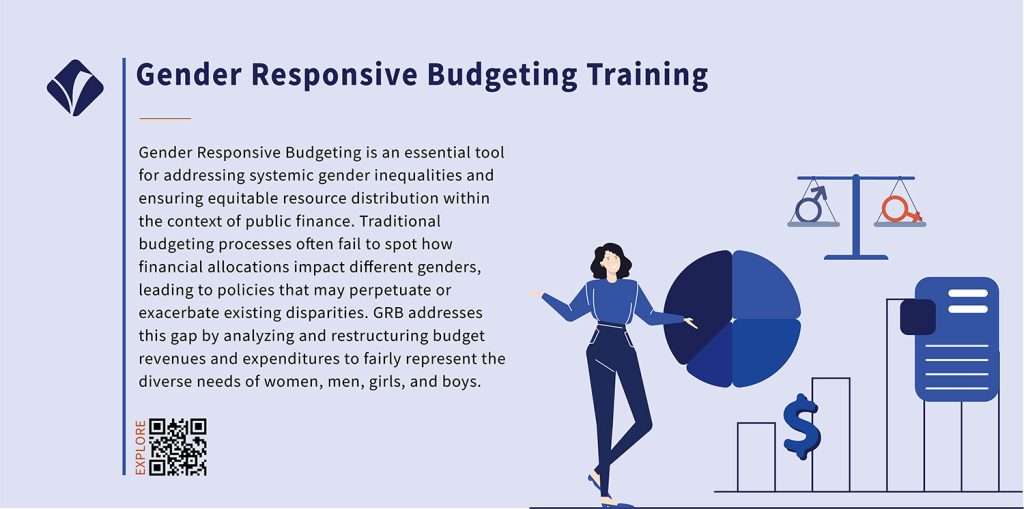
Gender responsive budgeting (GRB) applies a gender lens to the whole budget cycle: how revenue is raised, how spending is planned and allocated, how programmes are delivered and how results are reported. It does not create a separate budget for women. It asks whether public money reaches the different needs of women, men, girls and boys, and whether allocations close or widen existing gaps.
The practice has moved from pilots to mainstream public financial management. The OECD reports that the number of its member countries practising gender budgeting rose from 12 in 2016 to 17 in 2018 and 23 in 2022. Since 2020 the PEFA programme has offered a Supplementary Framework for Assessing Gender Responsive Public Financial Management (PEFA Gender), with nine indicators that run from budget circulars to legislative scrutiny, and 32 national and subnational governments had applied it by early 2026.
Yet the gap between commitment and practice remains wide. UN Women’s monitoring of SDG indicator 5.c.1 shows that only around a quarter of reporting countries have systems to track and make public allocations for gender equality. A World Bank review of PEFA Gender results published in March 2026 found that gender impact analysis of new policies and legislative scrutiny of gender impacts were rated weak in most assessments, and that only a few governments tag gender-related spending.
This three-day programme in Reykjavik is designed for ministries of finance, planning and line ministries, municipalities, audit institutions and project teams that want to make gender analysis a routine part of budget preparation, execution and reporting. Iceland offers a working benchmark: gender budgeting has been practised there since 2009, it is required under the Public Finance Act No. 123/2015, and the City of Reykjavik applies gender analysis across its departments.
Risalat works with each participating institution to connect the sessions to its own budget calendar, data systems and reform commitments, so that teams leave with a costed, sequenced action plan rather than general awareness.
Le programme renforce les capacités institutionnelles en matière de
- Gender analysis of budget policy proposals and new spending measures
- Gender-responsive budget circulars and call instructions
- Gender budget statements and budget proposal documentation
- Budget tagging and classification of gender equality expenditure
- Sex-disaggregated performance information for service delivery
- Gender-sensitive indicators in programme-based budgets
- Ex ante and ex post gender impact assessment
- Gender analysis of tax and transfer measures
- Gender-responsive public investment appraisal
- In-year monitoring and gender-responsive reporting
- Evaluation of the gender impacts of public services
- Legislative and audit scrutiny of gender budget information
- Use of the PEFA Gender framework for self-assessment
- Reporting on SDG indicator 5.c.1
- Coordination between finance ministries, line ministries and gender machinery
- Subnational and municipal gender budgeting
- Engagement with civil society and oversight bodies
- Reform sequencing and change management for GRB
The focus throughout is on building GRB into existing PFM processes and systems, so that it becomes part of how the budget is prepared rather than an extra reporting exercise.
The Growing Importance of Gender Responsive Budgeting
Finance ministries are being asked to show how budgets contribute to national gender equality commitments, the Beijing Platform for Action and SDG 5. Development partners are now financing this work directly. The Asian Development Bank approved a US$2 million technical assistance grant in November 2025 to strengthen GRB institutions and processes in six more Indian states, with a focus on sectors such as roads, energy and urban development. ADB is also supporting Uzbekistan’s Ministry of Economy and Finance on GRB, with pilot sectors proposed in September 2026 that include higher education, employment, agriculture, transport and water management.
The World Bank has prepared a project in Indonesia, Gender Equality and National Development through Gender Responsive PFM, aimed at improving how GRB is implemented, while UN Women’s Transformative Financing for Gender Equality programme supports national and local governments in Albania, Bosnia and Herzegovina, Kosovo, North Macedonia and Serbia. In the Philippines, the PFM reform roadmap launched with ADB in June 2026 drew on a 2025 PEFA assessment and a review of gender equality in PFM.
Iceland shows where the tools can lead. In 2024 it issued its first sovereign gender bond, a EUR 50 million placement under a financing framework annex that defines gender equality project categories such as affordable housing for low-income women and higher parental leave payments.
Source: OECD, preliminary results of the 2022 OECD Survey on Gender Budgeting
1. How many OECD countries practised gender budgeting in 2022?
OECD survey results show 12 countries in 2016, 17 in 2018 and 23 in 2022.
2. Which area did PEFA Gender assessments most often rate as weak?
A 2026 World Bank review of 32 PEFA Gender assessments found almost all gave low scores for legislative scrutiny of gender impacts.
3. Under which law is gender budgeting required in Iceland?
The Government of Iceland states that gender budgeting is required by the Public Finance Act, Act No. 123/2015.
Les organisations ont de plus en plus besoin de professionnels capables de :
- Analysing how budget measures affect different groups of women and men
- Drafting gender requirements for budget circulars
- Designing and applying a gender budget tagging methodology
- Setting gender-sensitive objectives, indicators and targets
- Costing gender equality commitments in sector strategies
- Using sex-disaggregated data in allocation decisions
- Preparing a gender budget statement for the budget bill
- Assessing public investment projects for gender impact
- Preparing for or responding to a PEFA Gender assessment
- Reporting results under SDG indicator 5.c.1
- Briefing parliamentary budget committees on gender impacts
- Coordinating line ministries through a GRB steering structure
- Applying GRB at municipal and provincial level
Strong gender responsive budgeting systems help organisations:
- Direct resources to the groups and services where gaps are largest
- Improve the targeting and value for money of public spending
- Meet legal and policy commitments on equality
- Strengthen transparency and accountability to citizens
- Give parliaments better information for budget scrutiny
- Track progress on national strategies and SDG 5
- Access gender-linked financing from development partners and markets
- Avoid unintended negative effects of tax and spending decisions
- Build evidence for future reforms through evaluation
The common thread is integration: GRB works when it uses the same budget calendar, classification, performance framework and reporting cycle as the rest of PFM.
Who Should Attend This Gender Responsive Budgeting Training?
Ce programme s'adresse à :
- Budget directors and budget analysts in ministries of finance
- Planning and policy officers in ministries of planning and economy
- Finance and planning units of line ministries
- Gender focal points and gender equality units
- National women’s machinery and equality commissions
- Municipal and provincial finance officers
- Performance budgeting and results-based management specialists
- Unités de gestion des investissements publics
- Officials responsible for statistics and sex-disaggregated data
- Supreme audit institution staff and internal auditors
- Personnel des bureaux et commissions parlementaires du budget
- Project implementation units of donor-financed PFM and social projects
- Staff of development partners supporting PFM and gender programmes
- Civil society budget monitoring organisations
- Gender consultants and researchers
- Sustainability and ESG finance professionals
Mixed teams from one institution, for example a budget analyst, a gender focal point and a line ministry planner, gain the most because the exercises follow a real budget cycle.
Cochez ce que votre équipe doit être capable de faire.
Gender Responsive Budgeting Training Objectives
Upon successful completion of this Gender Responsive Budgeting Training, participants will be able to:
- Explain the principles of GRB and its place in the PFM cycle
- Apply gender analysis to sector policies and budget proposals
- Distinguish gender equality, equity and intersectional analysis in practice
- Identify gender gaps using sex-disaggregated data
- Draft gender instructions for a budget circular
- Design gender-sensitive objectives and indicators for programme-based budgets
- Cost gender equality measures and estimate funding gaps
- Apply a budget tagging method and test it on real budget lines
- Prepare the outline of a gender budget statement
- Use the nine PEFA Gender indicators to assess their own system
- Monitor and evaluate the gender impact of spending
- Communicate GRB evidence to decision-makers and parliament
- Develop a sequenced GRB action plan for their institution
Each objective is linked to a session and a practical exercise, and participants test their progress against them in the pre-assessment and the final capstone.
Contenu et structure du programme
- The concept and principles of gender responsive budgeting
- Gender equality and equity: what they mean for public spending
- Intersectionality: age, disability, income, location and origin
- Gender dynamics in households, labour markets and unpaid care
- Identifying gender gaps and disparities across sectors
- Sex-disaggregated data: sources, gaps and quality
- International frameworks: SDG 5.c.1, OECD guidance and PEFA Gender
- Gender analysis of budget policy proposals and new measures
- Gender requirements in the budget circular
- Gender-sensitive objectives and indicators in programme-based budgets
- Costing tools for gender equality commitments
- Budget tagging and classification: design choices and pitfalls
- Gender analysis of tax and social transfer measures
- Gender-responsive public investment appraisal
- In-year monitoring of gender-tagged expenditure
- Gender-responsive reporting in annual and performance reports
- Evaluation of gender impacts of service delivery
- Legislative scrutiny and the role of audit institutions
- Stakeholder engagement and civil society budget monitoring
- Communicating with ministers, parliament and the public
- Evaluating budgets against gender responsiveness criteria
Contenu détaillé jour par jour
The programme runs over three days and follows the budget cycle from analysis to accountability.
- First Day: concepts, gender analysis and the evidence base
- Second Day: integrating gender into budget preparation and allocation
- Third Day: monitoring, reporting, scrutiny and the action plan
Contenu détaillé jour par jour
First Day | Concepts, Gender Analysis and Evidence
- The concept and principles of gender responsive budgeting
- Gender equality and equity: what they mean for public spending
- Intersectionality: age, disability, income, location and origin
- Gender dynamics in households, labour markets and unpaid care
- Identifying gender gaps and disparities across sectors
- Sex-disaggregated data: sources, gaps and quality
- International frameworks: SDG 5.c.1, OECD guidance and PEFA Gender
- Iceland’s model: legal basis, steering committee and annual reporting
- Lessons from OECD surveys on resources and expertise
Workshop: Gender Gap Mapping for One Sector
Teams select a sector from their own country, such as transport, agriculture or vocational skills, and map the main gender gaps using available statistics. They identify which gaps the budget can influence, which data are missing, and which programmes already address them. Each team presents a one-page gap map that becomes the evidence base for the next two days.
Second Day | Gender in Budget Preparation and Allocation
- Gender analysis of budget policy proposals and new measures
- Gender requirements in the budget circular
- Gender-sensitive objectives and indicators in programme-based budgets
- Costing tools for gender equality commitments
- Budget tagging and classification: design choices and pitfalls
- Gender analysis of tax and social transfer measures
- Gender-responsive public investment appraisal
- Gender budget statements and budget documentation
- Case material: ADB-supported GRB in Indian states and Uzbekistan
Case Study: Tagging and Reprioritising a Sector Budget
Using a simplified sector budget, participants apply a three-level tag to each line, test whether the tag matches the stated objective, and draft revised indicators. They then prepare a short budget submission that reallocates a fixed amount towards the largest gap identified on day one, with a justification written for a budget committee.
Third Day | Monitoring, Reporting and Accountability
- In-year monitoring of gender-tagged expenditure
- Gender-responsive reporting in annual and performance reports
- Evaluation of gender impacts of service delivery
- Legislative scrutiny and the role of audit institutions
- Stakeholder engagement and civil society budget monitoring
- Communicating with ministers, parliament and the public
- Evaluating budgets against gender responsiveness criteria
- Reform sequencing: what to do in year one, two and three
- Action plan development for gender responsive budgeting
Capstone Exercise: Institutional GRB Action Plan
Each team scores its own system against the nine PEFA Gender indicators, identifies the two or three weakest areas, and builds a three-year action plan with responsible units, milestones and resource needs. Plans are presented to a mock steering committee, which tests feasibility and links to the budget calendar.
Gender Responsive Budgeting Training Methodology
The methodology is practical and uses participants’ own budget documents and data wherever possible.
Le programme associe :
- Courtes présentations d'experts sur chaque étape du cycle budgétaire
- Analysis of real budget circulars and gender budget statements
- Hands-on tagging and costing exercises
- Case studies of financed GRB reforms
- Self-assessment using the PEFA Gender indicators
- Group work in mixed institutional teams
- Peer review of draft indicators and statements
- Role plays with budget committees and decision-makers
- Structured discussion of Iceland’s experience
- Reflection on intersectional and subnational issues
- Daily summaries and action points
- A capstone action plan presented to a mock steering committee
Templates and worked examples are provided in an editable format so that teams can adapt them on return. Facilitators bring experience of PFM reform and gender analysis in public institutions.
Résultats attendus
Upon completion of this Gender Responsive Budgeting Training, participants will be able to:
- Lead or contribute to gender analysis of budget proposals
- Propose gender requirements for the next budget circular
- Apply and refine a gender budget tagging method
- Improve gender-sensitive indicators in performance budgets
- Draft sections of a gender budget statement
- Prepare for a PEFA Gender assessment or follow-up
- Strengthen reporting on SDG indicator 5.c.1
- Brief senior officials and parliamentarians on GRB evidence
- Implement a sequenced institutional GRB action plan
These outcomes support both national reform programmes and the requirements of development partners financing GRB and PFM work.
£3,970 per participant · invoice and bank transfer · groups of 5 or more receive a discount
Cinq personnes ou plus d'une même organisation : demandez le tarif de groupe lors de votre demande de facture.
Ten or more: an in-house version for your institution may cost less per person. Ask for an in-house quote.
Registration closes in 62 days (3 Jan 2027)
Institutional Application of Gender Responsive Budgeting Training
Ce programme aide les organisations à renforcer :
- Budget preparation procedures and circulars
- Programme and performance frameworks
- Expenditure classification and tagging
- Gestion des investissements publics
- Tax and transfer policy analysis
- Financial and performance reporting
- Monitoring and evaluation systems
- Statistical systems and sex-disaggregated data
- Internal and external audit coverage
- Parliamentary oversight of the budget
- Coordination across ministries and levels of government
- Engagement with civil society and citizens
Les participants repartent avec des outils pratiques pour améliorer :
- Gender analysis checklists for budget proposals
- Budget circular gender instructions
- Tagging criteria and coding guides
- Indicator design templates
- Costing worksheets
- Gender budget statement outlines
- PEFA Gender self-assessment matrices
- Action plan and reform sequencing templates
Institutions that want to assess readiness before or after the programme can use Risalat’s free institutional capacity assessment and training needs assessment tools.
Pertinence régionale & mise en application
Europe
Most OECD countries practising gender budgeting are in Europe, and the Nordic countries share practices through regional cooperation. In the Western Balkans, UN Women’s Transformative Financing for Gender Equality programme works with national and local governments in five economies to apply GRB in PFM and in oversight bodies.
Asie
ADB is financing subnational GRB in India through a US$2 million grant approved in 2025 and supporting Uzbekistan’s finance ministry on GRB reforms. Indonesia has a World Bank project focused on GRB implementation, and the Philippines has linked gender reviews to its PFM roadmap for 2024–2028.
Afrique
Rwanda is one of three gender responsive budgeting country case studies published by PEFA in September 2026, alongside the Philippines and Canada. Finance ministries in the region often face the same constraints reported elsewhere: limited staff time, technical expertise and links between tagging and real allocation decisions.
Moyen-Orient
Governments in the region are building performance budgeting and statistical systems that create an entry point for gender analysis. The programme helps teams start with circulars, indicators and data before moving to tagging.
Amérique latine
Subnational governments in the region are active users of PEFA Gender, with a 2026 assessment of the Mexican state of Chihuahua among the most recent published reports.
Across regions, the same nine PEFA Gender indicators provide a common language, which makes peer learning between participants from different countries practical.
Profil du pays d'accueil – Islande
Reykjavik is a compact, safe capital with good conference facilities and an international airport at Keflavik. It gives participants a quiet setting to concentrate on technical work while seeing how a small public administration applies GRB in practice.
Iceland is a useful benchmark. It ranked first of 148 economies in the World Economic Forum’s Global Gender Gap Index 2025, with 92.6% of its gender gap closed. Gender budgeting has been practised since 2009 and is required under the Public Finance Act No. 123/2015. The Ministry of Finance and Economic Affairs leads a steering committee in which all ministries take part, line ministries assess the gender impact of their budget proposals, and an assessment of the budget’s overall gender impact is published with the budget bill. The City of Reykjavik applies gender budgeting across its departments, managed by its Department of Finance and Risk Management.
Iceland is part of the Schengen area. Participants who need a visa apply for a short-stay Schengen visa, often through another Schengen state’s embassy or a visa application centre where Iceland has no mission. Risalat provides invitation letters and visa guidance, and participants should apply early because winter schedules and processing times vary.
Gender Responsive Budgeting Training Deliverables
Chaque participant reçoit un ensemble complet de supports et un accompagnement avant, pendant et après le programme.
Avant le programme
- Pré-évaluation des participants
- Gender Responsive Budgeting Readiness Assessment
- Gender Responsive Budgeting Resource Pack
- Lectures préparatoires
- Aide et conseils gratuits pour le visa
- Accueil à l'aéroport & assistance à l'arrivée
- Hébergement avec petit-déjeuner
- Dîner de bienvenue et de réseautage
Pendant le programme
- Kit de formation Risalat (sac, gourde, mug, t-shirt, casquette, protège-passeport, stylos, carnet, magnet & porte-clés)
- Comprehensive Gender Responsive Budgeting Training Manual
- Gender Analysis Checklist for Budget Proposals
- Budget Circular Gender Instructions Template
- Gender Budget Tagging Coding Guide
- Gender-Sensitive Indicator Design Template
- Gender Budget Statement Outline
- PEFA Gender Self-Assessment Matrix
- Ateliers pratiques & simulations
- Discussions de groupe & apprentissage entre pairs
- Déjeuner et pauses-café quotidiens
- Accès complet aux installations du lieu de formation
- Mini tablette avec supports pédagogiques numériques
- Visite de terrain (le cas échéant)
- Visite récréative de la ville
Après le programme
- Certificat de participation
- Distinction Risalat de participation au programme
- Documents de référence après la formation
- Institutional GRB Action Plan Template
- GRB Reform Sequencing Toolkit
- Accompagnement après la formation & conseils de suivi
- Rapport du programme
Ministries, municipalities and project teams can request a tailored in-house version built around their own budget documents and reform plans through our request a proposal form.
Common Challenges in Gender Responsive Budgeting, And How This Training Helps
How can we start GRB when sex-disaggregated data are limited?
The first day covers data sources and practical ways to work with partial data, and the gap mapping workshop shows how to prioritise the data that matter most for budget decisions.
How do we move from gender tagging to real allocation decisions?
The OECD found that lack of impact on budget decisions is a common problem. The second day’s case study links tags to objectives and requires teams to justify a reallocation.
How can a finance ministry get line ministries to take part?
Sessions on budget circulars and Iceland’s steering committee model show how to make gender analysis part of standard submission requirements.
How should gender-sensitive indicators be designed?
The second day covers indicator design in programme-based budgets, with peer review of each team’s draft indicators.
How can parliaments and audit institutions use gender budget information?
PEFA Gender assessments often rate legislative scrutiny as weak. The third day covers what information to give committees and how auditors can include gender in performance audits.
How do we prepare for a PEFA Gender assessment?
The capstone uses the nine PEFA Gender indicators as a self-assessment tool, so teams know where they stand and what evidence assessors will request.
How can GRB be sustained with limited staff and expertise?
The reform sequencing session and the action plan focus on a realistic three-year path that builds on existing processes rather than adding new layers.
How can municipalities apply gender budgeting?
Reykjavik’s citywide approach and subnational PEFA Gender experience are used on the third day to show how local governments can start with service analysis and new projects.
Questions fréquentes
Does gender responsive budgeting mean a separate budget for women?
No. GRB applies gender analysis to the whole budget so that revenue and spending decisions reflect the different needs of women, men, girls and boys.
Why is the programme held in Reykjavik?
Iceland has practised gender budgeting since 2009 and requires it under its Public Finance Act, and the City of Reykjavik applies it across departments, so participants learn from a working national and municipal model.
Is the PEFA Gender framework covered?
Yes. Participants use the nine PEFA Gender indicators to assess their own system in the capstone exercise and to plan reforms.
Who benefits most from attending?
Budget, planning and gender units from finance and line ministries, municipalities, audit institutions, parliamentary staff and project teams working on PFM or social sector reforms.
Le programme peut-il être dispensé en intra ?
Yes. Risalat can tailor the programme to an institution's own budget documents, data and reform plan and deliver it in-country or at another venue.
Tous les programmes à ReykjavikPlus de programmes Comptabilité & Finance
Pourquoi Reykjavik pour ce programme
Reykjavik (Islande) a été choisie pour ce programme car elle est facile d'accès pour les participants attendus et dispose de lieux adaptés à une formation pratique et interactive.
The Gender Responsive Budgeting Training in Reykjavik programme in February 2027 brings together officials and professionals. Sessions combine short inputs, case studies and group work on participants' own files, and the city's institutions can be added as a study visit on request.
Vérifiez si vous avez besoin d'un visa avec le vérificateur de visa gratuit, et demandez une lettre d'invitation une fois inscrit.
Autres programmes à Reykjavik
Plus de formations en Islande · Tous les programmes en Europe · Calendrier complet des formations