

Vue d'ensemble
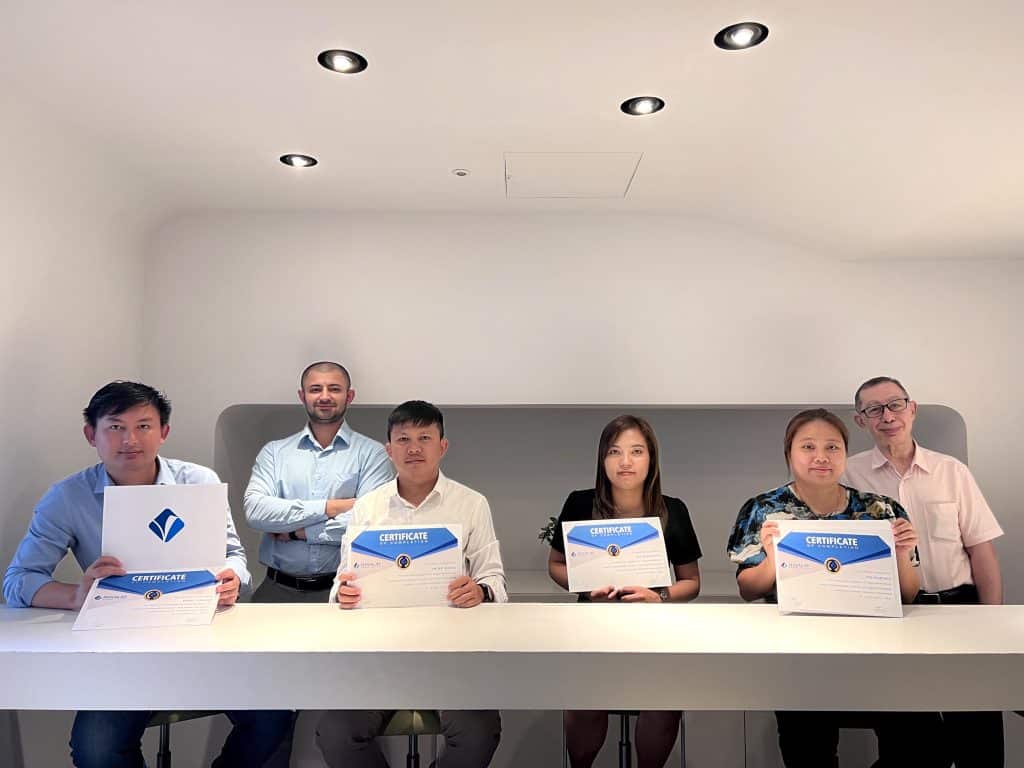
This assignment comprised a specialised training programme on project sustainability, project closure, and impact evaluation delivered in Tokyo, Japan. The training was conducted for officials from the Ministry of Commerce of Cambodia, addressing specific knowledge and skill gaps in managing sustainable project outcomes.
Delivered over three days, the course focused on building practical competencies to help government officials transition passive knowledge into real-world applications across the full project lifecycle.
Client and context
The programme was provided to personnel from the Ministry of Commerce from Cambodia, including the Chief of Bureau, Deputy Chief of Bureau, and other ministry members. It addressed identified gaps in skills and knowledge regarding project sustainability, phase-out processes, and impact evaluation methods.
Objectives
- Address stated gaps in knowledge and skills surrounding project sustainability and impact evaluation.
- Build targeted competencies to transition passive knowledge into practical applications in real-life projects.
- Develop familiarity with sustainability analysis integrated into project design to determine relevancy, viability, and adaptability.
- Understand how to design exit strategies and project closure plans that justify investment and ensure desired impacts.
What we delivered
- Bref aperçu des concepts clés du projet
- Comprendre la pérennité du projet et son importance
- Processus de planification du projet et pérennité
- Intégrer la durabilité dans le cycle de vie du projet
- Étapes de la clôture et du retrait progressif du projet
- Prévoir le temps et les ressources nécessaires à la clôture du projet
- Obligations après la clôture du projet
- Préserver l'héritage du projet
- Caractéristiques de la pérennité d'un projet
- Gestion de la durabilité des projets (GDP)
- Concevoir le plan GDP
- Sustainability in program mission, vision, and values
- Identification des parties prenantes
- Gestion de projet axée sur les résultats
- Adopter un cadre de résultats
- Mettre en place un système de collecte et d'analyse des données
- Utiliser les données pour s'améliorer
- Communiquer les résultats
- Définir le succès et l'échec
- Mesure de l'avancement et évaluation de la performance
- Planification et analyse financières du projet
- Adaptation aux changements
- Suivi et évaluation de projet
- Indicateurs d'efficacité, d'efficience et d'impact
- Analyse de la pérennité du projet
- Amélioration continue de la qualité
- Liste de contrôle GDP
- M&E vs Impact Evaluation
- La chaîne de résultats et la théorie du changement
Approach
The training delivery combined core thematic instruction with a focus on real-world implementation, exploring how sustainability balances conflicting environmental, societal, and financial factors across every stage of the project lifecycle.
- Instruction on core thematic areas of project sustainability and impact evaluation.
- Practical focus on converting passive concepts into applied project techniques.
- Examination of sustainability as an underlying factor across the entire project lifecycle, from planning to exit strategy development.
Results and outputs
- Participants gained familiarity with integrating sustainability analysis into project design to assess relevancy, viability, and adaptability.
- Participants learned how to develop exit strategies focused on sustainability to safeguard impact and justify investment effectiveness.
- Participants explored sustainability as a core competency required to balance environmental concerns, societal challenges, financial soundness, and affordability.
At a glance
| Type de client | Government ministry (Ministry of Commerce) |
|---|---|
| Pays | Japon |
| Location | Tokyo |
| Année | 2023 |
| Durée | 3 days (12-15 June, 2023) |
| Participants | Chief of Bureau, Deputy Chief of Bureau, and other members of the Ministry of Commerce from Cambodia |