

概览
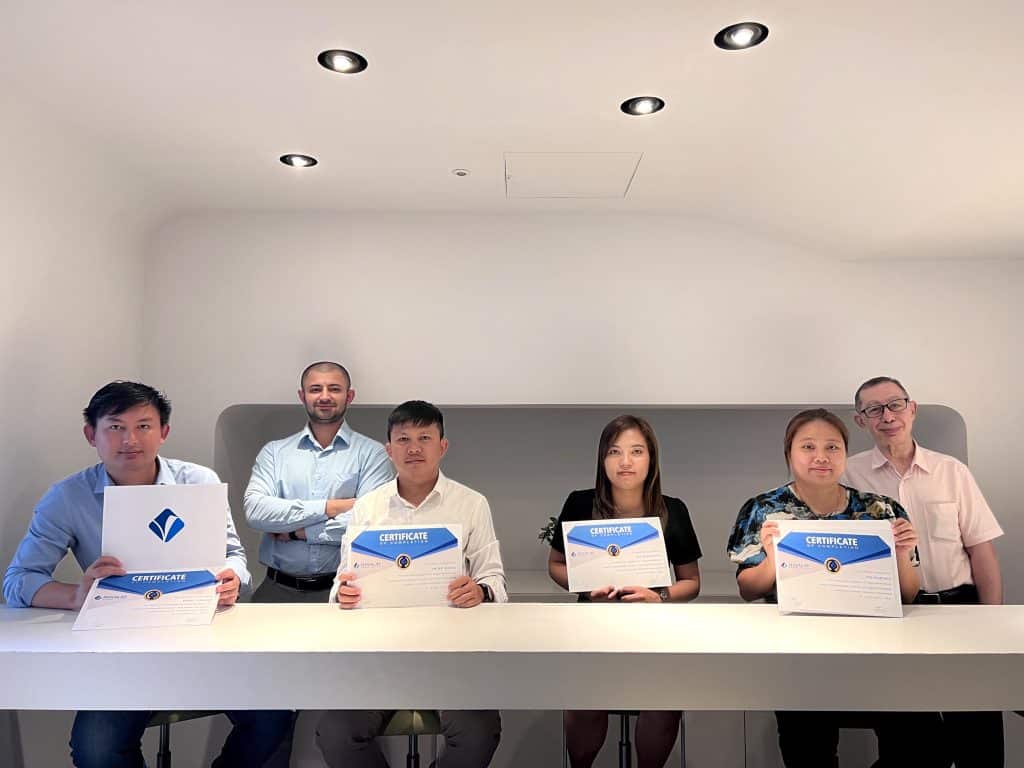
This assignment comprised a specialised training programme on project sustainability, project closure, and impact evaluation delivered in Tokyo, Japan. The training was conducted for officials from the Ministry of Commerce of Cambodia, addressing specific knowledge and skill gaps in managing sustainable project outcomes.
Delivered over three days, the course focused on building practical competencies to help government officials transition passive knowledge into real-world applications across the full project lifecycle.
Client and context
The programme was provided to personnel from the Ministry of Commerce from Cambodia, including the Chief of Bureau, Deputy Chief of Bureau, and other ministry members. It addressed identified gaps in skills and knowledge regarding project sustainability, phase-out processes, and impact evaluation methods.
Objectives
- Address stated gaps in knowledge and skills surrounding project sustainability and impact evaluation.
- Build targeted competencies to transition passive knowledge into practical applications in real-life projects.
- Develop familiarity with sustainability analysis integrated into project design to determine relevancy, viability, and adaptability.
- Understand how to design exit strategies and project closure plans that justify investment and ensure desired impacts.
What we delivered
- 项目关键概念简介
- 理解项目可持续性及其重要性
- 项目规划流程与可持续性
- 将可持续性融入项目生命周期
- 项目收尾与逐步退出的步骤
- 规划项目收尾所需的时间和资源
- 项目收尾后的义务
- 延续项目成果
- 项目可持续性的特征
- 项目可持续性管理(PSM)
- 设计项目可持续性管理(PSM)计划
- Sustainability in program mission, vision, and values
- 利益相关方识别
- 以成果为导向的项目管理
- 采用成果框架
- 建立数据收集与分析系统
- 运用改进所得数据
- 成果沟通
- 界定成功与失败
- 进展衡量与绩效评估
- 项目财务规划与分析
- 适应变化
- 项目监测与评估
- 效果、效率和影响指标
- 项目可持续性分析
- 持续质量改进
- 项目可持续性管理(PSM)检查清单
- 监测与评估与影响评估
- 成果链与变革理论
Approach
The training delivery combined core thematic instruction with a focus on real-world implementation, exploring how sustainability balances conflicting environmental, societal, and financial factors across every stage of the project lifecycle.
- Instruction on core thematic areas of project sustainability and impact evaluation.
- Practical focus on converting passive concepts into applied project techniques.
- Examination of sustainability as an underlying factor across the entire project lifecycle, from planning to exit strategy development.
Results and outputs
- Participants gained familiarity with integrating sustainability analysis into project design to assess relevancy, viability, and adaptability.
- Participants learned how to develop exit strategies focused on sustainability to safeguard impact and justify investment effectiveness.
- Participants explored sustainability as a core competency required to balance environmental concerns, societal challenges, financial soundness, and affordability.
At a glance
| 客户类型 | Government ministry (Ministry of Commerce) |
|---|---|
| 国家 | 日本 |
| Location | 东京 |
| 年份 | 2023 |
| 时长 | 3 days (12-15 June, 2023) |
| 学员 | Chief of Bureau, Deputy Chief of Bureau, and other members of the Ministry of Commerce from Cambodia |