

Points clés
- Dates
- 22–26 févr. 2027 (5 jours)
- Lieu
- Golden Tulip Warsaw Centre, Varsovie, Pologne
- Frais par participant
- 3 580 £ (GBP)
- Paiement
- Sur facture et par virement bancaire
- Clôture des inscriptions
- 3 janv. 2027
- Format
- 5-day short course: a practical capacity-building programme for government, NGO and project teams in Warsaw
- Certificat
- Certificat de participation
- Option intra
- Organisez-le pour votre équipe, à vos dates
Sur cette page 17 sections
Présentation du programme
Security risk management gives humanitarian organisations a structured way to keep their most important asset, their people, from being exposed to unacceptable risk while still reaching those in need. Approaches differ between organisations because their mandates, values, risk thresholds and resources differ, but the core disciplines are shared: understanding the context, assessing threats and vulnerabilities, planning, managing incidents and meeting the duty of care.
The need is greater than ever. Humanitarian Outcomes’ Aid Worker Security Database recorded at least 280 aid workers killed in 2023, then the deadliest year on record, followed by 383 killed in 2024 and 350 in 2025. In 2025, 1,187 aid workers were victims of major security incidents, including 235 kidnapped and 280 detained or arrested. National staff carry most of this burden: in 2023 they made up 569 of 595 victims.
Les coupes budgétaires ont rendu la tâche plus difficile. Le rapport sur la sécurité des travailleurs humanitaires 2025 (Aid Worker Security Report 2025) décrit comment la perte soudaine d'une grande partie du financement humanitaire mondial au début de 2025 a contraint les organisations à réduire leurs programmes et leurs postes de sécurité, a affaibli les services de sécurité partagés et a fait porter davantage de risques sur les partenaires locaux disposant du moins de ressources.
This Security Management for Humanitarians Training in Warsaw equips managers with a complete, practical security risk management cycle built on current good practice, including the 2025 third edition of Good Practice Review 8, Humanitarian Security Risk Management, and guidance from the Global Interagency Security Forum (GISF). It covers three areas the original programme was built on, security risk assessment, security planning and critical incident management, and adds duty of care, partnerships, digital risks and crisis management.
Warsaw is a fitting venue. Poland has been a central hub for the humanitarian response to the war in Ukraine, and UNHCR runs its country office in the city. The programme closes with an exposure visit so participants can see security management applied in practice.
The Programme Strengthens Institutional Capability
- Context analysis and actor mapping for insecure environments
- Security risk assessment using threat, vulnerability and impact
- Setting and communicating organisational risk thresholds
- Balancing risk against programme criticality
- Stratégies d'acceptation, de protection et de dissuasion
- Security plans, standard operating procedures and contingency plans
- Travel safety, movement control and communications
- Incident reporting, analysis and information management
- Critical incident and crisis management
- Hibernation, relocation and evacuation planning
- Obligation de diligence, gouvernance et responsabilité en matière de sécurité
- Security in partnerships with national and local organisations
- Gender, identity and person-centred approaches to security
- Digital security, disinformation and data protection
- Staff care and psychosocial support after incidents
- Security budgeting and resourcing under funding pressure
Throughout the week participants work on their own organisation’s security documents, so the outputs can be used as soon as they return.
- Collecter
- Nettoyer
- Stocker
- Analyser
- Décider
The Growing Importance of Humanitarian Security Management
The security environment for aid workers has deteriorated across many contexts. In 2024 the highest numbers of victims were recorded in Gaza, Sudan and South Sudan, with Nigeria, Lebanon, Ukraine, Ethiopia, Somalia, Syria and the Democratic Republic of the Congo also among the ten most affected contexts. State actors were responsible for a growing share of deaths and detentions, and kidnappings rose sharply in 2025.
Political attention has followed. UN Security Council resolution 2730, adopted in May 2024, demands respect for the protection of humanitarian and UN personnel, gives particular attention to locally recruited staff and calls for impartial investigations. The Secretary-General’s November 2024 recommendations cover access, accountability and support for survivors. Organisations are now expected to show that their own security systems are equally robust.
Les organisations ont de plus en plus besoin de professionnels capables de :
- Running structured security risk assessments for new and existing locations
- Translating risk analysis into clear, usable security plans
- Deciding when risk is acceptable in relation to programme criticality
- Building acceptance with communities, authorities and other actors
- Managing movements, convoys and field travel safely
- Handling serious incidents such as abduction, detention or attack
- Analyser les données d'incidents pour repérer les tendances et ajuster les mesures
- Soutenir de manière équitable le personnel national et les partenaires locaux
- Integrating gender and identity factors into security decisions
- Managing digital threats and misinformation targeting aid
- Briefing boards and donors on residual risk
- Coordinating with inter-agency security networks
Strong humanitarian security systems help organisations:
- Keep staff safe while sustaining access to people in need
- Meet legal and moral duty of care obligations
- Make consistent, documented decisions on risk
- Réagir rapidement et calmement aux incidents critiques
- Share risk fairly with partners rather than transferring it
- Maintain donor confidence and compliance
- Continue operations during crises and disruption
- Learn from incidents and near misses
- Protect organisational reputation and relationships
Security risk management is therefore a management responsibility, not only a specialist role. Organisations reviewing their systems can start with Risalat’s free project health check.
Source: Humanitarian Outcomes, Aid Worker Security Database figures (2026)
1. How many aid workers were killed in 2024, the deadliest year recorded?
Humanitarian Outcomes' Aid Worker Security Database recorded 383 aid workers killed in 2024 across 27 countries.
2. In 2023, what share of aid worker victims were national staff?
The Aid Worker Security Report 2024 records 569 national staff among 595 victims in 2023.
3. Which Security Council resolution (2024) addresses protection of humanitarian and UN personnel?
La résolution 2730 a été adoptée le 24 mai 2024 et accorde une attention particulière au personnel recruté localement et à la responsabilisation.
Who Should Attend This Humanitarian Security Management Training?
Ce programme s'adresse à :
- Country directors and heads of mission of humanitarian organisations
- Executive and senior managers of NGOs and national societies
- Security managers, advisers and focal points
- Field programme and area managers
- Operations, logistics and movement coordinators
- Responsables des ressources humaines et de l'accompagnement du personnel
- Partnership and localisation managers
- Managers of national and local NGOs working in insecure areas
- Staff of UN agencies and international organisations responsible for field safety
- Programme managers of donor-funded projects in fragile settings
- Staff preparing for deployment to insecure environments
- Board members with responsibility for risk and duty of care
- Donor staff who review partner security arrangements
Les participants n'ont besoin d'aucune qualification préalable en matière de sécurité. Les sessions conviennent tant aux gestionnaires débutant dans la responsabilité de la sécurité qu'aux référents expérimentés actualisant leurs pratiques.
Cochez ce que votre équipe doit être capable de faire.
Humanitarian Security Management Training Objectives
Upon successful completion of this Humanitarian Security Management Training, participants will be able to:
- Describe current trends in violence against aid workers and their causes
- Distinguish safety from security and apply the core risk vocabulary
- Conduct a context analysis and security risk assessment
- Define risk thresholds and weigh them against programme criticality
- Select a balanced mix of acceptance, protection and deterrence measures
- Draft a security plan, standard operating procedures and contingency plans
- Plan hibernation, relocation and evacuation
- Respond to and manage critical incidents and crises
- Report and analyse incidents to improve decisions
- Apply duty of care obligations to staff, partners and volunteers
- Integrate gender, identity and digital risks into security planning
- Design a security risk management framework for their organisation
Each objective is linked to a workshop output, so participants leave with tested drafts rather than notes.
Contenu et structure du programme
- Le concept du risque dans l'action humanitaire
- Safety versus security and their distinct management needs
- Trends from the Aid Worker Security Database, 2023–2025
- Effects of humanitarian funding cuts on security capacity
- Humanitarian principles and their operational interpretation
- Environmental scanning and context analysis
- Actor mapping: authorities, armed groups, criminal networks and communities
- Threat, vulnerability and impact as building blocks
- Risk matrices and their limitations
- Risk thresholds, red lines and programme criticality
- Stratégies d'acceptation, de protection et de dissuasion
- Person-centred security and personal risk profiles
- Gender, identity and security
- La sécurité dans les partenariats et le risque de transfert des risques
- Structure of a security plan and who it serves
- Writing usable standard operating procedures
- Travel safety, movement control and check-in systems
- Site and residence security
- Communications plans and equipment
- Security levels and phased response
- Hibernation, relocation and evacuation planning
- Incident reporting: what, when and to whom
- Incident analysis, trend tracking and information management
- Immediate response to serious incidents
- Structures et rôles de gestion de crise
- Enlèvement, détention et arrestation du personnel
- Communication avec les familles, les médias et les autorités pendant une crise
- Operational continuity during and after incidents
- Duty of care: legal and moral obligations
- Organisational policies, governance and accountability for security
- Roles of boards, senior managers and security focal points
- Resolution 2730 (2024) and its implications for organisations
- Partenariat responsable et soutien aux organisations locales
- Inter-agency security coordination and networks
- Compliance monitoring, audits and reviews
Contenu détaillé jour par jour
The programme follows the security risk management cycle from analysis to planning, response and governance.
- Day 1: risk concepts, trends and context analysis
- Day 2: risk assessment and security strategies
- Day 3: security plans and standard procedures
- Day 4: incident and crisis management
- Day 5: duty of care, governance, exposure visit and capstone
Contenu détaillé jour par jour
First Day | Risk, Context and the Security Environment
- Le concept du risque dans l'action humanitaire
- Safety versus security and their distinct management needs
- Trends from the Aid Worker Security Database, 2023–2025
- Effects of humanitarian funding cuts on security capacity
- Humanitarian principles and their operational interpretation
- Environmental scanning and context analysis
- Actor mapping: authorities, armed groups, criminal networks and communities
- Differing perceptions of risk across staff and organisations
- Organisational analysis: mandate, profile and exposure
Workshop: Building a Context Analysis
Les équipes reçoivent un dossier de pays fictif contenant des données politiques, de conflit, de criminalité et communautaires. Elles cartographient les principaux acteurs, leurs intérêts et leurs attitudes envers l'aide, et identifient la manière dont l'organisation est perçue. Chaque équipe présente une analyse contextuelle d'une page et reçoit des questions de mise à l'épreuve d'une autre équipe, constituant ainsi la base de l'évaluation des risques le deuxième jour.
Second Day | Security Risk Assessment and Strategy
- Threat, vulnerability and impact as building blocks
- Risk matrices and their limitations
- Risk thresholds, red lines and programme criticality
- Stratégies d'acceptation, de protection et de dissuasion
- Person-centred security and personal risk profiles
- Gender, identity and security
- La sécurité dans les partenariats et le risque de transfert des risques
- Sécurité du personnel national et du personnel recruté localement
- Menaces numériques, désinformation et protection des données
Workshop: Security Risk Assessment Clinic
Using their context analysis, teams assess five threats, scoring likelihood and impact before and after mitigation. They decide which risks are acceptable given programme criticality and which require changes to the programme. The facilitator compares results across teams to show how different assumptions lead to different decisions and why documenting them matters.
Third Day | Security Planning and Standard Procedures
- Structure of a security plan and who it serves
- Writing usable standard operating procedures
- Travel safety, movement control and check-in systems
- Site and residence security
- Communications plans and equipment
- Security levels and phased response
- Hibernation, relocation and evacuation planning
- Medical support and emergency procedures
- Budgeting for security in proposals and project plans
Workshop: Drafting the Security Plan
Each participant drafts key sections of a security plan for their own operation or a realistic fictional one: risk summary, security levels, movement procedures and a relocation plan. Peers review drafts against a checklist drawn from GISF guidance and Good Practice Review 8, and participants revise them before the end of the day.
Fourth Day | Incident and Crisis Management
- Incident reporting: what, when and to whom
- Incident analysis, trend tracking and information management
- Immediate response to serious incidents
- Structures et rôles de gestion de crise
- Enlèvement, détention et arrestation du personnel
- Communication avec les familles, les médias et les autorités pendant une crise
- Operational continuity during and after incidents
- Staff care, psychosocial support and recovery
- Learning reviews and after-action analysis
Case Study: Crisis Management Simulation
Participants form a crisis management team and work through a timed, escalating scenario in which a field team loses contact during a road movement. Injects test reporting lines, decision-making, family liaison and external communication. A structured debrief identifies what worked, where gaps appeared and what each participant would change in their own crisis plan.
Fifth Day | Duty of Care, Governance and Field Practice
- Duty of care: legal and moral obligations
- Organisational policies, governance and accountability for security
- Roles of boards, senior managers and security focal points
- Resolution 2730 (2024) and its implications for organisations
- Partenariat responsable et soutien aux organisations locales
- Inter-agency security coordination and networks
- Compliance monitoring, audits and reviews
- Exposure visit: security management in practice
- Action planning and peer feedback
Capstone Exercise: Organisational Security Framework Review
Teams use the framework elements set out in GISF guidance, from policy and governance to incident monitoring, crisis management and compliance, to assess a sample organisation and then their own. They combine findings from the week and the exposure visit into a prioritised improvement plan with owners, timelines and resource needs, and present it to a panel.
Humanitarian Security Management Training Methodology
The programme blends short expert inputs with practical work on realistic scenarios and participants’ own documents. Learning is cumulative: each day’s output feeds the next.
Le programme associe :
- Short presentations on concepts and current good practice
- Analysis of Aid Worker Security Database trends
- Context analysis and actor mapping exercises
- Risk assessment clinics with peer review
- Rédaction de plans et de procédures de sécurité
- A timed crisis management simulation
- Group discussion of real dilemmas raised by participants
- Exercices de sécurité genrés et centrés sur la personne
- Duty of care and governance self-assessment
- An exposure visit linked to the Ukraine response context
- Daily review and feedback
Scenarios are fictional or anonymised and focus on management decisions. The programme does not provide weapons, close protection or tactical training.
Visites techniques et programme sur site
The fifth day includes an exposure visit in or near Warsaw so participants can see how organisations involved in the regional response to the war in Ukraine manage safety, security and staff care in practice. Depending on availability, the visit may cover a humanitarian coordination or operations office, a refugee support service or a logistics function.
Visits are confirmed with host organisations closer to the programme dates and follow their security and confidentiality rules. Participants prepare questions in advance and the visit is followed by a structured debrief that feeds directly into the capstone exercise.
Résultats attendus
À l'issue de cette formation à la gestion de la sécurité humanitaire, les participants seront en mesure de :
- Lead a context analysis and security risk assessment for their operation
- Present risk decisions clearly to senior managers and boards
- Produce or revise a security plan and core procedures
- Prepare relocation and evacuation plans that staff understand
- Act effectively as a member of a crisis management team
- Improve incident reporting and use incident data in decisions
- Apply duty of care consistently to staff, volunteers and partners
- Renforcer le soutien en matière de sécurité aux partenaires locaux
- Set out a prioritised plan for improving their organisation’s security framework
Organisations benefit from managers who can make, document and defend security decisions under pressure.
3 580 £ par participant · facture et virement bancaire · remise pour les groupes de 5 personnes ou plus
Cinq personnes ou plus d'une même organisation : demandez le tarif de groupe lors de votre demande de facture.
Ten or more: an in-house version for your institution may cost less per person. Ask for an in-house quote.
Registration closes in 41 days (3 Jan 2027)
Institutional Application of Humanitarian Security Management Training
Ce programme aide les organisations à renforcer :
- Security policies and minimum standards
- Gouvernance et responsabilité pour les décisions de sécurité
- Risk assessment processes across country offices
- Security plans and standard operating procedures
- Signalement des incidents et gestion de l'information
- Crisis management structures and readiness
- Duty of care arrangements for all categories of personnel
- Security support to national and local partners
- Staff care and psychosocial support
- Security budgeting in proposals and projects
- Inter-agency coordination and information sharing
Les participants repartent avec des outils pratiques pour améliorer :
- Context analysis templates
- Matrices d'évaluation des risques de sécurité
- Security plan outlines
- Movement and travel safety checklists
- Incident report forms and logs
- Crisis management team role cards
- Relocation and evacuation planners
- Duty of care self-assessment tools
For a broader review of systems and capacity, organisations can use Risalat’s free institutional capacity assessment alongside this programme.
Pertinence régionale & mise en application
Europe
L'Ukraine figurait parmi les dix contextes ayant enregistré le plus de victimes parmi les travailleurs humanitaires en 2024, et les organisations soutenant la réponse depuis la Pologne et d'autres pays voisins gèrent des opérations transfrontalières, à distance et basées sur des partenaires. Ces contextes exigent des seuils de risque clairs, un soutien solide aux partenaires et des plans de relocalisation bien rodés.
Afrique
Sudan recorded a record 71 aid workers killed in 2025, and South Sudan, the Democratic Republic of the Congo, Nigeria, Somalia and Ethiopia were among the most affected contexts in 2024. Teams there need robust movement control, acceptance strategies and support for national staff.
Moyen-Orient
Gaza was the deadliest context for aid workers in 2024 and 2025, and Lebanon, Syria and Yemen also saw high levels of incidents, with Yemen accounting for about a third of state detentions of aid workers in 2025. Detention, deconfliction and crisis management are central concerns in the region.
Asie
Afghanistan was among the contexts with significant increases in attacks on aid workers between 2023 and 2024. Organisations there need context-sensitive acceptance strategies and careful attention to gender and identity in security planning.
Amérique latine
Haiti was identified as a high-insecurity context in 2025, where criminal violence and kidnapping shape how humanitarian organisations plan movements and protect staff.
Across regions the same management disciplines apply; the programme helps participants adapt them to their own context and partnerships.
Profil du pays d'accueil – Pologne
Warsaw, Poland’s capital, is a well-connected European city with an international airport, modern conference facilities and a strong presence of international organisations. It offers a calm, practical setting for a demanding management programme close to one of Europe’s largest humanitarian responses.
Poland has been a key hub for the response to the war in Ukraine. UNHCR’s September 2024 fact sheet reported 970,120 refugees from Ukraine recorded in Poland, a country office and field office in Warsaw, further offices in Lublin, Rzeszów and Kraków, and a refugee response coordinating 103 organisations, most of them local. This makes Poland a useful benchmark for cross-border coordination, partnerships with local organisations and support to staff working in and around a conflict-affected country.
La Pologne fait partie de l'Union européenne et de l'espace Schengen. Les participants qui ont besoin d'un visa doivent demander un visa de court séjour Schengen auprès des consulats polonais et doivent faire leur demande tôt pour tenir compte des délais de rendez-vous et de traitement. Risalat fournit des lettres d'invitation et des conseils en matière de visa.
Humanitarian Security Management Training Deliverables
Participants receive a full package of preparation, practical tools and follow-up support.
Avant le programme
- Pré-évaluation des participants
- Évaluation de la préparation à la sécurité humanitaire
- Humanitarian Security Resource Pack
- Lectures préparatoires
- Aide et conseils gratuits pour le visa
Pendant le programme
- Accueil à l'aéroport & assistance à l'arrivée
- Accommodation with breakfast: 6 nights, check-in Sunday 21 February 2027, check-out Saturday 27 February 2027 (one night before and one night after the programme)
- Dîner de bienvenue et de réseautage
- Kit de formation Risalat (sac, gourde, mug, t-shirt, casquette, protège-passeport, stylos, carnet, magnet & porte-clés)
- Comprehensive Humanitarian Security Management Training Manual
- Context Analysis Template
- Security Risk Assessment Matrix
- Security Plan and SOP Templates
- Incident Report Form and Log
- Crisis Management Team Role Cards
- Relocation and Evacuation Planner
- Ateliers pratiques & simulations
- Discussions de groupe & apprentissage entre pairs
- Déjeuner et pauses-café quotidiens
- Accès complet aux installations du lieu de formation
- Mini tablette avec supports pédagogiques numériques
- Visite de terrain (le cas échéant)
- Visite récréative de la ville
Après le programme
- Certificat de participation
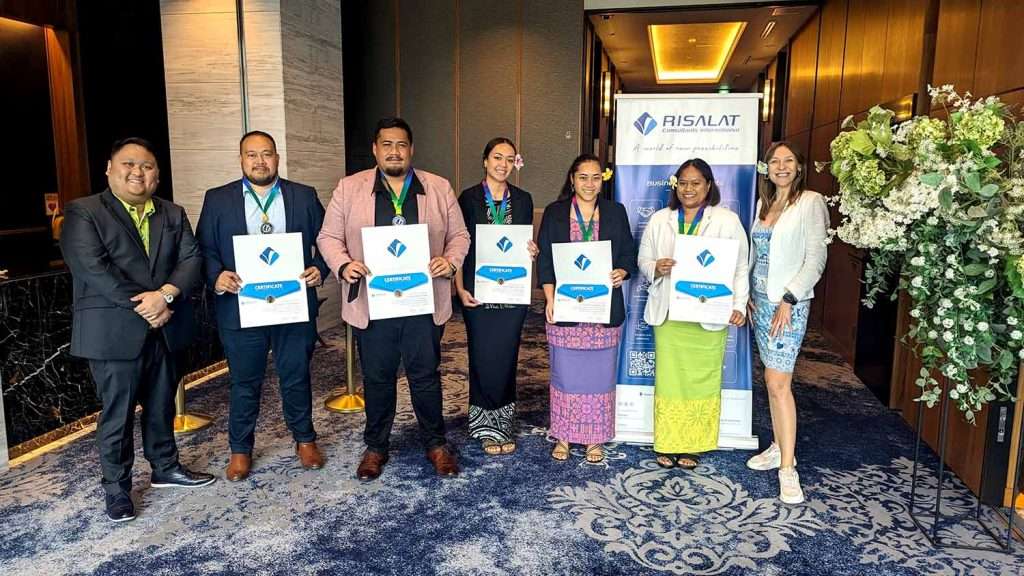
- Distinction Risalat de participation au programme
- Documents de référence après la formation
- Duty of Care Self-Assessment Tool
- Security Framework Improvement Plan
- Accompagnement après la formation & conseils de suivi
- Rapport du programme
Humanitarian organisations, UN agencies and project teams can request a tailored in-house version built around their contexts and procedures. Request a proposal and Risalat will design it with your team.
Common Challenges in Humanitarian Security Management, And How This Training Helps
How can we decide what level of risk is acceptable?
The second day covers risk thresholds, red lines and programme criticality, and the risk assessment clinic shows how to document and justify decisions.
How can security plans be made usable in the field?
On the third day participants draft and peer review plan sections and procedures with a checklist, focusing on clarity and practicality rather than length.
How should we respond when a staff member goes missing or is detained?
The fourth day crisis simulation rehearses the first hours of such an incident, including roles, family liaison and communication.
Comment pouvons-nous soutenir les partenaires locaux sans simplement transférer le risque ?
Sessions on the second and fifth days address responsible partnership and the shift of risk to local organisations described in recent sector reports, with practical support options.
How can security be sustained when budgets are cut?
The third day covers security budgeting in proposals, and the capstone helps participants prioritise improvements that protect people first.
How can we use incident data better?
The fourth day covers reporting, logging and trend analysis so incidents and near misses inform decisions rather than sitting in files.
How can boards and senior managers meet their duty of care?
The fifth day sets out governance roles and accountability, and the capstone produces a framework review leaders can act on. Teams can also benchmark wider systems with Risalat’s governance audit.
Questions fréquentes
Is this a tactical or close protection course?
No. It is a management programme on security risk management, planning, incident response and duty of care. It does not include weapons or tactical training.
Quelles directives de bonnes pratiques suit-il ?
It draws on Good Practice Review 8, Humanitarian Security Risk Management (third edition, 2025), and guidance from the Global Interagency Security Forum (GISF).
Is there a field component?
Yes. The fifth day includes an exposure visit linked to the Ukraine response context. Visits are confirmed with host organisations closer to the dates.
Why Warsaw?
Poland has been a central hub for the humanitarian response to the war in Ukraine, and UNHCR's country office is in Warsaw, which gives participants a relevant benchmark for cross-border and partner-based operations.
Peut-il être dispensé en intra ?
Yes. Risalat can tailor the scenarios, procedures and tools to an organisation's own contexts and run the programme for its teams.
Who Will Deliver This Programme
Each date is delivered by a team assigned from Risalat's expert network for this subject. For this programme we assign:
How we choose them: Experience in the region of the participants or comparable settings; Command of the financier rules that apply (World Bank, ADB, AfDB, EU, UN) where relevant; Delivery in English; other languages on request for in-house groups; No conflict of interest with participants' institutions.
Training courses in WarsawSecurity Management training courses
Pourquoi Varsovie pour ce programme
Warsaw hosts key national institutions, including the Chancellery of the Prime Minister, the Sejm, and the Warsaw Stock Exchange. Visiting delegations can examine Polish public administration reform and European Union integration models. The city is easily reached via direct flights from major international hubs across Europe and other regions.
The Security Management for Humanitarians Training in Warsaw programme in February 2027 brings together officials and professionals from across Europe, Africa, the Middle East and Asia. Sessions combine short inputs, case studies and group work on participants' own files, and the city's institutions can be added as a study visit on request.
Getting there: Warsaw Chopin Airport (WAW).
Vérifiez si vous avez besoin d'un visa avec le vérificateur de visa gratuit, et demandez une lettre d'invitation une fois inscrit.
Le même thème dans d'autres villes
- Mesures de lutte contre le terrorisme & gestion des risques humanitaires à Paris (Paris)
- Éducation aux médias dans l'humanitaire & lutte contre les discours de haine à Luxembourg (Luxembourg)
Autres programmes à Varsovie
Teams often travel here from Ukraine. Funding, visa letters and group rates are explained on each country page.
Pour les équipes et les institutions
Bring your team
Teams that learn together apply more at work. Tell us how many people and how you would like to take part: we reply with a group quote within two working days.
Autres dates et villes pour ce sujet : Cours de formation en gestion de programmes humanitaires (44 dates à venir).
Plus de formations en Pologne · Tous les programmes en Europe · Calendrier complet des formations
Plan this programme in a roadmap: why it matters, why to approve it, the dates to plan and the career it builds.
