Key facts
- Dates
- 2–5 Aug 2027 (4 days)
- Where
- Kigali, Rwanda
- Fee per participant
- £2,350 (GBP)
- Payment
- By invoice and bank transfer
- Registration closes
- 23 Jun 2027
- Format
- 4-day short course: a practical capacity-building programme for government, NGO and project teams in Kigali
- Groups
- Teams of 3 or more qualify for a group discount, offered case by case: ask for a group quote.
- In-house option
- Run it for your team, on your dates
On this page 10 sections
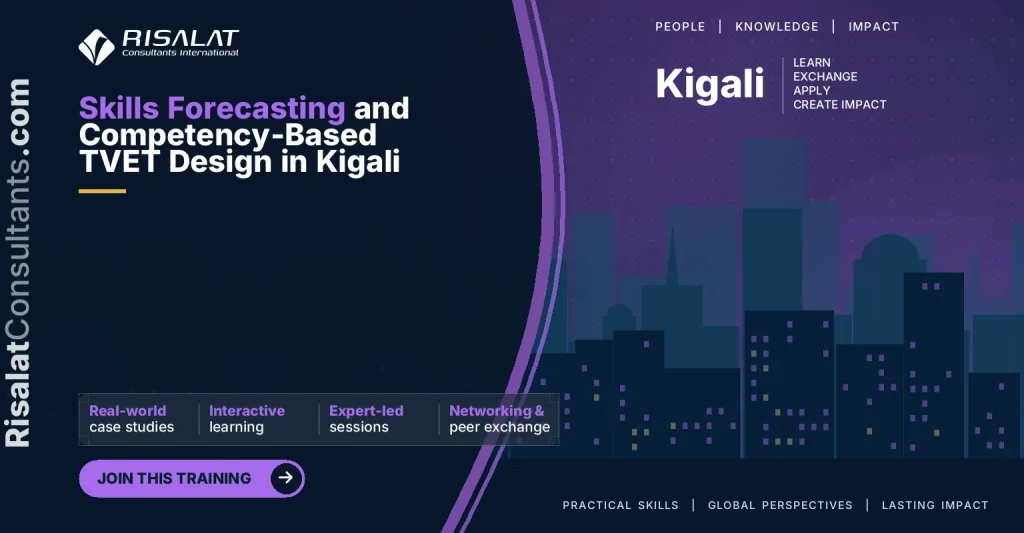
Skills Forecasting and Competency-Based TVET Design in Kigali
Programme Overview
Technical and vocational education and training systems face mounting pressure to align educational outputs with private sector requirements. This four-day programme in Kigali delivers practical methodologies for institutional leaders seeking to reform workforce preparation systems. Participants examine proven models for industrial skills demand forecasting, labour market analysis, and the institutional governance required to maintain agile educational programming. The course emphasises system-wide cohesion, connecting strategic national human resource development plans with operational delivery mechanisms at technical training centres.
Free self-check: the training needs assessment gives a free training needs assessment (TNA) for your team, in about 10 minutes.
Delegates will master the process of translating industrial market signals into actionable occupational standards and modular, competency-based curricula. Through intensive technical sessions, the curriculum explores regional qualifications frameworks, DACUM (Developing a Curriculum) occupational profiling techniques, and criterion-referenced assessment design. The programme addresses key institutional challenges, including the integration of digital skills, green competencies, and industry-led standard validation, enabling participants to move their home institutions away from outmoded, supply-driven instructional methods toward dynamic, competence-verified outcomes.
The training concludes by addressing structural partnerships between public training institutions and enterprise federations. Attendees explore governance models for dual training systems, work-based learning, and formal apprenticeship frameworks that distribute educational delivery between classrooms and actual workplace environments. Furthermore, the course introduces institutional performance management instruments, equipping technical education administrators to monitor training centre efficiency, manage instructional equipment investments, and track graduate employment rates effectively to ensure sustainable public and donor investments. Delivered by Risalat Consultants International in Kigali, Rwanda, it combines expert-led sessions, real cases and group work, so that participants can apply what they learn in their own institution.
The programme strengthens institutional capability in:
- Quantitative and qualitative approaches to enterprise skills demand forecasting
- Engaging industrial sector skills councils to determine technical talent gaps
- Conducting functional occupational analysis using the DACUM methodology
- Translating industrial competencies into national occupational standards
- Case analysis of Rwanda's workforce development model and sectoral engagement
- Principles of modular curriculum construction and learning outcome definition
- Integrating foundational cognitive, digital, and green skills into trade modules
- Aligning modular TVET packages with regional and national qualifications frameworks
- Service planning and management
- Quality improvement and standards
- Human resources and workforce planning
- Financing and budgeting for services
Why this matters now
Organisations increasingly require professionals capable of:
- Plan and manage services to meet demand
- Improve quality against standards
- Manage staff and resources effectively
- Use data to guide decisions
- Work with communities and partners
Strong health, education and social services systems help organisations:
- Deliver better services to more people
- Use budgets and staff efficiently
- Meet quality standards
- Show results to government and partners
Who Should Attend
This programme is designed for:
- Vocational education directors from ministries of employment and vocational training
- Curriculum development specialists from national skills development agencies
- Ministry of education officials overseeing technical and vocational secondary tracks
- Principals and directors of technical training centres and polytechnics
- Qualifications framework managers and national standards development officers
- Heads of industrial liaison and apprenticeship units within public training institutions
- Technical advisors and education specialists from donor-financed project implementation units
- Monitoring and evaluation specialists assessing technical education programmes
- Representatives from national chambers of commerce leading sector skills councils
- Service managers and administrators
- Directors and senior officials
- Planning and policy officers
Tick what your team needs to be able to do.
Programme Objectives
By the end of this programme participants will be able to:
- Analyse industrial labour market data to project current and emerging technical skills deficits
- Draft occupational standards using structured job analysis and DACUM profiling techniques
- Construct modular, competency-based TVET training programmes aligned with regional qualifications frameworks
- Formulate assessment packages using direct observation and workplace evidence verification models
- Establish structured public-private apprenticeship frameworks integrating formal enterprise-based learning
- Implement quality assurance and accreditation procedures for technical vocational institutions
- Deploy institutional key performance indicators to monitor training centre operations and graduate transition rates
- Explain the main challenges facing their sector
- Plan services that match demand and resources
- Apply quality improvement methods
Training Structure & Contents
- Quantitative and qualitative approaches to enterprise skills demand forecasting
- Engaging industrial sector skills councils to determine technical talent gaps
- Conducting functional occupational analysis using the DACUM methodology
- Translating industrial competencies into national occupational standards
- Case analysis of Rwanda's workforce development model and sectoral engagement
- Workshop on applying skills anticipation and occupational profiling to your institution
- Principles of modular curriculum construction and learning outcome definition
- Integrating foundational cognitive, digital, and green skills into trade modules
- Aligning modular TVET packages with regional and national qualifications frameworks
- Developing instructional media, trainer guides, and trainee learning workbooks
- Reviewing and validating draft modular curricula with private sector panels
- Workshop on applying CBET curriculum architecture methods to your institution
- Designing criterion-referenced assessment instruments for practical trades
- Portfolio development, direct observation rubrics, and continuous assessment
- Internal and external quality verification procedures for practical examinations
- Legal, financial, and operational frameworks for dual training and formal apprenticeships
- Drafting tripartite apprenticeship agreements between centres, firms, and trainees
- Case study analysis on competence-based assessment and apprenticeship models in practice
- Costing modular TVET programmes and modernising workshop equipment investments
- Formulating institutional performance contracts for vocational training centres
- Monitoring graduate employment outcomes through systematic tracer studies
- Implementing continuous quality improvement audits against international benchmarks
- Developing project implementation roadmaps for donor-financed institutional reforms
- Capstone exercise to develop an institutional action plan with priorities and next steps
- Consolidating institutional reform roadmaps for competency-based TVET systems
- Peer review and facilitator feedback on institutional action plans
- Aligning institutional upgrading plans with donor-financed project requirements
- Establishing frameworks to eliminate structural skills mismatches in strategic industrial sectors
- Finalising practical next steps, owners, and priorities for home institutions
Full day-by-day contents
First Day | Skills Anticipation, Labour Market Intelligence, and Occupational Profiling
- Quantitative and qualitative approaches to enterprise skills demand forecasting
- Engaging industrial sector skills councils to determine technical talent gaps
- Conducting functional occupational analysis using the DACUM methodology
- Translating industrial competencies into national occupational standards
- Case analysis of Rwanda's workforce development model and sectoral engagement
- Workshop on applying skills anticipation and occupational profiling to your institution
Second Day | Competency-Based Education and Training (CBET) Curriculum Architecture
- Principles of modular curriculum construction and learning outcome definition
- Integrating foundational cognitive, digital, and green skills into trade modules
- Aligning modular TVET packages with regional and national qualifications frameworks
- Developing instructional media, trainer guides, and trainee learning workbooks
- Reviewing and validating draft modular curricula with private sector panels
- Workshop on applying CBET curriculum architecture methods to your institution
Third Day | Competence-Based Assessment, Verification, and Apprenticeship Models
- Designing criterion-referenced assessment instruments for practical trades
- Portfolio development, direct observation rubrics, and continuous assessment
- Internal and external quality verification procedures for practical examinations
- Legal, financial, and operational frameworks for dual training and formal apprenticeships
- Drafting tripartite apprenticeship agreements between centres, firms, and trainees
- Case study analysis on competence-based assessment and apprenticeship models in practice
Fourth Day | Institutional Governance, Resource Planning, and Quality Management
- Costing modular TVET programmes and modernising workshop equipment investments
- Formulating institutional performance contracts for vocational training centres
- Monitoring graduate employment outcomes through systematic tracer studies
- Implementing continuous quality improvement audits against international benchmarks
- Developing project implementation roadmaps for donor-financed institutional reforms
- Capstone exercise to develop an institutional action plan with priorities and next steps
Fifth Day | Strategic Action Planning and Institutional Reform Roadmaps
- Consolidating institutional reform roadmaps for competency-based TVET systems
- Peer review and facilitator feedback on institutional action plans
- Aligning institutional upgrading plans with donor-financed project requirements
- Establishing frameworks to eliminate structural skills mismatches in strategic industrial sectors
- Finalising practical next steps, owners, and priorities for home institutions
Training Methodology
The training is delivered through practical, hands-on working sessions, institutional case studies, and peer-to-peer review workshops. Participants work in technical syndicates to draft occupational profiles, assemble curriculum modules, and simulate industry assessment panels. Facilitation includes the detailed examination of operational tools, comparative analysis of Sub-Saharan African TVET systems, and individual action planning sessions designed to produce directly transferable institutional frameworks for home ministries and technical centres.
- Expert-led sessions on current practice
- Regional and international case studies
- Group work and practical exercises
- Simulations and role plays where relevant
- Discussion of participants' own challenges
- Peer learning across institutions and countries
Expected Outcomes
- Development of actionable occupational standards aligned with private sector requirements
- Mastery of modular TVET curriculum construction and DACUM occupational profiling techniques
- Integration of cognitive, digital, and green competencies into technical trade packages
- Establishment of structured public-private apprenticeship frameworks and dual training models
- Application of criterion-referenced assessment tools and quality verification mechanisms
- Formulation of institutional performance contracts and graduate transition tracking systems
- Creation of practical, transferable institutional reform action plans for ministries and training centres
£2,350 per participant · invoice and bank transfer · groups of 5 or more receive a discount
Five or more from one organisation: ask for the group rate on the invoice request.
Ten or more: an in-house version for your institution may cost less per person. Ask for an in-house quote.
Registration closes in 206 days (23 Jun 2027)
Who Will Deliver This Programme
Each date is delivered by a team assigned from Risalat's expert network for this subject. For this programme we assign:
How we choose them: Experience in the region of the participants or comparable settings; Command of the financier rules that apply (World Bank, ADB, AfDB, EU, UN) where relevant; Delivery in English; other languages on request for in-house groups; No conflict of interest with participants' institutions.
Training courses in KigaliEducation training courses
Why Kigali for this programme
Kigali is known for clean, safe streets and public sector reforms, with easy visas for African travellers.
The Skills Forecasting and Competency-Based TVET Design in Kigali programme in August 2027 brings together officials and professionals from across the Africa region and beyond. Sessions combine short inputs, case studies and group work on participants' own files, and the city's institutions can be added as a study visit on request.
Getting there: Kigali International (KGL).
Check whether you need a visa with the free Visa Checker, and ask for an invitation letter once you are registered.
The same topic in other cities
- TVET Curriculum Development and Industry Alignment in Almaty (Almaty)
- TVET Competency-Based Curricula Design & Industry Partnership Models in Singapore (Singapore)
- TVET Curriculum Modernisation & Skills Forecasting Systems in Singapore (Singapore)
Other programmes in Kigali
- Strategic Leadership for Senior Government Officials in Kigali
- Sub-National Capital Investment Auditing and Municipal Grants in Kigali
- Agri-Tech Startup Incubation and Digital Venture Matching in Kigali
- Community Health Worker Logistics and Child Nutrition Delivery in Kigali
- AI for Project Management and PIU Teams Training in Kigali
Questions before you nominate your team? Book a 30-minute call with us, or ask for this programme in-house.
Teams often travel here from Sudan, Somalia, Ethiopia, Kenya, Uganda, Tanzania, Rwanda, South Sudan. Funding, visa letters and group rates are explained on each country page.
Is there labour market and employment training for government officials in Kigali in August 2027?
Can "Skills Forecasting and Competency-Based TVET Design in Kigali" be delivered in-house for one organisation?
Which other labour market and employment programmes does Risalat run?
How do organisations register and pay?
For teams and institutions
Bring your team
Teams that learn together apply more at work. Tell us how many people and how you would like to take part: we reply with a group quote within two working days.
Watch: this programme in short


Other dates and cities for this subject: Education Management and TVET training courses (91 upcoming dates).
More training courses in Rwanda · All programmes in Africa · Full training calendar
Plan this programme in a roadmap: why it matters, why to approve it, the dates to plan and the career it builds.