Key takeaways
- The Role of Capacity Building in Africas Sustainable Development. Capacity building in Africa is recognized as a pivotal lever for sustainable development, directly referenced in Goal 17 of SDGs, which emphasizes enhancing global support for building…
- Impact of Capacity Building on Socio-Economic Development. The transformative impact of capacity building on Africa’s socio-economic development is multifaceted and profound.
- The African Development Banks Contributions. The African Development Bank (AfDB) has been at the forefront of capacity building in Africa, with a focus on enhancing the continent’s ability to address development challenges effectively.
- Innovative Approaches to Capacity Building. Innovative approaches to capacity building in Africa are leveraging technology and strategic partnerships to enhance the effectiveness and sustainability of educational and training…
- Application for public agencies and donor-funded projects. To effectively address the capacity gaps in Africa, a multi-faceted approach that leverages strategic alliances, partnerships, and innovative strategies is essential.
In short: Africa’s Capacity Building requires practical choices about resources, evidence and implementation. This guide explains the main opportunities and constraints, and how organisations can turn the underlying ideas into measurable decisions.
The Role of Capacity Building in Africas Sustainable Development
The Role of Capacity Building in Africas Sustainable Development
Capacity building in Africa is recognized as a pivotal lever for sustainable development, directly referenced in Goal 17 of SDGs, which emphasizes enhancing global support for building capacities in developing countries.
Capacity building fosters innovation, enhances local ownership, promotes self-reliance, and improves governance, accountability, and transparency, thereby empowering communities to manage their resources effectively and participate in decision-making processes. Collaborative efforts from all stakeholders, including governments, non-profit organizations, businesses, and international partners, are crucial for building sustainable, context-specific capacities that address the continent’s diverse needs and challenges.
The process of capacity building must be strategic, comprising the following steps:
Assessment and Planning: Conducting a thorough assessment of current capacities and developing a tailored capacity building plan.
Engagement and Training: Involving employees in the capacity building process and initiating training and education programs.
Institutional Strengthening: Focusing on institutional strengthening, infrastructure development, and policy reform.
Challenges Facing Capacity Building in Africa
Despite the pivotal role of capacity building in Africa’s journey towards sustainable development, gaps persist across various domains including:
Technological Integration and Accessibility:
Bridging the gender gap in the ICT sector is crucial for inclusive development.
Tailoring programs for people with special needs and vulnerable groups is essential.
Overcoming cultural issues, diverse resources, and the challenges of multiple time zones in technology training is necessary.
Research and Institutional Barriers:
Quality of supervision and power dynamics can impede research, causing demotivation and delays.
The absence of inspiring leaders and poor institutional infrastructure, such as inadequate laboratories and limited access to research materials, severely hampers progress.
Bureaucratic delays in processing stipends and procuring equipment disrupt research activities.
Financial and Structural Limitations:
The scarcity of local research funding and the lack of bursaries for non-doctoral research students create an unsatisfactory research environment.
Addressing the capacity gaps requires identifying specific needs and developing targeted interventions to enhance skills in tackling corruption and economic crimes.
For africa’s capacity building, a useful implementation plan should explicitly consider learning outcomes, institutional roles and the time available for implementation. A responsible decision starts by identifying who experiences the problem, who has authority to respond, and what information would change the proposed action. These questions help separate an attractive concept from a feasible intervention.
For example, an organisation considering a new initiative can document the existing process, consult the people who use it, select a manageable pilot and record its baseline. The pilot should have a named owner, a delivery timetable, a complaints route and a realistic operating budget. Progress should be judged against observed results rather than the number of meetings, workshops or announcements completed.
Impact of Capacity Building on Socio-Economic Development
Impact of Capacity Building on Socio-Economic Development
The transformative impact of capacity building on Africa’s socio-economic development is multifaceted and profound. It affects almost all areas of development including but not limited to:
Infrastructure and Economic Growth:
The World Bank’s revised approach emphasizes strengthening public institutions and fostering demand for public service improvements, with a focus on infrastructure developmentin transportation, energy, and digital sectors to spur economic growth and attract foreign investment.
Innovative financial instruments, such as debt for climate or nature swaps, offer promising avenues to finance activities that build resilience to climate change impacts, thereby reducing physical risk and promoting sustainable development.
Educationand Workforce Development:
Quality education and vocational training are pivotal in equipping Africa’s youth with the skills needed to participate in the global economy, with the Bank introducing new diagnostic tools and lending instruments to support these initiatives.
Upskilling programs are crucial for creating a competitive workforce, preparing individuals for new industries or specialized fields, and ultimately contributing to greater economic stability.
Governanceand Climate Resilience:
Strengthening governance through improved transparency and accountability creates a more favorable business environment, attracting investment and fostering economic growth.
Investment in sustainable technologies and practices, alongside articulating investment-ready National Adaptation Plans, is essential for addressing climate change and environmental degradation, thus ensuring long-term socio-economic development.
Operational choices and constraints
For africa’s capacity building, a useful implementation plan should explicitly consider costs, procurement options, stakeholder incentives and the risks of premature scaling. A responsible decision starts by identifying who experiences the problem, who has authority to respond, and what information would change the proposed action. These questions help separate an attractive concept from a feasible intervention.
For example, an organisation considering a new initiative can document the existing process, consult the people who use it, select a manageable pilot and record its baseline. The pilot should have a named owner, a delivery timetable, a complaints route and a realistic operating budget. Progress should be judged against observed results rather than the number of meetings, workshops or announcements completed.
The African Development Banks Contributions
The African Development Banks Contributions
The African Development Bank (AfDB) has been at the forefront of capacity building in Africa, with a focus on enhancing the continent’s ability to address development challenges effectively. The AfDB’s African Development Institute (ADI) spearheads these efforts through a comprehensive approach that encompasses:
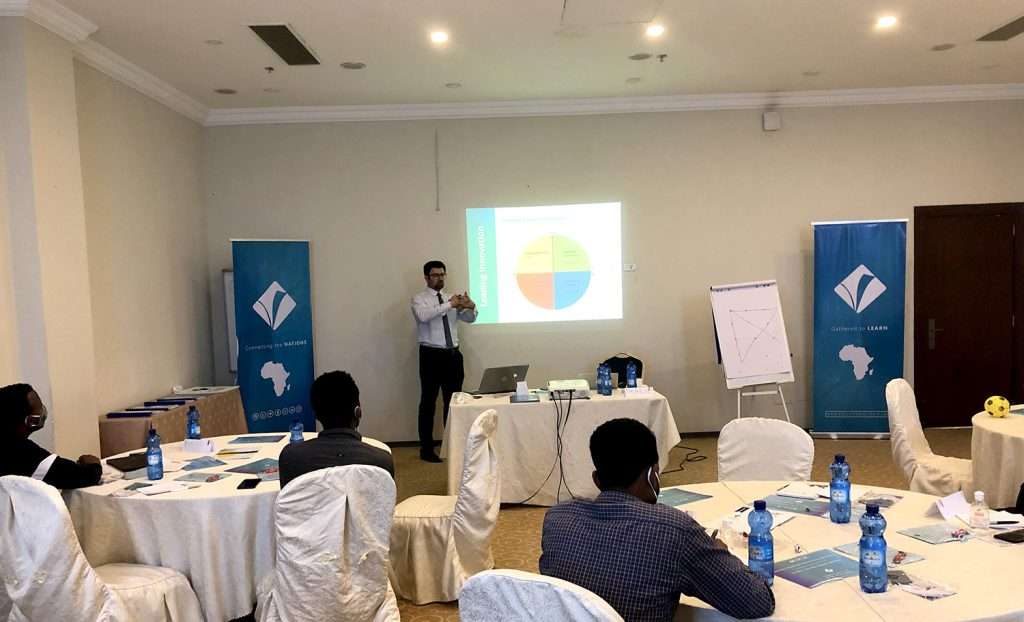
Training and Workshops:ADI conducts around 20 training sessions annually across Africa in languages including French, English, and Portuguese. These sessions are developed to improve the design and implementation of Bank-financed operations, with topics ranging from Bank procurement and disbursement procedures to project cycle management and debt sustainability.
Partnerships and Seminars:Collaborating with the Joint Partnership for Africa (JPA), ADI organizes seminars on critical sector issues such as rural development, integrated water management, and governance. These seminars serve as platforms for knowledge exchange and sector-specific capacity building.
Furthermore, the AfDB has significantly advanced statistical capacity building, focusing on improving data quality and availability. This is achieved through:
Statistical Capacity Building:Initiatives include the development of databases on economic and social statistics, support for the Poverty Reduction Strategy Papers (PRSP) process, and the International Comparison Program for Africa (ICP-Africa). These efforts aim to strengthen national statistical systems and enhance cross-country comparisons of economic aggregates in real terms.
National Strategies for Development Statistics (NSDSs):The AfDB supports African countries in developing or updating their NSDSs, which is pivotal for improving statistical capacities and adhering to international standards.
These contributions by the AfDB underscore its commitment to building a resilient and sustainable future for Africa, aligning with the broader objectives of promoting economic development and citizen inclusion.
Implementation and accountability
For africa’s capacity building, a useful implementation plan should explicitly consider quality assurance, privacy or environmental safeguards where relevant, and transparent reporting. A responsible decision starts by identifying who experiences the problem, who has authority to respond, and what information would change the proposed action. These questions help separate an attractive concept from a feasible intervention.
For example, an organisation considering a new initiative can document the existing process, consult the people who use it, select a manageable pilot and record its baseline. The pilot should have a named owner, a delivery timetable, a complaints route and a realistic operating budget. Progress should be judged against observed results rather than the number of meetings, workshops or announcements completed.
Innovative Approaches to Capacity Building
Innovative Approaches to Capacity Building
Innovative approaches to capacity building in Africa are leveraging technology and strategic partnerships to enhance the effectiveness and sustainability of educational and training programs:
Technology-Driven Learning:
Initiatives focusing on technology development are revolutionizing training by providing access to interactive materials, thus significantly increasing learner engagement and maximizing educational outcomes.
Strategic Partnerships for Comprehensive Growth:
Collaborations between governments, non-profits, entrepreneurs, and communities are crafting innovative strategies for value creation, particularly in nurturing Africa’s youth through entrepreneurship and digital technology courses.
Public-private partnerships, along with regional cooperation, underscore the importance of a united approach in addressing the continent’s capacity building needs, emphasizing technology and innovation as pivotal strategies.
Focus on Policy and Climate Adaptation:
The seminars on training policy formulation and the inclusion of decision-making science in university curricula highlight the need for qualitative public management in policy development.
The FCFA’s UMFULA consortium and the ACTS’s CapCET program are pioneering in co-production models and climate change education, aiming to bridge capacity gaps and foster resilience against environmental challenges.
A practical institutional example
For africa’s capacity building, a useful implementation plan should explicitly consider the difference between a pilot that works once and a process that an institution can sustain. A responsible decision starts by identifying who experiences the problem, who has authority to respond, and what information would change the proposed action. These questions help separate an attractive concept from a feasible intervention.
For example, an organisation considering a new initiative can document the existing process, consult the people who use it, select a manageable pilot and record its baseline. The pilot should have a named owner, a delivery timetable, a complaints route and a realistic operating budget. Progress should be judged against observed results rather than the number of meetings, workshops or announcements completed.
Application for public agencies and donor-funded projects
Addressing the Capacity Gaps
To effectively address the capacity gaps in Africa, a multi-faceted approach that leverages strategic alliances, partnerships, and innovative strategies is essential. This approach should encompass:
Strategic Alliances and Partnerships:
Engage in collaborative efforts with non-profit organizations, governments, businesses, and other stakeholders to foster human capital development and technology innovation.
Implement upskilling initiatives and provide personal development support, ensuring a comprehensive strategy for capacity building.
Tailored Programs for Inclusivity:
Prioritize bridging the gender gap in the ICT sector and tailor programs for people with special needs and vulnerable groups, ensuring no one is excluded from the capacity-building efforts.
Reform and Policy Implementation:
Encourage African governments to accelerate reform programs, remove bureaucratic impediments, and enhance public administration
What project teams should do next
For africa’s capacity building, a useful implementation plan should explicitly consider the needs of implementing agencies, suppliers, community representatives and development partners. A responsible decision starts by identifying who experiences the problem, who has authority to respond, and what information would change the proposed action. These questions help separate an attractive concept from a feasible intervention.
For example, an organisation considering a new initiative can document the existing process, consult the people who use it, select a manageable pilot and record its baseline. The pilot should have a named owner, a delivery timetable, a complaints route and a realistic operating budget. Progress should be judged against observed results rather than the number of meetings, workshops or announcements completed.
For a ministry or project implementation unit, the practical sequence is to agree the public purpose, map responsibilities across agencies, identify procurement and safeguard requirements, and record the evidence needed for approval. Where a donor finances the work, the project team should use the applicable financing agreement, procurement framework and environmental and social commitments rather than assuming that one generic procedure applies to every project.
Consider a hypothetical donor-funded programme with a limited implementation period. The project manager could commission a baseline assessment, involve local stakeholders in defining service standards, test the proposed intervention in a small number of sites and evaluate performance before expansion. An independent review of expenditure and outcomes can reveal whether the programme is reaching intended beneficiaries and whether the implementing agency can maintain it after external financing ends.
Implementation checklist
- Define the decision and intended beneficiaries.
- Confirm legal, financial and operational constraints.
- Set a baseline and measurable indicators.
- Assign owners and establish stakeholder feedback.
- Pilot, evaluate and revise before scaling.
Frequently Asked Questions
What is the main practical benefit?
It helps decision-makers connect the topic to defined needs, realistic resources and observable outcomes.
What should an organisation assess first?
Start with a baseline, stakeholder needs, delivery responsibilities and applicable legal requirements.
Which implementation risks deserve attention?
Pay attention to affordability, institutional capacity, inclusion, data quality and ongoing maintenance.
How can progress be measured?
Use a small set of baseline-linked indicators, user feedback and periodic independent review.
How does this apply to donor-funded projects?
Apply the project financing agreement and relevant procurement, safeguard, monitoring and reporting obligations.
- Open Contracting Partnership Open Contracting Partnership
- OECD (Organisation for Economic Co-operation and Development) OECD
- United Nations Development Programme UNDP
Know people who should read this? Become a Risalat Ambassador or write an article with Risalat under your own name.
Partners in project success since 2011, diagnostics, advisory support and applied learning for ministries, public agencies and project teams.
Need help putting this into practice?
Start with a free 10-minute diagnostic or talk to our experts.